
10 SEO Trends You Should Follow to Stay Ahead in 2026
Search engine optimization is shifting faster than ever, and keeping up with 2026 SEO trends is no longer optional if you want your business to remain visible online. Whether you run a local service business in Toronto, a SaaS company in Austin, or an ecommerce store in Melbourne, the rules of organic search are being rewritten by AI, changing user behavior, and evolving search engine algorithms.
Every trend listed below is backed by data, grounded in practical application, and relevant to businesses that depend on search traffic for growth. Read through all 10, because the combination of these strategies is what separates brands that thrive from those that stagnate.
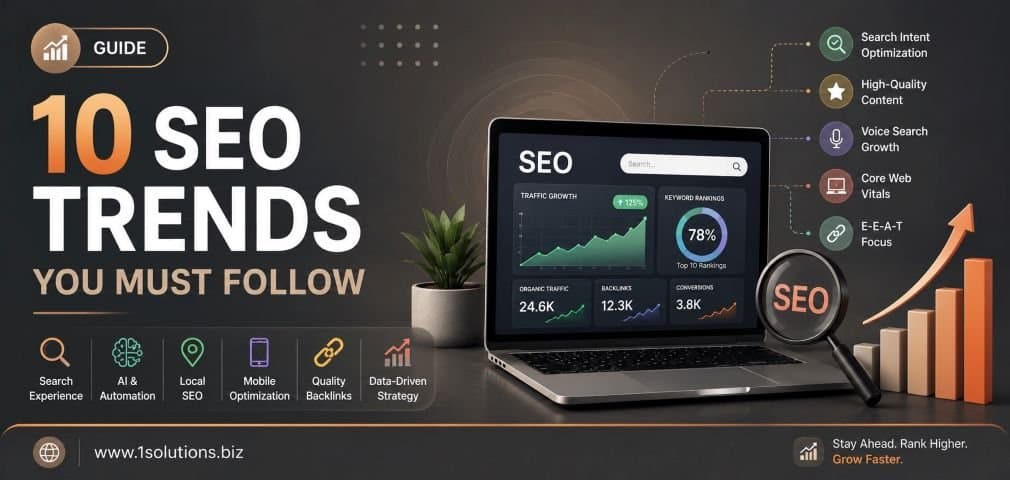
The 10 Most Important 2026 SEO Trends to Follow
1. AI-Generated Search Results Are Reshaping Click Behavior
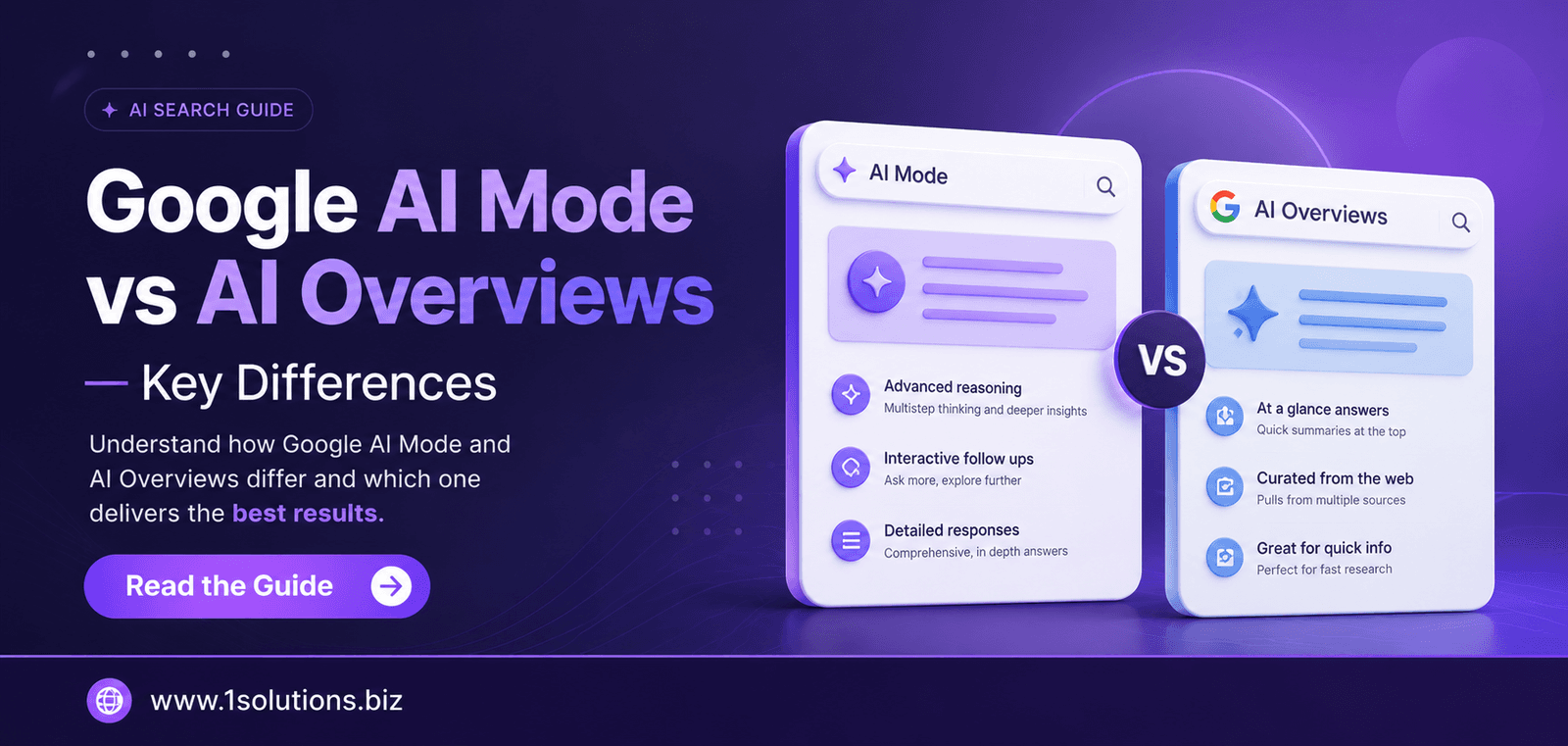
Google’s AI Overviews, formerly known as Search Generative Experience, have fundamentally changed how users interact with search results. When AI generates a direct answer at the top of the page, many users never scroll to the organic results below. According to a study by Search Engine Land (2024), AI Overviews appeared in roughly 84% of search queries tested, creating a dramatic shift in how traffic flows from Google to websites. For business owners in competitive markets, this means ranking on page one is no longer enough. You need to be the source that Google’s AI pulls from.
To get cited in AI Overviews, your content must be structured clearly, authoritative, and comprehensive. Use clear headings, answer specific questions directly, and back your claims with credible data. Building topical authority across your niche is now more important than optimizing individual pages in isolation. If you want a deeper understanding of how to position your content for AI-driven search, check out this guide on how to improve website visibility in AI search engines.
2. Generative Engine Optimization (GEO) Is the New SEO Frontier
Generative Engine Optimization, or GEO, refers to the practice of optimizing your content to appear in answers generated by AI-powered engines like ChatGPT, Google Gemini, Perplexity, and Microsoft Copilot. These platforms are rapidly becoming search destinations in their own right. Gartner (2024) predicted that by 2026, traditional search engine volume will drop by 25% as AI-powered tools take over informational queries. That is a significant shift in where your audience is going to find answers.
GEO involves writing content that is factually accurate, well-cited, structured for machine comprehension, and demonstrates genuine expertise. It overlaps with traditional SEO but goes further in requiring content that reads as trustworthy to both humans and AI models. Schema markup, clear authorship signals, and original data all play important roles.
For a practical starting point, the Generative Engine Optimization (GEO) Checklist 2026 is an excellent resource to work through with your content team.
3. E-E-A-T Signals Are More Critical Than Ever
Google’s quality rater guidelines emphasize Experience, Expertise, Authoritativeness, and Trustworthiness, commonly known as E-E-A-T. In 2026, these signals have moved from being best practices to being non-negotiable ranking factors, especially for content in competitive niches like finance, health, legal services, and home improvement. Google wants to surface content from people who have real, firsthand experience with the topics they write about, not generic summaries produced at scale.
To strengthen your E-E-A-T, make sure author bios are detailed and link to professional profiles. Publish original research, case studies, and customer success stories. Get your brand mentioned on authoritative third-party websites. Earn editorial backlinks from respected publications in your industry. Update old content regularly so it reflects current information. These signals work together to tell Google that your website is a reliable source worth recommending. Businesses that invest in genuine authority building will consistently outperform those that rely on technical tricks alone.
4. Voice and Conversational Search Optimization Is Expanding
Smart speakers, voice assistants, and mobile voice search are now a mainstream part of how people find businesses and answers. According to Statista (2024), there were over 8.4 billion digital voice assistants in use globally, a number that exceeds the world’s population. People using voice search ask questions differently than they type them. They speak in full sentences, use natural language, and expect direct, conversational answers rather than lists of links.
Optimizing for voice search means targeting long-tail, question-based keywords and structuring your content to answer those questions clearly and concisely. FAQ sections, conversational blog posts, and featured snippet optimization all contribute to voice search visibility. Local businesses benefit especially from voice optimization because many voice queries are location-specific, such as “find a plumber near me open now.” Making sure your Google Business Profile is complete and accurate is a foundational step for capturing these queries. Consider voice search optimization as a natural extension of your existing content strategy rather than a separate discipline.
5. Zero-Click Searches Demand a New Traffic Strategy
Zero-click searches occur when users get the information they need directly from the search results page without clicking through to any website. Featured snippets, knowledge panels, local packs, and AI Overviews all contribute to this trend. SparkToro (2024) reported that approximately 58.5% of all Google searches in the United States end without a click. For businesses that depend on organic traffic as their primary revenue driver, this is a serious challenge that requires a strategic response.
Rather than fighting the zero-click trend, smart marketers adapt to it. Focus on building brand awareness through search visibility even when clicks do not follow. Optimize your content to appear in featured snippets so your brand name is visible at the top of results. Use structured data markup to control how Google displays your content. Invest more in email list building, social media audiences, and direct traffic channels so that your business is not entirely dependent on click-through rates from organic search. Diversification of traffic sources is a core part of a resilient 2026 SEO strategy.
6. Video SEO and Visual Search Are Growing Ranking Factors
Video content continues to dominate user engagement, and search engines are increasingly incorporating video results into their organic listings. YouTube remains the world’s second-largest search engine, and Google regularly surfaces YouTube videos in its main search results for how-to queries, product reviews, and educational content. Alongside video, visual search tools like Google Lens are changing how users find products and local businesses by allowing them to search using images instead of text.
To capitalize on video SEO, businesses should create keyword-optimized video content that addresses the specific questions their target audience is searching for. Use descriptive titles, keyword-rich descriptions, and accurate transcripts to help search engines index your videos properly. For visual search, make sure product images are high quality, properly labeled with descriptive alt text, and embedded in pages with relevant surrounding content. Brands in retail, food and beverage, home decor, and fashion have the most to gain from visual search optimization, but nearly every business category can benefit from a stronger video presence in search results.
7. Link Building Remains Essential but Quality Beats Quantity
Backlinks are still one of the strongest signals search engines use to evaluate the authority and trustworthiness of a website. However, the era of building hundreds of low-quality links to game rankings is firmly over. Google’s spam updates have become increasingly aggressive at identifying and penalizing manipulative link building practices. What matters in 2026 is earning links from genuinely relevant, authoritative sources that editorial teams choose to link to because your content is worth referencing.
High-quality link building strategies in 2026 include digital PR, original research that others want to cite, strategic guest posting on respected industry publications, and building genuine relationships with journalists and bloggers in your niche. Internal linking is also an underrated part of the equation, as it helps search engines understand your site architecture and distributes authority across your key pages.
To get started on a sustainable approach, review this resource on how to build backlinks in competitive and low-competition niches for tactics that work regardless of your industry size.
8. Core Web Vitals and Page Experience Are Baseline Requirements
Google’s Core Web Vitals metrics measure real-world user experience on your website, covering loading speed (Largest Contentful Paint), interactivity (Interaction to Next Paint), and visual stability (Cumulative Layout Shift). These are not soft recommendations. They are confirmed ranking signals, and in 2026, pages that fail to meet the thresholds Google sets will consistently underperform competitors who have invested in technical performance. A slow, unstable website loses rankings and loses customers.
Improving Core Web Vitals typically involves optimizing image file sizes and formats, eliminating render-blocking scripts, upgrading to faster hosting, implementing lazy loading for below-the-fold content, and refining how your pages load on mobile devices. Mobile-first indexing means Google evaluates the mobile version of your site first, so if your mobile experience is poor, your desktop performance will not save you. Work with your development team to run regular audits using Google Search Console and PageSpeed Insights. Treat Core Web Vitals as ongoing maintenance rather than a one-time project, because your site’s performance needs to stay competitive as the standards evolve.
9. Local SEO and Hyperlocal Targeting Are Accelerating
Local search has never been more competitive, and the businesses that win in local pack rankings and Google Maps are those that treat local SEO as a dedicated discipline. For service businesses, contractors, dental practices, law firms, and restaurants across the US, Canada, and Australia, appearing in the top three local results can be the difference between a thriving business and one that struggles to attract new customers. Consumer behavior strongly favors local discovery through search, with mobile and voice searches driving a significant portion of local queries.
Effective local SEO in 2026 means maintaining a complete and consistently updated Google Business Profile, actively collecting and responding to customer reviews, building local citations across relevant directories, and creating location-specific content on your website. Hyperlocal targeting goes further by optimizing for neighborhood-level or suburb-level searches, which are often less competitive and highly converting.
If your business serves multiple locations, creating individual, well-optimized landing pages for each service area is significantly more effective than trying to rank a single generic page for an entire city or region.
10. Content Depth and Topical Authority Outperform Keyword Stuffing
Google has evolved well beyond matching keywords on a page to matching searcher intent with genuinely useful content. In 2026, building topical authority means covering a subject area comprehensively across multiple interconnected pieces of content rather than publishing one-off articles optimized for isolated keywords. Websites that demonstrate deep expertise across a topic cluster consistently outrank those that publish thin, unrelated content across many different subjects.
A topical authority strategy starts with identifying the core subjects your business has genuine expertise in and then building out a content hub around each one. This includes pillar pages that provide comprehensive overviews, cluster content that dives into specific subtopics, and a strong internal linking structure that connects them all. This approach not only improves your rankings but also improves the user experience by making it easy for visitors to explore related topics without leaving your site.
For businesses serious about sustainable search growth, topical authority is one of the highest-return investments you can make in content marketing. To strengthen your link structure alongside your content depth, explore how to use internal links to boost backlink impact across your entire website.
How to Prioritize These 2026 SEO Trends for Your Business
Not every business needs to tackle all 10 of these trends simultaneously. The most effective approach is to audit where your current SEO performance stands, identify the gaps that are costing you the most traffic and conversions, and build a prioritized roadmap based on your specific business goals and resources.
For most small to mid-sized businesses, the highest-impact starting points are usually Core Web Vitals, local SEO, and content depth. For larger brands competing in national or international markets, GEO, E-E-A-T, and link building authority tend to move the needle the most. For ecommerce businesses, video SEO and visual search are increasingly important alongside technical performance and product page optimization.
At 1Solutions, our approach is always to connect SEO strategy directly to business outcomes. Traffic is a means to an end. The real goal is leads, sales, and revenue growth, and the 2026 SEO trends above are all oriented toward earning the kind of search visibility that actually converts.
Conclusion
The landscape of search is more dynamic and more competitive than it has ever been, but that also means the opportunity to differentiate your business through smart, strategic SEO is greater than ever. The 2026 SEO trends outlined in this guide are not fleeting fads. They reflect the direction that search technology, user behavior, and Google’s algorithm are collectively moving. Businesses that invest in AI visibility, topical authority, technical performance, and genuine expertise will build search presences that compound in value over time.
Whether you are starting from scratch or refining an existing strategy, the key is to act with intention and consistency. SEO rewards businesses that commit to providing real value to their audience while meeting the technical standards that search engines require. If you are ready to put these trends into action and want a partner with over 15 years of proven experience, 1Solutions is here to help you build a search strategy that delivers measurable results in 2026 and beyond.
Frequently Asked Questions About 2026 SEO Trends
What is the most important SEO trend to focus on in 2026?
There is no single most important trend because the most effective SEO strategies in 2026 are those that combine multiple signals. That said, AI-driven search optimization, including both Google AI Overviews and generative engine optimization, represents the most significant structural shift happening in search right now. Businesses that adapt to how AI models surface and cite content will have a major competitive advantage over those that only optimize for traditional organic rankings. Pairing this with strong E-E-A-T signals and technical performance gives you a well-rounded foundation for success.
How does Generative Engine Optimization differ from traditional SEO?
Traditional SEO focuses on optimizing content so that search engines like Google rank your pages highly in their results. Generative Engine Optimization, or GEO, focuses on making your content the source that AI engines like ChatGPT, Perplexity, and Google Gemini use when generating answers to user queries. GEO places a higher emphasis on factual accuracy, clear attribution, authoritative sourcing, and structured content that machines can interpret reliably. Both approaches share common foundations, including quality content and strong authority signals, but GEO requires a deeper commitment to transparency and credibility in your content production.
Is link building still worth investing in for SEO in 2026?
Absolutely, but the approach has changed significantly. Low-quality, high-volume link schemes are actively penalized by Google’s spam detection systems. What works in 2026 is earning links from genuinely relevant, editorially chosen sources through tactics like digital PR, original research, guest posting on respected publications, and creating content that naturally attracts citations. The quality, relevance, and editorial nature of your backlinks now matter far more than the raw number of links pointing to your site. A focused strategy that earns fewer but stronger links will consistently outperform a scattershot approach to link volume.
How long does it take to see results from implementing these SEO trends?
SEO timelines vary depending on your current authority, the competitiveness of your niche, and the scope of changes you implement. Technical improvements like Core Web Vitals fixes can show results within weeks in terms of crawling efficiency and user experience metrics. Content-driven changes typically take three to six months to reflect meaningfully in rankings. Link building campaigns generally require six to twelve months of consistent effort before compounding benefits become clearly visible. Local SEO improvements, especially Google Business Profile optimization and review management, tend to produce faster results, often within one to three months for businesses in moderately competitive markets.
Can small businesses compete with large brands in 2026 SEO?
Yes, and in many cases small businesses have structural advantages that large brands cannot replicate easily. Local SEO, for example, heavily favors businesses with genuine local presence, real customer reviews, and community relevance. Topical authority in a narrow niche is also more achievable for a focused small business than for a large brand spreading its content across dozens of categories. Additionally, small businesses can move faster, produce more authentic content, and build genuine relationships with their audience in ways that corporate content machines often struggle to match. The key is to compete strategically in the areas where you have a natural edge rather than trying to out-spend large competitors on broad keyword terms.