
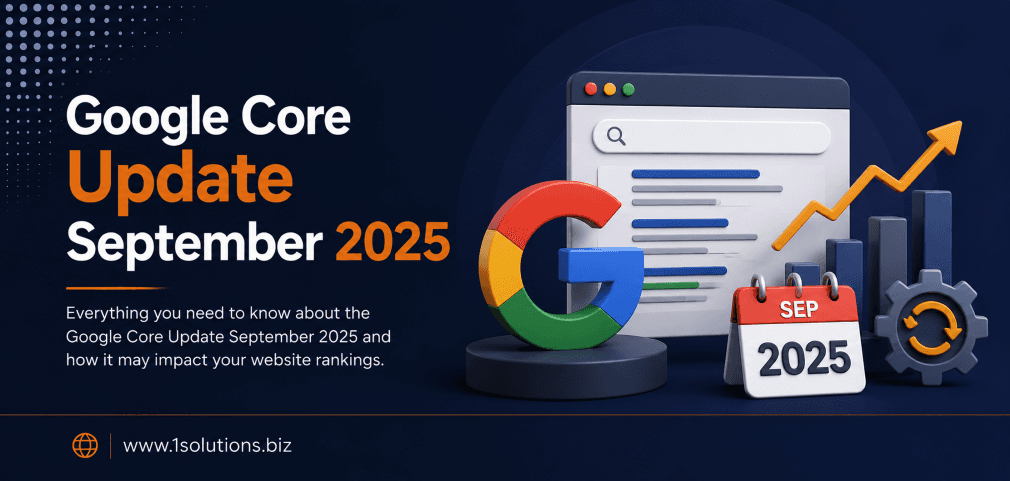
Google Core Update September 2025: What Changed and How to Recover
Every major Google Core Update reshapes the search landscape, and the September 2025 rollout is no different. If you logged into Google Search Console recently and noticed a sudden drop in impressions or clicks, you are not alone. Sites across nearly every niche reported ranking volatility during and after the rollout window. Understanding exactly what Google changed, why certain pages got hit, and what recovery steps actually work is the difference between bouncing back in weeks versus staying buried for months.
The Google Core Update September 2025 targeted thin content, low-trust pages, and sites with mismatched E-E-A-T signals. Recovery requires auditing content quality, strengthening topical authority, and fixing technical issues that erode user experience. There is no quick fix, but consistent action over 6 to 12 weeks can restore and even improve pre-update rankings.
⚡ Key Takeaways
- The September 2025 core update placed heavier weight on Experience and Expertise signals within E-E-A-T frameworks.
- Pages with shallow topical coverage were demoted regardless of backlink profiles.
- Core Web Vitals remained a tiebreaker, not a primary ranking factor, but poor scores amplified content-related drops.
- AI-generated content without clear human review and editorial oversight was disproportionately affected.
- Recovery timelines typically span one to two subsequent core update cycles, so early action matters.
- Structured data accuracy and author credibility pages became stronger ranking signals post-update.
- Sites that had already invested in topical authority clusters saw the smallest drops and fastest recoveries.
What the September 2025 Google Core Update Actually Changed
Google confirmed the September 2025 core update began rolling out on September 3 and completed around September 19, making it one of the longer rollout windows of the year. Core updates are not targeted at specific spam tactics the way Penguin or Panda were. Instead, they recalibrate how Google’s systems evaluate content quality across the board.
According to Google’s Search Central Blog (2025), this update refined the way the algorithm scores “helpfulness” at the page level, with increased emphasis on whether real human expertise is visible within the content itself, not just signaled through backlinks. This aligns with the ongoing evolution of the Helpful Content System, which Google merged into its core ranking infrastructure in March 2024.
Three core shifts stood out after analyzing early volatility data from tools like Semrush and Ahrefs:
- Topical depth over breadth: Sites with a narrow but deep content footprint outperformed generalist sites that covered many topics superficially.
- Author authority signals: Pages with verifiable author bios, credentials, and links to external professional profiles ranked more consistently.
- Content freshness paired with accuracy: Updating a page with new statistics or recent developments helped, but only when the factual accuracy of the full page was maintained.
Moz’s 2025 Search Ranking Factors study found that page-level topical authority now correlates with first-page rankings at a rate 34% higher than it did in their 2023 study, underscoring just how much this signal has grown in importance.
Who Got Hit and Why
Not every site dropped. In fact, many high-quality publishers saw ranking gains during this window. The sites that got hit hardest fell into recognizable patterns:
- Affiliate-heavy content sites where product reviews lacked genuine first-hand testing evidence
- Blogs that scaled AI-generated content rapidly in 2024 and early 2025 without editorial review
- News aggregators that republished content without original analysis or added value
- Service business websites with thin location pages built from templates with minimal unique content
- E-commerce product pages with manufacturer descriptions and no original copy
According to a SimilarWeb analysis published in September 2025, sites in the health, finance, and legal verticals experienced the highest average traffic declines at roughly 22% to 31% in the two weeks following the update’s completion. These are historically the most scrutinized YMYL (Your Money Your Life) categories.
💡 Pro Tip: Check Google Search Console’s Performance report filtered by the update window dates (September 3 to September 19, 2025). Compare average position for your top 20 pages before and after. Pages that dropped 5 or more positions are your priority recovery targets.
Step 1: Conduct a Content Quality Audit Before You Change Anything
The worst mistake site owners make after a core update is immediately rewriting pages or adding content without diagnosing what the actual problem is. Start with data, not assumptions.
How to run your content audit
- Export all URLs from Google Search Console that showed a significant drop in clicks or impressions between September 1 and October 1, 2025.
- Segment those URLs by content type: blog posts, landing pages, product pages, location pages.
- Score each URL against Google’s self-assessment questions from their core update guidance. Key questions include: Does the content provide original information? Does it have a clear author with demonstrated expertise? Does it satisfy the searcher’s intent completely?
- Tag each URL as: Improve, Consolidate, or Remove.
Reading how to boost your SEO efforts with page content analysis will give you a practical framework for scoring content at scale, especially if you are dealing with a large site.
Step 2: Strengthen E-E-A-T Signals Across Your Most Important Pages
E-E-A-T (Experience, Expertise, Authoritativeness, Trustworthiness) is not a single algorithm signal. It is a collection of quality indicators that Google’s systems and human quality raters use to evaluate a page. Post-September 2025, the Experience pillar appears weighted more heavily than in previous cycles.
Practical E-E-A-T improvements
- Add detailed author bios to every content page, including credentials, years of experience, and a link to a verifiable professional profile such as LinkedIn.
- Include first-person observations, test results, or case study data where relevant. Generic advice is penalized; specific evidence is rewarded.
- Add a “Last reviewed” or “Last updated” date alongside the publish date, and make sure it reflects a genuine review, not just a metadata change.
- Reference credible third-party sources with outbound links to build trust signals.
- For YMYL topics specifically, include disclaimers and indicate when a professional consultation is recommended.
If your business produces a lot of written content at scale, working with a dedicated professional content and copywriting team ensures that E-E-A-T requirements are built into every piece from the start, rather than retrofitted after an update.
Step 3: Consolidate Thin and Redundant Content
One of the clearest recovery paths after a Google Core Update involves reducing the volume of low-quality pages rather than adding more content. Google’s systems assess the overall quality distribution of your site, not just individual pages in isolation.
Consolidation strategy
- Identify pages with fewer than 500 words that target keywords also covered by stronger pages on your site.
- Use 301 redirects to point weaker pages to stronger, more comprehensive ones.
- For pages with unique keyword targets but thin content, expand them with first-hand insights, updated data, and structured headings rather than just padding word count.
- For pages that serve no clear user intent and receive no traffic, consider removing them and returning a 404 or 410 status code.
It is worth noting a genuine trade-off here: consolidating too aggressively can remove pages that pass authority through internal links. Before redirecting or removing anything, check the internal link equity of each page in your crawl tool.
💡 Pro Tip: Use Screaming Frog or Ahrefs Site Audit to identify pages with zero inbound internal links. These “orphan pages” often contributed nothing before the update and are safe candidates for removal or consolidation without risking link equity loss.
Step 4: Rebuild Topical Authority With a Cluster Strategy
Google’s post-2024 ranking infrastructure rewards sites that comprehensively cover a topic from multiple angles rather than publishing disconnected articles. The content cluster model, where a pillar page anchors a group of related subtopic pages, aligns directly with how the algorithm now evaluates topical relevance.
| Content Approach | Pre-2024 Effectiveness | Post-September 2025 Effectiveness |
|---|---|---|
| Single broad keyword article | High | Medium-Low |
| Topical cluster with pillar page | Medium | High |
| AI-generated content at scale | Medium | Low (without editorial review) |
| Long-form expert-authored guides | High | Very High |
| Thin affiliate review pages | Medium | Very Low |
Building effective clusters also depends on a strong internal linking structure. Using internal links strategically amplifies the value of both your pillar pages and your cluster content simultaneously, making it one of the highest-leverage recovery tactics available.
Step 5: Fix Technical Issues That Compound Content Problems
While this update was primarily content-focused, technical issues act as multipliers on content-related ranking signals. A page with borderline content quality and poor Core Web Vitals is more likely to drop than the same page on a fast, well-structured site.
Technical checklist post-update
- Audit Core Web Vitals in PageSpeed Insights and Google Search Console’s Core Web Vitals report. Prioritize LCP (Largest Contentful Paint) and CLS (Cumulative Layout Shift).
- Check for crawl errors, especially on pages that dropped in rankings. A soft 404 or redirect chain can prevent Google from fully indexing updated content. Our guide on why Google is not indexing your pages covers the most common technical blockers in detail.
- Validate structured data using Google’s Rich Results Test. Inaccurate or outdated schema markup can undermine trust signals.
- Ensure mobile responsiveness is consistent across all recovered pages since Google indexes mobile-first.
For sites running on WordPress, ensuring your theme and plugins are not generating render-blocking scripts or duplicate content is critical. A properly configured WordPress setup makes technical SEO maintenance significantly easier to manage at scale.
Step 6: Reassess Your Backlink Profile
Although this update emphasized content quality over links, a toxic backlink profile can suppress recovery. If your content improvements are solid but rankings remain stagnant after two to three months, a link audit is the next logical step.
Check your backlink profile in Google Search Console under Links, and cross-reference with Ahrefs or Majestic to identify:
- Links from sites with very low domain authority and no topical relevance
- Large volumes of exact-match anchor text links pointing to the same page
- Links from link farms or private blog networks
If you suspect a manual or algorithmic link penalty is layered on top of the core update impact, the Google penalty recovery process involves a structured disavow strategy combined with proactive acquisition of quality links. Trying to recover from both a content issue and a link penalty simultaneously without separating the two causes confusion about what is actually working.
On the proactive side, building new high-quality links remains essential for long-term authority. Building links safely without triggering penalties is especially important in the current environment where Google scrutinizes link patterns more carefully than ever.
💡 Warning: Do not rush to disavow links immediately after a core update drop. Core updates are not link-related penalties. Disavowing good links by mistake can permanently reduce your domain authority. Only disavow after a thorough audit confirms toxic patterns.
Step 7: Adapt to AI Search Visibility, Not Just Traditional Rankings
The September 2025 update arrived alongside continued expansion of Google’s AI Overviews and the early rollout of AI Mode in select markets. Sites that recovered fastest were those that structured their content to be cited within AI-generated answers, not just to rank in the blue links. These are increasingly different optimization targets.
Understanding the key differences between Google AI Overviews and AI Mode helps you decide which content format to prioritize. For informational queries, being cited in an AI Overview can maintain visibility even when your traditional ranking drops. For transactional queries, traditional SERP position still drives the majority of clicks.
Structured data, clear factual claims with cited sources, concise summaries at the top of long-form content, and FAQ sections all contribute to AI citation likelihood. This is why improving your content for E-E-A-T and improving it for AI visibility are largely the same work.
How Long Does Recovery Take After a Google Core Update?
This is the most common question, and the honest answer is: it depends, but most sites do not see meaningful recovery until the next core update cycle. According to Google’s own guidance (Search Central, 2024), improvements made in response to a core update may not be fully recognized until the following core update is processed. Given Google typically releases three to four core updates per year, that means a realistic recovery window of two to four months minimum.
Sites that see faster recovery usually share these characteristics:
- They make substantive improvements, not cosmetic changes like adding a few paragraphs
- They address the actual quality issue rather than chasing ranking signals
- They consistently publish new, high-quality content while recovering existing pages
- They invest in their off-page authority through legitimate link acquisition
For small business owners who lack the internal resources to execute a recovery strategy at this level, professional SEO services that include content auditing, technical fixes, and ongoing authority building provide a structured path back to visibility without requiring you to become an SEO expert overnight.
Practical Action Plan: Prioritized Recovery Steps
- Do This Now: Run a Google Search Console audit filtered to the September 3 to 19 window, identify your top 20 dropped pages, and score each one for content quality against Google’s self-assessment checklist. This gives you a clear picture of where your effort should go before you change a single word.
- Do This Now: Update author bios on all content pages. Add credentials, a professional photo, and at least one external verification link. This is a low-effort, high-impact E-E-A-T fix that can show results within weeks of being recrawled.
- Worth Doing: Build or complete a topical cluster around your most important commercial keyword groups. Identify gaps using a tool like Semrush’s Topic Research or Ahrefs’ Content Gap, and create cluster content that directly fills those gaps with genuine depth.
- Worth Doing: Fix Core Web Vitals issues on your top 10 traffic pages. You do not need to achieve perfect scores, but closing the gap between your scores and your competitors’ scores reduces any technical disadvantage that amplifies content-related drops.
- Low Priority: Conduct a full backlink disavow exercise unless you have specific evidence of a link-based penalty on top of the core update impact. This is time-intensive, carries risk, and is unlikely to drive recovery from a content-focused update.
- Low Priority: Redesigning your site or migrating platforms during a recovery window introduces new variables that can complicate your ability to attribute changes to your SEO work. Defer major site changes unless technically necessary.
Frequently Asked Questions About the Google Core Update September 2025
Did the September 2025 Google Core Update target AI-generated content specifically?
Google has stated it does not penalize content based on how it was produced, but rather on whether the content meets quality standards. In practice, AI-generated content that lacked human editorial review, factual accuracy, and genuine expertise signals was disproportionately affected because it more often fails those quality benchmarks. Sites that reviewed and enriched their AI content before publishing reported significantly smaller drops.
My rankings dropped but my competitors dropped too. Is that still a core update hit?
Not necessarily. Broad volatility sometimes reflects Google testing algorithm changes rather than a direct quality assessment of your site. However, if your traffic dropped while competitors in the same niche held steady or gained, that is a stronger signal that your site-specific content quality was the cause. Use tools like Semrush’s Sensor or SERPWatcher to differentiate broad volatility from targeted demotion.
Should I file a reconsideration request after a core update drop?
No. Reconsideration requests are only relevant for manual penalties, which you would see as a notification in Google Search Console under Manual Actions. Core update demotions are algorithmic, so there is no penalty to appeal. The only path to recovery is improving the quality of your content and overall site signals until Google’s next evaluation cycle.
How do I know if my content improvements worked before the next core update?
Monitor ranking movements in Google Search Console and your rank tracking tool weekly. Some improvements, particularly technical fixes and E-E-A-T additions, can influence rankings within two to four weeks of being recrawled. Content depth improvements may take longer. Positive signs include recovering impressions even before click-through rates recover, and gradual average position improvements on key pages.
Is it worth investing in SEO recovery if another update might hit next month?
Yes, because the improvements that recover rankings after one core update are the same improvements that protect you from future ones. Sites with genuinely helpful, expert-authored, technically sound content tend to be resilient across update cycles rather than volatile. Each recovery investment builds a stronger foundation, not just a patch for the current situation. If you want expert guidance, exploring a free 45-day SEO trial is a low-risk way to assess what a structured recovery strategy looks like for your specific site.
Conclusion
The Google Core Update September 2025 reinforced a clear direction: Google’s systems are increasingly capable of identifying whether content was created by someone with genuine expertise and firsthand experience, or assembled for search visibility alone. That distinction now drives rankings more powerfully than most other factors. Recovery is not about gaming the new system. It is about aligning your content strategy with what Google has always claimed to reward: content that genuinely serves the person reading it. Start with your audit, prioritize your highest-traffic pages, strengthen your E-E-A-T signals, and be patient. The sites that treat this update as a signal to invest in real quality rather than a problem to work around will be the ones that grow through the next Google Core Update cycle, not just survive it.