
The Google March 2026 spam update has sent ripples across the SEO community, triggering ranking drops for thousands of websites that relied on manipulative tactics, thin content, and low-quality link schemes. Whether you run a small business site, a content-heavy blog, or a large e-commerce store, understanding what changed and why is critical to protecting your organic visibility in 2026 and beyond.
This article breaks down the 10 most important things you need to know about the Google March 2026 spam update, from what it targeted to how you can recover and future-proof your site against the next wave of algorithm enforcement.
1. What the Google March 2026 Spam Update Actually Targeted
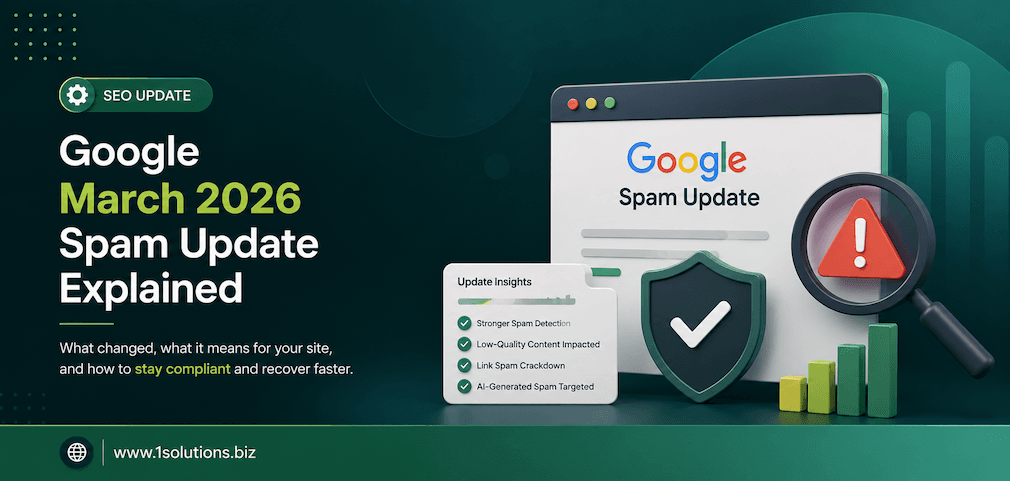
The Google March 2026 spam update was a broad, algorithmic enforcement action designed to reduce the visibility of websites that violate Google’s spam policies. Unlike core updates that refine how Google evaluates quality across the board, spam updates are specifically focused on sites using manipulative signals to game rankings artificially. This update placed heavy emphasis on three areas: large-scale content generation with no human oversight, manipulative link building practices, and deceptive cloaking techniques that show different content to users versus Googlebot.
According to Google’s own spam policies documentation, sites that engage in automatically generated content, link schemes, or sneaky redirects are subject to manual actions and algorithmic demotions. The March 2026 version of this enforcement was notably more aggressive than the September 2024 spam update, targeting not just the worst offenders but also mid-tier sites that had been coasting under the radar. If your site saw a sudden drop in impressions or clicks in the Google Search Console around March 2026, this update is likely a contributing factor worth investigating immediately.
2. How AI-Generated Spam Became the Primary Focus
Perhaps the most significant shift in the Google March 2026 spam update was its intensified focus on AI-generated content produced purely for search engine manipulation. As AI writing tools became more accessible through 2024 and 2025, a flood of low-quality, auto-generated articles appeared across the web. Many of these pages offered no original insight, no author expertise, and no genuine value to readers. Google had been signaling for years that it would crack down on this behavior, and March 2026 appears to be the most decisive enforcement yet.
Google’s documentation on its helpful content system makes clear that content must demonstrate Experience, Expertise, Authoritativeness, and Trustworthiness, commonly referred to as E-E-A-T. Sites that used AI tools to publish hundreds of thin articles with no editorial review, no author credentials, and no first-hand experience signals were among the hardest hit. It is worth noting that not all AI-assisted content was penalized. Sites that used AI responsibly, with human editing, fact-checking, and genuine expertise layered in, fared significantly better. If you are using AI tools as part of your content workflow, our guide on 10 AI SEO Tools to Outrank Your Competitors outlines how to use these platforms strategically without crossing into spam territory.
3. The Role of Link Schemes and Manipulative Backlinks
Link manipulation has always been a core spam concern for Google, but the March 2026 update brought renewed enforcement energy to this area. Specifically, Google targeted private blog networks (PBNs), paid link insertions disguised as editorial placements, and large-scale reciprocal link exchanges. Sites that had built their authority primarily through these artificial means saw their rankings decline significantly, in some cases losing 50 to 80 percent of their organic traffic within the first week of the rollout.
The update also refined how Google evaluates the context and relevance of inbound links. A link from a high-domain-authority site is no longer inherently valuable if the surrounding content is irrelevant, the page has no real traffic, or the anchor text appears over-optimized. According to a 2025 study by Ahrefs, over 66 percent of pages with zero backlinks also receive zero organic traffic, which underscores how critical legitimate link acquisition remains. However, the emphasis has shifted firmly toward earning links naturally through genuinely useful content, original research, and real brand mentions. If you want to build a clean and sustainable backlink profile, our detailed breakdown of how to build backlinks in competitive and low-competition niches is a practical starting point.
4. Which Industries and Niches Were Hit the Hardest
Not all industries felt the Google March 2026 spam update equally. Certain niches have historically attracted more spam activity due to their high commercial intent and relatively low barriers to entry for content creation. The sectors that appeared to experience the greatest volatility in the weeks following the rollout include health and wellness, finance and personal loans, legal services, affiliate marketing, and certain local service categories like home repair, pest control, and locksmith services.
In the YMYL (Your Money or Your Life) categories, which cover health, finance, and safety topics, Google’s expectations around E-E-A-T are particularly strict. Sites in these niches that lacked clear author credentials, cited no authoritative sources, and failed to demonstrate real-world expertise were especially vulnerable. A 2024 report by Semrush found that YMYL sites are two to three times more likely to experience significant volatility during algorithm updates compared to less sensitive niches. If your business operates in one of these verticals, ensuring your content reflects genuine expertise is not optional. It is a fundamental requirement for sustainable rankings in a post-March-2026 world.
5. Cloaking, Sneaky Redirects, and Site Reputation Abuse
The Google March 2026 spam update paid particular attention to two technical spam tactics that have been growing in sophistication: cloaking and site reputation abuse. Cloaking refers to the practice of showing different content to Googlebot versus human visitors, essentially deceiving the crawler about what a page actually contains. Sneaky redirects take users to a destination different from what the search result implied, often landing them on a low-quality page, an aggressive affiliate offer, or even a malicious site.
Site reputation abuse, a policy Google formalized in its 2024 spam update cycle, targets the practice of publishing third-party content on high-authority domains purely to piggyback on their credibility. For example, a respected news site or educational institution might host sponsored pages, coupon sections, or affiliate content with no real editorial oversight. The March 2026 update strengthened enforcement against this behavior, with several high-profile domains reportedly losing their ability to pass authority from sections that violated this policy. Google’s Search Central documentation specifically warns that even established, reputable sites can face partial or full demotion if they allow their domain reputation to be abused in this way.
6. How Google’s Spam Detection Has Evolved With AI
One of the most important contextual shifts behind the Google March 2026 spam update is the continued improvement of Google’s own AI-based detection systems. Google has been using machine learning to identify spam patterns since the early days of Panda and Penguin, but the sophistication of these systems has grown substantially. SpamBrain, Google’s AI-powered spam detection system first announced in 2021, has been iteratively improved to recognize not just individual spam signals but coordinated spam networks and patterns that span multiple domains.
By March 2026, SpamBrain was reportedly capable of identifying subtle signals that earlier systems missed entirely, including patterns in content structure, anchor text distribution across an entire link network, and behavioral signals that distinguish real user engagement from bot-driven traffic inflation. This evolution means that tactics which may have worked 12 or 24 months ago are now reliably caught and penalized. The gap between what human reviewers can manually assess and what Google’s automated systems can detect at scale has effectively closed. For businesses looking to remain competitive in this environment, focusing on genuinely helpful content and legitimate visibility strategies, including emerging approaches like LLM Optimization for ranking in AI search, is increasingly important.
7. The Relationship Between the March 2026 Update and Helpful Content
The Google March 2026 spam update did not exist in isolation. It arrived alongside continued refinement of Google’s helpful content system, which was first introduced in August 2022 and has since been absorbed into Google’s core ranking signals. The helpful content system is designed to reward content written primarily for people rather than search engines. The March 2026 spam update can be understood as the enforcement layer that acts against the most egregious violations of this principle.
Together, these systems create a two-pronged approach: the helpful content system elevates pages that demonstrate genuine expertise and user-first thinking, while the spam update suppresses pages that actively try to manipulate rankings through deceptive or low-quality practices. According to a 2025 analysis by Moz, sites that score highly on user engagement signals such as low bounce rate, high time on page, and strong click-through rates are significantly more resilient during algorithm updates. This suggests that investing in truly useful, well-researched content is the most durable long-term strategy available. If you are rethinking your content strategy for AI-influenced search, exploring the Generative Engine Optimization checklist for 2026 can help you align your approach with where search is heading.
8. How to Audit Your Site After the Google March 2026 Update
If your site experienced a significant traffic drop around the March 2026 rollout period, the first step is a thorough audit before making any changes. A reactive approach that involves deleting content or disavowing links without understanding the root cause can make things worse. Start with Google Search Console to identify which pages lost the most impressions and clicks, and look for patterns in the types of content or sections of your site that were affected most heavily.
Next, evaluate your content against Google’s quality guidelines. Ask whether each affected page demonstrates real expertise, provides sourced and accurate information, and serves a clear user need. Cross-reference your backlink profile using a tool like Ahrefs or Semrush to identify links that may appear manipulative, including links from irrelevant sites, networks of similar-looking domains, or pages with no real traffic. If you find a concentration of low-quality links pointing to specific pages, those pages may have been algorithmically demoted. On the technical side, check your site for any unintentional cloaking issues, redirect chains that land users somewhere unexpected, or third-party content sections that could be flagged as site reputation abuse. Document everything before making changes so you can track what works during recovery.
9. Recovery Strategies That Actually Work After a Spam Update
Recovery from a Google spam update is possible, but it requires a genuine commitment to quality rather than a superficial cleanup. Sites that recover successfully from these updates typically take a few consistent actions. First, they remove or significantly improve the content that caused the issue rather than simply tweaking titles or meta descriptions. If a batch of AI-generated articles was the problem, those pages need to either be rewritten with real expertise and sourced information or consolidated into fewer, stronger pieces.
Second, successful recovery usually involves cleaning up the backlink profile. If you have accumulated links that appear to be part of a scheme, use Google’s Disavow Tool carefully and selectively, focusing on links from clear PBNs or sites that exist only to pass link equity. Third, and perhaps most importantly, recovery requires patience. Google’s documentation on recovering from manual actions and algorithmic demotions notes that improvements may not be reflected in rankings until the next time the relevant system re-evaluates your site. That can take weeks or several months depending on the nature of the issue. According to a 2025 survey by Search Engine Land, sites that made substantive quality improvements after a spam update saw measurable ranking recovery within three to six months in the majority of cases. Maintaining clean, authoritative content practices going forward is also central to staying visible in an era where understanding how to improve website visibility in AI search engines is becoming just as important as traditional SEO.
10. What the Google March 2026 Update Means for Your Long-Term SEO Strategy
The Google March 2026 spam update is not a one-time event to weather and move on from. It represents the current state of a long-running evolution in how Google enforces its quality standards, and each iteration of these updates tends to be more sophisticated than the last. For businesses and marketers, the clearest takeaway is that any strategy built on shortcuts, manipulation, or volume over quality is now operating on borrowed time.
Long-term SEO success after March 2026 looks like building genuine topical authority through consistent, expert-led content. It means earning backlinks through real relationships, original research, and content worth citing. It means treating your website as a genuine resource for your audience rather than a vehicle for gaming rankings. It also means staying current with emerging search paradigms, including the growing role of AI-powered search engines and how they surface content. Exploring concepts like Agentic SEO and AAIO can give you a head start on understanding where search is evolving next. For businesses that need expert guidance navigating these changes without overhauling their entire digital presence, working with an experienced SEO partner who understands both technical foundations and content quality standards is one of the most practical steps available.
Key Takeaways From the Google March 2026 Spam Update
- AI-generated content with no human oversight or expertise signals was a primary target.
- Manipulative link building, including PBNs and paid insertions, faced stronger algorithmic enforcement.
- Site reputation abuse was penalized more aggressively than in previous spam updates.
- YMYL niches experienced the highest volatility during the rollout.
- Recovery requires genuine quality improvements, not superficial tweaks.
- Long-term SEO resilience depends on E-E-A-T, authentic link earning, and user-first content.
How 1Solutions Can Help You Navigate the March 2026 Spam Update
At 1Solutions, we have spent more than 15 years helping businesses across the US, Canada, and Australia build durable organic visibility that withstands algorithm changes. Our team understands both the technical foundations of SEO and the content quality standards that Google is increasingly prioritizing. Whether you are recovering from a recent ranking drop or want to audit your site proactively before the next update cycle, our team can provide the insight and strategy you need to move forward with confidence.
Frequently Asked Questions About the Google March 2026 Spam Update
What exactly is the Google March 2026 spam update?
The Google March 2026 spam update is an algorithmic enforcement action released by Google to reduce the rankings of websites that violate its spam policies. It targeted practices including AI-generated content with no human oversight, manipulative link building schemes, cloaking, sneaky redirects, and site reputation abuse. The update was part of Google’s ongoing effort to ensure that its search results surface genuinely helpful, trustworthy content rather than pages designed primarily to rank rather than serve users.
How do I know if my site was affected by the March 2026 spam update?
The clearest indicators are a sudden drop in organic traffic, impressions, or click-through rates visible in Google Search Console around the time of the rollout. You may also notice specific pages or site sections losing rankings while others remain stable. Cross-referencing your traffic data with the confirmed rollout dates in Google’s Search Status Dashboard can help confirm whether the update is the likely cause. A manual action notice in Search Console is a separate signal that indicates a human reviewer has flagged a specific violation.
Can a site recover from being penalized by the Google March 2026 spam update?
Yes, recovery is possible, but it requires genuine and substantive improvements to the issues that caused the demotion. This typically means improving or removing low-quality content, cleaning up manipulative backlinks using the Disavow Tool, and ensuring your site fully complies with Google’s spam policies going forward. According to a 2025 survey by Search Engine Land, most sites that made real quality improvements after a spam update saw measurable ranking recovery within three to six months. Superficial changes like adjusting meta titles or making minor wording edits rarely produce recovery results on their own.
Does using AI to write content automatically trigger a spam penalty?
No. Google’s stance is that AI-assisted content is not inherently spam. What matters is whether the content demonstrates E-E-A-T (Experience, Expertise, Authoritativeness, and Trustworthiness) and whether it was created primarily to help users rather than to manipulate search rankings. Content that is produced entirely by AI with no human editorial review, no factual verification, no author credentials, and no original insight is far more likely to be flagged. Using AI as a drafting or research aid while applying genuine human expertise in editing and review is a defensible and increasingly common practice.
How is the March 2026 spam update different from a Google core update?
Core updates are broad reassessments of how Google evaluates the overall quality and relevance of content across its entire index. They affect a wide range of sites and signals simultaneously. Spam updates, by contrast, are specifically targeted at sites that violate Google’s spam policies through deliberate manipulation. A spam update is less about refining how quality is measured and more about enforcing existing rules against bad-faith practices. Sites affected by a spam update need to address specific policy violations to recover, whereas sites affected by a core update need to holistically improve their overall content quality and user experience.