
Why Safe Link Building Still Matters in 2026
Link building remains one of the most powerful ranking factors in search engine optimization. But it also carries significant risk if done carelessly. Google’s algorithms, particularly the Penguin updates and the more recent spam-detection systems, are designed to identify and penalize unnatural link patterns. A single manual action or algorithmic penalty can wipe out months of SEO progress.
According to a 2023 study by Ahrefs, backlinks remain among the top three Google ranking factors, with pages ranking in position one earning nearly 3.8 times more backlinks than those in positions two through ten. The opportunity is real, but so is the downside of cutting corners.
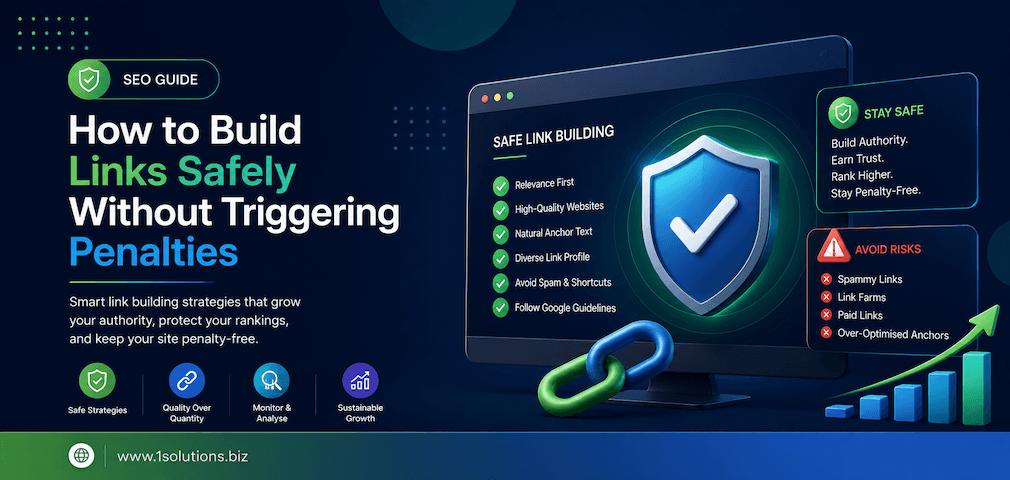
This guide walks you through a practical, step-by-step process for building links that strengthen your domain authority, improve rankings, and keep your site out of Google’s penalty zone.
Step 1: Understand What Triggers Google Penalties
Before you can build links safely, you need to understand exactly what Google considers a violation. Google’s link spam policies are clear: any link intended to manipulate PageRank or a site’s ranking in Google Search results may be considered link spam.
Common Link Building Practices That Trigger Penalties
- Buying or selling links that pass PageRank, including paying for placements disguised as editorial content
- Excessive link exchanges where two or more sites agree to link to each other purely for SEO value
- Private blog networks (PBNs) where a person or agency controls multiple sites to funnel link equity
- Over-optimized anchor text with the same exact-match keyword repeated across dozens of links
- Low-quality directory submissions to irrelevant or spammy directories with no editorial standards
- Comment spam and forum profile links built at scale with no genuine participation
- Automated link building tools that generate hundreds of links from unrelated or thin sites
Penalties come in two forms: manual actions applied by a Google reviewer, and algorithmic adjustments from systems like Penguin. Both can result in significant ranking drops. If your site has already experienced one, our guide on Google Penalty Recovery Using Smart Link Building Tactics covers the recovery process in detail.
Step 2: Audit Your Existing Backlink Profile
Before building new links, take stock of what you already have. A messy or toxic backlink profile can undermine any new effort you make.
How to Conduct a Backlink Audit
- Use a reputable tool. Ahrefs, SEMrush, or Moz can pull a comprehensive list of your current backlinks, including domain authority scores, anchor text distribution, and spam indicators.
- Identify toxic links. Look for links from sites with very low domain ratings, unrelated industries, foreign-language spam sites, or pages flagged as adult or gambling content.
- Check anchor text diversity. If more than 20 to 30 percent of your links use exact-match commercial anchor text, that is a warning sign.
- Review link velocity. A sudden spike in backlinks is a red flag unless it corresponds to a viral content piece or major PR event.
- Disavow where necessary. Use Google’s Disavow Tool to tell Google to ignore links you cannot get removed manually. Use this tool cautiously, as disavowing legitimate links can hurt your rankings.
According to a 2024 report by SEMrush, 94 percent of content online gets zero backlinks. That means most sites are starting from a very modest baseline, which makes building the right links from the start even more important.
Step 3: Define a White-Hat Link Building Strategy
A white-hat strategy focuses on earning links through genuine value, rather than manipulating systems. This takes more time, but the results are durable and penalty-proof.
Core Principles of White-Hat Link Building
- Relevance first: Links should come from sites in your industry or related verticals. A health site linking to a plumbing company offers little value and looks suspicious.
- Editorial independence: The best links are ones where an editor or writer chose to link to you because your content was useful, not because you paid or pressured them.
- Natural anchor text variety: A healthy profile includes branded anchors, naked URLs, partial-match keywords, and generic phrases like “click here” or “this resource.”
- Sustainable pace: Building five to ten strong links per month is far safer and more effective than acquiring 200 weak links in a week.
For a broader view of which methods are delivering results right now, see our post on 15 Link Building Methods That Continue to Work in 2026.
Step 4: Create Content That Earns Links Naturally
The most reliable way to attract high-quality backlinks is to publish content that other sites want to reference. This is not passive; it requires intentional content design.
Content Formats That Attract Backlinks
- Original research and data studies: When you publish proprietary data, other writers cite it as a source. A single data study can generate dozens of natural editorial links.
- Comprehensive how-to guides: Long-form, thorough guides become reference resources in your industry. Writers link to them instead of explaining the concept themselves.
- Infographics and visual assets: Visual content is frequently embedded by other publishers, and each embed can include a backlink to your site.
- Free tools and calculators: Utility-based content earns consistent links because people share genuinely useful tools with their audiences.
- Expert roundups and interviews: When you feature industry voices, those experts often share and link to the content from their own platforms.
A 2023 study by Backlinko found that long-form content of 3,000 words or more earns an average of 77 percent more backlinks than shorter articles. Depth and genuine usefulness are your strongest link magnets.
Step 5: Use Guest Posting the Right Way
Guest posting remains a legitimate and effective link building tactic when done correctly. The key is focusing on genuine editorial contribution rather than using it purely as a link vehicle.
Safe Guest Posting Practices
- Target relevant, reputable publications. Aim for sites with real audiences, consistent editorial standards, and topical relevance to your industry.
- Pitch unique, valuable content ideas. Editors reject generic pitches immediately. Research the publication’s existing content and propose something that fills a gap.
- Avoid over-optimized anchor text. Use your brand name or natural phrases as your anchor. Forcing exact-match keywords into guest post links is a known spam signal.
- Limit links back to your site. One or two contextual links in a well-written guest post is normal. Five or six links pointing back to your money pages looks manipulative.
- Avoid mass guest post networks. Sites that openly advertise “guest post placements” as a paid service often have thin content, low engagement, and Google-flagged profiles.
For a detailed walkthrough of identifying and securing quality placements, read our guide on How to Secure High-Quality Guest Post Placements.
Step 6: Build Links Through Digital PR and Outreach
Digital PR is one of the most scalable white-hat link building methods available. It combines the principles of traditional public relations with SEO strategy to earn links from high-authority news sites, industry publications, and blogs.
Outreach Tactics That Work Without Triggering Penalties
- HARO and journalist request platforms: Services like Help a Reporter Out (now Connectively) connect journalists with expert sources. A quoted expert typically earns a backlink from a high-authority publication.
- Broken link building: Find broken links on authoritative sites in your niche and offer your content as a replacement. This is a win for both parties and produces natural, editorial links.
- Resource page outreach: Many sites maintain curated “resources” or “tools” pages. If your content fits, a polite and personalized outreach email can earn a placement.
- Unlinked brand mention outreach: Use tools like Ahrefs or Google Alerts to find mentions of your brand that do not include a link. A short email asking the author to add a link often converts well.
- Competitor gap analysis: Identify sites linking to your competitors but not to you. If your content is equally strong or stronger, you have a valid reason to reach out.
For a data-driven approach to identifying outreach targets, see our post on Competitor Backlink Analysis: How to Find and Replicate Links.
Step 7: Diversify Your Link Profile Intentionally
A natural backlink profile looks varied. If all your links come from the same type of source or use identical anchor text, that pattern signals manipulation regardless of whether any individual link is technically “white-hat.”
How to Maintain a Diverse, Natural-Looking Profile
- Mix link sources: editorial links, directory listings, social profiles, podcasts, and forum mentions all contribute to a natural profile
- Vary anchor text: use branded terms, partial-match phrases, topical keywords, and generic anchors in roughly natural proportions
- Build links to multiple pages: linking only to your homepage looks unnatural; distribute link equity across service pages, blog posts, and landing pages
- Earn links at a consistent pace: a link velocity that gradually grows over time looks organic; sudden spikes without an obvious cause attract algorithmic scrutiny
- Include nofollow and sponsored links: a profile with only dofollow links looks engineered; natural profiles include a mix of link types
You can also amplify the impact of your existing links through smart internal linking. Our guide on How to Use Internal Links to Boost Backlink Impact explains how to route link equity to the pages that need it most.
Step 8: Monitor, Measure, and Adjust
Safe link building is not a one-time effort. It requires ongoing monitoring to catch problems early and make sure your strategy is producing results.
Key Metrics to Track
- Domain Rating or Domain Authority: Track overall authority growth over three to six month periods. Short-term fluctuations are normal.
- Referring domain count: The number of unique domains linking to your site is more meaningful than raw link count.
- Anchor text distribution: Review this quarterly to catch any drift toward over-optimization.
- Google Search Console manual actions: Check this section monthly. Any manual action notice requires immediate attention.
- Organic traffic and keyword rankings: Ultimately, the purpose of link building is to improve rankings and traffic. Track these alongside link metrics to verify that your efforts are translating into results.
If you notice your strategy is not delivering results or has caused a rankings drop, our guide on How to Fix a Failed Link Building Strategy provides a structured recovery framework.
Red Flags to Watch Out For in Link Building Services
If you are working with an external agency or freelancer for link building, there are several warning signs that should prompt serious concern.
- Promises of hundreds of links within days at very low prices
- Refusal to disclose the sites where your links will be placed
- Lack of relevance between offered placements and your industry
- Links delivered through private blog networks or content farms
- No reporting on anchor text strategy or link quality metrics
- Use of automated tools for mass outreach with templated, impersonal messages
Reputable agencies with a proven track record will be transparent about their methods, willing to share placement examples, and focused on quality over volume. At 1Solutions, with over 15 years in web development and digital marketing, our approach to link building is always grounded in Google’s quality guidelines.
Conclusion
Effective link building is not about finding shortcuts. It is about building genuine authority through content quality, strategic outreach, and consistent effort over time. The sites that dominate search results in competitive niches are not the ones with the most links. They are the ones with the most relevant, trusted, and editorially earned links.
By auditing your existing profile, choosing white-hat tactics, diversifying your sources, and monitoring results consistently, you can build a backlink strategy that delivers long-term ranking improvements without putting your site at risk of penalties.
If your current strategy needs a reset or you are starting from scratch, the steps in this guide give you a solid, penalty-safe foundation to build from.
Frequently Asked Questions
What is the safest type of link building?
Editorial link building through original content, digital PR, and genuine outreach is the safest approach. These links are earned based on merit rather than paid placement or manipulation, which aligns directly with Google’s quality guidelines.
How many links should I build per month to stay safe?
There is no universal number, but a steady pace of five to fifteen high-quality links per month is generally considered safe and sustainable for most small to mid-sized businesses. Sudden spikes in link velocity without a clear reason can attract algorithmic scrutiny.
Can guest posting get my site penalized?
Guest posting itself is not penalized. However, large-scale guest posting purely for link acquisition, using over-optimized anchor text, or publishing on low-quality sites that exist only for link placement can trigger penalties. Focus on quality publications and genuine editorial value.
What should I do if I receive a manual penalty from Google?
Start by reviewing the manual action notice in Google Search Console for details. Then audit your backlink profile, remove or disavow toxic links, and submit a reconsideration request to Google explaining the steps you took. Recovery timelines typically range from a few weeks to several months.
Does the number of backlinks matter more than their quality?
Quality consistently outweighs quantity in modern SEO. One link from a high-authority, topically relevant site can carry more weight than hundreds of links from low-quality or irrelevant domains. Focusing on fewer, better links is the safer and more effective long-term strategy.