
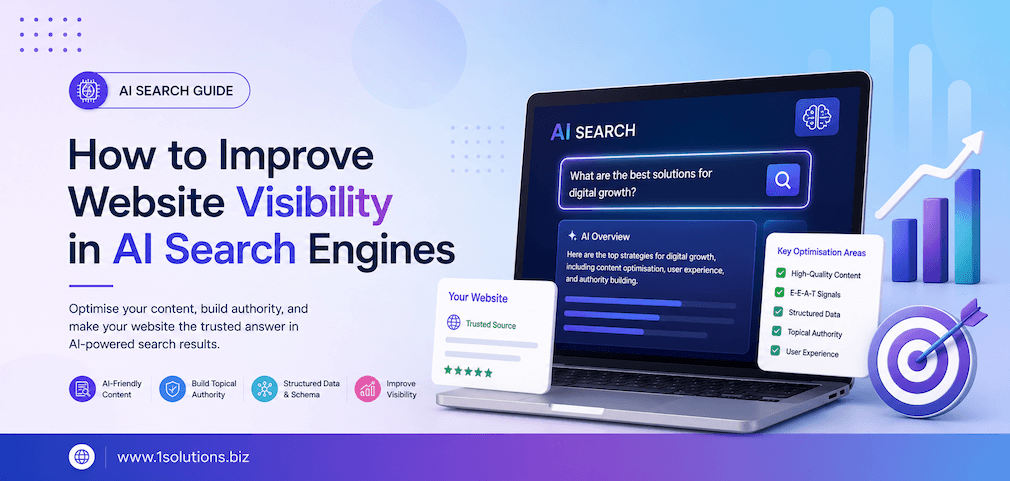
Why AI Optimization Is Now a Business Priority
AI optimization is no longer a futuristic concept reserved for tech teams. It is an active business strategy that determines whether your website shows up when potential customers ask questions to ChatGPT, Google Gemini, Perplexity, or Microsoft Copilot. According to a report by BrightEdge, 68% of online experiences now begin with a search engine or AI assistant, and that number is shifting rapidly toward AI-generated answers. If your site is not structured to be understood and cited by these systems, you are leaving significant traffic on the table.
The good news is that improving your visibility in AI search engines does not require rebuilding your entire site. It requires a focused, methodical approach to how your content is structured, how authoritative your brand appears, and how clearly you communicate your expertise. This guide walks you through 10 proven steps to get there.
10 Steps to Improve Your Website Visibility in AI Search Engines
1. Understand How AI Search Engines Discover and Cite Content
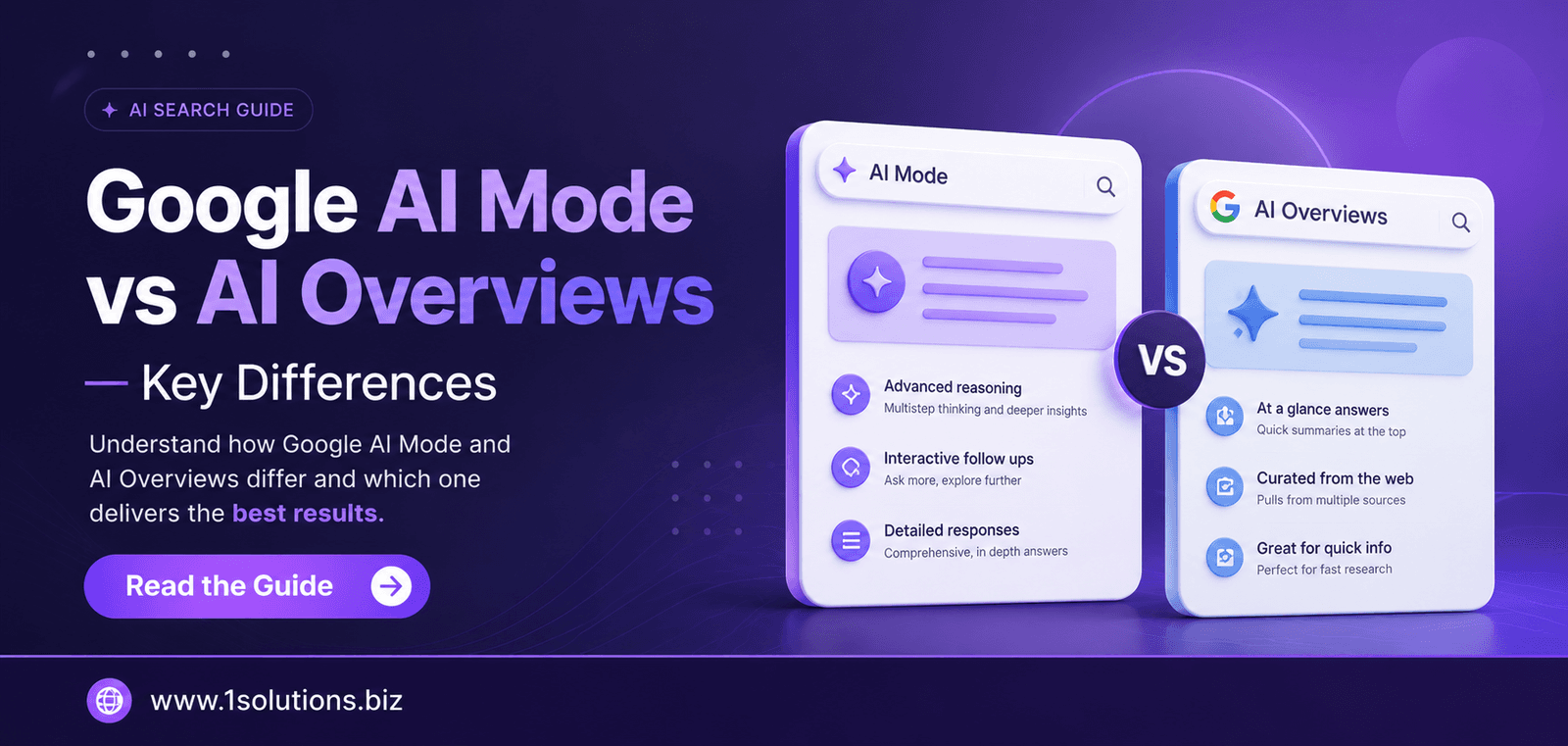
Before you optimize, you need to understand the mechanism. AI search engines like Perplexity and Google’s AI Overviews do not rank pages the way traditional search does. Instead, they pull information from sources they consider authoritative, well-structured, and contextually relevant to a query. According to Semrush’s State of Search report, pages that appear in AI-generated answers tend to rank in the top 10 of traditional search results as well, meaning strong foundational SEO is still the entry point.
The key difference is that AI systems prioritize direct, factual, clearly attributed information. They look for content that answers a specific question completely, uses clear language, and is backed by credible sources. Start by auditing your existing content to identify gaps where you are not providing clear, concise answers to the questions your audience actually asks.
2. Build Topical Authority With Structured Content
AI systems favor websites that demonstrate deep expertise in a specific subject area. This is called topical authority, and it is one of the most powerful signals you can send to both traditional search engines and AI crawlers. To build it, you need clusters of content that cover a topic comprehensively, from foundational overviews to specific subtopics and frequently asked questions.
For example, if your business operates in the SEO or digital marketing space, publishing interconnected content around keyword research, technical SEO, link building, and content strategy signals to AI systems that your site is a reliable source on those subjects. Refer to the Generative Engine Optimization (GEO) Checklist 2026 for a structured framework you can follow to organize your content for AI visibility.
Use internal linking to reinforce these topic clusters. When you use internal links to boost backlink impact, you are also signaling to AI crawlers which pages are most important within your content ecosystem.
3. Optimize for Answer Engine Optimization (AEO)
Answer Engine Optimization is the practice of structuring your content so that it can be directly pulled as an answer by AI and voice search systems. This goes beyond traditional keyword placement. You need to anticipate the exact questions your audience is typing or speaking and write direct, authoritative answers to each one.
According to Moz’s 2023 Search Ranking Factors report, featured snippets and position-zero results are the primary source material for AI-generated answers. If you can earn those positions, your content is far more likely to be cited by systems like Google Gemini and Bing Copilot. Key tactics include writing FAQ sections on every major page, using question-based H2 and H3 headings, and providing concise paragraph answers immediately after each question.
For a full breakdown of how to rank in this format, read our detailed guide on how to rank in Answer Engine Optimization AEO. It covers the structural and content-based elements you need to prioritize right now.
4. Implement Schema Markup Strategically
Schema markup is structured data that helps AI systems and search engines understand the context of your content. It is one of the most underused tools in digital marketing, yet it directly improves how AI engines interpret and categorize your pages. Common schema types that improve AI visibility include FAQ schema, HowTo schema, Article schema, Organization schema, and Review schema.
When you add FAQ schema to a page, you are essentially handing AI systems a pre-formatted answer they can pull directly into a response. HowTo schema works similarly for instructional content. Organization schema helps AI understand who you are, what you do, and where you operate, which contributes to brand trust signals that influence citation frequency.
If you are unsure where to start, begin with a professional SEO audit to identify which pages are missing schema and which ones would benefit most from structured data implementation.
5. Prioritize E-E-A-T Signals Across Your Site
Google’s E-E-A-T framework, which stands for Experience, Expertise, Authoritativeness, and Trustworthiness, has become a central evaluation criterion for AI-driven systems. According to Google’s Search Quality Evaluator Guidelines (updated 2024), pages that demonstrate these qualities are consistently ranked higher and cited more frequently in AI-generated responses.
Practical ways to strengthen E-E-A-T signals include adding detailed author bios with credentials and LinkedIn profiles, citing reputable external sources within your content, earning backlinks from authoritative industry publications, displaying trust signals like certifications and client reviews, and maintaining accurate and consistent NAP (name, address, phone) data across all platforms.
For businesses in competitive niches, earning high-quality backlinks is a critical component of building this authority. Learn more about how to build backlinks in competitive and low-competition niches to strengthen your domain authority and AI citation potential.
6. Write in a Conversational, Question-First Format
AI search engines are trained on human language. They understand conversational phrasing, long-tail queries, and natural sentence structures far better than they process keyword-stuffed copy. This means your content needs to shift from traditional keyword-dense writing toward a more natural, question-driven format that mirrors how real people speak and search.
Start each major section with the question it answers. Write clear, direct responses in plain language. Avoid jargon where possible, or define it immediately when you use it. Use bullet points and numbered lists to break down complex information into digestible chunks. These formatting choices make it easier for AI systems to extract and present your content as an answer.
This approach also aligns with voice search optimization, which matters because a growing percentage of AI queries come through voice-activated devices. According to Statista’s 2024 Digital Trends report, there are over 8.4 billion voice assistant devices in use globally, each of which relies on AI to generate spoken answers from web content.
7. Strengthen Your Technical SEO Foundation
AI crawlers, like traditional search bots, depend on clean technical infrastructure to access and index your content. A slow-loading site, broken links, poor mobile performance, or missing sitemaps can prevent AI systems from discovering your pages entirely. Technical SEO is the foundation on which all other AI optimization efforts rest.
Core technical priorities include improving Core Web Vitals scores, ensuring HTTPS security, creating and submitting an XML sitemap, fixing crawl errors and redirect chains, optimizing image alt text for context, and making sure your robots.txt file is not blocking important pages. A comprehensive technical audit will surface the specific issues holding your site back.
If you want expert support identifying and resolving these issues, explore 1Solutions’ SEO audit services for a full technical review of your site’s current performance and AI-readiness.
8. Build a Strong Brand Presence Across the Web
AI systems cross-reference multiple data sources when deciding which brands to cite and trust. Your website alone is not enough. You need a consistent, authoritative brand presence across directories, social media platforms, industry publications, and review sites. The more places your brand appears with consistent information, the more trust signals AI systems collect about your authority.
This includes claiming and optimizing your Google Business Profile, maintaining active profiles on major social platforms, earning mentions and links from industry publications, and regularly publishing guest posts on authoritative sites. For tips on getting placement in quality publications, see our guide on how to secure high-quality guest post placements.
Brand mentions, even without links, are being increasingly recognized as authority signals by AI systems. The goal is to make your brand name synonymous with your area of expertise across the web.
9. Use AI Tools to Research and Optimize Your Content
You can fight fire with fire. AI tools are available right now that help you understand how AI search engines are interpreting queries in your niche, what kind of content they are pulling, and where your pages fall short. Tools like ChatGPT, Perplexity, and specialized SEO platforms can help you identify content gaps, refine your FAQ structures, and test how well your current pages answer common queries.
Beyond content research, AI tools are transforming link building outreach as well. If you want to explore how AI can accelerate your off-page strategy, check out our guide to top AI tools for link building and outreach in 2026. Incorporating these tools into your workflow lets you move faster and make smarter decisions about where to focus your optimization efforts.
10. Monitor AI Visibility and Adapt Continuously
AI search is evolving rapidly. What works today may shift as systems like Google Gemini, ChatGPT search, and Perplexity update their models and ranking signals. Monitoring your visibility in AI-generated results needs to become a regular part of your SEO reporting, not a one-time project.
Track which of your pages are being cited in AI answers by searching for your key topics and noting when your content appears. Use tools like Google Search Console to monitor impressions and click patterns, and watch for shifts after major algorithm updates. The Google May 2026 Core Update is a good example of the kind of change that directly impacts AI-powered search results and requires prompt strategic review.
The businesses that build consistent monitoring habits and act quickly on new data will maintain their competitive edge as AI search matures.
Why Professional SEO Support Accelerates Results
Executing all ten of these steps simultaneously while running a business is a significant challenge. That is where working with an experienced digital marketing partner makes a measurable difference. At 1Solutions, we have been helping businesses across the US, Canada, and Australia improve their search visibility for over 15 years, and AI optimization is now a core part of every strategy we build.
Our team handles everything from technical audits to content restructuring, schema implementation, and authority building, all aligned with the latest AI search requirements. If you are ready to get serious about AI visibility, explore our full range of SEO services and see how we can build a custom strategy for your business.
Key Takeaways
- AI optimization requires a combination of technical SEO, content strategy, and authority building.
- Schema markup, E-E-A-T signals, and answer-focused content are the highest-priority elements for AI visibility.
- Consistent brand presence across the web reinforces trust signals that AI systems use when deciding what to cite.
- Continuous monitoring and adaptation are essential as AI search evolves quickly.
- Professional SEO support can compress the time it takes to see measurable improvements.
Frequently Asked Questions
What is AI optimization and how is it different from traditional SEO?
AI optimization is the process of structuring your website and content so that AI-powered search engines like Google Gemini, ChatGPT, and Perplexity can understand, trust, and cite your pages in generated answers. Traditional SEO focuses on ranking in a list of blue links, while AI optimization focuses on being selected as the source for a direct, conversational answer. The two approaches overlap significantly but AI optimization places greater emphasis on content clarity, schema markup, and brand authority signals.
How long does it take to see results from AI optimization?
Results vary depending on your starting point, competition level, and how aggressively you implement changes. Some technical improvements like adding schema markup can have an impact within weeks. Building topical authority and earning the backlinks needed to appear in AI citations typically takes three to six months of consistent effort. Businesses with existing strong SEO foundations often see faster results because they already meet the baseline requirements AI systems look for.
Do I need to create new content or can I optimize existing pages?
You can do both, and a combination is usually the most efficient approach. Start by auditing your existing high-traffic pages and restructuring them to include FAQ sections, direct answer paragraphs, and appropriate schema markup. Then identify content gaps where AI systems are currently citing competitors and create new pages to fill those gaps. A professional SEO audit will help you prioritize which pages to tackle first for the fastest impact.
Is AI optimization relevant for small and medium-sized businesses?
Yes, and in some ways it is more important for smaller businesses. Large brands already have the domain authority and brand recognition to appear in AI answers. For small and medium-sized businesses, AI optimization is one of the most accessible ways to compete because it rewards relevance, specificity, and content quality over raw domain power. A well-structured local business blog that answers hyper-specific questions can outperform a large competitor in AI-generated results for niche queries.
What role does social media play in AI optimization?
Social media contributes to AI optimization primarily through brand authority and content discovery signals. When your content is shared and discussed across platforms, it generates the kind of third-party validation that AI systems factor into their trust assessments. Maintaining active, consistent profiles on major platforms and earning engagement around your content strengthens your overall digital footprint. While social links are not direct ranking factors, the brand signals they generate do influence how AI systems perceive your authority in a given subject area.