
Why Internal Linking Is the Missing Piece in Most Link Building Strategies
Most SEO conversations treat backlinks and internal links as two separate topics. They are not. If you want to truly use internal links to boost backlink impact, you need to understand how these two systems work together as a single, interconnected authority engine. A powerful backlink landing on a page that is poorly connected to the rest of your site is like pouring water into a cracked container. You earn the link, but much of its value leaks away before it reaches the pages that actually need it.
This guide breaks down exactly 10 actionable strategies to fix that. Whether you are managing a large ecommerce site or a small business blog, the principles here apply directly to how Google crawls, evaluates, and ranks your content.
Internal links distribute the authority that backlinks bring into your site. By strategically connecting your pages, you ensure link equity reaches your most important content. This guide covers 10 specific techniques to make every backlink you earn work harder across your entire website.
⚡ Key Takeaways
- Backlinks deliver authority to a landing page, but internal links distribute that authority sitewide.
- Pages with strong internal link profiles rank higher even when their direct backlink count is lower.
- Anchor text in internal links sends relevance signals to Google, not just equity signals.
- Orphan pages and siloed content waste a significant portion of your earned backlink value.
- A deliberate hub-and-spoke internal linking model maximizes the impact of every link you build.
- Regular internal link audits are just as important as regular backlink audits.
- Internal linking strategy should be built before a link building campaign, not after.
1. Understand How Link Equity Flows Through Your Site
Before you can use internal links to boost backlink impact, you need a working model of how link equity actually moves. When an external site links to one of your pages, Google assigns that page a portion of the linking site’s authority. This is often called PageRank, link juice, or link equity. Critically, that equity does not stay locked on the landing page. It flows outward through every internal link on that page to connected pages throughout your site.
Think of your website as a network of pipes. Backlinks are the water pressure entering the system. Internal links are the pipes that direct where that pressure travels. A page with 50 backlinks but no outgoing internal links keeps all that equity bottled up locally. Meanwhile, a well-connected hub page with 10 backlinks can push substantial equity to 20 other pages through smart internal linking.
According to a 2023 study by Ahrefs, pages that receive internal links from high-authority pages on the same domain rank significantly better than pages relying solely on external links. This confirms that internal structure is not a secondary concern, it is a primary ranking factor. Understanding this flow model is step one of any serious SEO strategy. If you are running a comprehensive SEO campaign, mapping your equity flow should happen before you build a single new backlink.
2. Identify Your Top Link-Earning Pages First
Not every page on your site earns backlinks equally. Blog posts, data studies, tools, and long-form guides tend to attract the most external links. These are your link magnets, and they are the starting point for any serious internal linking strategy. Once you know which pages pull in the most equity from external sources, you can build an internal linking plan that radiates that equity toward your commercial or priority pages.
Use Google Search Console, Ahrefs, or Semrush to export a list of your most-linked pages. Sort them by referring domains, not raw backlink count, since a thousand links from one domain count far less than links from a hundred different domains. Once you have your top 10 to 15 link-earning pages, audit their outgoing internal links. Ask: do these pages link to my product pages, service pages, or conversion-focused content? If the answer is no, you have a direct opportunity sitting unused.
This is particularly relevant if you have invested in structured link building packages to grow your backlink profile. Those earned links are only as effective as the internal structure beneath them. Identifying link-earning pages and optimizing their outgoing links is one of the highest-leverage actions in all of SEO.
💡 Pro Tip: Sort your pages by referring domains in any backlink tool, then check each top page for outgoing internal links to your priority service or product pages. If those links are missing, add them within the body content, not just the sidebar or footer.
3. Build a Hub-and-Spoke Architecture Around Your Backlinked Pages
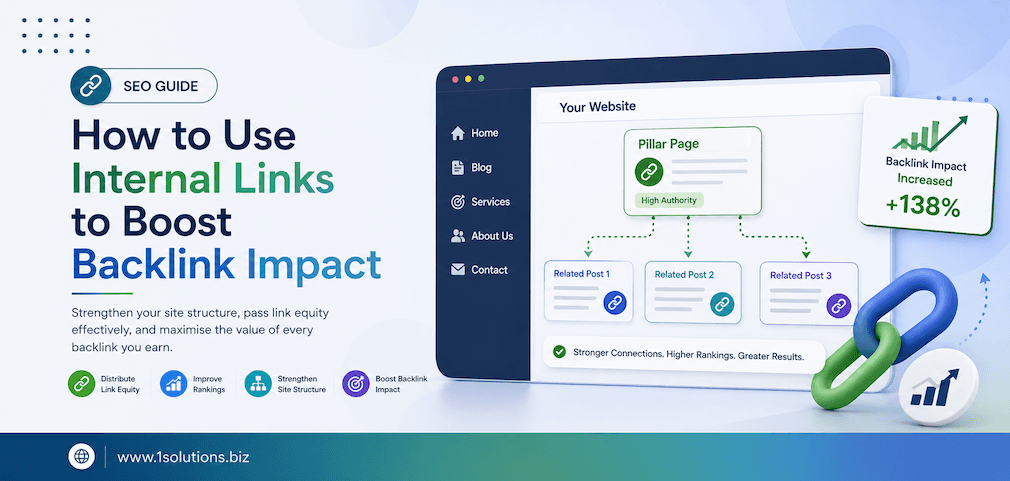
The hub-and-spoke model is one of the most effective site architecture strategies for distributing backlink equity. In this structure, a central hub page covers a broad topic and links out to multiple spoke pages that go deep on subtopics. The hub earns backlinks because it is comprehensive and shareable. The spokes benefit from that equity through strong internal links pointing from the hub to each spoke.
For example, a hub page on link building might link to spoke pages covering guest posting, competitor backlink analysis, anchor text strategy, and internal linking. Each spoke page receives equity from the hub. If someone links to the hub from an external site, that equity distributes to all the spokes connected to it. You can extend this by having spokes link back to the hub and to each other where relevant, creating a dense and well-connected cluster.
Our own blog demonstrates this approach. You can see it in action in resources like how to build backlinks in competitive and low-competition niches and 15 link building methods that continue to work, both of which function as hub-level resources that distribute authority to related content across the site.
4. Use Descriptive, Keyword-Rich Anchor Text in Internal Links
Anchor text does two jobs in internal linking. First, it tells Google what the destination page is about, reinforcing its topical relevance. Second, it tells users what to expect when they click, which improves the user experience. Both matter for rankings. When you use generic anchor text like “click here” or “read more,” you waste a relevance signal that Google is actively looking for.
For internal links, you have full control over anchor text, which is an advantage you do not always have with external links. Use that control deliberately. If you are linking to a page targeting the phrase “ecommerce SEO strategy,” your anchor text should reflect that phrase naturally within the sentence. Avoid over-optimization, where every internal link uses the exact same anchor text to the same page, as this can look unnatural. Instead, vary the phrasing while keeping the core topic clear.
A Moz study from 2022 confirmed that internal link anchor text is one of the strongest on-page signals Google uses to understand page relevance. Pairing this with the equity flow from your backlinked hub pages creates a double reinforcement of topical authority. For sites built on WordPress, this is straightforward to implement. If your site architecture needs attention first, working with a skilled WordPress development team can help you restructure content and navigation for optimal linking.
5. Rescue Orphan Pages by Connecting Them to Authority Nodes
An orphan page is any page on your site that receives no internal links from other pages. These pages are essentially invisible to Google’s crawler in practical terms, even if they are indexed. More critically, they receive zero equity distribution from any of your backlinked pages. If you have worked hard to earn quality backlinks and some of your best content is sitting as orphan pages, you are leaving real ranking potential on the table.
According to a 2024 Screaming Frog analysis of enterprise websites, approximately 20 to 30 percent of all crawled pages qualify as orphan pages. That is a staggering proportion of content receiving no internal link support. Fixing this requires an audit, connecting orphan pages to relevant hub pages or at minimum to your site’s navigation structure. Prioritize orphan pages that have existing backlinks pointing to them, since these are the highest-value quick wins.
If you are struggling with why certain pages fail to gain traction in search, understanding why Google is not indexing your pages is a good companion resource. Orphan status is one of the most common reasons pages get skipped during crawls, and it compounds backlink waste significantly.
💡 Pro Tip: Run a crawl with Screaming Frog or Sitebulb and filter for pages with zero inlinks. Cross-reference that list with your backlink data. Any orphan page that already has backlinks pointing to it should be your first priority for internal link repair.
6. Add Internal Links From High-Traffic Pages, Not Just High-Authority Ones
A common mistake is to focus exclusively on which pages have the most backlinks when deciding where to add internal links. Traffic is an equally important signal. Pages that receive high organic traffic are being actively crawled and evaluated by Google on a regular basis. Adding internal links from high-traffic pages to your priority content creates both equity flow and user engagement opportunities.
High-traffic pages are also more likely to generate user clicks on internal links, which can send behavioral signals to Google that the destination page is relevant and valuable. This is a more nuanced benefit than pure PageRank flow, but it is real. A page that earns consistent organic traffic, even without exceptional backlinks, can still serve as a powerful internal link source because of its crawl frequency and engagement signals.
Consider your blog posts that consistently rank on page one for informational keywords. These pages may not have the highest domain authority contributions, but they receive regular visits and crawl attention. Inserting contextual internal links from these pages toward your service or product pages creates a steady stream of equity and engagement flow. This strategy pairs well with the approach outlined in boosting SEO efforts with page content analysis, which helps you identify which content is already performing well enough to serve as a link source.
7. Audit and Update Internal Links After Every New Backlink Acquisition
Most teams build internal links once when publishing a new page and then never revisit them. This static approach misses the dynamic nature of link equity. Every time you earn a new backlink to any page on your site, the equity landscape of your entire website shifts slightly. The page that just earned a new link from a high-authority domain now has more equity to distribute, making its outgoing internal links more valuable than they were before.
Build a process where every new backlink acquisition triggers a quick internal link audit for that landing page. Ask whether the page links to your top commercial or conversion pages. Ask whether the anchor text on those links is optimized. Ask whether there are any newer pages published since the last audit that should receive a link from this page. This ongoing maintenance approach ensures your internal link structure keeps pace with your growing backlink profile.
If you are running active link building campaigns, whether through guest posting or other outreach strategies, connecting your campaigns to internal link reviews is essential. Resources like how to secure high-quality guest post placements and how to fix a failed link building strategy offer useful context for improving the full lifecycle of your link acquisition work.
8. Leverage Breadcrumbs and Navigational Links Strategically
Many SEO guides focus exclusively on contextual, in-body internal links. These are important, but navigational internal links including breadcrumbs, category links, and site-wide navigation also contribute to equity distribution. Google confirmed in its documentation that breadcrumb links are crawled and factored into site structure understanding. For large sites with deep content hierarchies, breadcrumbs create a direct equity path from top-level pages down to deeply nested pages.
The strategic value here is that navigational links are consistent across many pages. A breadcrumb trail that appears on 200 category pages creates 200 internal links to a parent page, each one contributing incrementally to that parent’s internal authority. For ecommerce sites especially, this is a powerful structural advantage. Category pages with many product pages beneath them receive consistent internal link support from every product page, reinforcing their topical authority with Google.
The trade-off to acknowledge is that navigational links carry less weight per link than contextual body links, since they appear on many pages and Google’s algorithms discount repetitive structural links to some degree. Use both types together rather than relying on navigation alone. For ecommerce sites looking to amplify this effect, our ecommerce SEO packages include internal link architecture as part of a comprehensive optimization strategy.
| Internal Link Type | Equity Weight | Best Use Case | Scalability |
|---|---|---|---|
| Contextual body links | High | Connecting related blog posts to service pages | Medium, requires manual placement |
| Breadcrumb links | Medium | Deep site hierarchies, ecommerce categories | High, automatic with proper setup |
| Navigation menu links | Low to Medium | Top-level priority pages | High, sitewide consistency |
| Related posts modules | Low to Medium | Increasing crawl depth on blogs | High, often automated |
| Footer links | Low | Legal pages, contact, key service pages | High, sitewide but diminishing returns |
9. Use Internal Links to Recover Value From Penalized or Weak External Links
Not all backlinks are good backlinks. If your site has received a Google penalty or if you have a segment of low-quality external links pointing to certain pages, internal linking can help you manage the situation strategically. Rather than having penalized or weak pages serve as a dead end in your link graph, you can use noindex directives or disavow files to neutralize the harm while ensuring any residual equity from legitimate links on those pages still flows through to your better content.
More proactively, if you have pages that rank poorly despite having backlinks, adding strong internal links from authoritative pages on your site can supplement that page’s authority enough to move the needle. According to Search Engine Journal’s 2023 ranking factor analysis, pages receiving internal links from high-authority pages within the same site consistently outperformed pages relying on external links alone for competitive queries.
For sites recovering from past penalties, smart internal linking is part of the recovery toolkit. You can learn more about the full recovery process in our guide on Google penalty recovery using smart link building tactics. Combining penalty recovery with improved internal structure gives your site the best foundation for sustainable ranking improvement.
💡 Warning: Do not use internal links to artificially inflate the ranking of a page that has thin or low-quality content. Internal linking amplifies what is already there. If the content is weak, improving the link structure will have limited effect and could waste equity on a page that will not convert visitors anyway.
10. Monitor Internal Link Performance and Iterate Regularly
Internal linking is not a one-time setup task. It is an ongoing practice that requires measurement and iteration. After implementing any of the strategies in this list, you need a way to track whether your changes are producing results. The most direct signals to watch are: ranking movement for pages you have added internal links to, changes in crawl frequency from Google Search Console, and changes in organic traffic to previously underperforming pages.
Set up a monthly or quarterly internal link audit using tools like Screaming Frog, Ahrefs Site Audit, or Semrush’s Site Audit module. Look for pages that have gained new backlinks and ensure their internal linking is updated. Look for newly published pages that have not yet received internal links from your established content. Look for broken internal links, which can interrupt equity flow entirely. According to HubSpot’s 2023 SEO benchmark report, websites that conduct regular technical SEO audits, including internal link reviews, achieve 30 percent faster ranking improvements than those that audit annually or less frequently.
Combining this monitoring habit with a broader understanding of how Google’s evolving algorithms treat links, as discussed in competitor backlink analysis strategies, ensures your internal link strategy stays current and effective. If you want support building and maintaining this entire system, our professional SEO services cover both the technical audit work and the ongoing strategic optimization your site needs.
Practical Action Plan: Where to Start
- Do This Now: Run a backlink report and identify your top 10 link-earning pages. Check each one for contextual internal links to your priority commercial pages. Add missing links immediately with keyword-rich anchor text. This takes less than two hours and can produce ranking movement within weeks.
- Worth Doing: Run a full site crawl to identify orphan pages. Cross-reference with backlink data to find any orphan pages that already have external links. Connect these pages to relevant hub content using contextual body links. Schedule this as a monthly task.
- Low Priority: Review footer and navigation links for alignment with your current priority pages. These contribute less per link but create consistent signals at scale. Revisit this during your quarterly site audit rather than treating it as urgent.
Frequently Asked Questions
How many internal links should a page have?
There is no hard limit, but quality and relevance matter more than volume. Google’s John Mueller has stated that having too many links on a page can dilute the value passed to each. A practical guideline is to include internal links that genuinely help users navigate to related content. For most blog posts, five to ten contextual internal links is a reasonable range without overwhelming the reader or spreading equity too thin.
Does the position of an internal link on a page affect its value?
Yes. Links placed higher on a page and within the main body content tend to carry more weight than footer or sidebar links. Google’s crawlers process page content top to bottom, and early placement signals that a link is editorially important rather than structural. Contextual links within the first few paragraphs of body content are generally considered the most valuable for equity transfer.
Can internal links replace the need for backlinks?
No. Internal links redistribute authority that already exists within your site. They cannot create new authority from scratch. Backlinks from external domains remain the primary way to build domain-level authority. Internal links are a multiplier, not a source. You still need to earn quality external links, and then use internal links to make those earned links work as hard as possible across your site.
How do I find pages on my site that need more internal links?
Use a tool like Screaming Frog, Ahrefs, or Semrush to run a site audit. Filter for pages with fewer than three inbound internal links. Then cross-reference that list with your Google Search Console performance data to identify which of those underlinked pages are also underperforming in search despite having decent content or backlinks. These are your highest-priority pages for internal link additions.
Should I use the same anchor text for all internal links pointing to a single page?
No. Using identical anchor text for every internal link pointing to the same page looks unnatural and can be over-optimized. Google’s algorithms are sophisticated enough to detect anchor text patterns. Instead, use varied but semantically related anchor text. For example, a page targeting content marketing might receive internal links using anchors like “content strategy guide,” “creating effective blog content,” and “how content marketing drives traffic.” Variation signals authenticity while still reinforcing topic relevance.