
Why Off Page SEO Activities Still Define Who Ranks First
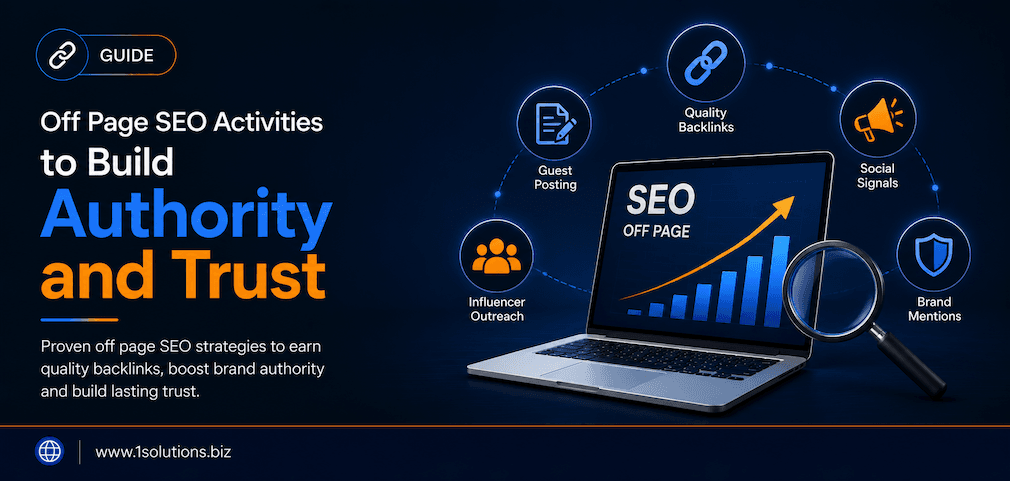
If your on-page SEO is already solid but rankings refuse to budge, the missing piece is almost always what happens outside your website. Off page SEO activities are the signals search engines use to decide whether your site deserves to be trusted, cited, and ranked above competitors. These signals include backlinks, brand mentions, social signals, reviews, and a growing list of authority indicators that Google weighs alongside your content quality.
According to Semrush’s State of Search report, pages that rank in the top three positions carry significantly more referring domains than pages ranked four through ten. The gap is not marginal. Authority built off-site compounds over time, making early investment in these tactics one of the highest-ROI decisions you can make for long-term organic growth.
This guide covers exactly 10 off page SEO activities that genuinely move the needle, along with honest trade-offs for each one, so you can prioritize based on your resources and goals.
Off page SEO activities like link building, digital PR, and brand mentions are critical ranking factors that work alongside on-page optimization. This article walks through 10 proven tactics, explains how to execute each one, and flags the real trade-offs so you invest your time wisely.
⚡ Key Takeaways
- Backlinks from authoritative, relevant domains remain the single strongest off-page ranking signal.
- Unlinked brand mentions are a growing trust signal that can often be converted into actual links.
- Guest posting works when relevance and quality are prioritized over volume.
- Online reviews directly affect local rankings and click-through rates in search results.
- Social media signals do not directly boost rankings but amplify content reach and earn passive links.
- Digital PR and data-driven content can generate dozens of editorial backlinks from a single campaign.
- Toxic backlinks can trigger Google penalties, making link audits a non-negotiable part of any strategy.
The 10 Most Impactful Off Page SEO Activities
1. Strategic Link Building From High-Authority Domains
Link building is the cornerstone of every effective off page SEO strategy. When an authoritative website links to yours, it passes what SEO professionals call “link equity” or “PageRank,” which signals to search engines that your content is credible and worth ranking. Not all links are equal, though. A single backlink from a high-authority publication in your niche can outweigh dozens of links from low-quality directories.
The key is targeting websites with strong domain authority, topical relevance, and real organic traffic. Tools like Ahrefs, Moz, and Semrush help you evaluate potential link sources before investing outreach time. According to Ahrefs (2023), 66.31% of pages have zero backlinks at all, which means even modest link building efforts put you ahead of most competitors.
Effective tactics include broken link building (finding dead links on authoritative pages and offering your content as a replacement), resource page outreach, and skyscraper content creation. Before you scale any link building campaign, it is worth reading how to build links safely without triggering penalties to avoid common mistakes that can harm rather than help your rankings.
Trade-off: Quality link building takes time. Expect weeks to months before you see measurable ranking movement. Shortcuts like buying links violate Google’s guidelines and risk penalties. If you need structured support, explore dedicated link building packages designed to scale safely.
2. Guest Posting on Relevant Industry Publications
Guest posting is one of the most sustainable off page SEO activities when done with a quality-first mindset. By contributing original, expert-level content to respected publications in your niche, you earn contextual backlinks, build brand visibility, and establish topical authority simultaneously.
The critical factor is relevance. A guest post on a website that covers your exact industry topic delivers far more SEO value than a post on a generic “write for us” directory site. Publishers also increasingly scrutinize the quality of submissions, so thin, templated articles rarely get accepted by sites worth linking from.
Your outreach process matters as much as the content itself. Personalized pitches that reference specific articles on the target site, propose a clear angle, and demonstrate your expertise convert at much higher rates than mass email blasts. For a detailed breakdown of the outreach process, this guide on securing high-quality guest post placements covers the full workflow.
Trade-off: Guest posting at scale requires significant content production capacity. Each post needs to be genuinely valuable to the host publication’s audience, which means you cannot simply recycle existing content. The investment is real, but so are the compounding returns from a strong guest post portfolio.
💡 Pro Tip: When pitching guest posts, always study the target site’s most-shared articles first. Proposing a topic that fills a visible gap in their content library increases your acceptance rate dramatically compared to pitching broad, generic ideas.
3. Competitor Backlink Analysis and Replication
One of the most efficient off page SEO activities is studying where your competitors earn their backlinks and targeting those same sources. If a website is willing to link to a competitor in your niche, there is a reasonable chance they would link to you too, provided your content is as good or better.
The process starts with exporting your competitors’ backlink profiles using tools like Ahrefs or Semrush, then sorting by domain authority and traffic to identify the highest-value link sources. From there, you can categorize opportunities: guest post prospects, resource pages, editorial mentions, forum citations, and more.
This approach is particularly effective for newer websites that lack an established link-building history. Rather than starting from scratch, you are working from a proven map of what works in your specific niche. For a step-by-step process, this competitor backlink analysis guide walks through the exact methodology.
Trade-off: Replication is a floor, not a ceiling. If every competitor has the same links, you will not outrank them by matching their profile alone. Use competitor analysis as a baseline and then identify unique link opportunities they have missed to pull ahead.
4. Digital PR and Data-Driven Content Campaigns
Digital PR is one of the fastest-growing off page SEO activities because it generates editorial backlinks at scale from high-authority news sites, industry publications, and blogs. The approach involves creating original research, surveys, or data-driven content that journalists and bloggers want to cite and link to.
A single well-executed digital PR campaign can earn 20 to 50 editorial backlinks from genuinely authoritative sources, something that would take months of traditional outreach to replicate. According to Moz’s survey data (2022), links from editorial news sources carry substantially higher trust scores than links from most other categories.
Effective digital PR assets include original industry surveys, proprietary data analysis, interactive tools, and bold opinion pieces from recognized experts. The content needs a clear news hook: something surprising, counterintuitive, or timely enough that a journalist covering your sector would genuinely want to reference it.
If you are also thinking about how AI-driven search changes content visibility, it is worth understanding how to improve website visibility in AI search engines, since authoritative off-page signals increasingly influence AI-generated answers as well.
Trade-off: Digital PR campaigns require upfront investment in research and outreach. Not every campaign lands. Budget for multiple attempts and treat each one as a learning opportunity.
5. Building and Monitoring Brand Mentions
Every time your brand name, product, or key people are mentioned online without a link, that is an unlinked citation. These mentions are an off-page authority signal in their own right, but they also represent link-building opportunities you can pursue with a simple outreach email asking the author to add a hyperlink to the reference.
Google’s systems are sophisticated enough to associate unlinked mentions with your brand, contributing to what some SEOs call “implied links.” However, converting those mentions into actual links still delivers a measurable ranking boost, so monitoring tools like Google Alerts, Mention, or Brand24 are worth incorporating into your workflow.
Brand mention monitoring also serves a reputation management function. Negative mentions caught early can be addressed before they accumulate. For businesses where online reputation directly affects revenue, professional reputation management services can systematize this entire process.
Trade-off: Not every website owner will respond to mention-to-link conversion requests. Response rates vary by niche and publication size. Focus your outreach energy on mid-tier sites where editors are accessible and backlinks are most valuable relative to the effort involved.
💡 Pro Tip: Set up Google Alerts for your brand name, key executives, and your most popular products. Check weekly and prioritize outreach to unlinked mentions on sites with a domain authority above 40, since those links will have the most impact on your profile.
6. Online Review Generation and Management
Online reviews are a direct ranking factor for local SEO and an indirect trust signal for broader organic rankings. Google’s local algorithm explicitly considers review quantity, recency, and response patterns when ranking businesses in map packs and local organic results. According to BrightLocal’s Local Consumer Review Survey (2023), 98% of consumers read online reviews for local businesses, and businesses with consistent review activity rank higher than those with stale or absent review profiles.
The right approach to review generation is systematic: build post-purchase or post-service email sequences that invite satisfied customers to leave reviews on Google Business Profile, Trustpilot, G2, or industry-specific platforms. Responding to every review, positive and negative, signals to both users and search engines that your brand is active and accountable.
For local businesses especially, neglecting reviews is one of the most common and costly SEO mistakes. If you want to understand how review management fits into a broader local visibility strategy, this breakdown of Google My Business mistakes is a practical starting point.
Trade-off: Incentivizing reviews violates Google’s policies and can result in review removal or account penalties. Growth must come from genuine customer experiences, which means the underlying service or product quality cannot be separated from the SEO strategy.
7. Social Media Amplification and Profile Authority
Social media signals are not a direct Google ranking factor, but dismissing social media as an off page SEO activity misses the real mechanism: amplification. Content that gets shared on social platforms reaches more potential linkers, journalists, and bloggers who may cite it with an editorial backlink. The link is the ranking signal; social media is the distribution channel that makes the link more likely to happen.
Active, well-optimized social profiles also appear in branded search results, taking up more real estate on the first page when someone searches your company name. This builds trust with users and signals brand legitimacy to search engines assessing your overall authority footprint.
For businesses leveraging paid social alongside organic, this comprehensive guide to the top social media sites helps you identify where your audience actually spends time so your amplification efforts land in the right places.
Trade-off: Social media requires consistent content output to maintain relevance. A dormant account can actually hurt brand perception. If bandwidth is limited, focus on one or two platforms where your audience is most active rather than spreading thinly across every network.
8. Forum Participation and Community Engagement
Participating in relevant online communities, including Reddit, Quora, niche forums, and industry Slack groups, builds brand authority and drives referral traffic. When done genuinely, it also generates contextual backlinks in discussions where your content is a legitimate reference.
The critical distinction is between value-adding participation and spam. Dropping links without context gets you banned and flagged. Genuine answers that happen to reference your content, shared naturally within helpful responses, earn trust from both community members and search engines over time.
Forum and community engagement also serves keyword research purposes: the exact language your audience uses in organic discussions reveals search intent patterns you can use to optimize both on-page and off-page content strategy. This connects directly to improving SEO through better page content analysis, since understanding audience language helps you create content worth linking to.
Trade-off: Most forum links are nofollow, meaning they pass minimal direct link equity. The real value is in referral traffic, brand exposure, and building relationships with influencers who may later link to your content from their own sites or publications.
9. Podcast Appearances and Audio Content Syndication
Podcast appearances are an underutilized off page SEO activity that delivers both direct backlinks from show notes and indirect authority through brand exposure. Most podcast hosts publish detailed show notes with links to their guests’ websites, social profiles, and mentioned resources, creating genuine editorial backlinks from media properties with real audiences.
Beyond the link value, appearing as a guest on respected podcasts in your niche positions your brand as an authoritative voice. This builds the kind of E-E-A-T (Experience, Expertise, Authoritativeness, Trustworthiness) signals that Google’s quality rater guidelines explicitly reward, particularly for YMYL (Your Money Your Life) topics.
Identifying podcast opportunities follows the same logic as guest posting outreach: find shows your target audience already listens to, study recent episodes, and pitch angles that fill genuine gaps in what has already been covered. A strong pitch explains why your specific perspective adds something the audience has not heard before.
Trade-off: Podcast outreach requires personal time investment since appearances cannot be outsourced easily. The returns are slower to manifest in rankings than a direct high-authority backlink, but the compounding brand authority effect makes it worthwhile for businesses playing a long-term SEO game.
💡 Pro Tip: After recording a podcast appearance, ask the host to include links to two or three specific pages on your website in the show notes, not just your homepage. Contextual links to specific content pages carry more SEO value than generic homepage links.
10. Backlink Auditing and Toxic Link Disavowal
Most conversations about off page SEO activities focus on building new signals, but maintaining the health of your existing backlink profile is equally important. Toxic backlinks from spammy sites, link farms, or irrelevant sources can drag down your domain authority and, in severe cases, trigger a Google manual penalty that suppresses your rankings entirely.
Regular backlink audits using tools like Ahrefs, Semrush, or Google Search Console allow you to identify and address problematic links before they compound. The disavowal process, using Google’s Disavow Tool, tells Google to ignore specific links when assessing your site, protecting your profile from signals you did not create or cannot remove through outreach.
This is particularly critical if your site has a history of aggressive or low-quality link building, or if you have acquired a domain with a pre-existing toxic link profile. If your rankings have already dropped, Google penalty recovery services can help diagnose whether a link issue is the root cause and guide the remediation process. For understanding how past algorithm updates may have impacted your site, reviewing link building methods that have survived multiple algorithm updates provides useful historical context.
Trade-off: Disavowing too aggressively can remove legitimate links and harm your rankings. The process requires careful analysis, not bulk removal. When in doubt, focus disavowal on clear spam patterns rather than links that are merely low-authority but genuinely relevant to your site.
Comparison: Off Page SEO Activities by Effort, Speed, and Impact
| Activity | Effort Level | Time to See Results | Link Equity Value | Best For |
|---|---|---|---|---|
| Strategic Link Building | High | 2-4 months | Very High | All websites |
| Guest Posting | High | 1-3 months | High | Content-rich brands |
| Competitor Backlink Analysis | Medium | 2-4 months | High | Competitive niches |
| Digital PR | Very High | 1-2 months | Very High | Data-driven brands |
| Brand Mention Monitoring | Low-Medium | 1-2 months | Medium | Established brands |
| Review Generation | Low | 1-2 months | Local SEO focused | Local businesses |
| Social Media Amplification | Medium | Ongoing | Indirect | Content publishers |
| Forum and Community Engagement | Medium | Ongoing | Low (mostly nofollow) | Niche authority building |
| Podcast Appearances | Medium | 3-6 months | Medium | Thought leaders |
| Backlink Auditing | Medium | 1-3 months | Protective | Sites with penalty risk |
Practical Action Plan: Where to Start With Off Page SEO
Not every business has the time or budget to execute all ten activities simultaneously. Here is a tiered framework for prioritizing your efforts based on available resources and current site authority.
- Do This Now: Conduct a backlink audit to identify any toxic links harming your current profile. Set up brand mention monitoring. Begin systematic review generation if you have local search visibility goals. These three activities require relatively low ongoing effort and protect or activate value you already have.
- Worth Doing: Launch a guest posting outreach campaign targeting three to five relevant publications in your niche. Run a competitor backlink analysis and build a prioritized list of reachable link targets. These activities require content capacity but deliver consistent compounding returns.
- Low Priority (But Still Valuable): Invest in digital PR campaigns and podcast outreach once your foundational link profile is solid. These activities amplify authority that already exists, making them more effective when you have a baseline of credibility to leverage. Forum participation and social amplification can run in the background with minimal dedicated time.
If you are working with a limited team and need structured support across multiple off page SEO activities, exploring professional SEO services allows you to scale these tactics without overextending internal resources. For small businesses in particular, SEO for small business programs are built specifically around the resource constraints most growing companies face.
How Off Page SEO Connects to the Bigger Picture
Off page SEO activities do not exist in isolation. They amplify the value of your on-page content, accelerate indexing, and compound over time in ways that paid advertising cannot replicate. A well-structured internal link architecture, for example, determines how efficiently link equity from external backlinks flows through your site. Understanding how to use internal links to maximize backlink impact is one of the most overlooked ways to get more value from every link you earn.
As search evolves with AI-powered features and new ranking mechanisms, the fundamentals of authority and trust remain constant. Google’s systems change how they surface content, but they continue to rely on external validation signals to assess credibility. The businesses that invest consistently in off page SEO now are building a moat that becomes harder for competitors to cross over time.
Conclusion
The ten off page SEO activities covered in this guide range from proven fundamentals like link building and guest posting to emerging tactics like podcast appearances and digital PR. Each one contributes to the authority and trust signals that determine where your content ranks. The honest reality is that off-page SEO requires sustained effort, patience, and quality judgment. There are no shortcuts that survive algorithm updates. But the businesses that treat these activities as core, ongoing investments consistently outrank those that treat SEO as a one-time fix. Start with your highest-leverage opportunities, build systematically, and treat every external signal as a long-term asset for your brand.
Frequently Asked Questions
What are off page SEO activities?
Off page SEO activities are actions taken outside your own website to improve its authority, trustworthiness, and search engine rankings. They include link building, guest posting, brand mention monitoring, review generation, social media amplification, digital PR, and backlink auditing. These external signals help search engines assess whether your site deserves to rank above competitors for relevant queries.
How long does off page SEO take to show results?
Results vary by tactic and competitiveness of the niche. Most link building efforts begin showing measurable ranking movement within two to four months. Digital PR campaigns can generate results faster, sometimes within weeks. Review generation affects local rankings relatively quickly once new reviews start accumulating. The compounding nature of authority means results accelerate over time rather than plateauing.
Are social media links counted as backlinks for SEO?
Most social media links are tagged as nofollow, which means they pass minimal direct link equity to your site. However, social amplification indirectly benefits SEO by increasing content visibility, which leads to more editorial links from third-party sites. Active social profiles also contribute to branded search real estate and overall brand legitimacy signals.
Can toxic backlinks hurt my website rankings?
Yes. A large volume of links from spammy, irrelevant, or link-farm sources can suppress rankings and, in severe cases, trigger a manual penalty from Google. Regular backlink audits are essential for identifying and disavowing toxic links before they accumulate into a serious problem. If you suspect a penalty is already affecting your site, professional Google penalty recovery services can help you diagnose and resolve the issue.
Is guest posting still an effective off page SEO activity?
Yes, when done correctly. Guest posting on genuinely authoritative, relevant publications with original, high-quality content remains one of the most effective and sustainable link building strategies. The key is prioritizing relevance and quality over volume. Thin content placed on low-quality “guest post farms” provides little value and can attract algorithmic penalties. For a detailed approach, review how to fix a failed link building strategy if past guest posting efforts have not delivered results.