
Top Ecommerce SEO Practices to Multiply Sales: A Complete How-To Guide
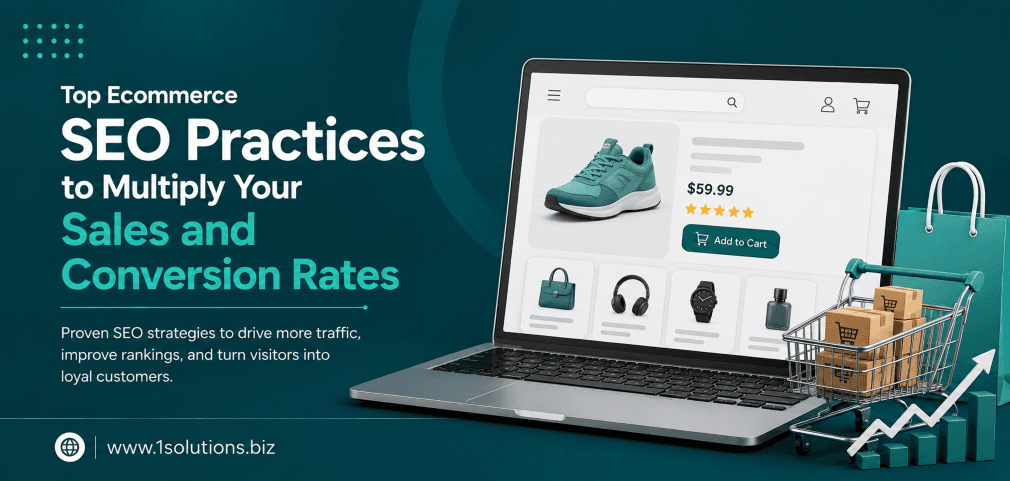
If you run an online store, you already know that traffic without conversion is just noise. The top ecommerce SEO practices to multiply sales are not about chasing algorithms or stuffing keywords into product pages. They are about building a structured, sustainable visibility engine that brings the right shoppers to the right products at exactly the right moment. This guide breaks down every major lever, step by step, so you can stop guessing and start growing.
Ecommerce SEO requires a combination of technical optimization, strategic keyword targeting, high-quality content, and authoritative link building. Done correctly, it reduces your reliance on paid ads and delivers compounding returns over time. This guide walks you through each step with actionable tactics you can implement immediately.
⚡ Key Takeaways
- Site architecture and crawlability directly affect how many of your product pages get indexed and ranked.
- Long-tail, intent-driven keywords convert significantly better than broad, high-volume terms on product and category pages.
- Page speed and Core Web Vitals are confirmed Google ranking factors that also reduce bounce rates and cart abandonment.
- Unique product descriptions, buying guides, and FAQ content help you compete against larger retailers with bigger ad budgets.
- Internal linking between category pages, blog posts, and product pages distributes link equity and improves crawl depth.
- Structured data markup for products enables rich results like price, availability, and review stars in Google search.
- Backlink acquisition through guest posts and digital PR remains one of the highest-ROI off-page SEO activities for ecommerce brands.
Step 1: Audit Your Ecommerce Site Before Doing Anything Else
Before you optimize a single page, you need a clear picture of where your store stands. A technical SEO audit reveals crawl errors, duplicate content, orphaned pages, broken links, and indexation gaps that silently suppress rankings.
Start with Google Search Console. Check the Coverage report for pages with errors or warnings. Then run a crawl using Screaming Frog or Ahrefs Site Audit to surface redirect chains, missing canonical tags, thin content, and slow-loading resources. Pay special attention to faceted navigation on category pages, which is one of the most common sources of duplicate content in ecommerce stores.
If your store runs on WooCommerce, reviewing our WooCommerce store maintenance checklist will help you catch platform-specific issues that generic audit tools often miss. For those weighing platform options, our WooCommerce vs Shopify comparison outlines the SEO trade-offs between the two most popular ecommerce platforms.
Document every issue you find in a prioritized list. Critical issues like broken canonical tags, noindex directives on product pages, or server errors should be resolved before any content or link work begins.
Step 2: Build a Keyword Strategy Around Buyer Intent
Generic keyword research does not serve ecommerce. You need to map keywords to the specific stage of the buying journey: awareness, consideration, and purchase. A shopper searching “best running shoes for flat feet” is much closer to buying than someone searching “types of running shoes.”
Focus your category pages on high-volume, mid-funnel keywords. Reserve product pages for specific, transactional queries that include model names, sizes, colors, or use cases. Use Google’s autocomplete, the “People Also Ask” section, and tools like Semrush or Ahrefs to find long-tail variations with clear commercial intent.
One often-overlooked tactic is targeting competitor product names as informational comparison content. A post titled “Product A vs Product B: Which Is Right for You?” captures buyers who are actively comparing options and drives them to your category or product page through strategic internal links.
💡 Pro Tip: Map one primary keyword and two to three supporting keywords per page. Never target the same primary keyword on two different pages as this creates keyword cannibalization, which splits your ranking signals and dilutes authority for both pages.
Step 3: Optimize Your Site Architecture for SEO and Usability
A clean, flat site architecture ensures that link equity flows efficiently from your homepage to your category and product pages. The general rule is that no important page should be more than three clicks from the homepage.
Structure your site in logical silos: Homepage, then Category pages, then Subcategory pages, then Product pages. This hierarchy signals topical relevance to search engines and makes navigation intuitive for users. According to a study by Backlinko (2020), pages ranking in the top three positions on Google tend to have significantly more internal links pointing to them than pages ranking lower on the same domain.
Breadcrumb navigation serves a dual purpose. It helps users understand where they are within your store and generates structured data that Google displays in search results, improving click-through rates. Enable breadcrumb schema on every product and category page.
Learning how to use internal links to boost backlink impact is particularly valuable for ecommerce, where you can channel authority from high-traffic blog content directly into conversion-focused product pages.
Step 4: Write Product and Category Page Content That Ranks and Converts
Most ecommerce stores fail at content because they use manufacturer-provided descriptions verbatim. This creates duplicate content across thousands of sites selling the same products and gives Google no reason to rank your version over anyone else’s.
Every product page needs a unique description that answers buyer questions, highlights key benefits over features, and includes the target keyword naturally within the first paragraph, a subheading, and the alt text of the primary image. Aim for at least 300 words on product pages and 600 to 900 words on category pages.
Category pages, in particular, benefit from an introductory content block above the product grid that explains what the category contains, who it is for, and why your selection is worth considering. This content is where most of your category-level keyword targeting lives.
If writing compelling, optimized content at scale feels overwhelming, our professional content and copywriting services can cover product descriptions, category introductions, and blog content simultaneously, giving your SEO program consistent fuel.
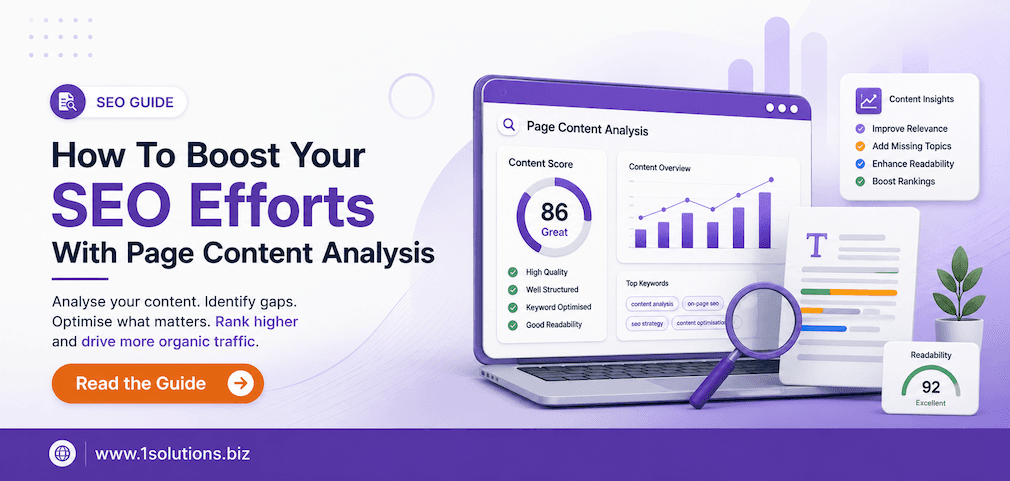
Also consider enhancing your pages using the techniques covered in our guide on boosting SEO with page content analysis. This method helps you identify exactly what your top-ranking competitors include in their content that you currently do not.
Step 5: Master Technical SEO for Ecommerce
Technical SEO is the foundation everything else rests on. Without it, even exceptional content and links will underperform.
Page Speed and Core Web Vitals
According to Google (2023), 53% of mobile site visits are abandoned if a page takes longer than three seconds to load. For ecommerce, every second of delay translates directly into lost revenue. Compress images using WebP format, implement lazy loading, minimize render-blocking JavaScript, and use a content delivery network (CDN) to reduce server response times.
HTTPS and Security Signals
Every ecommerce store must operate on HTTPS. Beyond the trust signals it sends to shoppers, it is a confirmed Google ranking factor. Ensure your SSL certificate is valid, check for mixed content warnings, and verify that all internal links use the HTTPS version of your URLs.
Structured Data for Products
Implement Product schema markup on every product page. At minimum, include name, description, image, SKU, price, priceCurrency, availability, and aggregateRating properties. This enables rich snippets in search results that display price and stock status directly in the SERP, which significantly improves click-through rates.
Crawl Budget Management
Large stores with tens of thousands of SKUs need to manage crawl budget deliberately. Use robots.txt to block faceted navigation parameters from being crawled. Use canonical tags to consolidate duplicate product variants. Submit a clean XML sitemap to Google Search Console that only includes indexable, canonical URLs.
If your pages are not showing up in search despite your efforts, our deep-dive into why Google is not indexing your page covers the ten most common reasons and how to fix each one.
Step 6: Build High-Quality Backlinks to Your Ecommerce Store
Backlinks remain one of the strongest ranking signals in Google’s algorithm. According to Ahrefs (2023), over 66% of pages have zero backlinks pointing to them, which is a primary reason they receive no organic traffic. For ecommerce stores, this gap represents a significant competitive opportunity.
The most effective link building strategies for online stores include digital PR campaigns tied to product launches or industry data, guest posting on niche-relevant blogs, and supplier or manufacturer link placements where your store is listed as an authorized retailer.
Our guides on building backlinks in competitive and low-competition niches and how to build links safely without triggering penalties cover the tactics that work in 2025 without putting your store at risk of a manual action.
One important trade-off to acknowledge: link building takes time. You are unlikely to see significant ranking movement from backlinks within the first 30 to 60 days. The payoff is durable authority that compounds over months and years, unlike paid ads that stop working the moment your budget runs out.
💡 Pro Tip: Instead of building all your links directly to product pages, build links to your best informational content, then use internal links to pass that authority down to the product and category pages you want to rank. This is faster, more natural, and less likely to attract scrutiny from Google’s spam detection systems.
Step 7: Create Supporting Content That Captures the Full Buying Funnel
Your product and category pages can only rank for a limited range of keywords. A blog or resource section lets you capture awareness-stage and consideration-stage traffic that eventually converts.
Buying guides, comparison posts, how-to articles, and gift guides all attract organic traffic from shoppers who are not quite ready to purchase but are actively researching. These pages build topical authority for your domain and provide natural opportunities to link internally to your product pages.
For example, a store selling home gym equipment might publish a guide titled “How to Set Up a Home Gym on a $1,000 Budget.” This page ranks for research queries, earns links from fitness blogs, and drives internal traffic to product pages for dumbbells, resistance bands, and weight benches.
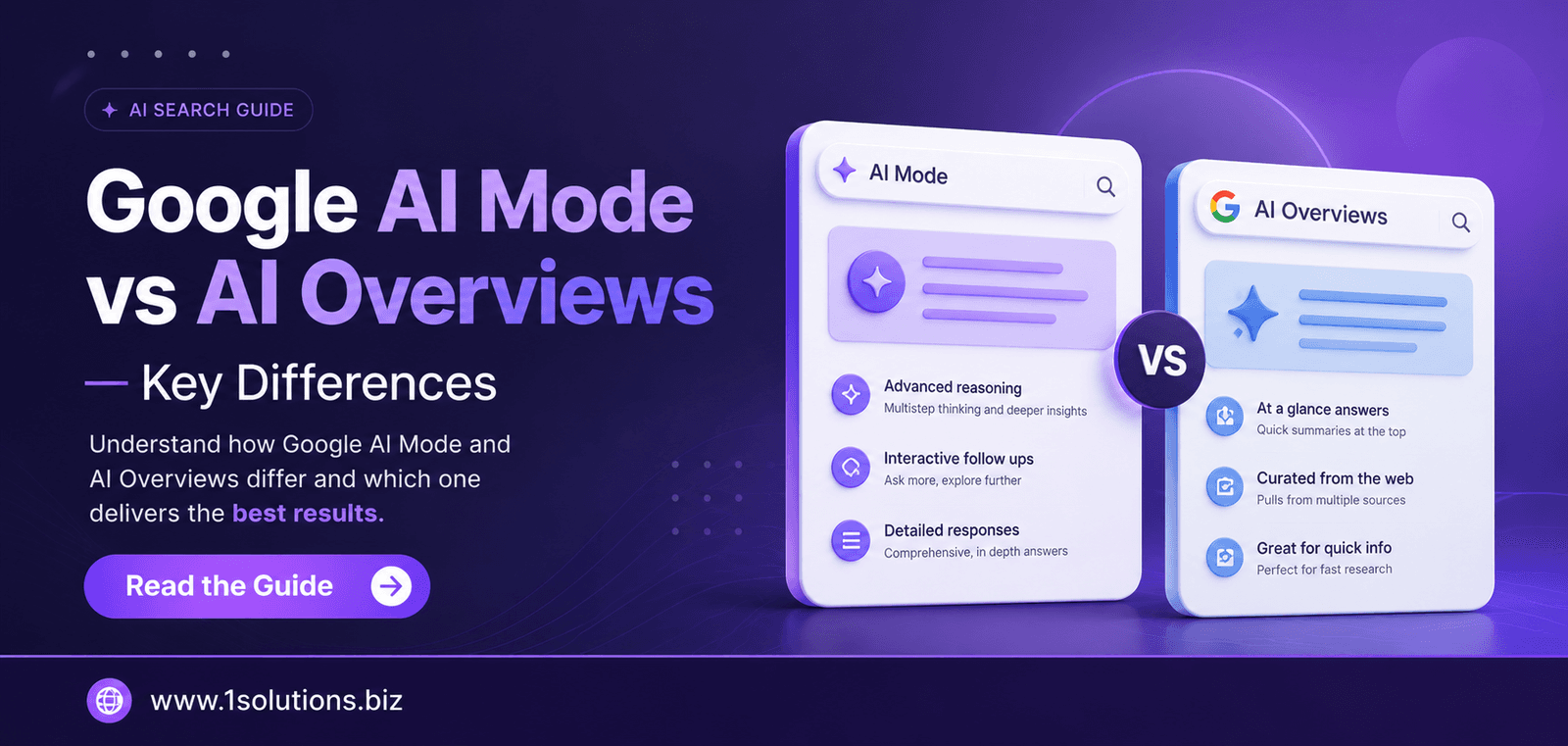
As AI-driven search features become more prominent, being visible in answer-focused content is increasingly valuable. Our overview of Google AI Overviews vs AI Mode explains how these features pull content from pages and what you can do to improve your visibility within them.
Step 8: Optimize for Google Shopping and Product Feeds
Organic SEO and Google Shopping work best together. Your product feed quality directly affects how well your products appear in Shopping results, which appear at the very top of many commercial search queries.
Ensure your product titles in the feed include the primary keyword, brand name, and key attributes like size or color. Keep descriptions detailed and accurate. Use high-resolution images. Maintain accurate pricing and stock data to avoid feed disapprovals.
For a deep dive into feed management and campaign structure, our complete guide to your Google Shopping feed walks through every attribute and common mistakes that cause products to underperform in Shopping results.
Pairing strong organic rankings with optimized Shopping placements means your brand appears multiple times on the same search results page, which significantly increases overall click share and brand authority in the shopper’s perception.
Ecommerce SEO Tool Comparison: Choosing the Right Platform for Your Needs
| Tool / Feature | Best For | Key Strength | Limitation |
|---|---|---|---|
| Google Search Console | All stores | Free, direct data from Google | Limited historical data (16 months) |
| Ahrefs | Keyword research and backlink analysis | Industry-leading link index | Higher cost for full access |
| Semrush | Competitive analysis and site audits | All-in-one with paid search data | Can be overwhelming for beginners |
| Screaming Frog | Technical audits on large stores | Handles large crawls efficiently | Requires technical knowledge to interpret |
| Yoast SEO (WooCommerce) | On-page optimization guidance | Easy schema and meta management | Does not replace a full SEO strategy |
| Google Merchant Center | Shopping feed management | Direct integration with Google Ads | Feed errors can suspend listings quickly |
Step 9: Monitor Rankings, Traffic, and Revenue Attribution
SEO without measurement is guesswork. Set up a consistent reporting process that tracks organic sessions, organic revenue, keyword ranking positions, click-through rates from Search Console, and crawl health metrics.
Use Google Analytics 4 to create an organic channel segment and monitor it weekly. Set up conversion tracking so you can see which landing pages generate the most organic revenue, not just traffic. This distinction matters enormously because a page can drive significant traffic without contributing proportionally to sales.
Review your Search Console Performance report monthly to identify keywords where your store is ranking in positions four through fifteen. These are your highest-priority optimization targets because a modest improvement in click-through rate or ranking position for these terms can produce a disproportionate increase in organic traffic.
💡 Warning: Avoid making major structural changes to your site, such as URL restructuring, platform migrations, or navigation overhauls, without first consulting an SEO professional. According to Search Engine Journal (2022), site migrations are one of the leading causes of significant, unexpected drops in organic traffic, and recovery can take six to twelve months even when the migration is handled correctly.
Practical Action Plan: Prioritized Next Steps
Use this three-tier action framework to focus your effort where it will produce the fastest and most durable results.
- Do This Now: Run a technical audit using Google Search Console and Screaming Frog. Fix any pages with crawl errors, missing canonical tags, or noindex tags that should be indexable. Submit a clean XML sitemap. These fixes unblock Google from discovering and ranking your content and should be completed before any other work begins.
- Do This Now: Rewrite at least your top ten category page descriptions with unique, keyword-targeted content of 600 words or more. Category pages drive the highest-value organic traffic for most ecommerce stores and are consistently underdeveloped.
- Worth Doing: Develop a content calendar for twelve to twenty-four buying guide and comparison articles targeting consideration-stage keywords. Publish consistently, link each article internally to relevant product pages, and promote each piece to earn initial backlinks.
- Worth Doing: Implement Product schema markup across all product pages and verify it using Google’s Rich Results Test. This is a one-time investment that persistently improves click-through rates from search results.
- Worth Doing: Launch a link building campaign targeting category pages through guest posts on niche-relevant blogs. Use our guide on securing high-quality guest post placements to maintain quality standards.
- Low Priority: Explore advanced tactics like optimizing for LLM optimization to rank in AI search once your core technical and content foundations are solid. These emerging channels matter, but they will not compensate for weak fundamentals.
- Low Priority: Test Google Shopping Ads to amplify the organic work you have done, particularly for high-margin products that already rank on page one organically. Paid and organic visibility together produce higher conversion rates than either channel alone.
When to Work with an Ecommerce SEO Partner
Ecommerce SEO is not a one-person job once your store reaches a meaningful scale. A store with 500 or more SKUs, multiple category hierarchies, and a growing content operation needs consistent technical oversight, content production, and link acquisition running in parallel.
If you are at the point where DIY SEO is becoming a bottleneck, exploring dedicated ecommerce marketing services makes practical sense. An experienced agency brings both the strategy and the execution capacity to run all three pillars of ecommerce SEO simultaneously, and with transparent ecommerce SEO packages, you can find a scope that fits your budget without overpaying for services you do not yet need.
The honest trade-off: agency partnerships require an investment of time for onboarding and communication in addition to the financial cost. But for most growing stores, the compounding value of well-executed SEO outperforms equivalent spend on paid advertising within twelve to eighteen months, and continues to deliver returns long after the work is done.
Conclusion: Commit to the Process, Not Just the Tactics
The top ecommerce SEO practices to multiply sales are not secrets. They are a disciplined combination of technical hygiene, targeted keyword strategy, genuinely useful content, and authoritative backlinks, executed consistently over time. Every step in this guide builds on the previous one, which means skipping steps costs you more than the time you save.
Start with your audit. Fix what is broken. Optimize what exists. Build what is missing. Then measure, iterate, and repeat. The stores that win in organic search are not the ones with the biggest budgets. They are the ones that treat SEO as a long-term asset rather than a short-term campaign.
Frequently Asked Questions
How long does it take to see results from ecommerce SEO?
Most stores begin seeing measurable improvements in rankings and organic traffic within three to six months of consistent SEO work. Competitive categories with established players may take nine to twelve months to show significant movement. Technical fixes and content updates on pages that are already indexed can produce results faster, sometimes within weeks.
Do I need to blog if I run an ecommerce store?
Not every store needs a blog, but most benefit from having one. Blog content captures awareness and consideration-stage traffic that product pages cannot rank for, builds topical authority, and creates assets that attract backlinks. Stores in competitive niches almost always need supporting content to compete against larger, more established retailers.
What is the biggest technical SEO mistake ecommerce stores make?
The most common and damaging mistake is allowing faceted navigation to create thousands of duplicate or near-duplicate URLs that dilute crawl budget and split ranking signals. This is especially prevalent on stores with large inventories and filter-heavy category pages. Properly configured canonical tags and robots.txt directives are the standard fix.
How many backlinks does an ecommerce store need to rank?
There is no universal number. What matters is the quality and relevance of your links relative to competitors in your specific category. A niche store selling artisan kitchen tools needs far fewer links than a general sporting goods retailer competing against major brands. Use Ahrefs or Semrush to benchmark the link profiles of the top three ranking pages for your target keywords and use that as your baseline.
Should I use paid ads or SEO first for a new ecommerce store?
New stores typically benefit from running both simultaneously. Paid ads provide immediate traffic and conversion data while SEO builds in the background. As organic rankings develop, you can reduce paid spend on terms where you rank organically and reinvest that budget into new keyword opportunities. Treating paid and organic as competing priorities is a false choice and one that slows overall growth unnecessarily.