
Google’s March 2025 Core Update: What It Means for Your Website
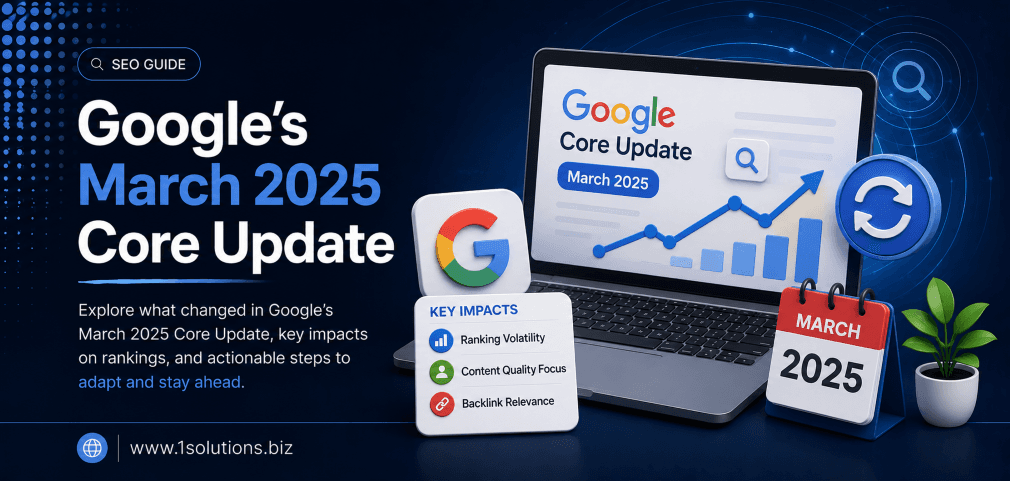
Google’s March 2025 Core Update officially began rolling out on March 13, 2025, and completed its full deployment by March 27, 2025. If your organic traffic dropped, your rankings shuffled unexpectedly, or your impressions in Google Search Console took a sudden hit during that window, this update is almost certainly the reason. Core updates are among the most significant algorithmic changes Google makes, and the March 2025 edition was no exception. Understanding what changed, why it changed, and what you should do about it is essential for any website owner, SEO professional, or digital marketer who depends on organic search for visibility and revenue.
This article breaks down everything you need to know about the update, organized into clear, actionable sections. Whether you were hit hard or sailed through unaffected, the insights here will help you make smarter decisions going forward. If you need hands-on help recovering lost rankings or strengthening your site’s authority, our professional search engine optimization solutions are designed exactly for situations like this.
Google’s March 2025 Core Update rolled out over two weeks and targeted content quality, E-E-A-T signals, and page experience factors more aggressively than previous updates. Sites with thin, unoriginal, or AI-generated content without human expertise saw the sharpest ranking drops. Recovery requires a genuine audit of content quality, authority signals, and technical health, not quick fixes.
⚡ Key Takeaways
- The update rolled out March 13-27, 2025, making it a two-week, broad core algorithm change.
- E-E-A-T (Experience, Expertise, Authoritativeness, Trustworthiness) signals were weighted more heavily than in previous core updates.
- Sites publishing high volumes of AI-generated content without human editorial oversight were disproportionately impacted.
- Page experience metrics including Core Web Vitals remained a ranking factor, amplifying drops for slow or unstable pages.
- Recovery is possible but typically takes several months and requires genuine content improvement, not surface-level edits.
- Monitoring Google Search Console data weekly is non-negotiable during and after any core update.
- Proactive content audits and authority-building strategies are the most reliable long-term defenses against future core updates.
1. What Is a Google Core Update and Why Does March 2025 Matter?
Google releases core updates several times per year. Unlike targeted updates that address specific issues like spam or product reviews, core updates are broad changes to Google’s main ranking algorithm. They reassess how the entire system evaluates and ranks content across all topics and industries. Google has been transparent about this process, confirming on its Search Central blog that core updates are designed to better reward content that was previously undervalued, not necessarily to penalize sites that were previously overvalued, though the practical effect for many sites feels exactly like a penalty.
Google’s March 2025 Core Update matters for several specific reasons. First, it arrived at a time when AI-generated content had proliferated across the web at an unprecedented scale. Since late 2022, the volume of AI-assisted or fully AI-generated web pages has grown exponentially. Google had to respond algorithmically to distinguish genuinely helpful, expert-authored content from content that is technically well-written but lacks real-world experience or depth. Second, this update came shortly after Google’s broader push to surface more “hidden gem” content, meaning high-quality content from smaller or less authoritative domains that was being buried under established but mediocre content from larger sites. Third, the update’s timing, early in the calendar year, gave it significant influence over how sites would perform throughout 2025’s high-traffic periods.
According to data from Semrush’s volatility tracker, the March 2025 Core Update produced above-average SERP volatility scores across most content categories, with health, finance, and news verticals showing the most turbulence (Semrush, 2025). This pattern is consistent with Google’s historical tendency to scrutinize YMYL (Your Money or Your Life) content more stringently during core updates.
2. The 25 Most Important Signals Google’s March 2025 Core Update Evaluated
Understanding exactly which signals this update weighted more heavily helps you prioritize your recovery and improvement efforts. The following 25 signals represent the clearest patterns observed across sites that gained or lost rankings during the March 2025 rollout. These are based on aggregated data from SEO tools, Google’s own documentation, and community analysis from reputable SEO publications including Search Engine Journal, Search Engine Land, and Google’s own Search Central.
- Content originality and unique value: Pages that offered information, perspectives, or data that could not be found verbatim anywhere else online continued to perform well or gained rankings. Pages that essentially restated what dozens of other pages already said, without adding any original insight, data, or experience, were the most likely to drop. Google’s systems are increasingly sophisticated at detecting whether a page is the original source of information or a derivative repackaging of existing content. This does not mean you cannot cover topics others have covered, but your treatment must add something genuinely new, whether that is proprietary data, personal testing, expert opinion, or a unique structural approach to the topic.
- Demonstrated author expertise: Google’s quality raters use E-E-A-T guidelines to assess content, and the March 2025 update appears to have pushed these signals further into the core ranking algorithm. Sites that clearly identified authors with verifiable credentials, professional experience, or demonstrable subject-matter expertise fared better than sites with anonymous content or content attributed to generic “staff writers” without any traceable professional background. This does not require every author to have a PhD, but the expertise must be real, documented, and relevant to the content topic.
- Page-level experience signals: Core Web Vitals, specifically Largest Contentful Paint (LCP), Cumulative Layout Shift (CLS), and Interaction to Next Paint (INP), which officially replaced First Input Delay in March 2024, continued to factor into rankings. Sites that had improved their INP scores in the preceding months were better positioned heading into this update. According to Google’s own data cited in the 2024 Web Almanac, the median INP for mobile pages improved by roughly 10% year-over-year, but a significant portion of sites still failed the “good” threshold, leaving them vulnerable.
- Content freshness and maintenance: Evergreen content that had not been updated in 12 or more months, particularly in rapidly evolving topics, showed higher rates of ranking decline. Google’s systems assess whether content reflects the current state of a topic. This is especially important for content about technology, health, finance, law, and any other field where facts, recommendations, or best practices change regularly. A page written in 2021 about, for example, social media marketing strategy that has never been updated is a liability, not an asset, in 2025.
- Topical authority and content depth: Sites that demonstrated comprehensive, structured coverage of a topic area, rather than isolated high-performing pages, showed more stability during this update. This aligns with Google’s concept of topical authority, where a site that covers a subject thoroughly and coherently is treated as a more reliable resource than a site that publishes scattered content across unrelated topics. Building topical authority requires a deliberate content architecture strategy, not just publishing more pages.
- Backlink quality over quantity: The March 2025 update reinforced a trend visible since the Penguin era: a small number of genuinely authoritative, contextually relevant backlinks outperforms a large number of low-quality or irrelevant links. Sites with link profiles built through legitimate relationship-based outreach, original research, and digital PR held their rankings more reliably than sites relying on high-volume link schemes. Our guide on building backlinks across different competitive landscapes covers practical approaches for earning the kind of links that actually help in post-2025 Google.
- User engagement and satisfaction signals: While Google does not confirm which specific behavioral signals it uses, the SEO community has long observed correlations between rankings and metrics like time on page, scroll depth, return visits, and low bounce rates to the SERP. Sites where users consistently found what they were looking for, stayed on the page, and did not immediately return to search results were more likely to maintain or gain rankings. This underscores the importance of content that truly answers the user’s question, not just content that appears to answer it at a surface level.
- Structured data and semantic clarity: Pages that implemented schema markup correctly, particularly for articles, FAQs, how-to content, products, and reviews, showed slightly better retention of rich result features during the update. While schema is not a direct ranking factor, it helps Google understand content structure and context, which indirectly supports better ranking performance. Malformed or misleading schema, on the other hand, can actively harm a site.
- Mobile usability: With mobile-first indexing now the default for all sites, any mobile usability issues, from small tap targets and horizontal scrolling to interstitials that obscure content, contributed to ranking declines during this update. Google’s mobile usability report in Search Console is a starting point, but manual testing on actual mobile devices reveals issues that automated tools miss.
- Site architecture and internal linking: Sites with clear, logical information architecture, where every important page was reachable within a few clicks from the homepage and where internal links distributed authority coherently, performed better than sites with orphaned pages, broken internal links, or illogical navigation structures. Using internal links strategically to maximize backlink impact is a technique that pays dividends during core updates, because it ensures Google can efficiently discover, crawl, and evaluate all your valuable content.
- Content-to-ad ratio: Pages where display advertising, interstitials, or affiliate link density overwhelmed the actual content value were more susceptible to ranking drops. This has been a factor since Google’s Page Layout algorithm, but the March 2025 update appears to have sharpened this signal, particularly for pages where above-the-fold space was dominated by ads rather than content.
- Duplicate and near-duplicate content: Sites with large volumes of internally duplicated content, such as location pages that swap only city names, product pages with nearly identical descriptions, or category pages with minimal unique content, were disproportionately affected. Canonical tags help, but they do not fully compensate for the quality signal damage caused by publishing large volumes of low-uniqueness content.
- Transparency and trustworthiness signals: Sites with clear About pages, author bios, contact information, privacy policies, editorial policies, and disclosure statements for sponsored or affiliate content maintained better trust signals. Google’s quality raters actively look for these signals, and the March 2025 update appears to have integrated these trustworthiness factors more deeply into automated ranking decisions.
- HTTPS and basic security: HTTPS has been a minor ranking signal for years and continues to be a baseline requirement. However, sites with mixed content warnings, expired SSL certificates, or security vulnerabilities flagged by browsers showed compounding negative signals during this update, particularly in YMYL verticals where user trust is paramount.
- Core content accessibility: Content that required excessive user action before becoming accessible, such as mandatory sign-ins, pop-up gates, or excessive click-throughs, was evaluated less favorably. This aligns with Google’s stated goal of surfacing content that users can actually access and benefit from without friction.
- AI content quality and human oversight: This was one of the most discussed dimensions of the March 2025 update. Google has stated clearly that AI-generated content is not inherently against its guidelines, but content generated purely by AI without meaningful human expertise, editing, and fact-checking is precisely the kind of low-quality content that core updates target. Sites that published mass AI-generated content without editorial oversight were among the hardest hit. The distinction is not how content is produced but whether it genuinely serves users with accurate, helpful, expert-level information.
- Passage-level relevance: Google’s ability to rank specific passages within pages, introduced in 2021, continued to influence how individual sections of content were evaluated. This means a page with mostly high-quality content but several weak or off-topic sections could still underperform, because Google evaluates content at a more granular level than just the page as a whole.
- Niche vs. broad site performance: Highly specialized sites covering a narrow topic with great depth often outperformed generalist sites covering many topics superficially. This trend has been building for several updates and reflects Google’s preference for topical authority over topical breadth without depth.
- Review and rating authenticity: Sites in industries where customer reviews are prominent, such as local services, e-commerce, and hospitality, were assessed for the authenticity and diversity of their review signals. Fake reviews or review gating practices created negative trust signals that compounded algorithmic drops during this update.
- Video and multimedia integration: Pages that supplemented text content with genuinely useful video, images with meaningful alt text, infographics, or interactive tools provided better user value signals. This is not about adding multimedia for its own sake but about recognizing that some information is better communicated through non-text formats, and serving users that way when appropriate.
- Crawl efficiency and index coverage: Sites with significant crawl waste, where large numbers of low-quality or irrelevant URLs were being crawled instead of important content, showed more vulnerability during this update. Efficient crawl management, including proper use of robots.txt, noindex directives, and canonical tags, ensures Google spends its crawl budget on your best content. Our analysis of why Google sometimes fails to index pages properly covers this issue in practical detail.
- Local SEO signals for location-based content: For sites with local components, the accuracy and consistency of business information across the web, Google Business Profile completeness, and the presence of locally relevant content factored into this update’s impact. Common mistakes in local optimization, like those covered in our resource on Google My Business errors that damage local visibility, became more costly during this update period.
- Page speed at scale: Not just individual page performance but site-wide speed consistency mattered. A site with some fast pages and some very slow pages sent mixed signals. The March 2025 update appeared to evaluate speed more holistically across the entire domain, rewarding sites that had invested in performance optimization at the infrastructure level rather than just optimizing a few flagship pages.
- Content format appropriateness: Matching content format to user intent became more critical. Informational queries were better served by comprehensive guides and explanatory articles. Navigational queries needed clear, direct answers. Transactional queries needed frictionless paths to conversion. Sites that mismatched format and intent, for example, publishing a 4,000-word essay in response to a query that needed a simple factual answer, were penalized for failing to serve user needs efficiently.
- Brand search volume and recognition: Sites where users frequently searched for the brand name directly, indicating genuine interest and recognition, showed more stability during this update. Brand search volume is a proxy for trust and authority that Google’s algorithm incorporates. Building brand awareness through content marketing, social media, and PR is therefore not just a marketing activity but an SEO activity with direct algorithmic implications.
💡 Pro Tip: Do not audit your site looking only for what the March 2025 update targeted. Use this update as the catalyst to align your entire content strategy with what Google has been signaling for years: real expertise, genuine helpfulness, and authentic authority. Sites that chase individual update signals rather than building real quality tend to yo-yo between gains and losses with every new update.
3. Which Types of Sites Were Most Impacted?
Analysis from multiple SEO data sources in the weeks following the March 2025 rollout revealed clear patterns in which types of sites experienced the most significant changes, both positive and negative.
Sites that lost rankings most frequently: Affiliate content sites with thin reviews written primarily by AI, health and wellness sites without clear medical or professional authorship, news aggregators republishing others’ content with minimal original commentary, e-commerce sites with manufacturer-copied product descriptions, and large content farms publishing hundreds of articles per week without editorial standards were among the biggest losers. According to data shared by Ahrefs in their March 2025 update analysis, sites in the affiliate marketing niche saw average ranking drops of 15-30% for their top keywords during the rollout period (Ahrefs, 2025).
Sites that gained rankings: Independent expert blogs with a clear author perspective, niche community sites with active user-generated content and expert moderation, sites that had recently completed thorough content audits and pruned or improved low-quality pages, and brands that had invested in original research and data-driven content saw meaningful gains. This mirrors what Google has described as the goal of core updates: to better surface content that was previously undervalued.
E-commerce sites specifically: Online stores faced a unique challenge. Product pages need to be commercially focused, but the March 2025 update pushed harder on the requirement that product and category pages offer genuine value beyond a product listing. Sites that had invested in rich product descriptions, user reviews, buying guides, comparison content, and expert recommendations held their e-commerce rankings far better than sites with bare-bones product listings. If your online store was affected, exploring structured e-commerce SEO strategies is a practical next step.
| Site Type | Typical Impact | Primary Reason |
|---|---|---|
| Thin affiliate content sites | Significant loss (-15% to -40%) | Low originality, no demonstrable expertise |
| Health sites without medical authorship | Significant loss (-10% to -35%) | YMYL scrutiny, weak E-E-A-T signals |
| Expert niche blogs | Gain (+5% to +25%) | Strong topical authority, clear authorship |
| E-commerce with rich content | Stable to moderate gain | Content value beyond product listings |
| News aggregators | Moderate to significant loss | Low original content ratio |
| Community/forum sites with expert moderation | Moderate gain | Authentic user experience, real discussions |
| AI content farms | Severe loss (-30% to -60%) | Mass low-quality content, no human oversight |
4. How to Diagnose Whether Your Site Was Affected
Before you start making changes, you need to accurately diagnose whether the March 2025 Core Update actually affected your site, and if so, which specific pages or sections were impacted. Acting on incorrect assumptions wastes resources and can create new problems.
Step 1: Check Google Search Console. Navigate to the Performance report and set the date comparison to show the period before March 13, 2025 versus after March 27, 2025. Look for drops in total clicks, impressions, average position, and click-through rate. Filter by page to identify which specific URLs lost the most visibility. If you see a broad decline across many pages simultaneously starting around March 13, a core update impact is the most likely explanation.
Step 2: Cross-reference with Google Analytics. Confirm that traffic drops in Search Console align with organic traffic drops in your analytics platform. If you use Google Analytics 4, segment your organic traffic and compare the same date ranges. Be aware that bot traffic can distort your data. Our guide on identifying and excluding bot traffic from Google Analytics 4 can help ensure you are reading clean, accurate data during your diagnosis.
Step 3: Identify patterns in affected pages. Look for commonalities among your pages that dropped. Are they all in the same topic area? Do they share an author, a content format, a publication date range, or a structural characteristic? Patterns reveal the underlying issue far more reliably than examining individual pages in isolation.
Step 4: Benchmark against competitors. Use tools like Semrush, Ahrefs, or Moz to check whether your competitors in the same niche gained or lost traffic during the same period. If your competitors also lost traffic, the issue may be niche-wide. If your competitors gained while you lost, the issue is more likely specific to your site’s content or authority signals.
Step 5: Review your content quality honestly. This is the most important and most uncomfortable step. Read your affected pages critically, not as their author but as a user who found them through a search. Ask whether the page genuinely serves the user’s need better than the alternatives currently ranking. If the honest answer is no, that is your primary area for improvement. For a structured approach to this analysis, the insights in our article on using page content analysis to strengthen your SEO efforts provide a practical framework.
5. Google’s March 2025 Core Update and AI Content: The Real Picture
No topic generated more discussion in the SEO community following this update than the question of AI-generated content. The reality is more nuanced than many headlines suggested.
Google did not algorithmically target AI-generated content as a category. Google targeted low-quality content, and a disproportionate amount of low-quality content happens to be AI-generated without adequate human oversight. The distinction is critical because it means the solution is not to abandon AI tools but to use them responsibly as part of a content production process that maintains genuine quality standards.
Sites that used AI tools to accelerate research, generate initial drafts for expert review, create content outlines, or produce supporting elements like FAQs and summaries, while retaining strong human editorial control over accuracy, expertise, and originality, generally did not see AI-related penalties. The issue was specifically with sites that used AI to mass-produce content with minimal human involvement, often targeting keyword variations at scale with no genuine subject matter expertise behind the content.
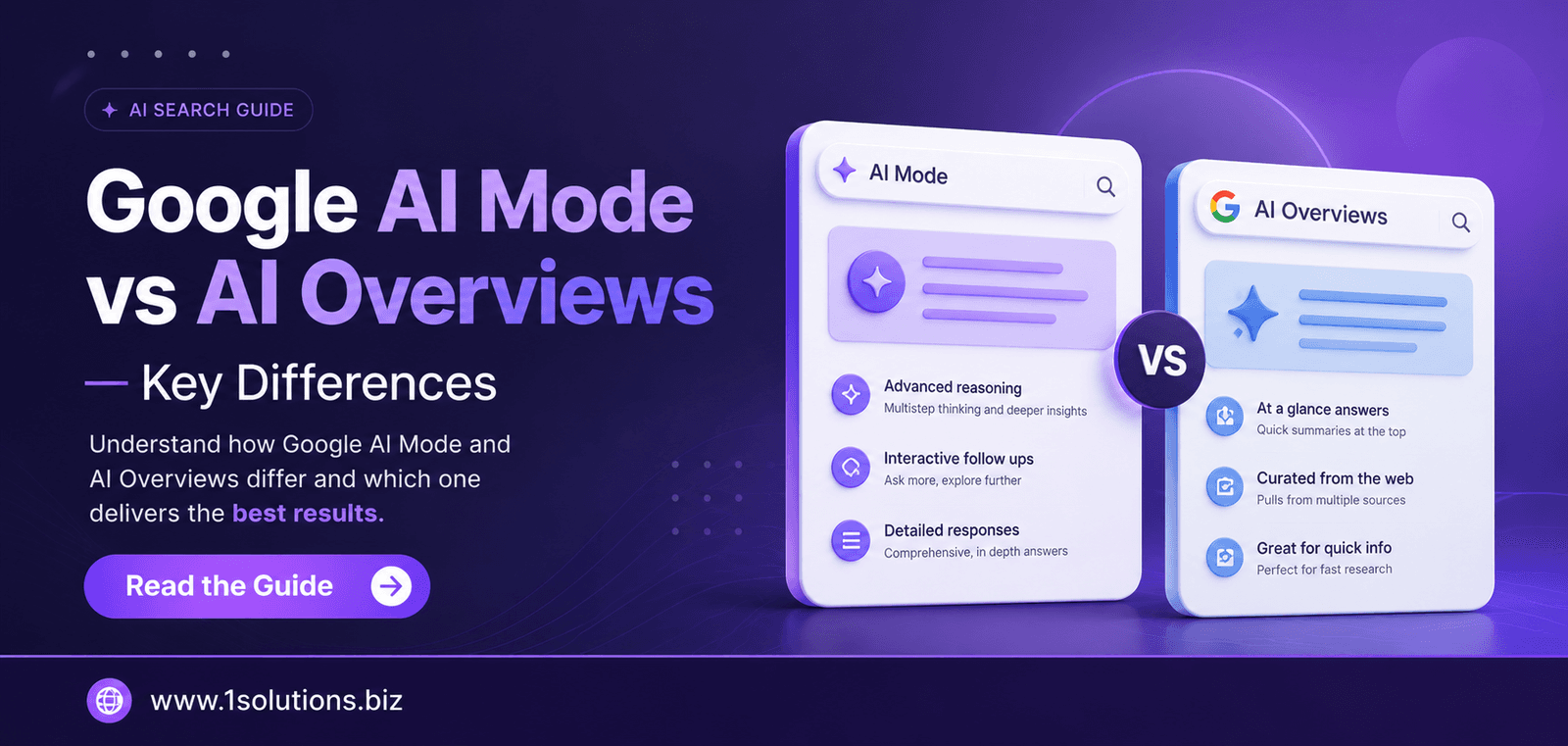
Understanding how Google’s AI systems evaluate content is also evolving rapidly. The differences between how Google’s AI Overviews and its AI Mode process and surface content have implications for how you structure your content to remain visible in an increasingly AI-mediated search environment. Our breakdown of the key differences between Google AI Overviews and AI Mode explains these distinctions and their practical SEO implications.
💡 Pro Tip: If you are using AI content tools, implement a mandatory human review checklist for every piece before publication. This checklist should verify factual accuracy, confirm that the content reflects real expert knowledge, check for repetitive phrasing that signals low-quality AI output, and ensure the content genuinely answers the user’s specific question better than competing pages. This process takes time but protects your site’s authority and ranking stability.
6. Recovery Strategies: What Actually Works After a Core Update
Google has been consistent in its advice about core update recovery: the path back is improving the overall quality of your content, not finding technical workarounds or quick fixes. This is frustrating advice because it takes time, but it is also the most honest guidance available. Here is what a genuine recovery strategy looks like in practice.
Conduct a full content audit. Inventory every page on your site and categorize each as: keep as-is (strong content meeting current quality standards), improve (good foundation but needs updating, expansion, or authorship enhancement), consolidate (multiple thin pages on similar topics that should be merged into one comprehensive resource), or remove (pages with no search value, no traffic, no links, and no realistic potential for improvement). This audit is the foundation of every other recovery action. For sites that want help identifying which content to prioritize, our expert content development services include content audit support as part of a comprehensive quality improvement program.
Prioritize improving, not just deleting. While removing truly low-quality, no-value pages is sometimes the right call, the instinct to delete content aggressively after a core update can backfire. Pages that drove some traffic, earned any backlinks, or served a genuine (if underperforming) purpose are usually better improved than deleted. Deletion permanently removes any link equity those pages carry and can create crawl errors if other sites link to them.
Strengthen E-E-A-T signals throughout your site. This means adding or improving author bios with verifiable credentials, linking to authors’ professional profiles or published work, adding clear publication and last-updated dates to all content, creating a transparent About page that explains your site’s mission and team expertise, implementing editorial disclosure policies for affiliate or sponsored content, and citing reputable sources for factual claims. These changes signal to both Google’s algorithms and its human quality raters that your site is a trustworthy source of information.
Build genuine backlink authority. If your site lost rankings partly due to weak authority signals, earning high-quality backlinks from authoritative, relevant sites is part of the recovery path. This is a medium to long-term effort, not a quick fix. Strategies like original research publication, expert commentary for media outlets, and relationship-based guest posting on reputable sites produce the kind of links that strengthen authority sustainably. Learn more about securing high-quality guest post placements that actually build authority rather than just adding link count.
Patience is required. Google has stated that recovery from core update impacts typically requires waiting for a subsequent core update to see significant ranking recovery, even after improvements are made. This means your improved content may not be fully re-evaluated until the next major core update, which could be several months away. This is not a reason to delay improvements. It is a reason to start immediately so your changes are in place and indexed well before the next evaluation cycle.
If you believe your site’s ranking loss may be penalty-related rather than purely algorithmic, our Google penalty recovery services can help diagnose and address both manual and algorithmic penalties with a structured remediation approach.
7. Future-Proofing Against the Next Core Update
The most effective strategy for any core update is to ensure your site is already aligned with Google’s quality standards before the update rolls out. This requires treating every day, not just post-update periods, as an opportunity to improve content quality, strengthen authority, and deliver better user experiences.
Invest in original research and data. Content that presents original survey data, proprietary analysis, industry research, or unique case studies earns links naturally, establishes genuine authority, and provides value that no amount of AI-generated content can replicate. Even modest original research, a survey of 100 industry professionals, a data analysis of publicly available information, or a structured case study of your own results, provides the kind of unique value Google rewards.
Build a content maintenance calendar. Every piece of evergreen content on your site should have a scheduled review date. For rapidly evolving topics, this might be every six months. For more stable topics, annually may be sufficient. Systematic content maintenance prevents the slow degradation of content quality that makes sites vulnerable to core updates.
Monitor algorithm developments proactively. Understanding how Google’s systems are evolving, including developments like WebMCP, agentic search, and LLM-based ranking signals, helps you stay ahead of changes rather than reacting to them. Our analysis of how Google’s WebMCP protocol impacts SEO and our comprehensive guide on LLM optimization for AI-driven search rankings provide context for the direction search is heading beyond traditional ranking signals.
Diversify your traffic sources. Over-reliance on organic Google traffic creates extreme vulnerability to core updates. Building email lists, social media audiences, direct traffic from brand recognition, and traffic from platforms like YouTube or industry publications creates resilience. When Google updates its algorithm, sites with diversified traffic sources feel the impact less acutely because they are not entirely dependent on one channel.
💡 Warning: Avoid any service or tool that promises rapid ranking recovery from a core update through link schemes, content spinning, or other shortcuts. These approaches may produce temporary gains but create serious long-term risks including manual penalties. Genuine recovery from a core update impact requires genuine improvement, and any provider who tells you otherwise is not being straight with you.
8. Practical Action Plan: What to Do Right Now
Based on everything covered in this article, here is a prioritized action plan organized by urgency and impact.
- Do This Now:
- Pull your Google Search Console data and identify every page that lost impressions or clicks between March 13 and March 31, 2025. Create a spreadsheet documenting the before/after performance of your top 50 most affected pages. This is your working document for the recovery process.
- Read your five most impacted pages critically and honestly assess whether they deliver genuinely expert, original, helpful information. If they do not, prioritize them for immediate improvement before any other action.
- Check every author bio on your site. If any content lacks clear, credible authorship, add proper author attribution with verifiable credentials before your next Google crawl.
- Review your Core Web Vitals scores in Search Console. Pages failing the “good” threshold for LCP, CLS, or INP should be flagged for technical optimization alongside content improvements.
- Worth Doing (Within the Next 30-60 Days):
- Complete a full content audit using the categorization framework described above. This is a significant investment of time but is the single most impactful action you can take for long-term ranking stability.
- Identify your top 10 most valuable pages, meaning those with the most traffic, conversions, or strategic importance, and bring them to the highest possible quality standard. These pages represent disproportionate value and deserve disproportionate investment.
- Start a structured link-building outreach program focused on earning contextually relevant links from authoritative sites in your niche. Even two or three high-quality new backlinks per month compounds significantly over time.
- Develop or update your content maintenance calendar to ensure every piece of evergreen content has a scheduled review date within the next 12 months.
- Low Priority (Plan for the Next 3-6 Months):
- Explore original research opportunities relevant to your industry. Even a simple structured survey or data compilation project can produce linkable, authoritative content that strengthens your site’s reputation over time.
- Assess whether your site’s information architecture supports topical authority or fragments it. Restructuring content silos and internal linking patterns is a longer-term project but pays dividends across multiple future updates.
- Investigate how AI-driven search features like Google’s AI Overviews are handling your target queries, and adjust your content structure to maximize visibility in these formats. Understanding Answer Engine Optimization practices for local businesses is a useful starting point for thinking about content structure in an AI-mediated search environment.
Frequently Asked Questions About Google’s March 2025 Core Update
How long did Google’s March 2025 Core Update take to fully roll out?
The update began on March 13, 2025 and completed its rollout on March 27, 2025, making it a roughly two-week deployment. During rollout, rankings can fluctuate significantly before stabilizing. If you saw your rankings fluctuate wildly and then settle, this rollout window explains that behavior.
My rankings dropped during the March 2025 Core Update. Am I being penalized?
A core update impact is not a manual penalty. Google has been clear that core updates reward previously undervalued content and may cause previously overvalued content to rank lower, but this is a reassessment, not a punishment. There is no reconsideration request process for core update impacts. The path forward is improving content quality. If you believe you received a manual action rather than an algorithmic impact, you will see a notification in the Manual Actions section of Google Search Console.
Does AI-generated content automatically get penalized by Google?
No. Google’s guidelines target low-quality content regardless of how it is produced. AI-generated content that is accurate, expert-reviewed, genuinely helpful, and original in its treatment of a topic is not inherently penalized. The problem is AI-generated content produced at scale without meaningful human oversight, which tends to be formulaic, inaccurate, and lacking genuine expertise. Use AI tools as part of a quality content production process, not as a replacement for it.
How soon can I expect my rankings to recover after making improvements?
Google has stated that recovery from core update impacts is typically assessed during subsequent core updates. Since Google releases several core updates per year, you may need to wait three to six months, or longer, to see full recovery even if your improvements are substantial. That said, significant content quality improvements can sometimes produce partial recovery between core updates. The key is to make improvements now rather than waiting, so your changes have the maximum possible time to be indexed and evaluated before the next update cycle.
Should I avoid publishing new content while recovering from a core update?
No. Pausing content publication while you improve existing content is a reasonable short-term strategy if resources are limited, but there is no SEO reason to avoid publishing new, high-quality content during a recovery period. New content that meets strong quality standards can generate positive signals while you work through improvements to existing pages. The priority should be quality over quantity: one genuinely excellent new piece of content is worth more than ten average ones during a recovery period.
Conclusion
Google’s March 2025 Core Update delivered a clear message that is entirely consistent with what Google has been communicating for years: content quality, genuine expertise, authentic authority, and real user value are not optional extras for SEO. They are the foundation of sustainable search visibility. Sites that were hit hard by this update have a clear path forward, and it runs through honest self-assessment and genuine improvement, not algorithmic gaming.
The update also underscored how rapidly the search landscape is evolving. With AI reshaping both how content is produced and how search results are delivered, the sites that will thrive through the next dozen core updates are those building real authority in specific subject areas, serving users with genuinely helpful content, and maintaining technical foundations that make their content accessible and fast.
At 1Solutions, we have helped websites navigate core updates, algorithm changes, and shifting SEO landscapes for over 15 years. Whether you need a comprehensive audit, a content quality overhaul, or a structured authority-building strategy, our expert SEO team is ready to help you turn a ranking setback into a long-term competitive advantage. The sites that treat every core update as a quality checkpoint rather than an attack are the sites that consistently come out stronger on the other side.