
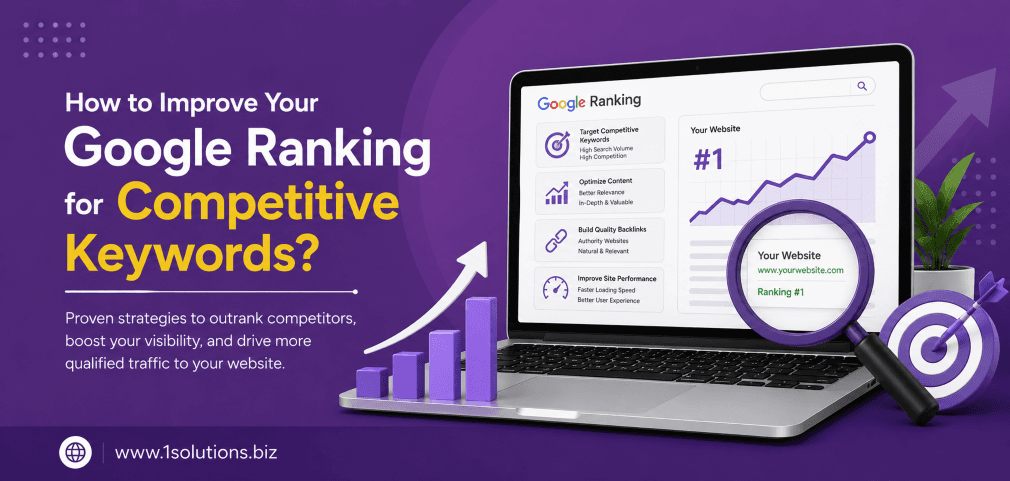
How to Improve Your Google Ranking for Competitive Keywords
Ranking for competitive keywords is one of the hardest challenges in SEO. Unlike low-competition terms, these keywords are contested by established brands, high-authority sites, and businesses investing heavily in content and links. If you want to know how to improve your Google ranking for competitive keywords, you need a strategy that is methodical, patient, and built on what actually works in 2026, not tactics from five years ago.
This guide breaks down exactly 10 proven strategies, each grounded in data and real-world application. Whether you are a small business owner or an in-house SEO professional, these methods will help you compete at a higher level.
Ranking for competitive keywords requires a combination of technical precision, content depth, authoritative backlinks, and user experience signals. There are no shortcuts, but the 10 strategies in this article give you a clear, prioritized roadmap. Consistency and compounding effort are what separate sites that break through from those that stall.
⚡ Key Takeaways
- Target keyword clusters and semantic variations, not just exact-match terms, to widen your ranking surface.
- Content depth and topical authority consistently outperform thin content even when paired with strong backlinks.
- Core Web Vitals and technical health are baseline requirements, not optional extras, for competitive SERPs.
- Link quality matters far more than link volume, especially in 2026 after repeated Google spam updates.
- Internal linking is an underused lever that accelerates ranking gains from your existing content.
- Search intent alignment is the single most correctable mistake that blocks pages from ranking.
- AI-generated search features are changing how rankings translate to traffic, requiring an answer-first content approach.
1. Understand Search Intent Before You Write a Single Word
The most common reason a well-optimized page fails to rank for a competitive keyword is intent mismatch. Google’s algorithm has become exceptionally good at distinguishing between informational, navigational, commercial, and transactional queries. If your page delivers the wrong type of content for the intent behind a keyword, no amount of on-page optimization will save it.
Before targeting any competitive keyword, analyze the top 10 ranking results. Ask yourself: are they listicles, product pages, comparison guides, or how-to tutorials? That pattern tells you exactly what format Google believes users want. According to a 2024 study by Semrush, 68% of pages that ranked in positions 1 through 3 matched the dominant content format of their SERP, while pages that mismatched intent rarely cracked page one regardless of their domain authority.
For competitive keywords with mixed intent, consider creating multiple pages that each address one intent variant. A page targeting “best CRM software” (commercial) should be structured very differently from one targeting “what is CRM software” (informational). Blending them into one page often satisfies neither intent well enough to rank. This foundational step saves months of effort and is where smart SEO always begins.
💡 Pro Tip: Search your target keyword in an incognito window and look at the “People Also Ask” and related searches sections. These reveal the intent sub-categories Google recognizes, giving you a direct blueprint for your content structure.
2. Build Topical Authority Through Content Clusters
Ranking for a single competitive keyword in isolation is extremely difficult. A far more effective approach is to build topical authority, which means creating a web of interconnected content that signals deep expertise on a subject. Google’s Helpful Content guidance, reinforced through several core updates, rewards sites that demonstrate comprehensive knowledge rather than isolated keyword targeting.
A content cluster model consists of a pillar page covering a broad topic and multiple cluster pages covering related subtopics in detail. Each cluster page links back to the pillar, and the pillar links out to all cluster pages. This structure helps Google understand your site’s depth and boosts the ranking potential of every page in the cluster, including your competitive target keyword page.
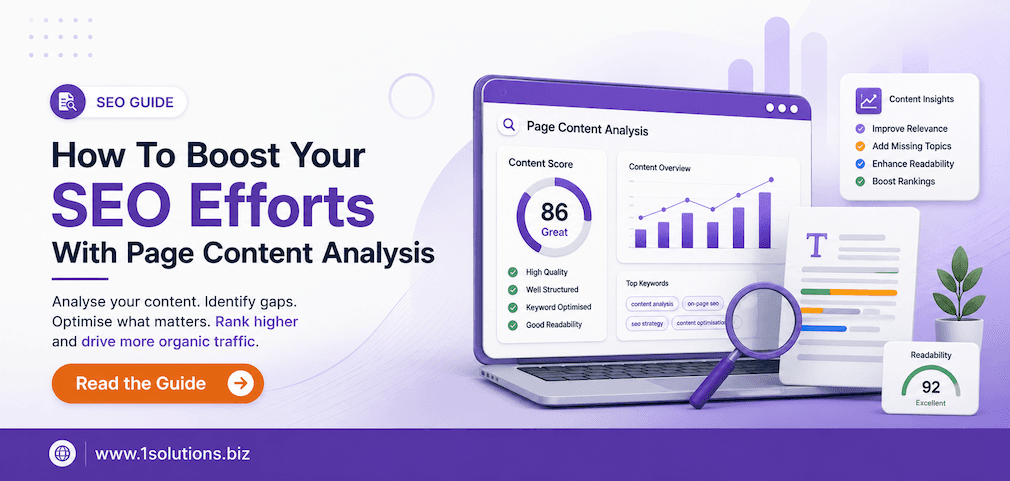
For example, if your competitive keyword is “enterprise SEO strategy,” your cluster might include pages on technical audits, link acquisition, content scaling, and SERP feature optimization. Our post on how to boost your SEO efforts with page content analysis is a practical companion to this approach, showing how to audit existing content and identify topical gaps before building new pages. Content clusters consistently produce compounding ranking gains over time, which is exactly what competitive keyword campaigns require.
3. Prioritize Technical SEO as a Competitive Baseline
Technical SEO is the foundation that every other strategy rests on. A slow, poorly structured, or crawl-blocked website will not rank for competitive keywords no matter how strong its content or backlinks are. According to Google’s own developer documentation, Core Web Vitals are used as a ranking signal, and pages failing the thresholds are at a measurable disadvantage in competitive SERPs.
Key technical areas to address include crawlability, indexation, site speed, mobile usability, structured data, and canonical tag management. For indexation issues specifically, our post on why Google is not indexing your page covers 10 real causes that are frequently overlooked. A page that is not indexed cannot rank, which makes indexation checks a non-negotiable step before any other optimization effort.
Core Web Vitals benchmarks for 2025 require Largest Contentful Paint under 2.5 seconds, Interaction to Next Paint under 200 milliseconds, and Cumulative Layout Shift under 0.1. Sites missing these targets should treat technical remediation as their highest-priority SEO task. The trade-off is real: technical fixes require developer resources, but the ranking payoff in competitive niches justifies the investment. Our professional SEO services include full technical audits that surface and prioritize these issues systematically.
4. Invest in Deep, Differentiated Content
Content length alone does not guarantee rankings, but depth and differentiation consistently do. For competitive keywords, the bar for content quality is set by the current top-ranking pages. Your content needs to be more useful, more comprehensive, more accurate, or more clearly structured than what already ranks. Simply matching existing content at the same quality level rarely displaces established pages.
Differentiation can come from original data, unique frameworks, first-hand expertise, better visual explanations, or a format that makes complex information more accessible. According to Backlinko’s 2023 content study, long-form content averaging 1,447 words received significantly more backlinks than shorter articles, but the correlation was with depth and originality, not word count as a standalone metric.
One powerful differentiation tactic is incorporating your own research, surveys, or case study data. Original statistics attract natural backlinks, boost E-E-A-T signals, and make your content genuinely harder to replicate. Pair this with a clear content brief built around semantic keyword variations and secondary questions from the “People Also Ask” box. Our guide on key SEO strategies for article ranking covers additional content quality signals that apply to competitive pages as well as news content.
5. Earn High-Quality Backlinks Strategically
Backlinks remain one of Google’s strongest ranking signals, and for competitive keywords, the quality and relevance of linking domains can be decisive. A single link from a high-authority, topically relevant site often outweighs dozens of links from low-quality directories. The key word is “earn,” because manipulative link schemes continue to result in manual actions and algorithmic penalties.
Effective link acquisition tactics for competitive keywords include digital PR, expert contribution to industry publications, broken link building, and strategic guest posting on sites with genuine editorial standards. Our post on how to build backlinks in competitive niches covers niche-specific tactics in detail, while our guide on securing high-quality guest post placements explains how to identify and approach the right editorial targets without triggering penalties.
The trade-off with link building is that it takes time. A realistic timeline for competitive keywords is 6 to 12 months of consistent link acquisition before measurable ranking movement becomes visible. Trying to accelerate this artificially by buying links or using private blog networks carries significant penalty risk, which our post on building links safely without triggering penalties addresses directly. Our link building packages are designed for sustainable, penalty-free acquisition at scale.
💡 Pro Tip: Use a tool like Ahrefs or Semrush to analyze the backlink profiles of the top 5 pages ranking for your target keyword. Identify domains that link to multiple competitors but not to you. These are your highest-priority outreach targets because they have already demonstrated a willingness to link to your topic.
6. Optimize Internal Linking to Distribute Authority
Internal linking is one of the most underutilized ranking levers available, and it costs nothing beyond time. When you link from high-authority pages on your site to the page you want to rank for a competitive keyword, you pass PageRank and signal topical relevance. This can meaningfully accelerate ranking gains, especially for pages that are stuck between positions 5 and 20.
A strategic internal linking audit involves identifying your highest-authority pages, finding contextual opportunities to add links pointing to your target keyword pages, and ensuring anchor text is descriptive and varied rather than repetitive. According to a 2024 analysis by Moz, pages with strong internal link equity were 37% more likely to appear in the top 5 results for their target keyword compared to pages with weak internal link structures.
Our dedicated guide on how to use internal links to boost backlink impact explains the mechanics of PageRank distribution in practical terms and shows how to map your internal linking strategy around your most competitive target pages. One important trade-off: over-optimizing anchor text in internal links can look unnatural, so always prioritize readability over exact-match repetition.
7. Target Featured Snippets and SERP Features
For competitive keywords, appearing in position one is valuable, but capturing a featured snippet, People Also Ask box, or AI Overview can deliver visibility that exceeds traditional organic rankings. According to Advanced Web Ranking’s 2024 SERP study, featured snippets capture an average click-through rate of 8.6%, which can outperform the standard position one result in certain query types.
To target featured snippets, structure your content to directly answer the most likely snippet-triggering question within your target page. This means using a concise 40 to 60 word paragraph after a question-formatted heading, or a clearly formatted list or table where the snippet type is typically a list. For definition-based competitive keywords, a crisp definitional paragraph near the top of the page is the most reliable snippet-capture format.
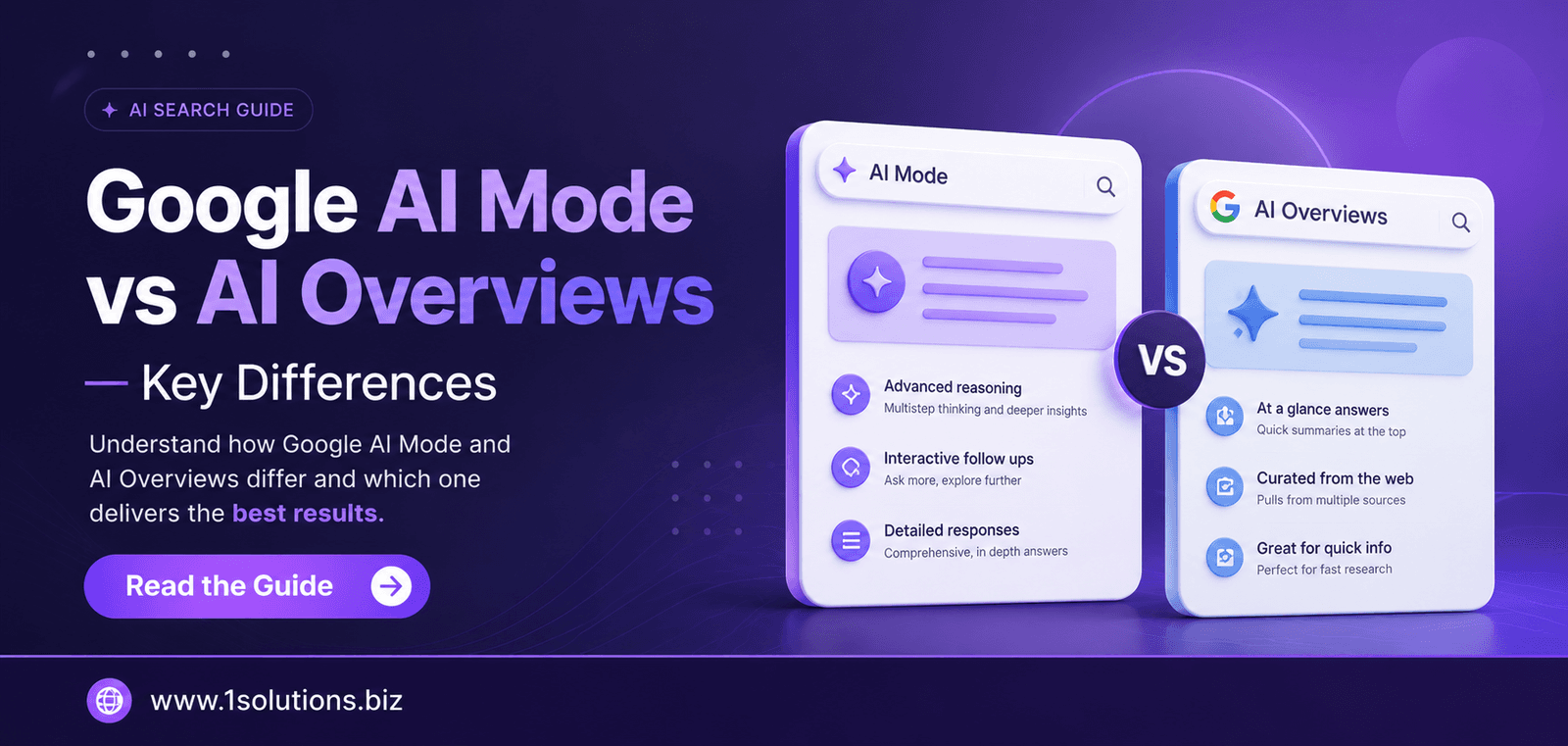
Understanding how Google’s AI-powered features interact with traditional rankings is also increasingly important. Our post on Google AI Mode vs AI Overviews explains the practical differences and how each feature affects organic click-through rates. Additionally, our guide on improving website visibility in AI search engines covers how to position your content for inclusion in generative AI answers, which is becoming essential for competitive keyword visibility.
8. Strengthen E-E-A-T Signals Across Your Site
Experience, Expertise, Authoritativeness, and Trustworthiness (E-E-A-T) are not direct ranking signals in themselves, but they influence the quality signals that Google’s algorithms do measure. For competitive keywords in high-stakes categories such as finance, health, legal, or technology, E-E-A-T is a decisive factor in whether your content earns and holds rankings.
Practical E-E-A-T improvements include displaying author credentials and bios on content pages, adding schema markup for authors and organizations, earning brand mentions and citations from authoritative sources, maintaining a transparent About page, and keeping all factual claims current and well-sourced. Google’s Quality Rater Guidelines, updated in 2024, place particular emphasis on “experience” as a first-hand quality indicator, meaning content written by people with demonstrated expertise in the subject outperforms generic content even when other signals are comparable.
For businesses, E-E-A-T also connects to your online reputation. Consistent positive reviews, accurate business information, and active management of your brand presence all contribute to the trustworthiness signals Google’s algorithms assess. The trade-off is that E-E-A-T improvements are slow to show results, typically requiring several months before ranking impact becomes visible. However, they create durable ranking stability that is harder for competitors to displace.
9. Use Competitor Gap Analysis to Find Ranking Opportunities
Competing blindly without understanding what your top-ranking competitors are doing is one of the most common strategic errors in competitive SEO. A structured competitor gap analysis reveals exactly where your site is weakest relative to the pages you are trying to outrank, and it highlights opportunities your competitors have missed entirely.
A complete gap analysis covers four areas: content gaps (topics your competitors rank for that you do not), link gaps (high-value domains linking to competitors but not to you), keyword gaps (keyword variations driving traffic to competitors), and technical gaps (areas where competitor sites outperform yours on Core Web Vitals or structured data). Tools like Ahrefs, Semrush, and Screaming Frog make this analysis systematic and scalable.
One often-overlooked part of gap analysis is identifying where competitors rank on page two or three. These are keywords where the entire competitive field is vulnerable, and a focused push with better content and a handful of quality links can produce first-page rankings faster than attacking their strongest pages head-on. Our post on 10 AI SEO tools to outrank competitors highlights the best tools for automating much of this analysis and accelerating the identification of actionable gaps.
💡 Pro Tip: When analyzing competitor content, pay attention to which pages earn the most backlinks organically over time. This reveals what their audience finds genuinely link-worthy, giving you a template for creating content that will attract links in the same niche.
10. Be Consistent and Patient: Compounding Effort Wins
This is the strategy that most guides leave out because it is uncomfortable to say plainly: competitive keyword rankings take time, and inconsistency is the most common reason SEO campaigns fail. According to Ahrefs’ 2023 study of 2 million random web pages, only 5.7% of newly published pages reached the top 10 within a year, and those that did typically had strong domain authority and consistent content publishing schedules.
The compounding nature of SEO means that the work you do today builds on the work from last month, and the site that publishes two well-researched, properly optimized articles per month for 18 months will almost always outrank a competitor that published 20 articles in a single quarter and then went quiet. Consistency signals to Google that your site is actively maintained and authoritative. It also gives you more entry points for links, more internal linking opportunities, and more chances to capture featured snippets.
If you are struggling to maintain that consistency, consider partnering with a professional team. Our professional content and copywriting services can handle the research, writing, and optimization that sustains a competitive SEO campaign over the long term. Equally, our comprehensive digital marketing services integrate SEO with paid, social, and content channels so that every effort reinforces the others, shortening the timeline to meaningful rankings without cutting corners.
Comparing Key Ranking Tactics: Effort vs. Impact
| Strategy | Time to See Results | Effort Level | Ranking Impact | Best For |
|---|---|---|---|---|
| Search Intent Alignment | 1 to 4 weeks | Low | High | Fixing stalled pages |
| Content Clusters | 3 to 6 months | High | Very High | Long-term authority |
| Technical SEO | 2 to 8 weeks | Medium | High | All sites |
| Link Building | 6 to 12 months | Very High | Very High | Competitive niches |
| Internal Linking | 4 to 8 weeks | Low | Medium | Quick wins |
| Featured Snippet Targeting | 2 to 6 weeks | Low | Medium | Visibility above rankings |
| E-E-A-T Improvements | 3 to 9 months | Medium | High | YMYL and authority sites |
| Competitor Gap Analysis | Ongoing | Medium | High | Strategy refinement |
Practical Action Plan
- Do This Now: Audit your top 5 target keyword pages for search intent alignment and fix any mismatches. Check Core Web Vitals using Google Search Console and flag any pages failing the thresholds. Run a quick internal linking audit and add at least 3 to 5 contextual links to your most important competitive keyword pages.
- Worth Doing: Build out a full content cluster around your primary competitive keyword, starting with the pillar page and mapping 5 to 8 cluster topics. Initiate a systematic link building outreach campaign using the competitor backlink gap method. Improve author bios and E-E-A-T signals on your highest-traffic content pages.
- Low Priority: Explore advanced AI search optimization tactics for long-term positioning in generative answer features. Test different featured snippet formats for secondary keywords before rolling out to primary targets. Investigate schema markup opportunities for review aggregates and FAQ content as a supplemental SERP enhancement.
Conclusion
Learning how to improve your Google ranking for competitive keywords is not about finding one magic tactic. It is about executing multiple complementary strategies with consistency and patience. Intent alignment, topical authority, technical health, deep content, quality backlinks, strategic internal linking, SERP feature targeting, E-E-A-T signals, competitor analysis, and sustained effort all compound together over time to produce rankings that are durable and defensible.
The sites that dominate competitive SERPs are not always the ones with the biggest budgets. They are the ones that execute more systematically, more honestly, and more consistently than their competitors. Start with the “Do This Now” actions above, build your systems around the medium-term strategies, and give your campaign the time it needs to compound into real results.
Frequently Asked Questions
How long does it take to rank for competitive keywords?
For genuinely competitive keywords, a realistic timeline is 6 to 18 months with consistent effort. Pages on newer or lower-authority domains may take longer. Quick wins are possible through intent fixes and internal linking, but sustained first-page rankings require a full multi-channel strategy and ongoing maintenance.
Is it worth targeting competitive keywords as a small business?
Yes, but strategy matters. Small businesses should use a cluster approach: target longer-tail variations and related subtopic keywords first to build topical authority, then compete for the head term once the surrounding content demonstrates depth and earns some links. Our SEO services for small businesses are specifically designed around this kind of phased, resource-conscious approach.
How many backlinks do I need to rank for a competitive keyword?
There is no fixed number. What matters is the quality and relevance of links relative to the pages you are competing against. Analyze the backlink profiles of the top 5 ranking pages using a tool like Ahrefs or Semrush and aim to match or exceed their link quality, not necessarily their raw volume. Our post on 15 link building methods that continue to work covers effective acquisition tactics for any authority level.
Do AI Overviews hurt organic rankings for competitive keywords?
AI Overviews can reduce click-through rates for some competitive keywords, particularly informational ones. However, being cited inside an AI Overview can itself drive brand awareness and qualified traffic. Structuring content to be answer-first and clearly sourced improves your chances of being included. Our post on LLM optimization and ranking in AI search explains the mechanics in detail.
What is the biggest mistake people make when targeting competitive keywords?
The single biggest mistake is targeting competitive keywords with content that mismatches search intent, or creating thin content that does not meaningfully improve on what already ranks. Both errors waste time and resources. Always start with a thorough SERP analysis and a content brief grounded in what Google’s algorithm is already rewarding for that specific query.