
How to Rank on the Top of Google Search Results: 10 Proven Strategies
Getting your website to appear at the top of Google Search Results is not a lucky break. It is the outcome of deliberate, consistent, and technically sound SEO work. Google processes roughly 8.5 billion searches every single day (Statista, 2023), and the first organic result on the first page captures an average click-through rate of 27.6% (Backlinko, 2023). If your site is not near the top, you are invisible to the majority of potential visitors.
The good news is that ranking well is achievable for businesses of all sizes, provided you understand what Google actually rewards. This guide breaks down exactly what to do, in plain language, with no fluff.
Ranking at the top of Google Search Results requires a combination of technical SEO, high-quality content, authoritative backlinks, and a great user experience. This article walks you through 10 specific, actionable strategies. Implement them consistently and you will see measurable improvements in organic visibility.
⚡ Key Takeaways
- Keyword research is the foundation of every successful SEO campaign.
- Page experience signals including Core Web Vitals directly influence rankings.
- Backlinks from authoritative, relevant sites remain one of Google’s top three ranking factors.
- On-page optimization must align with search intent, not just keyword frequency.
- Content freshness and depth consistently outperform thin, outdated pages.
- Structured data and schema markup help Google understand and feature your content.
- Tracking your rankings and adjusting your strategy based on data is non-negotiable.
1. Start With Intent-Driven Keyword Research
Every page that ranks well on Google Search Results begins with a keyword that matches what real people are actually searching for. But matching a keyword is only half the battle. The other half is matching the intent behind that keyword.
Google classifies search intent into four categories: informational, navigational, commercial, and transactional. If someone types “best running shoes for flat feet,” they want a comparison, not a product page. If someone types “buy running shoes size 10,” they want to purchase. Building content that matches this intent is what separates pages that rank from pages that do not.
Use tools like Google Keyword Planner, Ahrefs, or Semrush to identify keywords with a healthy balance of search volume and manageable competition. Long-tail keywords, those with three or more words, tend to have lower competition and higher conversion rates. A local bakery trying to rank for “bakery” will struggle, but ranking for “sourdough bread bakery open Sunday” is very realistic.
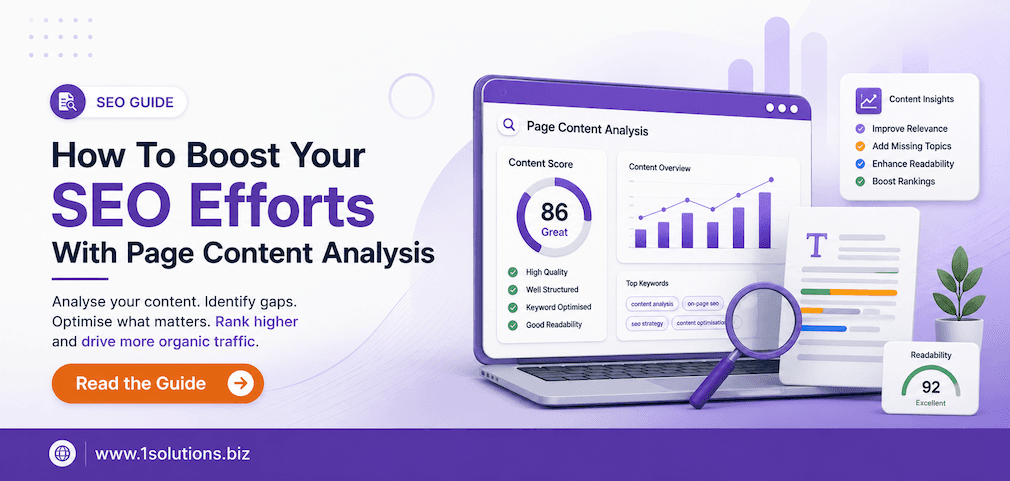
Also look at the “People Also Ask” and “Related Searches” sections in Google to uncover secondary keywords and subtopics your content should address. For a deeper dive into how content analysis shapes keyword strategy, read our guide on how to boost your SEO efforts with page content analysis.
💡 Pro Tip: Never target a keyword your page cannot genuinely answer better than the current top-ranking results. Ambition is good, but relevance is what Google rewards.
2. Optimize On-Page SEO Elements Thoroughly
On-page SEO is the process of making sure Google and your readers can clearly understand what each page is about. It covers your title tags, meta descriptions, header tags, URL structure, image alt text, and internal linking, all working together to send clear relevance signals to Google.
Your primary keyword should appear in the page title, the first 100 words of the body copy, at least one H2 subheading, and naturally throughout the rest of the content. Avoid keyword stuffing, which Google actively penalizes. Aim for natural placement that reads well to a human visitor first.
Meta descriptions do not directly influence rankings, but they influence click-through rates, which do. Write meta descriptions that are specific, benefit-driven, and under 155 characters. A compelling meta description can be the difference between a user clicking your result or the one below it.
Internal linking is often underestimated. Linking relevant pages within your site helps Google understand your site’s structure and distributes ranking authority. Our detailed post on how to use internal links to boost backlink impact explains exactly how to do this strategically.
3. Create Content That Is Genuinely Better Than What Already Ranks
Google’s Helpful Content system, introduced in 2022 and strengthened in subsequent updates, is designed to reward content created for people rather than for search engines. This means depth, accuracy, originality, and genuine usefulness are now ranking requirements, not nice-to-haves.
Before writing a new page, spend 20 minutes reading the top five results for your target keyword. Ask yourself: what questions do those pages leave unanswered? What data is outdated? What could be explained more clearly? Your page should fill those gaps.
Long-form content tends to rank well because it covers topics comprehensively. According to HubSpot (2023), long-form content generates 77% more backlinks than short-form articles. But length for its own sake is useless. Every section must earn its place by adding information the reader cannot easily find elsewhere.
Freshness also matters. Regularly updating existing content to reflect new data, algorithm changes, or emerging trends signals to Google that your page remains relevant. If you are producing content for news or current events, our post on 5 key SEO strategies for Google News article ranking provides a focused framework.
4. Build High-Quality Backlinks From Authoritative Sources
Backlinks remain one of Google’s top three ranking factors. A backlink from a relevant, high-authority site tells Google that another trusted source vouches for your content. However, not all links are equal, and pursuing low-quality links can actively harm your rankings.
The most effective link-building strategies include creating link-worthy assets such as original research, detailed guides, or free tools; earning editorial mentions from industry publications; and building genuine relationships with other site owners in your niche. Guest posting on reputable sites is another reliable method when done with quality in mind.
Avoid link schemes, paid links without the nofollow attribute, and bulk link-building services that promise hundreds of links quickly. These tactics can trigger a Google penalty that tanks your rankings far below where you started. For a detailed breakdown of safe approaches, read our guide on how to build links safely without triggering penalties and our resource on 15 link building methods that continue to work.
Our team at 1Solutions offers dedicated link building packages designed to earn genuine authority for your site without the risk of penalties.
5. Make Technical SEO a Non-Negotiable Foundation
You can write the best content in the world, but if Google cannot crawl and index your pages correctly, none of it matters. Technical SEO covers the infrastructure that makes your site accessible and understandable to search engines.
Start with your XML sitemap. Make sure it is submitted to Google Search Console and lists all your important pages. Check your robots.txt file to confirm you are not accidentally blocking pages you want Google to index. Use Google Search Console’s Coverage report to identify any indexing errors.
Site speed is a confirmed ranking factor. Google’s Core Web Vitals, which include Largest Contentful Paint (LCP), Cumulative Layout Shift (CLS), and Interaction to Next Paint (INP), are now part of the page experience signals that influence rankings. According to Google (2023), pages that meet Core Web Vitals thresholds are 24% less likely to be abandoned mid-load.
If you are unsure why certain pages are not being indexed, our post on why Google is not indexing my page walks through the 10 most common reasons and how to fix them.
💡 Pro Tip: Run a technical audit at least once per quarter. Issues like broken internal links, duplicate content, and slow page loads accumulate over time and compound their negative effect on rankings.
6. Optimize for Mobile and Page Experience Signals
Google has operated on a mobile-first indexing model since 2019, meaning the mobile version of your site is what Google primarily uses to determine your rankings. If your mobile experience is poor, your rankings will reflect that, regardless of how good your desktop version looks.
Test your site on multiple devices and screen sizes. Make sure buttons are tappable, text is readable without zooming, and pages load within three seconds on a standard mobile connection. Use Google’s Mobile-Friendly Test tool to get a quick assessment.
Beyond mobile, page experience signals include HTTPS security, absence of intrusive interstitials (those pop-ups that cover the content immediately on load), and the Core Web Vitals metrics mentioned in the previous point. These signals collectively influence how Google ranks pages when content quality is similar between competing pages.
For businesses running ecommerce sites, mobile performance is especially critical. A one-second delay in page load time can reduce conversions by 7% (Akamai, 2017). If you are running a WooCommerce or Shopify store, see our comparison guide on WooCommerce vs Shopify to understand which platform handles performance better for your needs.
7. Use Structured Data and Schema Markup
Structured data is code you add to your pages that helps Google understand the specific type of content you are presenting. It does not directly boost rankings, but it can earn rich results in Google Search Results, such as star ratings, FAQs, how-to steps, product prices, and event dates displayed directly in the search snippet.
These rich results take up more visual space in the search results page, which naturally increases click-through rates. A product page with a star rating and price shown in the snippet will almost always outperform a plain blue link for the same search query.
Common schema types include Article, Product, FAQ, LocalBusiness, BreadcrumbList, and HowTo. Use Google’s Rich Results Test tool to validate your markup before publishing. Schema implementation can be done manually in JSON-LD format, which Google recommends, or through plugins if you are on WordPress or a similar CMS.
If your site is built on WordPress, working with an experienced WordPress development team can ensure your schema markup is implemented cleanly and maintained as your site evolves.
8. Strengthen Your E-E-A-T Signals
E-E-A-T stands for Experience, Expertise, Authoritativeness, and Trustworthiness. It is a framework Google’s quality raters use to evaluate content, and it heavily influences how Google’s algorithm treats your pages, particularly for health, finance, legal, and other sensitive topics often called YMYL (Your Money or Your Life) content.
To strengthen E-E-A-T, make sure your content is written or reviewed by people with genuine credentials in the subject matter. Include author bios with relevant experience. Display trust signals such as SSL certificates, privacy policies, clear contact information, and real customer reviews. Link out to authoritative external sources where relevant.
Building brand authority through PR mentions, podcast appearances, industry award listings, and Wikipedia references all contribute to how Google perceives your site’s credibility. It is a slower process than keyword optimization, but it creates durable ranking strength that is very difficult for competitors to replicate quickly.
Our comprehensive SEO services include E-E-A-T audits and authority-building strategies tailored to your industry and audience.
9. Adapt to AI-Driven Search Features
Google Search Results are changing. AI Overviews, formerly known as Search Generative Experience, now appear for a growing number of queries and provide AI-generated summaries at the top of the page. To appear in or alongside these features, your content needs to be structured clearly, answer questions directly, and demonstrate strong topical authority.
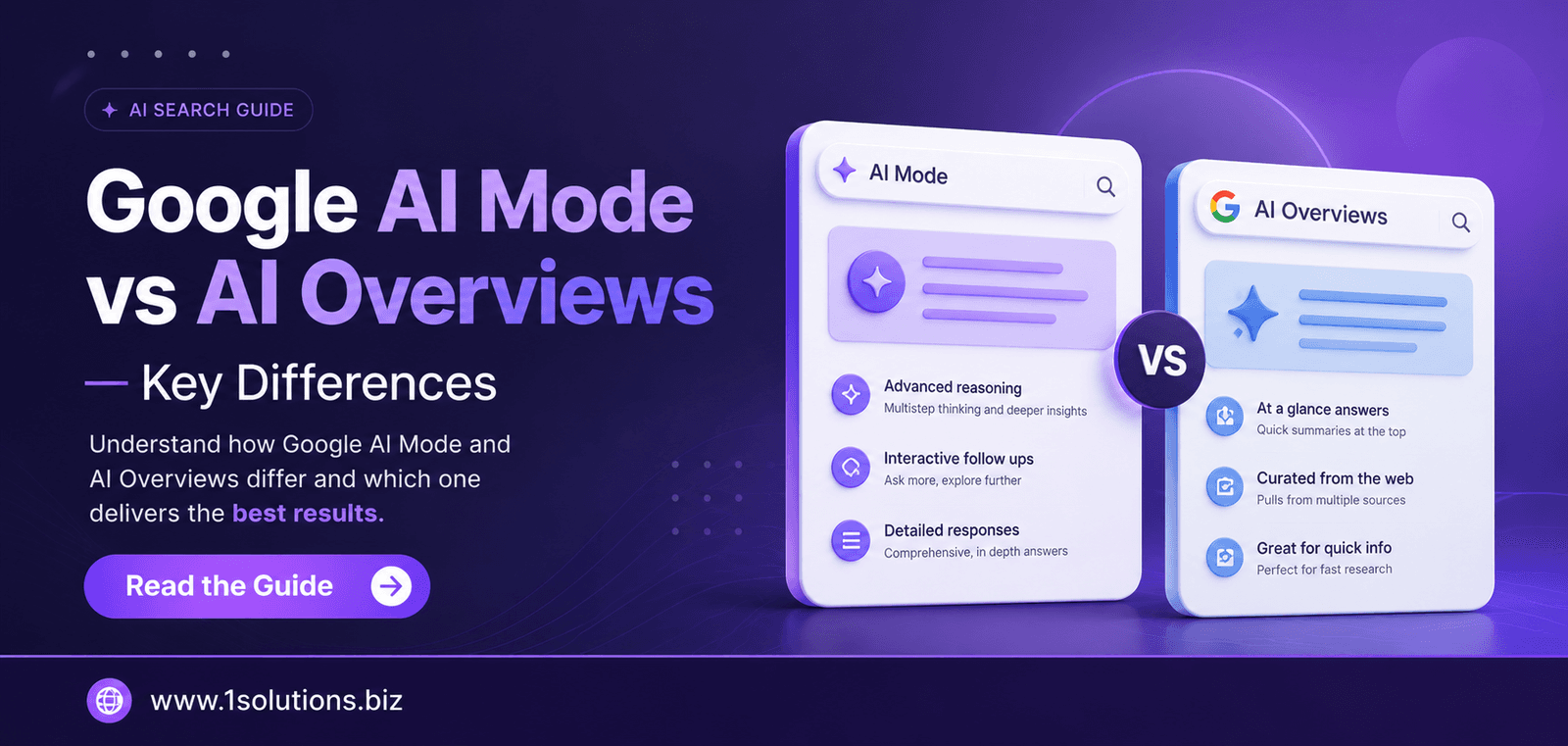
This is not a reason to panic. Websites that rank well organically tend to be cited in AI Overviews. The same practices that earn traditional rankings, depth, accuracy, trust, and clear structure, are what get you featured in AI summaries. Understanding the differences between Google’s AI features can sharpen your approach. Our post on Google AI Mode vs AI Overviews breaks down exactly how each works and what it means for your visibility strategy.
Additionally, optimizing for large language models is becoming its own discipline. Read our guide on LLM Optimization: how to rank in AI search to stay ahead of this shift.
💡 Pro Tip: Structure your content with clear question-and-answer formatting where appropriate. AI systems and featured snippets both favor content that directly addresses specific questions in concise, well-organized language.
10. Track, Measure, and Iterate Based on Real Data
None of the previous nine strategies will compound into lasting results unless you are tracking what works and adjusting accordingly. SEO is not a set-and-forget activity. It is an ongoing process of measurement, learning, and refinement.
Set up Google Search Console and Google Analytics 4 if you have not already. In Search Console, monitor your average position for key queries, your click-through rates, and any manual actions or coverage errors. In GA4, track organic sessions, bounce rate, and goal completions attributed to organic search. These two tools together give you a clear picture of what is driving results and what needs attention.
Set a monthly review schedule. Look at which pages improved, which dropped, and why. Compare changes to any algorithm updates Google announced around the same time. If a page slipped after a core update, assess whether its content quality, E-E-A-T signals, or technical health needs improvement.
For businesses that want professional guidance without building an in-house SEO team, our digital marketing services provide ongoing strategy, execution, and reporting so you can focus on running your business while we focus on growing your visibility in Google Search Results.
Comparing Key Google Ranking Factors: Impact and Effort
| Ranking Factor | Ranking Impact | Implementation Effort | Time to See Results |
|---|---|---|---|
| Keyword Research | High | Low to Medium | 1 to 4 weeks |
| On-Page Optimization | High | Medium | 2 to 6 weeks |
| Content Quality and Depth | Very High | High | 4 to 12 weeks |
| Backlink Building | Very High | High | 8 to 24 weeks |
| Technical SEO | High | Medium to High | 2 to 8 weeks |
| Mobile and Page Experience | Medium to High | Medium | 2 to 6 weeks |
| Schema Markup | Medium | Low to Medium | 1 to 4 weeks |
| E-E-A-T Building | High (long-term) | High | 12 to 52 weeks |
| AI Search Optimization | Growing | Medium | 4 to 16 weeks |
| Analytics and Iteration | Compounding | Low to Medium | Ongoing |
Practical Action Plan: Where to Focus Your Energy
- Do This Now: Audit your top 10 pages in Google Search Console. Identify those ranking between positions 5 and 15 and update them with fresher data, stronger on-page optimization, and improved internal linking. These are your fastest wins.
- Do This Now: Run a Core Web Vitals check using Google PageSpeed Insights. Fix any LCP or CLS issues immediately, especially on your most important landing pages.
- Worth Doing: Build a content calendar targeting long-tail keywords with clear informational or transactional intent. Publish at least two well-researched pieces per month consistently.
- Worth Doing: Start a systematic link-building outreach campaign. Prioritize guest posting on relevant, mid-to-high authority sites in your industry.
- Worth Doing: Add FAQ and HowTo schema markup to pages that naturally suit those formats. Validate with Google’s Rich Results Test tool.
- Low Priority: Experiment with AI search optimization strategies once your foundational SEO is solid. Trying to optimize for AI features before your core SEO is healthy is premature.
- Low Priority: Social media amplification of your content can support brand awareness and indirect link acquisition, but it is not a direct ranking factor. Focus here after your technical and content foundations are strong.
Frequently Asked Questions
How long does it take to rank on the first page of Google Search Results?
It depends on your domain’s existing authority, the competitiveness of your target keywords, and how consistently you execute your SEO strategy. For a new site targeting low-competition keywords, three to six months is a realistic estimate. For competitive keywords on an established domain, six to eighteen months is more common. There are no shortcuts that produce durable results.
Does paying for Google Ads help organic rankings?
No. Google has explicitly stated that running paid ads has no influence on organic rankings. The two systems operate independently. Paid ads can increase your visibility in the short term, but they do not build the organic ranking authority that SEO does.
How many keywords should I target on one page?
Focus your page around one primary keyword and a handful of semantically related secondary keywords. A page trying to rank for ten unrelated keywords will rank poorly for all of them. One primary focus with supporting subtopics naturally addressed in the content is the most effective structure.
What is the biggest mistake businesses make with SEO?
Producing content without first understanding search intent. Many businesses write about what they want to say rather than what their audience is actually searching for. The result is content that gets published, gets no traffic, and does nothing for business growth. Start every piece of content with keyword and intent research.
Is SEO still worth investing in when AI is changing Google Search Results?
Absolutely. AI features in Google, such as AI Overviews, primarily cite and surface content from pages that already rank well organically. Strong SEO is the foundation for appearing in both traditional and AI-driven search features. If anything, the bar for content quality has risen, which makes professional SEO more valuable, not less.
Conclusion
Ranking at the top of Google Search Results is a multi-layered challenge, but it is entirely achievable with the right approach. The ten strategies outlined in this article cover every major lever: keyword research, on-page optimization, content quality, backlinks, technical SEO, mobile performance, structured data, E-E-A-T, AI search adaptation, and data-driven iteration. None of these work in isolation. The sites that dominate Google are the ones that execute all of them consistently over time.
If you want professional support to accelerate your results, explore our expert SEO services or take advantage of our free 45-day SEO trial to see real results before making a long-term commitment. Your next customer is searching right now. Make sure they find you first.