
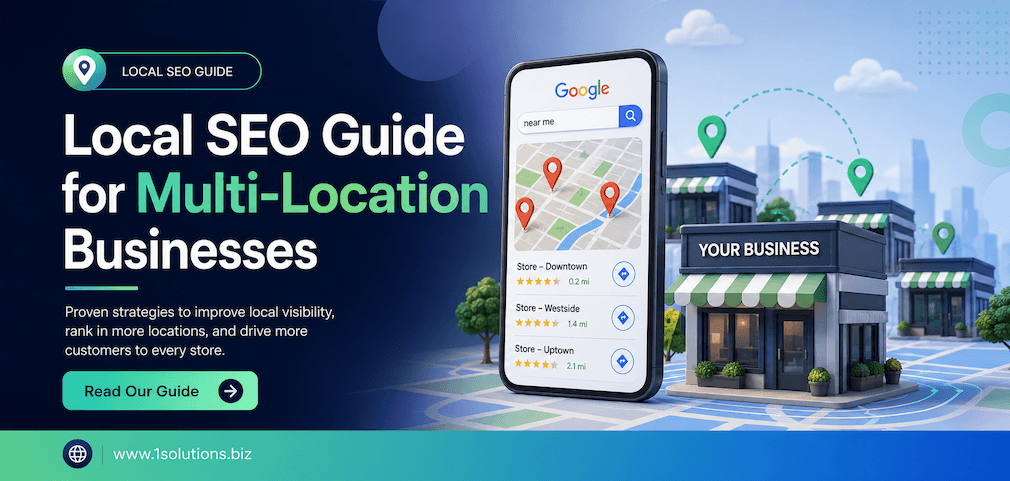
Why Local SEO Is a Different Game for Multi-Location Businesses
Local SEO is the process of optimizing your online presence so each physical location appears prominently in local search results. For a business with two locations, that challenge is manageable. For a business with ten, fifty, or two hundred locations, it becomes an entirely different operation that demands a structured, scalable system.
According to Google, 46% of all searches have local intent, meaning nearly half of every query typed into Google is from someone looking for something nearby. If your locations are not individually optimized, you are handing those customers to competitors who are.
This guide walks through every critical element of a multi-location local SEO strategy, from Google Business Profile management to content, citations, reviews, and technical SEO, so every branch, franchise, or office you operate can compete effectively in its own market.
1. Create and Optimize a Separate Google Business Profile for Every Location
The foundation of local SEO for any business is a well-optimized Google Business Profile (GBP). For multi-location businesses, this means one verified, fully completed profile per physical location, not one profile listing multiple addresses.
Each profile should include:
- The exact business name, address, and phone number (NAP) unique to that location
- Location-specific business hours, including holiday hours
- A unique local phone number rather than a centralized call center number
- Category selections that match the services offered at that specific location
- High-quality photos of the actual location, staff, and services
- A link to that location’s dedicated landing page on your website
Google’s own documentation confirms that businesses with complete profiles are twice as likely to earn trust from customers. Treat each GBP as its own mini-website and keep the information current. Outdated hours or wrong addresses create immediate trust problems and hurt your local pack rankings.
2. Build Dedicated Location Pages on Your Website
One of the most common mistakes multi-location businesses make is sending all GBP traffic to a single homepage or a generic contact page. Every location needs its own dedicated landing page with unique, relevant content.
A strong location page should include:
- The location’s full NAP information
- An embedded Google Map
- Unique content describing that location’s services, team, and neighborhood context
- Locally relevant keywords such as