
Why Social Media Sites Still Matter for Your Business in 2026
If you are trying to grow a brand, generate leads, or build an audience, social media sites remain one of the most powerful tools available. According to Statista (2024), there are over 5.17 billion social media users worldwide, a number that continues to climb each year. Whether you are a startup in Toronto, a retail business in Sydney, or a service agency in Chicago, your customers are active on these platforms right now.
This guide breaks down the top 100 social media sites, explains how to choose the right ones for your goals, and gives you a clear step-by-step approach to building a meaningful presence across them. We also cover how your social activity connects to broader digital marketing outcomes, including SEO, backlinks, and brand authority.
Step 1: Understand the Different Categories of Social Media Sites
Not all social media platforms serve the same purpose. Before you dive into a list of 100 sites, you need to understand the categories. Each type attracts a different audience and supports different content formats.
General Social Networks
These are the big all-purpose platforms where users share updates, photos, videos, and links. Examples include Facebook, Instagram, X (formerly Twitter), and Threads. According to DataReportal (2025), Facebook alone has 3.07 billion monthly active users, making it the single largest social network on Earth.
Professional and Business Networks
LinkedIn is the dominant player here, with over 1 billion members globally (LinkedIn, 2024). These platforms are built for career development, B2B networking, and industry thought leadership. Others in this category include Xing and Alignable.
Video Platforms
YouTube, TikTok, Vimeo, Dailymotion, and Rumble fall into this group. Short-form video, in particular, has exploded. According to HubSpot (2024), short-form video delivers the highest ROI of any content format for the third consecutive year.
Image and Visual Platforms
Pinterest, Flickr, 500px, and Imgur are built around visual discovery. Pinterest, for example, functions almost like a search engine for visual inspiration and drives significant referral traffic to e-commerce websites.
Discussion and Community Forums
Reddit, Quora, Discord, and Hacker News fall here. These platforms are built around conversations and niche communities. They are powerful for brand trust, Q&A marketing, and driving targeted traffic.
Messaging and Private Networks
WhatsApp, Telegram, Snapchat, Signal, and WeChat blur the line between social media and direct communication. WhatsApp Business has become a critical customer service channel for businesses in Australia, Canada, and the UK.
Niche and Industry-Specific Platforms
GoodReads for book lovers, Houzz for home design, Behance for creatives, GitHub for developers, and Untappd for craft beer fans. These smaller platforms often deliver highly engaged, specific audiences that general networks cannot replicate.
Step 2: The Top 100 Social Media Sites Listed by Category
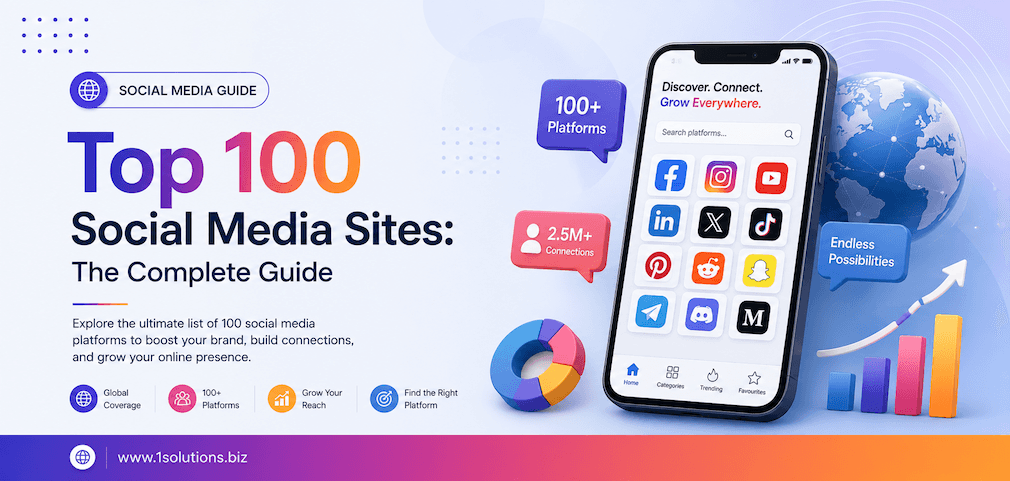
Below is a structured breakdown of the top 100 social media sites organized by category. Use this as a reference when building your platform strategy. For the most current and detailed version of this list, see our dedicated resource: Top 100 Social Media Sites: The Complete Guide (2026).
Top General Social Networks (1-15)
- Facebook – 3.07 billion MAU, universal reach across demographics
- Instagram – 2 billion MAU, visual-first, strong for e-commerce
- X (Twitter) – Real-time news, trending topics, brand voice
- Threads – Meta’s text-based alternative to X, growing rapidly
- Snapchat – 800 million MAU, younger demographics, Stories format
- Pinterest – 518 million MAU, visual search and shopping discovery
- Tumblr – Niche creative communities, blogging hybrid
- MeWe – Privacy-first alternative social network
- VK – Dominant social platform across Eastern Europe
- Weibo – China’s leading microblogging platform
- Line – Popular messaging and social app in Japan and Southeast Asia
- Mastodon – Decentralized open-source social network
- Bluesky – Decentralized Twitter alternative gaining traction in 2025
- Minds – Open-source social platform with crypto rewards
- Gab – Free speech focused social network with a niche audience
Top Professional Networks (16-25)
- LinkedIn – The go-to B2B social platform globally
- Xing – Business network popular in German-speaking markets
- Alignable – Small business owner community focused on local networking
- AngelList (Wellfound) – Startup ecosystem, hiring, and investor connections
- Bark – Professional services marketplace and networking
- Houzz – Home design and renovation professional network
- Behance – Adobe’s creative professional portfolio network
- Dribbble – Design community for UI/UX and graphic designers
- GitHub – Developer community and code collaboration platform
- ResearchGate – Academic and scientific networking for researchers
Top Video Platforms (26-38)
- YouTube – 2.7 billion logged-in users monthly, second largest search engine
- TikTok – 1.5 billion MAU, dominant short-form video platform
- Vimeo – Premium video hosting for creatives and businesses
- Dailymotion – Video sharing with strong European audience
- Rumble – Alternative video platform with a rapidly growing creator base
- Twitch – Live streaming, gaming, and creator communities
- Kick – Fast-growing Twitch alternative for live streamers
- YouTube Shorts – Short-form vertical video directly competing with TikTok
- Triller – Music-driven short video platform
- Lemon8 – ByteDance’s lifestyle content and photo-sharing app
- Clapper – Short video app aimed at creators over 30
- Odysee – Blockchain-based video platform for independent creators
- Bitchute – Peer-to-peer video hosting as an alternative to YouTube
Top Discussion and Community Platforms (39-50)
- Reddit – 1.5 billion monthly visits, the front page of the internet
- Quora – Q&A platform with high search engine visibility
- Discord – Community server platform for all niches
- Hacker News – Tech and startup news community by Y Combinator
- Stack Overflow – Developer Q&A community
- Product Hunt – Launch platform for new tech products
- Indie Hackers – Community for bootstrapped founders and entrepreneurs
- Slashdot – Technology news and discussion forum
- Digg – Social news aggregation platform
- Mix – Content discovery and community bookmarking
- Clubhouse – Audio-based social networking and live conversations
- Geneva – Community platform for private groups and clubs
Top Messaging and Chat Platforms (51-60)
- WhatsApp – 2 billion users, dominant messaging app globally
- Telegram – 900 million MAU, channels, bots, and group chats
- Signal – Privacy-focused encrypted messaging
- WeChat – All-in-one super app dominant in China
- Viber – Popular messaging app in Eastern Europe and Asia
- KakaoTalk – Dominant messaging platform in South Korea
- Kik – Anonymous chat app popular with younger users
- GroupMe – Group messaging popular in US college communities
- Zalo – Vietnam’s most popular messaging and social app
- iMessage/FaceTime – Apple’s built-in communication ecosystem
Top Niche and Lifestyle Platforms (61-100)
The remaining 40 platforms cover everything from food and fitness to books, travel, gaming, and art. Notable ones include:
- GoodReads – Book reviews and reading communities
- Untappd – Craft beer check-ins and brewery discovery
- Strava – Fitness tracking and athlete social network
- Letterboxd – Film logging and movie review community
- Ravelry – Knitting and crochet community
- Flickr – Photo sharing for enthusiasts and professionals
- 500px – Photography community and stock photo platform
- DeviantArt – Art sharing and creative community
- ArtStation – Professional art portfolio platform used by games and film studios
- SoundCloud – Music sharing and independent artist platform
- Bandcamp – Direct-to-fan music sales and streaming
- Last.fm – Music tracking and discovery social network
- Nextdoor – Hyperlocal neighborhood social network
- Meetup – In-person and virtual event community building
- Tumblr – Blogging and fandom communities
- Medium – Long-form writing and thought leadership
- Substack – Newsletter and community publishing platform
- Patreon – Creator membership and subscription community
- Buy Me a Coffee – Lightweight creator support and community platform
- Twitch – Already listed above, but also functions as a community hub
Step 3: Choose the Right Social Media Sites for Your Business Goals
Spreading yourself across 100 platforms is neither practical nor effective. The key is to select the platforms that align with your audience, content strengths, and business objectives.
Define Your Target Audience First
Who are you trying to reach? A B2B software company will find more value on LinkedIn and Reddit than on TikTok. A fashion brand targeting Gen Z will thrive on Instagram and TikTok. A local restaurant benefits most from Facebook and Nextdoor. Start with audience research before platform selection.
Match Content Format to Platform Strength
Each platform rewards a specific content format. Video-first brands should prioritize YouTube, TikTok, and Instagram Reels. Text-driven thought leaders should invest in LinkedIn, X, and Medium. Visual product brands belong on Pinterest and Instagram. Match your content production capabilities to the platform’s native format.
Consider Platform SEO and Backlink Value
Social media activity does not directly boost your Google rankings, but the indirect benefits are real. Profiles on high-authority platforms like LinkedIn, YouTube, and Pinterest pass referral traffic and brand signals that support your broader SEO strategy. Building visibility across multiple social media sites also increases the chances of earning natural backlinks from journalists, bloggers, and industry publications who discover your content. For more on this, explore how to build backlinks in competitive and low-competition niches.
Step 4: Set Up and Optimize Your Profiles
Once you have selected your target platforms, the setup process matters more than most businesses realize. A half-finished profile sends the wrong signal to both users and search engines.
Complete Every Profile Field
Use your full business name, consistent logo and branding, complete bio or about section, and accurate contact information. Every social media profile is a mini landing page and should be treated accordingly.
Use Keywords in Your Bios and Descriptions
Social media platforms have their own internal search functions. Using relevant industry keywords in your profile description, headline, and post captions helps you appear in platform-specific searches. This is especially important on LinkedIn, YouTube, Pinterest, and Reddit.
Link Back to Your Website
Every profile should include a link to your website. This drives referral traffic and contributes to your site’s authority signals. If you want to understand how this fits into your overall link strategy, read our guide on how to use internal links to boost backlink impact.
Step 5: Build a Consistent Content Strategy Across Platforms
Creating content for 10 or more platforms sounds overwhelming, but a repurposing approach makes it manageable. Start with one core piece of content, then adapt it for each platform.
The Content Repurposing Framework
- Write a long-form blog post or article (your core content asset)
- Extract 3-5 key insights and turn them into LinkedIn posts or X threads
- Create a short video or screen recording summarizing the main points for TikTok or YouTube Shorts
- Design a visual carousel for Instagram or Pinterest
- Post a discussion question in a relevant Reddit or Quora community
- Share the article link in niche Discord servers or Facebook Groups
This approach lets one piece of content generate engagement across 6 or more platforms without creating everything from scratch.
Post Frequency Guidelines by Platform
- LinkedIn: 3-5 times per week
- Instagram: 4-7 posts per week including Reels and Stories
- X (Twitter): 5-10 tweets or replies per day
- TikTok: 1-3 videos per day for growth phase, 3-5 per week for maintenance
- YouTube: 1-2 videos per week for consistent channel growth
- Pinterest: 5-15 pins per day leveraging scheduled tools
- Reddit and Quora: Participate in discussions 3-5 times per week
Step 6: Measure Performance and Adjust Your Strategy
Data should drive every decision about which social media sites you prioritize. Each platform offers native analytics. Use them consistently.
Key Metrics to Track
- Reach and Impressions: How many people are seeing your content
- Engagement Rate: Likes, comments, shares, and saves as a percentage of reach
- Click-Through Rate: How many users are clicking through to your website
- Follower Growth Rate: Are you building an audience consistently over time
- Referral Traffic: Check Google Analytics to see which platforms actually drive visits
- Conversions: Are social visitors completing goals like form submissions or purchases
Audit your performance every 90 days and reallocate time and budget to the platforms delivering the best results for your specific goals.
Step 7: Integrate Social Media with Your Broader Digital Marketing
Social media does not operate in a vacuum. The most effective businesses treat it as one piece of an interconnected digital marketing system. Your social profiles support your SEO, your content marketing supports your social reach, and your paid ads amplify what is already working organically.
As search engines evolve, your visibility across trusted platforms also affects how AI-powered search tools surface your brand. Understanding how to improve website visibility in AI search engines is increasingly relevant as tools like ChatGPT, Perplexity, and Google’s AI Overviews pull brand signals from multiple digital sources, including social profiles and community mentions.
Quick Reference: Top 10 Social Media Sites by Monthly Active Users (2025)
- Facebook: 3.07 billion (DataReportal, 2025)
- YouTube: 2.7 billion (Google, 2024)
- WhatsApp: 2 billion (Meta, 2024)
- Instagram: 2 billion (Meta, 2024)
- WeChat: 1.36 billion (Tencent, 2024)
- TikTok: 1.5 billion (ByteDance, 2024)
- Telegram: 900 million (Telegram, 2024)
- Snapchat: 800 million (Snap Inc., 2024)
- Pinterest: 518 million (Pinterest, 2024)
- X (Twitter): 550 million (X Corp, 2024)
Conclusion
Navigating the landscape of social media sites can feel complex, but a structured approach simplifies everything. Start by understanding the categories, choose platforms that match your audience and content strengths, optimize every profile, build a consistent publishing cadence, and measure what actually drives results. The 100 platforms covered in this guide represent opportunities, but focus and consistency on the right 5 to 10 will outperform a scattered presence across all of them. Whether you are building brand awareness, generating leads, or supporting your SEO strategy, the right social media mix is one of the highest-leverage investments your business can make right now.
Frequently Asked Questions
What are the most important social media sites for businesses in 2026?
For most businesses, the highest-priority platforms are LinkedIn for B2B, Facebook for broad reach, Instagram for visual brands, YouTube for video content, and TikTok for audience growth. The best choices depend on your target demographic and content format. Pinterest is especially valuable for e-commerce, while Reddit and Quora work well for building trust and authority through helpful content.
How many social media sites should a small business be active on?
Most small businesses get the best results by focusing on 3 to 5 platforms rather than trying to maintain a presence everywhere. Quality and consistency outperform volume. Start with the platforms where your target customers spend the most time, build strong profiles, and expand only when you have the capacity to maintain regular publishing and engagement.
Do social media sites directly help with SEO?
Social media profiles and posts are not a direct Google ranking factor, but they contribute indirectly. High-authority profiles on platforms like LinkedIn, YouTube, and Pinterest appear in Google search results themselves, increasing your brand’s overall visibility. Social content also earns shares and links from other websites, which does directly support SEO. Consistent brand mentions across trusted platforms send positive authority signals to search engines.
Which social media sites are best for driving website traffic?
Pinterest, Facebook, YouTube, and Reddit consistently rank as the strongest social referral traffic sources for websites. Pinterest is particularly powerful for e-commerce and lifestyle brands, driving purchase-intent traffic. YouTube drives high-value visitors who have already invested time watching your content. Reddit and Quora bring targeted traffic when you answer questions authentically in relevant communities.
Are niche social media sites worth the effort for marketing?
Absolutely, and they are often underutilized. Niche platforms like GoodReads, Houzz, Behance, Strava, and Letterboxd deliver highly engaged, specific audiences that are impossible to reach through general networks. The competition is lower, the community trust is higher, and conversion rates are often better than on mainstream platforms. If your product or service fits a specific niche, investing in the dedicated platform for that community is usually a smart move.