
What Is Inductive Logic Programming? 10 Things You Need to Know
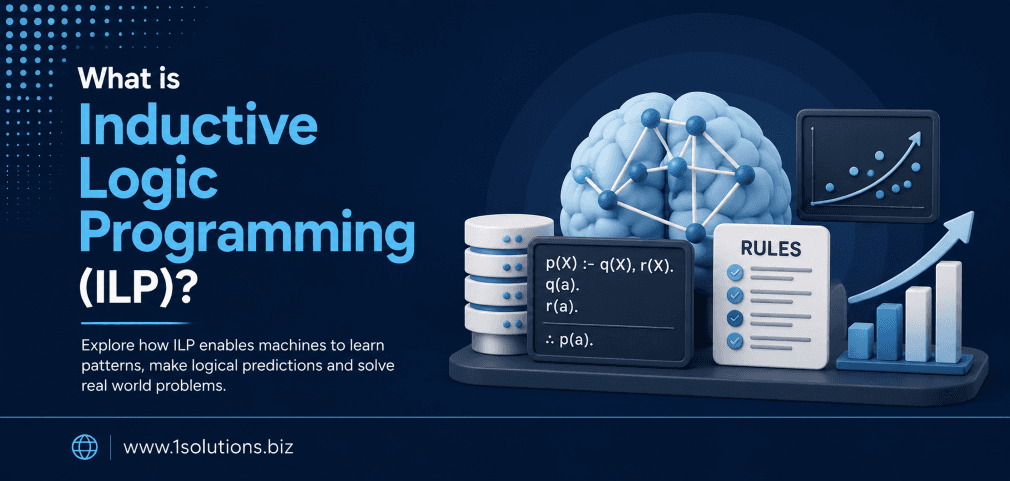
Inductive Logic Programming (ILP) sits at the intersection of machine learning and logic programming, offering a uniquely powerful way for machines to learn rules from structured data. Unlike most machine learning approaches that rely on numerical patterns and massive datasets, ILP uses symbolic logic to construct human-readable hypotheses from examples and background knowledge. If you have ever wondered how AI can learn not just to classify but to reason, ILP is part of that answer.
This article breaks down exactly what Inductive Logic Programming is, how it works, where it succeeds, where it struggles, and why it is becoming relevant again in the age of explainable AI. Whether you are a developer, a digital marketer trying to understand AI tools, or simply a curious reader, these 10 points will give you a thorough and honest picture.
Inductive Logic Programming is a branch of AI that learns logical rules from examples using background knowledge. It is transparent, interpretable, and powerful for structured data, but computationally expensive. It is gaining renewed interest as explainable AI becomes a priority in modern machine learning systems.
⚡ Key Takeaways
- ILP generates human-readable logical rules, making AI decisions interpretable and auditable.
- It combines inductive machine learning with first-order logic, requiring background knowledge alongside training examples.
- ILP has proven especially strong in bioinformatics, drug discovery, and natural language processing tasks.
- The main trade-off is computational cost: ILP scales poorly compared to neural methods on large, noisy datasets.
- Modern hybrid systems are combining ILP with deep learning to balance interpretability and performance.
- ILP is directly relevant to AI-driven SEO and content systems where rule transparency matters.
- Understanding ILP helps digital professionals make smarter decisions about which AI tools actually explain their outputs.
1. The Core Definition of Inductive Logic Programming
Inductive Logic Programming is a subfield of artificial intelligence that uses inductive reasoning within the framework of first-order predicate logic to derive general rules or hypotheses from specific examples. The term was coined by Stephen Muggleton in 1991, and the formal framework was established through his foundational paper introducing ILP as a discipline combining machine learning with logic programming.
In plain terms: you give the system some positive examples (things that are true), negative examples (things that are false), and background knowledge (facts about the world), and ILP produces logical rules that explain the examples. These rules are expressed in a logic programming language such as Prolog, which means they can be read, understood, and questioned by humans.
This distinguishes ILP sharply from neural networks or decision trees, which often produce outputs that are difficult to interpret. A neural network might correctly classify an email as spam, but it cannot easily tell you why. An ILP system can produce a rule like: “If the email contains the word ‘lottery’ and has no known sender, classify as spam.” That kind of transparency has enormous value in regulated industries, scientific research, and any domain where accountability matters.
The formal goal of ILP is to find a hypothesis H such that the background knowledge B, combined with H, logically entails all positive examples and none of the negative examples. This is a well-defined computational problem, but it is also a hard one, which is why the field has developed sophisticated search strategies over the decades.
2. How ILP Differs from Traditional Machine Learning
To understand why Inductive Logic Programming matters, it helps to contrast it clearly with conventional machine learning approaches. Most ML systems, including neural networks, random forests, and support vector machines, work in propositional or sub-symbolic spaces. They take numerical feature vectors and produce predictions based on statistical patterns. They do not reason about relationships between objects; they detect correlations in data.
ILP works in first-order logic, which means it can reason about relationships. It can handle structured, relational data naturally. For example, in a family tree dataset, ILP can learn the rule “X is a grandparent of Y if X is a parent of Z and Z is a parent of Y.” A traditional ML classifier would struggle with this relational structure unless the data was heavily pre-processed into flat feature vectors.
Another key difference is data efficiency. Traditional deep learning models often require tens of thousands, sometimes millions, of labeled examples to perform well. ILP systems can learn meaningful rules from just a handful of examples, provided the background knowledge is rich enough. According to research published by Muggleton et al. (2018) in Machine Intelligence, ILP systems achieved competitive results on certain scientific learning tasks using fewer than 100 training examples, something neural models could not match at that scale.
The trade-off, however, is scalability. ILP does not handle noisy, high-dimensional data as gracefully as statistical methods. It also requires the background knowledge to be carefully crafted, which places a significant burden on domain experts. These are real limitations worth acknowledging honestly.
💡 Pro Tip: If your AI use case involves structured relational data and you need auditable outputs, ILP may outperform black-box models even with far less training data. Always match the AI method to the data structure, not just to popularity.
3. The Role of Background Knowledge in ILP
One of the most distinctive features of Inductive Logic Programming is its explicit use of background knowledge. In most machine learning frameworks, prior knowledge is either baked into the model architecture or represented indirectly through feature engineering. In ILP, background knowledge is a first-class citizen: it is stated explicitly as a set of logical facts and rules that the learning system can use when constructing its hypothesis.
For example, if you are building an ILP system to learn drug-protein interaction rules, your background knowledge might include facts about molecular structures, known chemical properties, and biological relationships. The system uses this knowledge as a foundation, searching for hypotheses that are consistent with both the examples and the background facts.
This approach has two major advantages. First, it allows domain expertise to be injected directly into the learning process rather than hoping the model will discover important relationships on its own. Second, it constrains the search space, making the learning process more efficient and less likely to overfit. According to Lavrac and Dzeroski (1994) in their landmark textbook on ILP, the quality of background knowledge is one of the single most important factors determining the quality of the induced rules.
The downside is that constructing good background knowledge requires significant expert effort, and incomplete or incorrect background knowledge can mislead the learning system. This is a genuine trade-off that practitioners must account for in any real-world ILP deployment. It is not a plug-and-play technology; it rewards investment in knowledge engineering.
4. Key Algorithms and Systems in ILP
Inductive Logic Programming has produced several influential algorithms over its three-decade history. Understanding the main ones helps clarify how the field has evolved and where it stands today.
FOIL (First Order Inductive Learner), introduced by Quinlan in 1990 just before the ILP label was coined, learns first-order Horn clauses by greedily adding literals to a clause until it covers positive examples without covering negative ones. It is fast but can be brittle in complex relational settings.
Progol, developed by Muggleton in 1995, introduced inverse entailment as a search mechanism. Instead of searching top-down from the most general hypothesis, Progol computes a most-specific clause and searches upward toward more general rules. This made it far more powerful for bioinformatics applications.
Aleph is an extended version of Progol that became the most widely used ILP system in academic research through the 2000s. It introduced several optimizations for handling larger datasets and more complex background knowledge.
Metagol, developed by Muggleton and colleagues around 2015, uses meta-interpretive learning to allow programs to learn new predicate inventions, meaning it can invent intermediate concepts that are not present in the background knowledge. This is a significant capability for complex tasks.
ILASP (Inductive Learning of Answer Set Programs) is a more recent system that learns from noisy examples and supports learning with partial interpretations, making it more robust in realistic settings. Research from Law et al. (2020) demonstrated ILASP’s effectiveness on benchmark tasks where earlier systems struggled with noise tolerance.
5. Real-World Applications of ILP
Inductive Logic Programming is not purely theoretical. It has been applied successfully across a range of domains where structured relational data and interpretability matter most.
Bioinformatics and drug discovery are perhaps its most celebrated application areas. ILP has been used to learn rules about protein secondary structure prediction, carcinogenicity of chemical compounds, and gene function. The King et al. (2004) Robot Scientist project, published in Nature, used ILP to autonomously form and test hypotheses about yeast gene functions, representing a landmark in AI-driven scientific discovery.
Natural language processing is another strong application domain. ILP can learn grammatical rules and semantic relationships from parsed text corpora, producing interpretable grammars that generalize well to new sentences.
Medical diagnosis has benefited from ILP because the rules it produces can be reviewed by clinicians. A rule like “If a patient has symptom A and lacks symptom B, consider diagnosis C” is clinically meaningful and checkable, unlike a neural network’s internal weights.
Robotics and planning use ILP to learn action rules from demonstrations, enabling robots to generalize learned behaviors to new situations based on logical structure rather than superficial pattern matching.
Understanding how AI learns interpretable rules is increasingly relevant to how search engines and content systems work. The same push for explainability in AI also drives modern search engine optimization strategies that must adapt to algorithm updates requiring transparent, logically coherent content signals.
6. ILP and Explainable AI (XAI)
Explainable AI has moved from a research curiosity to a regulatory requirement in many industries. The European Union’s AI Act, GDPR provisions on automated decision-making, and sector-specific rules in finance and healthcare all demand that AI systems be able to justify their outputs. This is exactly where Inductive Logic Programming has a structural advantage.
Because ILP produces rules in symbolic logic, every decision trace is fully transparent. You can ask: why did the system make this prediction? And the answer is a chain of logical steps you can follow and verify. No gradient descents, no weight matrices, no black-box activations. Just logic.
The broader AI community has started to recognize this. Hybrid architectures that combine neural networks for perception-level tasks with ILP for reasoning-level tasks are an active research direction. Systems like Neural-Symbolic integration frameworks attempt to get the best of both worlds: the pattern recognition power of deep learning and the interpretability of symbolic reasoning.
This matters practically. As AI tools become embedded in content creation, marketing automation, and ranking systems, the ability to audit how those tools reason becomes commercially and legally important. If you want to understand how AI is reshaping content discovery, the discussion in Google AI Mode vs AI Overviews is a useful read for context on how interpretable reasoning is influencing search.
💡 Pro Tip: When evaluating AI tools for your business, ask vendors specifically how their system explains its outputs. A system built on symbolic or hybrid logic will give you auditable answers; a pure black-box will not. Explainability is not a luxury, it is a liability management tool.
7. Limitations and Honest Trade-offs of ILP
No technology is without its limitations, and Inductive Logic Programming has several that are worth stating clearly rather than glossing over.
Scalability is the most significant challenge. ILP systems perform a combinatorial search over the space of possible logical hypotheses, and this search can become computationally intractable as the number of examples, predicates, or background knowledge facts grows. While modern ILP systems have introduced pruning and meta-level heuristics to manage this, they still cannot match the scalability of deep learning on large, unstructured datasets like raw images or free-form text.
Noise sensitivity is another real concern. Traditional ILP systems assume clean, correctly labeled examples. In real-world datasets, mislabeled examples or inconsistent background knowledge can cause the system to produce incorrect or overly complex rules. More recent systems like ILASP address this, but noise handling remains less mature in ILP than in statistical ML.
Knowledge engineering burden is high. Building the background knowledge requires domain experts and significant upfront investment. This is not a system you deploy out of the box. For many organizations, especially those without specialized knowledge engineers, this creates a real adoption barrier.
Limited community and tooling compared to the deep learning ecosystem. The libraries, tutorials, and community support for ILP are a fraction of what exists for PyTorch or TensorFlow. This matters for practical deployment speed.
These are not reasons to dismiss ILP, but they are honest factors to weigh when deciding whether it is the right tool for a specific problem. The best decisions in AI adoption come from understanding the full picture, not just the strengths.
8. ILP Compared to Other Symbolic AI Approaches
ILP exists within a broader ecosystem of symbolic AI approaches, and understanding how it compares helps clarify when to choose it over alternatives.
| Approach | Learning Type | Data Structure | Interpretability | Scalability |
|---|---|---|---|---|
| Inductive Logic Programming | Inductive, from examples | Relational, structured | Very high | Low to moderate |
| Decision Trees | Inductive, statistical | Propositional, flat | High | High |
| Bayesian Networks | Probabilistic, inductive | Propositional, structured | Moderate | Moderate |
| Knowledge Graphs | Deductive, manual | Relational, structured | High | High |
| Deep Neural Networks | Inductive, sub-symbolic | Any, especially unstructured | Very low | Very high |
The table shows that ILP occupies a unique niche: it handles relational data with high interpretability, something no other common approach does as naturally. The price is scalability. For problems where you need to reason about relationships, audit decisions, and learn from small datasets, ILP is hard to beat. For problems involving images, audio, or massive flat datasets, neural approaches dominate.
Understanding these trade-offs also applies to how AI systems process web content. Techniques related to structured reasoning influence how Agentic SEO systems are being designed to reason about content relevance rather than just pattern-match keywords.
9. The Resurgence of ILP in Modern AI Research
After a period of relative quiet through the 2010s, when deep learning dominated virtually every AI benchmark, Inductive Logic Programming is experiencing a genuine resurgence. Several converging forces are driving this renewed interest.
First, the explainability imperative discussed earlier is creating demand for AI systems that can justify their reasoning. Second, the limitations of pure deep learning, including brittleness, data hunger, and inability to generalize from small samples, have become well-documented. Third, advances in hardware and algorithm design have made ILP systems more practical on modern infrastructure.
Meta-interpretive learning, introduced through the Metagol system, has expanded ILP’s ability to learn recursive programs and invent new predicates, capabilities that were previously out of reach. Research from Cropper and Dumancic (2022) in the Journal of Artificial Intelligence Research identified ILP as one of the most promising approaches for few-shot concept learning, a task that current deep learning systems handle poorly without massive pre-training.
Hybrid neurosymbolic systems are arguably the most exciting development. Projects like DeepProbLog combine probabilistic logic programming with neural perception modules, allowing systems to learn both from raw data and from logical structure simultaneously. This represents a maturation of the field rather than a replacement of its core ideas.
For practitioners building or evaluating AI-powered systems, this resurgence means ILP is worth understanding even if you are not a researcher. The underlying ideas about learning interpretable rules from structured data are influencing the next generation of AI tools across industries. Staying informed about these shifts is part of sound digital marketing strategy as AI reshapes how content and data are processed.
💡 Pro Tip: Keep an eye on neurosymbolic AI developments. Systems that combine deep learning with logical rule induction are likely to power the next wave of explainable recommendation engines, content ranking tools, and customer behavior models.
10. Why Inductive Logic Programming Matters for Digital Professionals
You might be wondering why a web development and digital marketing article is discussing Inductive Logic Programming in depth. The connection is more direct than it might seem. Search engines, content ranking algorithms, AI-powered recommendation systems, and automated content analysis tools are all built on AI and machine learning foundations. Understanding how different AI paradigms work, including ILP, helps digital professionals make better decisions about the tools they adopt and the content strategies they pursue.
ILP’s emphasis on interpretable, rule-based reasoning directly connects to how structured data markup, semantic relationships, and knowledge graph optimization work in modern SEO. When you implement schema markup, you are essentially providing background knowledge that helps search engines reason about your content. That is a conceptual parallel to ILP’s use of background knowledge to constrain and improve learning.
Similarly, the push for explainable AI in content tools means that understanding why an AI system makes a recommendation, whether it is a topic suggestion, a keyword cluster, or a content gap analysis, is increasingly important. Tools built on symbolic or hybrid reasoning will give you more auditable answers than pure black-box systems.
For those working to improve their visibility in AI-driven search, the principles behind LLM optimization and AI search ranking have roots in how AI systems, including those inspired by symbolic reasoning, process and evaluate structured information. And if you want to understand how intelligent agents are changing how people interact with web content, the guide on agentic browsers and how they work is directly relevant.
Investing in knowledge about AI fundamentals is not just academic. It gives you a clearer lens for evaluating tools, interpreting algorithm changes, and building content strategies that hold up as AI systems become more capable and more central to every digital channel. If your content and copywriting strategy is going to remain competitive, it needs to be informed by how AI actually processes and evaluates information, not just by surface-level best practices.
Practical Action Plan: Working With ILP Concepts
- Do This Now: Audit your AI tool stack for explainability. For any AI system influencing your content, SEO, or marketing decisions, ask how it explains its recommendations. If the answer is “it doesn’t,” consider whether that opacity creates risk for your business. Start with one tool and document what it can and cannot explain.
- Worth Doing: Learn the basics of structured data and knowledge graph concepts. These are the practical marketing equivalents of ILP’s background knowledge. Implementing schema markup and entity-based optimization aligns your content with how reasoning-oriented AI systems process information. This pays dividends across search and AI-driven discovery channels.
- Low Priority: Explore neurosymbolic AI research papers and hybrid systems if you have research or development resources. Understanding where ILP and deep learning are converging gives you early insight into the next generation of AI tools, but this is a longer-term investment best suited to teams with technical depth and a roadmap for AI adoption.
Conclusion
Inductive Logic Programming is a foundational AI technique that offers something rare: machine learning with human-readable outputs. By learning logical rules from examples and background knowledge, ILP systems produce hypotheses that can be inspected, challenged, and trusted in ways that black-box neural networks cannot match. Its trade-offs are real, including scalability challenges and the burden of knowledge engineering, but its strengths in relational data, few-shot learning, and explainability are increasingly valuable as AI accountability becomes a priority across industries.
For digital professionals, understanding ILP is less about implementing it directly and more about sharpening your ability to evaluate the AI systems that increasingly shape search rankings, content recommendations, and marketing automation. The clearer your understanding of how AI reasons, the better positioned you are to work with it effectively.
If you want to stay ahead of how AI is reshaping digital strategy, exploring resources on improving visibility in AI search engines and understanding AI-powered SEO tools is a practical next step that connects these technical foundations to everyday marketing action.
Frequently Asked Questions About Inductive Logic Programming
What is the simplest way to explain Inductive Logic Programming?
ILP is a method for teaching computers to learn logical rules from examples. You give it positive cases (things that are true), negative cases (things that are false), and background knowledge (facts about the world), and it produces rules in plain logical language that explain the examples. Think of it as teaching a machine to reason rather than just recognize patterns.
How is ILP different from regular machine learning?
Regular machine learning works with numbers and statistics, finding patterns in flat datasets. ILP works with symbolic logic and can reason about relationships between objects. It also produces interpretable, human-readable rules rather than numerical weights or probability scores, making it far more transparent but less scalable on large unstructured datasets.
Is Inductive Logic Programming still used today?
Yes, and it is experiencing a resurgence. After being overshadowed by deep learning during the 2010s, ILP is gaining renewed interest due to the demand for explainable AI, advances in meta-interpretive learning, and hybrid neurosymbolic systems that combine logical reasoning with neural networks. It remains particularly active in bioinformatics, drug discovery, and AI safety research.
What programming language is most associated with ILP?
Prolog is the most commonly associated language, as it is the standard for logic programming. Most ILP systems, including Aleph, Progol, and Metagol, are implemented in or interface with Prolog. Answer Set Programming (ASP) languages like those used by ILASP are also increasingly relevant in modern ILP research.
Can small businesses or non-technical professionals benefit from understanding ILP?
Directly implementing ILP requires technical expertise, but understanding its principles helps non-technical professionals make smarter decisions about AI tools. Knowing that interpretable rule-based AI exists means you can demand explainability from the tools you use, understand structured data’s role in AI-driven search, and evaluate marketing automation platforms more critically. The conceptual literacy is genuinely valuable even without hands-on implementation.