

What Is Silo Structure in SEO? 10 Things Every Site Owner Should Know
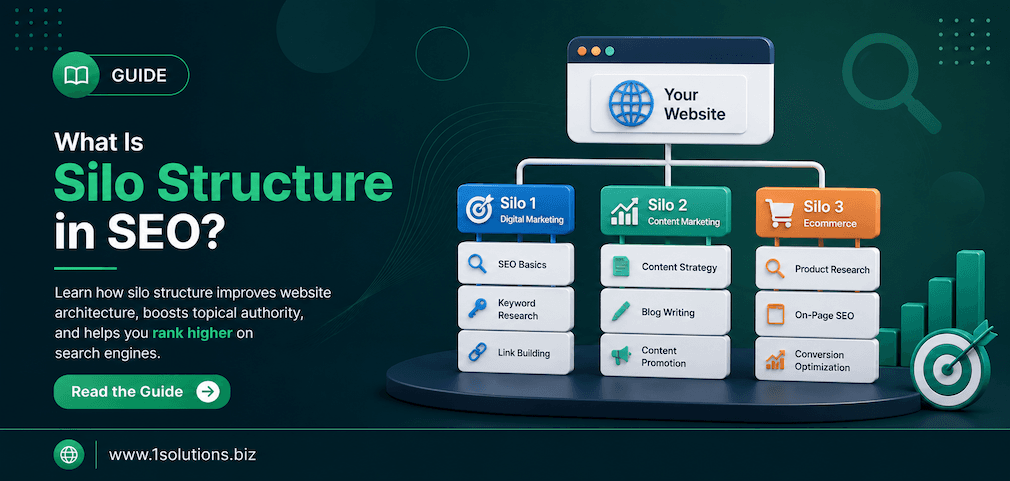
If your website covers multiple topics but your rankings feel scattered and inconsistent, the problem might not be your content quality or your backlinks. It might be your site architecture. Silo structure in SEO is the practice of organizing your website into distinct, thematically grouped sections so that search engines clearly understand what each part of your site is about. Think of it like filing cabinets: every drawer holds one category, and nothing bleeds into another.
Done correctly, a silo structure concentrates topical authority, improves crawl efficiency, and sends link equity to where it matters most. Done poorly, it creates orphaned pages and confused crawlers. This guide walks through 10 essential things you need to know about silo structure in SEO, from the fundamentals all the way to common mistakes worth avoiding.
Silo structure in SEO means organizing your website into thematically grouped sections that signal topical authority to search engines. It improves crawl efficiency, boosts internal link equity, and helps individual pages rank more competitively. This guide covers 10 key points, including how to build one, what to avoid, and when it actually makes sense to use one.
⚡ Key Takeaways
- A silo structure groups related content under shared parent pages to signal topical depth to search engines.
- Internal linking within silos, not across them, is what channels link equity effectively.
- Both physical silos (URL-based) and virtual silos (link-based) are valid approaches depending on your CMS.
- Silo structure supports E-E-A-T signals by demonstrating expertise in focused topic clusters.
- Over-siloing can hurt user experience by making navigation unnecessarily rigid.
- Regular audits are needed to prevent silo drift as your content library grows.
- Silo structure works best when paired with strong keyword research and a clear content hierarchy.
1. The Core Definition: What Silo Structure in SEO Actually Means
A silo structure in SEO refers to a website architecture strategy where pages are grouped into thematic categories, with each category being a self-contained cluster of related content. The word “silo” comes from agriculture, where grain silos store one type of crop separately from others to prevent contamination. In web architecture, the logic is identical: you want your SEO signals to stay concentrated within a topic area rather than leaking across unrelated subjects.
A basic silo has three layers. At the top sits a pillar page or silo root, which covers a broad topic. Below that are supporting pages that explore subtopics in detail. At the bottom are granular posts or pages that target very specific long-tail keywords. Internal links flow upward and laterally within the silo, but rarely jump across to unrelated silos without good reason.
For example, an HVAC company might have one silo for “Air Conditioning,” another for “Heating Systems,” and a third for “Indoor Air Quality.” Each silo contains its own pillar page, supporting articles, and FAQ content. Cross-linking between the Air Conditioning silo and the Heating Systems silo is minimal and always contextually justified.
This structure helps Google understand the site’s topical map. According to Search Engine Journal (2023), sites with clear topical hierarchies tend to earn stronger positions for competitive terms because Google can verify subject-matter authority across multiple related pages rather than a single standalone article. If you want to explore how internal links reinforce this architecture, this guide on using internal links to boost backlink impact explains the mechanics clearly.
2. Physical Silos vs. Virtual Silos: Understanding the Two Types
Not all silo structures look the same under the hood. There are two primary types: physical silos and virtual silos. Understanding which one fits your setup is important before you start restructuring anything.
A physical silo uses your URL structure to enforce the hierarchy. Pages within a silo live under a dedicated subdirectory. For example: yoursite.com/air-conditioning/central-ac-units/ and yoursite.com/air-conditioning/ac-maintenance/ both sit under the same parent folder. This makes the relationship immediately visible to both users and crawlers. Physical silos are easier to maintain long-term and create a natural breadcrumb trail.
A virtual silo does not rely on URL structure at all. Instead, it creates the silo effect purely through internal linking. Pages anywhere on the site can belong to a virtual silo as long as they link to each other and not to pages outside the intended cluster. Virtual silos are more flexible and work well on platforms where changing URL structures is technically difficult or risky for existing rankings.
Most SEO professionals recommend using physical silos when building a new site from scratch, and virtual silos when reorganizing an established site where URL changes would require mass redirects. Both approaches work, but physical silos are considered cleaner because the architecture is self-documenting. If you are building on WordPress, the platform makes both approaches manageable through category taxonomies and custom permalink structures.
💡 Pro Tip: If you are on WordPress and planning a silo structure from scratch, set your permalink structure to use category-based URLs before publishing any content. Changing it later requires careful redirect management to avoid broken links and ranking drops.
3. Why Silo Structure Strengthens Topical Authority
Google’s ranking systems have moved well beyond keyword matching. Since the Hummingbird and Bert updates, the algorithm evaluates topical depth and context. A silo structure directly supports this by proving that your site does not just mention a subject once but covers it comprehensively from multiple angles.
When Google’s crawler enters a silo and finds a pillar page linking to five supporting articles, each of which links back to the pillar and to each other, it maps out a coherent knowledge graph for that topic. This signals expertise and increases the probability of the entire silo earning strong rankings, not just one flagship article.
According to HubSpot’s State of Marketing Report (2023), websites that use a topic cluster model (which is structurally similar to silo architecture) see an average of 55% more organic traffic compared to sites with flat content structures. The compound effect is real: one well-ranked pillar page pulls up the supporting pages alongside it.
This is also directly tied to Google’s E-E-A-T framework, which stands for Experience, Expertise, Authoritativeness, and Trustworthiness. A silo that comprehensively covers a subject from beginner to advanced level demonstrates expertise in a way that a single page simply cannot. If you want a deeper perspective on how content depth affects rankings, this article on boosting SEO with page content analysis is worth reading.
4. How Internal Linking Rules Change Inside a Silo
Internal linking is the connective tissue of any silo structure, and the rules change significantly once you adopt this architecture. The general principle is simple: link freely within a silo, and link sparingly across silos.
Within a silo, every supporting page should link back to the pillar page, and the pillar page should link out to each supporting page. Supporting pages can also link to each other when there is genuine contextual relevance. This creates a dense internal link network that concentrates PageRank within the silo and reinforces the topical relationship between pages.
Cross-silo linking is not forbidden, but it should be deliberate and justified. If a page in your “AC Maintenance” silo mentions something relevant to your “Indoor Air Quality” silo, a single contextual link is fine. What you want to avoid is random cross-linking that dilutes the thematic focus of either silo.
Navigation links in headers and footers are a special case. These links appear on every page and technically cross silos constantly. Most SEO professionals handle this by pointing global navigation only to silo root pages, not to individual supporting articles. This keeps the link equity concentrated at the top of each silo rather than scattering it across the entire site.
For a practical breakdown of how to maximize the value of your internal link architecture, this overview of link building methods that still work covers the topic in more depth.
5. Keyword Research Comes Before Architecture, Not After
One of the most common mistakes site owners make is building a silo structure based on how they think about their business, rather than how their audience searches. Your silos should be defined by keyword clusters, not by internal department names or product category labels.
Start with a broad seed keyword for each intended silo. Then use tools like Ahrefs, Semrush, or Google Search Console to pull all the related search queries that share the same user intent. Group these queries into clusters based on semantic similarity. Each cluster becomes a silo. Each query within a cluster becomes either a supporting page or a long-tail variation of an existing page.
For example, if you are a digital marketing agency, you might discover that “local SEO,” “Google Business Profile optimization,” and “citation building” all belong in the same cluster because users searching any of these terms are fundamentally trying to improve local search visibility. Those three topics belong in one silo together.
According to Ahrefs (2023), 94.74% of all keywords receive fewer than 10 monthly searches. That reinforces the importance of clustering: you need to target dozens of low-volume related terms through a structured silo rather than gambling on a handful of high-volume head terms. Our professional SEO services include keyword clustering and silo mapping as part of every engagement for exactly this reason.
💡 Pro Tip: Before assigning any page to a silo, check the actual search results for its target keyword. If the top-ranking pages are all from sites in a completely different niche, the keyword may not belong where you think it does. Let the SERPs guide your clustering decisions.
6. The Role of Pillar Pages in a Silo
The pillar page is the anchor of every silo. It covers the broadest version of the topic, acts as the primary destination for internal links from supporting pages, and is typically the page you most want to rank for a competitive head term. Getting the pillar page right is non-negotiable if you want the silo to perform.
A strong pillar page does several things. It introduces the topic comprehensively enough to satisfy high-intent searchers. It links to every supporting page within the silo. It is long enough to demonstrate depth but tightly focused enough to avoid topic drift. And it is updated regularly, because freshness signals matter for broad informational queries.
Pillar pages are not doorway pages or thin overviews. They need to provide real, standalone value. A good rule of thumb: the pillar page should be able to rank on its own before the supporting pages even exist. The silo then amplifies that existing signal.
In terms of content format, pillar pages often work well as definitive guides, comprehensive how-tos, or authoritative resource hubs. They should be internally linked from the site’s homepage or main navigation to pass high-authority link equity directly into the silo. This matters because the homepage typically holds the most PageRank on any given site, and where it points has outsized influence.
7. Silo Structure and Crawl Budget: Why It Matters for Large Sites
For small sites with under a hundred pages, crawl budget is rarely a concern. But for e-commerce stores, news sites, and large service directories, how efficiently Googlebot crawls your site can directly affect how quickly new content gets indexed and how consistently existing pages appear in search results.
A well-designed silo structure improves crawl efficiency in two ways. First, it creates logical pathways that make it easy for crawlers to move through related content without getting lost in disconnected pages. Second, it reduces the risk of crawl budget waste by minimizing unnecessary cross-links to low-priority pages.
Google’s John Mueller has stated on multiple occasions in Google Search Central discussions that internal linking structure is one of the most important factors in crawl optimization. A silo structure, by its nature, creates a clear hierarchy that communicates page importance to Googlebot. Pages at the top of a silo (the pillar pages) receive more internal links and are therefore crawled more frequently.
For e-commerce sites in particular, silo structure can prevent the common problem of product pages receiving almost no internal link equity because they sit several clicks away from the homepage. If you are running an online store, pairing silo architecture with a solid ecommerce SEO package ensures both the structural and content elements are addressed together. You can also review why Google might not be indexing your pages if crawl issues are already affecting your visibility.
8. Common Mistakes That Break a Silo Structure
Knowing what a silo structure is supposed to look like is only half the battle. Understanding how they break down in practice is just as important. Here are the most frequent mistakes that undermine an otherwise solid architecture.
Silo drift is the most common problem. It happens when new content is added without checking whether it fits an existing silo or needs a new one. Over time, the thematic boundaries blur and pages end up in categories that don’t match their actual topic focus.
Over-siloing is the opposite error. Some site owners become so rigid about keeping silos separate that they avoid contextually valid cross-links that would genuinely help users. This hurts user experience and ignores the fact that Google expects some degree of topical overlap on comprehensive sites.
Orphaned supporting pages occur when pillar pages fail to link back to their supporting content. These pages receive no internal link equity and effectively exist in isolation. They rank poorly and get crawled infrequently.
Keyword cannibalization within a silo happens when multiple supporting pages target the same or very similar keywords. Instead of reinforcing each other, they compete. This is why thorough keyword mapping before content creation is essential.
If your silo structure has already drifted out of alignment, a content audit combined with internal link analysis can usually restore it without requiring a full site restructure. This guide on fixing a failed link building strategy addresses some overlapping structural issues worth reviewing.
9. How to Build a Silo Structure: A Practical Step-by-Step Overview
Building a silo structure does not require a complete site rebuild in most cases. It requires a clear plan, disciplined execution, and ongoing maintenance. Here is how to approach it practically.
Step 1: Audit your existing content. List every page and post on your site and identify its primary topic. Note which pages are already closely related by subject matter. This gives you a raw map of potential silos.
Step 2: Define your silos based on keyword clusters. Using keyword research, group your existing content into three to seven thematic silos depending on your site’s size and subject breadth. Each silo should have enough content to be self-sustaining, typically five or more pages.
Step 3: Identify or create your pillar pages. Each silo needs one clear anchor page. If it already exists, optimize it and make sure it links to all supporting pages. If it doesn’t exist, create it.
Step 4: Fix your internal linking. Go through every supporting page and ensure it links back to its pillar. Add contextual cross-links between supporting pages where relevant. Remove or redirect internal links that point outside the silo without justification.
Step 5: Update your URL structure if feasible. For new sites, implement category-based URLs from the start. For established sites, weigh the risk of URL changes against the structural benefit before proceeding.
Our team at 1Solutions handles silo audits and restructuring as part of our comprehensive search engine optimization services, including full content mapping and internal link analysis.
💡 Pro Tip: Use a spreadsheet to map your silo structure visually before touching a single page. List each silo in a column, then list its pillar page and all supporting pages beneath it. This prevents you from accidentally creating orphaned pages or duplicate silo assignments during the restructuring process.
10. When Silo Structure Is and Is Not the Right Choice
Silo structure is a powerful SEO strategy, but it is not universally appropriate for every website. Understanding the trade-offs helps you decide whether the investment of time and resources is justified for your specific situation.
Silo structure works exceptionally well for: service-based businesses with multiple distinct offerings, e-commerce sites with clear product category hierarchies, content-heavy sites targeting competitive informational keywords, and any site that wants to establish topical authority in a specific niche. If your site fits any of these descriptions, silo architecture will almost certainly improve your rankings over time.
Silo structure is less necessary for: very small sites with fewer than 20 to 30 pages, single-topic blogs where all content naturally belongs to the same theme, or portfolio sites where page volume is low and navigational simplicity matters more than SEO architecture.
It is also worth noting that silo structure requires ongoing discipline. It is not a one-time setup. Every new page you add must be assigned to the correct silo, every new internal link must respect the architecture, and every content audit must check for drift. If your team does not have the bandwidth to maintain this discipline consistently, a partial silo covering only your most competitive topics may be more sustainable than a full site restructure.
According to Moz (2022), structured content architecture is among the top five on-site factors that correlate with first-page rankings for competitive keywords. But correlation is not causation, and silo structure alone will not overcome weak content, poor backlinks, or slow site speed. It works best as part of a broader SEO strategy. For deeper context on how modern search engines evaluate content quality, this overview of local AEO best practices and this guide on improving visibility in AI search engines provide useful complementary perspectives.
Silo Structure at a Glance: Comparison Table
| Factor | Physical Silo | Virtual Silo | Flat Architecture |
|---|---|---|---|
| URL structure | Category-based subdirectories | No change required | No hierarchy |
| Topical authority signal | Strong | Moderate to strong | Weak |
| Crawl efficiency | High | Moderate | Low on large sites |
| Implementation difficulty | High (especially on existing sites) | Low to moderate | None |
| Maintenance requirement | High | Moderate | Low |
| Best for | New sites, rebuilds | Established sites | Small sites, portfolios |
Practical Action Plan for Silo Structure in SEO
- Do This Now: Audit your existing pages and group them by topic. Identify your three to five most competitive topic areas and treat each as a potential silo. Find or create a pillar page for each. This alone will improve your internal link coherence within weeks.
- Worth Doing: Fix your internal linking structure so that every supporting page links to its pillar and vice versa. Remove or redirect any internal links that violate silo boundaries without clear contextual justification. Update your navigation to point only to silo root pages rather than random deep-level posts.
- Low Priority: If your site is already established, delay any physical URL restructuring until you have confirmed the topical groupings are stable and you have redirect infrastructure in place. Changing URL structures without proper 301 redirects can cause significant temporary ranking drops that take months to recover from.
Frequently Asked Questions About Silo Structure in SEO
Does silo structure still work with Google’s current algorithm?
Yes. Google’s increasing focus on topical authority and E-E-A-T actually makes silo structure more relevant, not less. The algorithm now rewards sites that demonstrate comprehensive expertise across a subject area, which is exactly what a well-maintained silo is designed to do.
How many pages do I need before a silo structure makes sense?
A general guideline is that each silo should contain at least five to seven pages to be worth structuring separately. If your entire site has fewer than 20 pages, a flat architecture is usually sufficient. Silo structure adds the most value at 50 or more pages where topical organization becomes harder to maintain organically.
Can I have too many silos on one site?
Yes. Creating more silos than your content volume can support means each silo ends up thin and unconvincing to search engines. It is better to have three well-developed silos than ten sparse ones. Consolidate topics where there is overlap rather than forcing artificial separation.
Does silo structure affect user experience?
It can, both positively and negatively. A well-designed silo makes navigation more intuitive by grouping related content logically. An over-engineered silo can make it hard for users to find content that sits at the intersection of two topics. Always prioritize logical user journeys alongside crawl optimization when making architectural decisions.
How long does it take to see results from a silo restructure?
Most site owners begin seeing measurable changes in crawl frequency and internal link equity distribution within four to eight weeks of restructuring. Ranking improvements for targeted keywords typically take three to six months, depending on domain authority, competition level, and how well the supporting content is optimized.
Conclusion
Silo structure in SEO is one of the most durable and effective architectural strategies available to site owners who want to build long-term topical authority. It organizes your content in a way that mirrors how search engines think, concentrates link equity where it does the most good, and creates a scalable foundation for content growth. The trade-off is that it requires disciplined planning and ongoing maintenance. It is not a plug-and-play solution, and it works best as part of a broader SEO strategy rather than in isolation.
Whether you are building a new site or auditing an established one, the ten points covered in this guide give you everything you need to evaluate whether silo structure is right for your goals and how to implement it effectively. If you want expert help mapping out a silo strategy for your specific site, our team is ready to help. Explore our professional SEO services or check our free 45-day SEO trial to see what structured, strategic optimization looks like in practice.