
Why Your Bounce Rate Is Quietly Killing Your Rankings
If you want to discover 5 easy ways to reduce your bounce rate and increase your rankings, you are already ahead of most website owners who ignore this critical metric entirely. Bounce rate is one of the clearest signals that something is wrong between what your visitors expect and what your page actually delivers. When users land on your page and leave without interacting further, search engines notice. And over time, that pattern works against you in the rankings.
According to Semrush (2023), the average bounce rate across all industries sits between 41% and 55%. Anything above 70% is generally considered a red flag. But the good news is that bounce rate is not a fixed number. It is a behavior pattern, and behaviors can be changed with the right adjustments to your content, design, speed, and user experience strategy.
This article walks you through five practical, proven methods to lower your bounce rate and strengthen your search visibility at the same time.
High bounce rates signal poor user experience and hurt your search rankings over time. This guide covers 5 actionable strategies including improving page speed, matching search intent, enhancing readability, using smart internal linking, and strengthening your calls to action. Each fix directly improves how long visitors stay and how well your pages rank.
⚡ Key Takeaways
- Bounce rate above 70% is a warning sign that your page is not meeting visitor expectations.
- Page speed is one of the fastest and most impactful fixes you can make to reduce bounces.
- Matching your content to actual search intent keeps the right visitors on the page longer.
- Readability improvements like shorter paragraphs, subheadings, and visuals reduce friction dramatically.
- Strategic internal linking guides users to explore more of your site rather than leave.
- Clear, well-placed calls to action reduce confusion and increase page engagement.
- Combining these five methods creates a compounding effect on both rankings and conversions.
1. Improve Page Load Speed Before Anything Else
If your page takes more than three seconds to load, a large percentage of your visitors will leave before they ever see your content. This is not speculation. According to Google (2022), 53% of mobile users abandon a site that takes longer than three seconds to load. That means more than half your potential audience is bouncing before the page even finishes rendering, which makes speed the single highest-leverage fix available to most site owners.
Page speed affects bounce rate in a direct and measurable way. When a visitor has to wait, they assume the site is low quality or broken. They go back to the search results and click on a competitor. Google tracks this behavior through engagement signals, and pages with consistently poor engagement metrics tend to lose ground in the rankings over time, even if their content and backlinks are strong.
To audit your current speed situation, start with Google PageSpeed Insights or GTmetrix. These tools give you a clear breakdown of what is slowing your pages down, from uncompressed images and render-blocking JavaScript to slow server response times and excessive third-party scripts. The most common culprits are large, unoptimized images and plugins that load unnecessary code on every page.
If your site is built on WordPress, you have access to caching plugins like WP Rocket and W3 Total Cache that can dramatically improve load times without requiring developer skills. Image optimization tools like ShortPixel or Smush handle bulk compression automatically. For more substantial performance gains, switching to a faster hosting environment or implementing a content delivery network can cut load times significantly. Our team at 1Solutions WordPress development regularly handles performance audits that uncover these hidden speed bottlenecks.
One trade-off worth acknowledging: aggressive caching and minification can occasionally break functionality on complex sites. Always test changes in a staging environment first. Speed optimization is worth the investment, but it needs to be approached methodically rather than all at once.
For further context on how technical issues affect your search visibility, read why Google might not be indexing your pages, since many of the same technical factors that slow sites down also prevent proper crawling and indexing.
💡 Pro Tip: Run your speed test on mobile, not just desktop. Mobile users make up the majority of web traffic, and Google uses mobile-first indexing, so your mobile load time is the one that matters most for rankings.
2. Match Your Content Precisely to Search Intent
One of the most common and underappreciated causes of high bounce rates is a mismatch between what the user was searching for and what they actually found on your page. This is called search intent mismatch, and it is responsible for bounces that no amount of design polish or speed optimization can fix. If someone searches for “how to fix a leaking faucet” and lands on a page selling plumbing services with no instructional content, they will leave immediately, and they should.
Search intent falls into four main categories: informational (the user wants to learn something), navigational (the user wants to find a specific site), commercial (the user is researching before buying), and transactional (the user is ready to buy). Understanding which category your target keyword falls into is essential before you write a single word of content. A page optimized for the wrong intent type will attract visitors who are not satisfied by what they find, resulting in fast, frustrated exits.
To align your content with intent, start by searching your own target keyword and studying the top-ranking results. What format are they using? Are they listicles, how-to guides, product pages, or comparison articles? What questions do they answer? The search results page is Google’s clearest signal of what searchers actually want. If all the top results are tutorial articles and your page is a sales page, you have an intent problem.
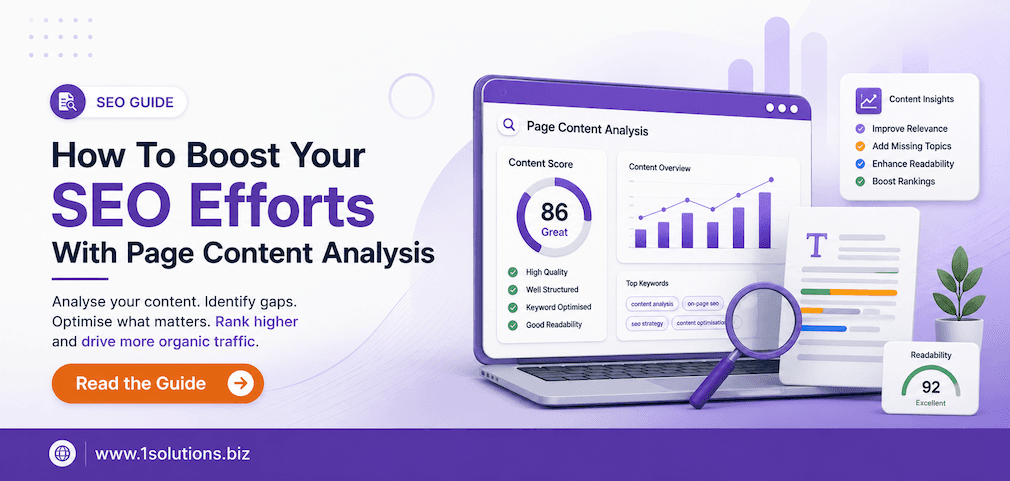
From there, revisit your content structure. Informational pages should lead with the answer immediately, not with company history or background. Transactional pages should lead with the product or service, trust signals, and a clear next step. Every section of your content should serve the user’s goal, not just fill word count. Our detailed guide on boosting SEO through page content analysis covers this process in depth, including how to audit existing pages for intent alignment.
It is also worth noting that Backlinko (2023) found that pages ranking in the top three positions on Google have an average time-on-page significantly higher than those ranking between positions four and ten. Intent alignment is a major factor in that difference. When users find exactly what they were looking for, they stay longer, engage more, and convert at higher rates.
If you need professional support building content that matches both user intent and search demand, our professional content and copywriting services are designed specifically to bridge that gap.
3. Make Your Content Genuinely Easy to Read
Even if your content perfectly matches search intent, visitors will still bounce if the reading experience feels like hard work. Dense walls of text, tiny fonts, poor color contrast, missing subheadings, and long paragraphs are all friction points that push people toward the back button. Readability is not just a design preference. It is a retention strategy.
Think about how people actually read online. They do not start at the first word and read straight through to the last. They scan. They look at headings, bullet points, bold text, and images to decide whether the page is worth their time. If your formatting does not support that scanning behavior, you will lose readers who might have found your content genuinely useful if only it had been easier to navigate.
Practical readability improvements include: breaking paragraphs into three to four sentences maximum, using descriptive H2 and H3 subheadings every 200 to 300 words, adding numbered lists and bullet points for steps and comparisons, bolding key phrases rather than full sentences, and using images or diagrams to break up long sections of text. These adjustments cost very little time but have a measurable impact on how long people stay on your page.
Font size matters more than most people realize. Body text below 16px is uncomfortable to read on most screens, especially mobile. Line height should be generous enough that lines do not feel cramped. Background and text color contrast should meet basic accessibility standards, which also helps with readability for all users regardless of visual ability.
For content that involves comparisons, consider using tables rather than prose to present information. For step-by-step processes, numbered lists work better than paragraphs. For definitions or FAQs, an accordion format reduces visual clutter while keeping all the information accessible. Each of these choices reduces cognitive load, which keeps visitors reading instead of leaving. You can also look at key SEO strategies for article ranking to see how formatting choices affect both readability and search performance together.
💡 Pro Tip: Use the Hemingway App or Readable.io to score your content’s readability before publishing. Aim for a Grade 7 to Grade 9 reading level for most general audiences. Complex industry content can go higher, but only when your specific audience expects and requires that level of technical depth.
4. Use Strategic Internal Linking to Keep Visitors Exploring
Internal linking is one of the most underused tools in the bounce rate reduction toolkit. When a visitor finishes reading a section of your page, the question becomes: what do they do next? If there is no clear path forward, the default action is to leave. Strategic internal links create those paths, guiding users toward related content, deeper explanations, or conversion-focused pages that keep them engaged with your site rather than sending them back to Google.
The key word here is “strategic.” Dropping links randomly throughout your content or stuffing a “Related Posts” widget at the bottom is not enough. Effective internal linking means identifying the natural moments in your content where a reader’s curiosity or need points toward another page you have, and then placing a contextual, descriptive link at exactly that moment. The anchor text should describe what the user will find, not be a generic phrase like “click here.”
From an SEO standpoint, internal links also distribute page authority across your site, which helps your supporting pages rank better in their own right. A well-structured internal linking architecture tells search engines which pages are most important, how content is related, and what topics your site covers comprehensively. This is explored in detail in our guide on using internal links to boost backlink impact, which explains how internal link placement affects the flow of link equity throughout your site.
Practically speaking, aim to include three to five contextual internal links per 1,000 words of content. Prioritize linking to pages that are closely related in topic, pages that have strong conversion potential, and pages that are newer or need more traffic support. Avoid linking to your homepage from every article as if it were the only destination worth visiting. Give your content pages the same promotional treatment.
Another useful approach is to audit your existing content for orphan pages, which are pages with no internal links pointing to them. These pages are effectively invisible to both users and search engines within your site structure. Adding internal links to them from relevant existing pages can revive their traffic and rankings quickly without requiring any new content creation. Our professional SEO services include internal link audits as part of a broader site structure review.
5. Strengthen Your Calls to Action and Reduce Exit Confusion
A high bounce rate is often a navigation problem in disguise. Visitors leave not because they disliked your content, but because they were not sure what to do next. Weak, vague, or absent calls to action leave users at a dead end. And when people reach a dead end, they leave. Improving your calls to action is therefore one of the most direct levers you can pull to reduce bouncing and increase the percentage of visitors who take a meaningful next step.
A strong call to action does three things: it tells the user exactly what to do, it explains what they will get by doing it, and it removes friction from the path between where they are and where you want them to go. “Learn More” is a weak call to action. “Read our free guide to doubling your organic traffic” is a strong one. The difference is specificity and value clarity. The user knows what the action is, what they will receive, and why it benefits them.
Placement matters as much as wording. Calls to action buried at the bottom of a 2,000-word article will be missed by the majority of readers who scan rather than reading in full. Consider placing one call to action in the opening section of long content, one in the middle after a key insight, and one at the end. For shorter pages, a single well-placed CTA is usually sufficient, but it should be visually distinct from the surrounding content.
Reducing exit confusion also means looking at your page layout from the perspective of a first-time visitor. Are there competing menus, pop-ups, banners, and sidebars all demanding attention simultaneously? Decision fatigue is real. When users face too many options, they often choose none of them and leave. Simplifying your page layout to focus attention on the most important action reduces this problem significantly.
If you are running an ecommerce site, the stakes are even higher. A confused visitor does not just bounce, they also represent lost revenue. Our ecommerce marketing services focus specifically on conversion path optimization, which includes CTA testing, layout improvements, and reducing the number of steps between a visitor’s arrival and their purchase. For a broader understanding of how CTA optimization fits into your overall digital marketing strategy, our full digital marketing services cover the complete funnel from traffic acquisition to conversion.
💡 Warning: Avoid using aggressive exit-intent pop-ups as your primary bounce rate solution. While they can recover some exits, overuse damages user experience and can increase the perception that your site is pushy or low quality. Use them sparingly and only with genuine value offers.
How These 5 Methods Compare in Impact and Effort
| Strategy | Impact on Bounce Rate | Impact on Rankings | Implementation Effort | Time to See Results |
|---|---|---|---|---|
| Page Speed Optimization | Very High | High | Medium to High | 1 to 4 weeks |
| Search Intent Alignment | Very High | Very High | Medium | 4 to 8 weeks |
| Readability Improvements | High | Medium | Low to Medium | 1 to 3 weeks |
| Strategic Internal Linking | Medium to High | High | Low | 2 to 6 weeks |
| CTA Optimization | Medium | Medium | Low | 1 to 2 weeks |
Practical Action Plan: What to Do and When
- Do This Now: Run a speed audit using Google PageSpeed Insights and fix the top three issues flagged. Also review your top five highest-traffic pages and check whether the content matches the search intent of the primary keyword. These two actions alone can produce measurable improvement within weeks.
- Worth Doing: Conduct a readability pass on your most important pages. Break up long paragraphs, add subheadings every 250 to 300 words, and replace any vague CTAs with specific, benefit-driven language. Then build a simple internal link map connecting your pillar content to supporting pages.
- Low Priority: Experiment with layout variations and CTA placement using A/B testing tools like Google Optimize or Hotjar. This is valuable but requires more time and traffic to produce statistically meaningful results. Tackle this after the higher-impact fixes are already in place.
The Long-Term Picture: Bounce Rate as an Ongoing Practice
Reducing your bounce rate is not a one-time project. It is an ongoing practice of listening to user behavior and adjusting your site accordingly. Tools like Google Analytics 4, Hotjar heatmaps, and Microsoft Clarity session recordings give you continuous feedback about how visitors are interacting with your pages. The patterns you see in that data should feed directly into your content and design decisions on a regular cadence.
It is also worth noting that not all bounces are created equal. A visitor who reads your entire article and then leaves has behaved very differently from one who landed and immediately hit the back button. Google Analytics 4 now uses “engagement rate” rather than raw bounce rate as its primary metric, measuring sessions where the user spent at least ten seconds, viewed more than one page, or completed a conversion event. Understanding this nuance helps you focus your optimization efforts on the right problems.
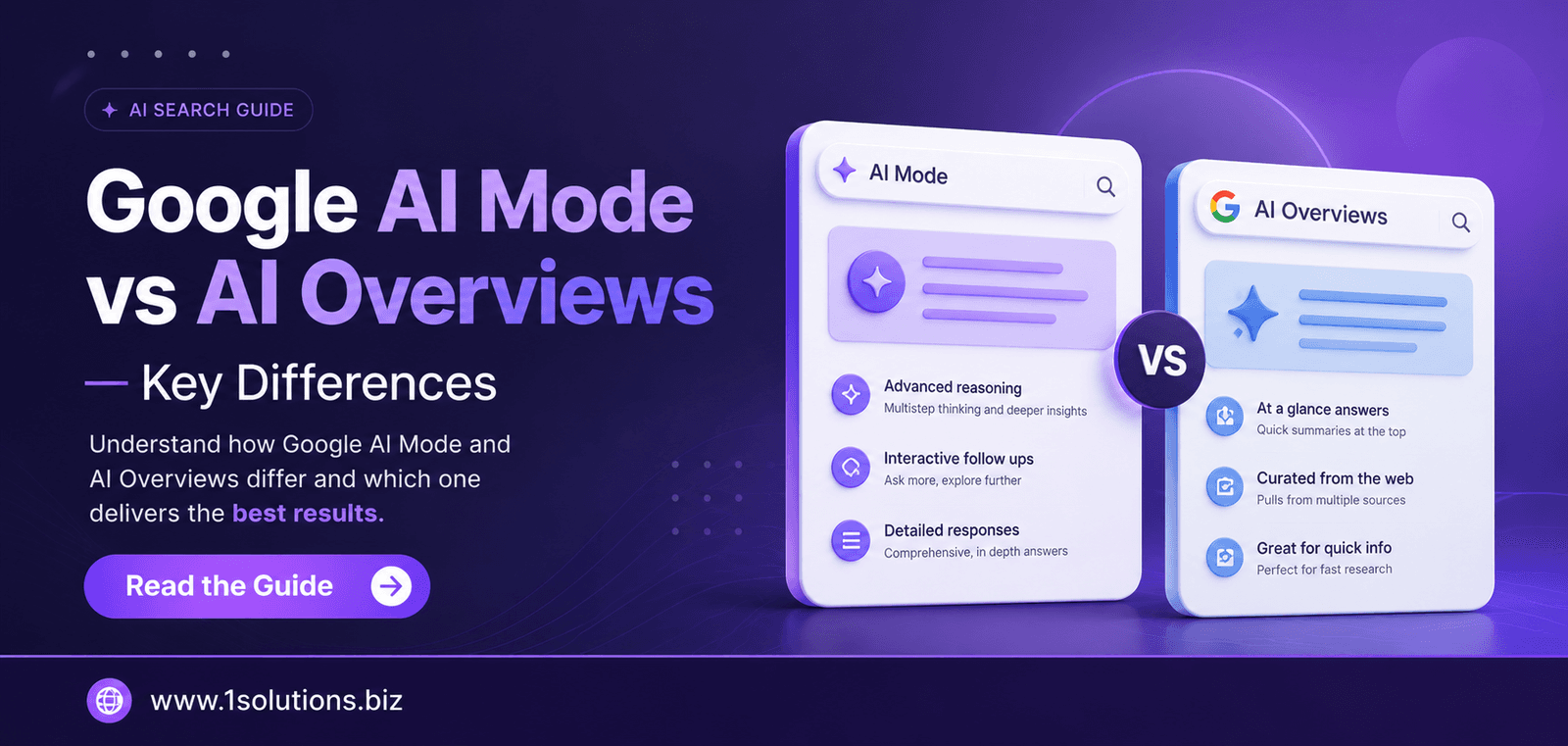
For context on how the broader SEO landscape is evolving and what signals Google is increasingly prioritizing, our coverage of Google AI Overviews vs AI Mode and local AEO best practices provide useful perspective on where user engagement signals fit into the future of search. The direction is clear: Google is getting better at distinguishing genuine engagement from superficial metrics, which means authentic user experience improvements will matter more over time, not less.
Conclusion: 5 Easy Ways to Reduce Your Bounce Rate and Increase Your Rankings
The 5 easy ways to reduce your bounce rate and increase your rankings covered in this guide are not shortcuts or tricks. They are fundamental improvements to the experience you deliver to every visitor who lands on your site. Page speed sets the foundation. Search intent alignment ensures the right people stay. Readability removes friction from the reading experience. Internal linking creates a path forward. And strong calls to action give visitors a reason to engage rather than leave.
None of these strategies requires a complete site rebuild or a massive budget. Most can be started this week with tools you already have access to. The compound effect of applying all five together is significantly greater than any single fix on its own. Start with the highest-impact items, measure the results, and keep iterating. Your bounce rate will come down, and your rankings will follow.
Frequently Asked Questions
What is considered a good bounce rate for a website?
A bounce rate between 26% and 40% is generally considered excellent, while 41% to 55% is average, and anything above 70% warrants investigation. However, context matters: blog posts and informational pages naturally have higher bounce rates than product or landing pages. Always benchmark against your own industry and page type rather than applying a universal standard.
Does bounce rate directly affect Google rankings?
Google has not officially confirmed bounce rate as a direct ranking factor, but the engagement signals it reflects, including session duration, pages per session, and return visits, do influence how Google evaluates page quality. Pages that consistently fail to retain visitors tend to lose ranking ground over time because they signal a poor match between content and user expectations.
How long does it take to see results from bounce rate improvements?
Speed and readability improvements can show measurable changes in user behavior within one to three weeks. Search intent alignment and internal linking improvements typically take four to eight weeks to reflect in rankings, since Google needs time to recrawl and reassess the pages. CTA changes can show conversion improvements almost immediately once enough traffic flows through the updated pages.
Can high-quality content still have a high bounce rate?
Yes. Content quality is only one piece of the equation. Even excellent content will produce high bounce rates if the page loads slowly, the formatting is difficult to read, or there are no clear next steps for the visitor. The strategies in this guide address all the variables that contribute to bounce rate, not just content quality in isolation.
What tools should I use to monitor and analyze my bounce rate?
Google Analytics 4 is the essential starting point for tracking engagement metrics across your site. For visual behavior data, Hotjar and Microsoft Clarity offer heatmaps and session recordings that show exactly where users are dropping off. Google Search Console helps you identify which pages are receiving traffic but underperforming in engagement, giving you a prioritized list of pages to fix first.