
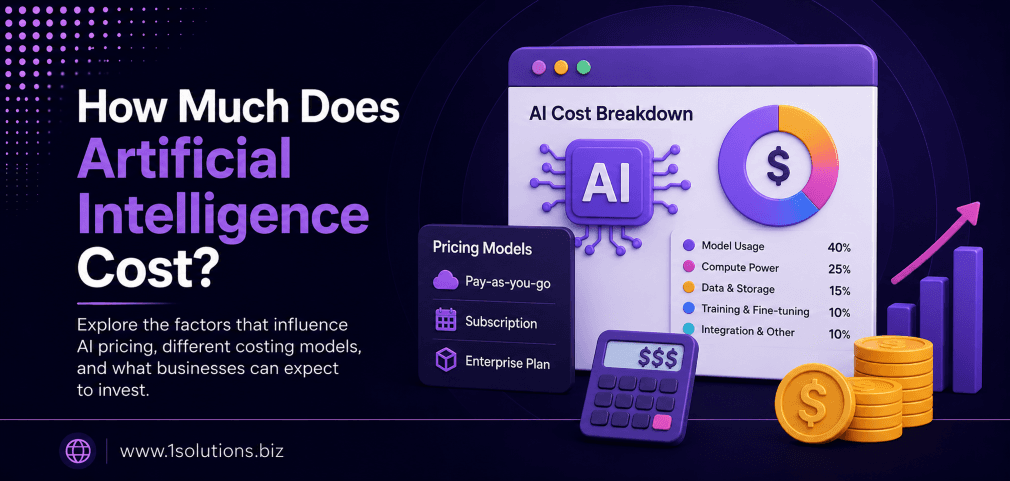
AI Pricing: How Much Does Artificial Intelligence Cost?
Understanding what Artificial Intelligence actually costs is one of the most practical questions any business owner or marketer can ask right now. The answer is not simple. AI pricing varies wildly depending on the type of solution, the scale of deployment, the vendor you choose, and the level of customization you need. Whether you are a solo entrepreneur exploring AI writing tools or an enterprise evaluating custom machine learning pipelines, this guide breaks down 10 real cost factors you need to understand before spending a single dollar.
AI costs range from free tiers to millions of dollars depending on the solution type, customization level, and data requirements. Most small businesses spend between $0 and $500 per month on AI tools, while enterprise custom builds can run $500,000 or more. Understanding pricing tiers, hidden costs, and ROI benchmarks is essential before committing to any AI investment.
⚡ Key Takeaways
- AI tool pricing ranges from free plans to enterprise contracts worth millions annually.
- Off-the-shelf AI SaaS tools are the most affordable entry point for small businesses.
- Custom AI model development is the most expensive and resource-intensive option.
- Hidden costs like data labeling, infrastructure, and maintenance often double initial budgets.
- AI-powered digital marketing tools deliver measurable ROI when implemented strategically.
- Open-source AI models reduce licensing costs but require significant technical expertise.
- Pricing models include per-seat subscriptions, API call billing, usage-based, and project-based contracts.
1. Off-the-Shelf AI SaaS Tools: The Lowest Cost Entry Point
For most small and mid-sized businesses, the journey into Artificial Intelligence starts with off-the-shelf SaaS tools. These are subscription-based platforms that have AI capabilities baked in, such as AI writing assistants, chatbots, image generators, and marketing automation tools. Pricing typically starts at free for basic tiers and scales to $20-$150 per user per month for professional plans.
Tools like ChatGPT Plus cost $20 per month, Jasper AI starts around $49 per month, and Midjourney’s standard plan runs $30 per month. According to Gartner (2024), over 70% of organizations are now using some form of SaaS-delivered AI, making this the dominant adoption model. These tools require no infrastructure investment, no data science team, and no custom development. You simply subscribe and start using them.
The trade-off is flexibility. Off-the-shelf tools are built for general use cases. They cannot be trained on your proprietary data in most cases, and you are limited to the features the vendor chooses to build. For businesses that want AI to do something very specific to their industry or workflow, SaaS tools often hit a ceiling quickly. Still, for teams exploring AI for content creation, customer support, or SEO, this tier delivers strong value at low risk. If you are using AI to support your digital marketing strategy, starting with SaaS tools is a smart, low-commitment approach.
2. API-Based AI Pricing: Pay for What You Use
Many AI capabilities are accessed not through a subscription dashboard but through an API, meaning you pay per call or per token. OpenAI’s GPT-4o API, for example, charges approximately $5 per million input tokens and $15 per million output tokens as of 2025. Google’s Gemini API and Anthropic’s Claude API operate on similar usage-based models.
This pricing model is ideal for developers building AI-powered features into applications or websites. If you are processing moderate volumes of text, the cost can be surprisingly low. A business generating 1,000 customer support responses per day might spend $30-$100 monthly on API calls. However, at scale, costs compound fast. High-traffic applications that process millions of queries daily can accumulate five-figure monthly API bills without careful optimization.
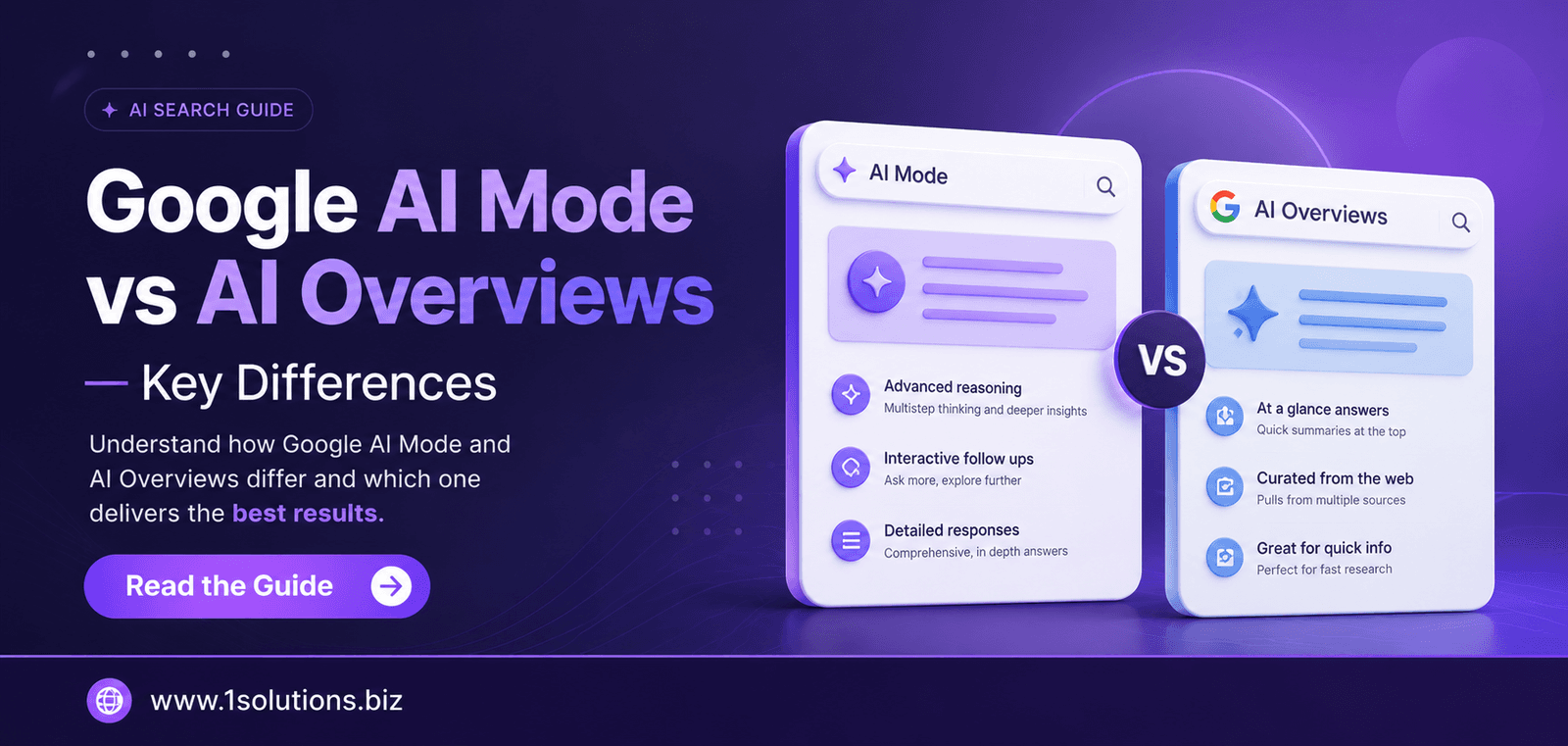
Token-based billing also creates budgeting challenges because usage is hard to predict. A spike in traffic or a poorly optimized prompt that generates long outputs can inflate your bill significantly. Teams that rely heavily on API-based AI need to implement cost controls such as token limits, caching repeated queries, and monitoring dashboards. Understanding how Google’s AI tools function and evolve is also useful context when deciding which AI APIs to integrate with your marketing or content workflows.
💡 Pro Tip: Always set hard spending caps on your AI API accounts. Most providers allow you to configure billing alerts and automatic cutoffs, which can prevent unexpected invoices from derailing your monthly budget.
3. AI-Powered Marketing Tools: Pricing for Marketers
The marketing technology stack has been deeply transformed by Artificial Intelligence, and pricing for AI-driven marketing tools spans a wide range. Platforms like HubSpot with AI features start around $45 per month, while enterprise marketing automation suites with advanced AI can cost $3,000 to $10,000 per month or more.
Specific AI marketing use cases include predictive lead scoring, personalized email campaigns, AI content generation, chatbot deployment, and automated ad optimization. According to McKinsey (2023), AI adoption in marketing and sales functions has increased by 27% year over year, reflecting the measurable ROI these tools deliver. Businesses that use AI for ad targeting, for example, report average cost-per-acquisition reductions of 20-30%.
For ecommerce businesses, AI-powered recommendation engines and personalization tools are particularly impactful. These tools are often priced as a percentage of revenue influenced, meaning you only pay a premium if the AI actually drives conversions. This performance-based model reduces risk but requires proper attribution tracking to verify results. If you are investing in AI for your online store, pairing it with strong ecommerce marketing services ensures the technology delivers measurable returns rather than sitting idle. Also, exploring tools covered in resources like AI SEO tools that outrank competitors can help you prioritize which platforms deserve your budget.
4. Custom AI Model Development: Enterprise-Level Investment
Building a custom AI model from scratch is the most expensive option and is typically reserved for large organizations with specific, proprietary use cases. A full custom machine learning project, including data collection, model training, testing, and deployment, can cost anywhere from $50,000 to over $1,000,000 depending on scope and complexity.
The key cost drivers in custom development include data acquisition and labeling (often $10,000 to $100,000 alone), computational resources for training (GPU cloud costs can run $5,000 to $50,000 per training run), and the salaries of data scientists and ML engineers, which average $130,000 to $180,000 per year in most markets (Bureau of Labor Statistics, 2024).
Custom models offer the highest ceiling in terms of accuracy and specificity. A healthcare company building a diagnostic AI or a financial firm developing fraud detection algorithms needs custom models because no off-the-shelf tool can match their requirements. However, the maintenance burden is significant. Models degrade over time as real-world data shifts, requiring regular retraining cycles. Many organizations that commit to custom AI development underestimate the ongoing operational cost, which often runs 20-30% of the initial build cost annually.
5. Open-Source AI Models: Low Licensing Costs, High Hidden Costs
Open-source AI models like Meta’s LLaMA, Mistral, and Stable Diffusion offer a compelling alternative to commercial platforms because the software itself is free. Organizations can download, fine-tune, and deploy these models without paying licensing fees. This makes open-source AI attractive for technically sophisticated teams with tight budgets.
However, the true cost of open-source AI is not zero. You still need the infrastructure to run these models, and large language models require significant compute resources. Running a 70-billion parameter model on your own hardware requires high-end GPU servers, which can cost $30,000 to $150,000 to purchase or $5,000 to $20,000 per month to rent in the cloud. Add to this the engineering time required to fine-tune models, build interfaces, and maintain deployments, and your costs accumulate quickly.
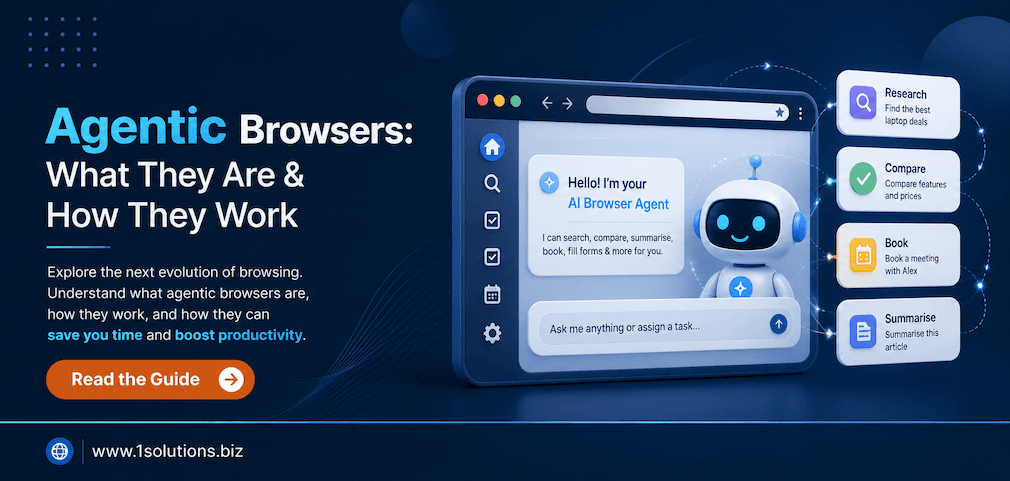
Open-source AI also comes with compliance and security responsibilities that commercial APIs handle automatically. When you self-host a model, you own the liability for data privacy, output quality, and system reliability. For organizations willing to invest in the technical overhead, open-source AI delivers unmatched control and flexibility. For others, it may be more cost-effective to use a managed API. Understanding the emerging world of agentic AI browsers and autonomous systems is increasingly important as open-source tools power many of these next-generation deployments.
6. AI Infrastructure Costs: The Bill Behind the Bill
Whether you are using cloud AI services or building your own, infrastructure is a major cost category that surprises many buyers. Cloud compute for AI workloads is priced differently from standard web hosting. A single A100 GPU instance on AWS or Google Cloud costs approximately $3 to $5 per hour, and training large models can take hundreds or thousands of GPU-hours.
Storage costs for AI are also substantial. AI systems require large datasets for training and inference, along with vector databases, model weights, and log storage. A mid-sized AI deployment might consume 5-20 TB of storage per month, adding hundreds of dollars in cloud storage fees on top of compute costs.
Networking costs are another hidden line item. AI applications that process large files, stream outputs, or serve many simultaneous users generate significant data transfer fees. Organizations often underestimate these costs by 40-60% when first planning AI budgets, according to Flexera’s State of the Cloud Report (2024). The practical implication: always build a 50% buffer into your AI infrastructure budget and review actual versus projected spend monthly. If your infrastructure supports a content-heavy site or digital marketing operation, pairing efficient AI tools with strong search engine optimization services can help maximize the ROI of your total tech spend.
💡 Pro Tip: Use cloud cost management tools like AWS Cost Explorer or Google Cloud’s Billing Dashboard to track AI-specific spend separately from your other cloud costs. This makes it much easier to evaluate the true ROI of each AI initiative.
7. AI Pricing Models Compared: Which Structure Fits Your Needs?
AI vendors use several distinct pricing structures, and understanding each one helps you choose the right fit for your usage pattern and budget predictability preferences. Here is a comparison of the most common models:
| Pricing Model | How It Works | Best For | Risk Level |
|---|---|---|---|
| Per-Seat Subscription | Fixed monthly fee per user | Teams with predictable usage | Low |
| Usage-Based (API) | Pay per token, call, or query | Developers, variable workloads | Medium |
| Tiered Plans | Fixed tiers with feature limits | SMBs scaling gradually | Low |
| Enterprise Contract | Negotiated annual deal | Large organizations | Low (with SLA) |
| Performance-Based | % of revenue or outcomes driven | Ecommerce, ad platforms | Medium |
| Project-Based | One-time fee for custom build | Custom AI development | High |
Each model has genuine trade-offs. Per-seat subscriptions provide budget predictability but can be wasteful if users do not engage consistently. Usage-based billing aligns cost with value but creates forecasting challenges. Enterprise contracts require commitment but often come with dedicated support and volume discounts. Choose the model that matches your actual usage pattern, not just your ideal usage scenario.
8. AI for SEO and Content: Real Costs and Real Returns
One of the most accessible applications of Artificial Intelligence for small and mid-sized businesses is in SEO and content marketing. AI tools for keyword research, content generation, technical audits, and search intent analysis are now widely available at accessible price points. Tools like Surfer SEO, Clearscope, and Semrush’s AI features range from $49 to $449 per month depending on plan and usage.
AI-assisted content production can dramatically reduce the per-word cost of content creation, but the quality trade-off is real. AI-generated content still requires human editing, fact-checking, and brand voice alignment to be effective. The smartest approach is to use AI to accelerate research, drafting, and optimization while keeping humans in the loop for quality control.
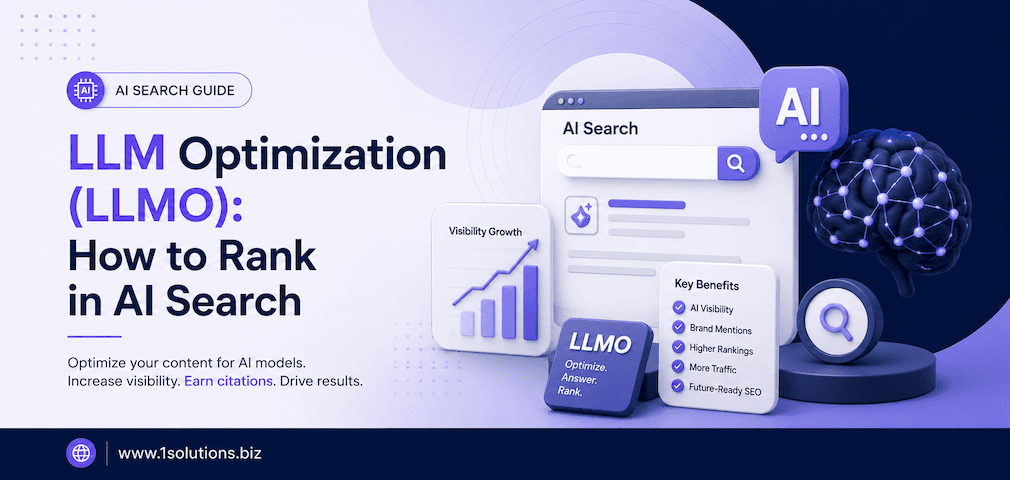
For businesses serious about search visibility, the combination of AI tools and strategic SEO expertise produces the strongest results. Tactics like LLM optimization for AI search visibility are becoming increasingly important as AI-driven search engines reshape how content gets discovered. Similarly, understanding how to improve website visibility in AI search engines is now a core part of any forward-looking SEO strategy. AI tools make these tactics more efficient, but they still require expertise and ongoing investment to execute well.
9. Hidden and Ongoing Costs That Inflate Total AI Spend
One of the biggest mistakes businesses make when budgeting for AI is focusing only on the initial tool cost or contract price. Hidden and ongoing costs frequently double or triple the total cost of ownership over a 12-month period. Understanding these upfront can save significant frustration and financial strain.
Data labeling and preparation is one of the largest hidden costs. Supervised machine learning models require labeled training data, and labeling is labor-intensive. Professional data labeling services charge $0.01 to $0.50 per label depending on complexity, and a single training dataset might require hundreds of thousands of labels. Integration costs are another common surprise: connecting AI tools to your existing CRM, CMS, or ecommerce platform often requires custom development work that adds $5,000 to $50,000 to the budget.
Training and change management are often overlooked entirely. According to Deloitte’s AI Adoption Survey (2024), 42% of companies that underperformed on AI ROI cited insufficient employee training as a key factor. Getting your team to actually use AI tools effectively requires structured onboarding, documentation, and ongoing support. Add compliance costs (particularly for AI touching personal data), regular model retraining, and vendor price increases over time, and the true annual cost of AI is almost always higher than the advertised price. Build these factors into every AI budget proposal you create.
💡 Pro Tip: Before signing any AI contract, ask the vendor directly: what are the most common reasons customers exceed their initial budget estimate? The answer will tell you exactly where the hidden costs live.
10. How to Evaluate AI ROI Before You Spend
The final and most important cost consideration is not what AI costs but what it returns. AI investment should be evaluated like any other business expenditure: through the lens of measurable return on investment. The challenge is that AI ROI is often indirect, long-cycle, or difficult to attribute precisely, which makes pre-investment evaluation critical.
Start by identifying the specific business problem you want AI to solve. Vague goals like “improve efficiency” are not measurable. Concrete goals like “reduce customer support ticket resolution time by 30%” or “increase content output by 50% without adding headcount” give you a clear benchmark. Then estimate the dollar value of achieving that goal and compare it to the total cost of ownership including all the hidden costs covered in point 9.
Use pilot programs wherever possible before committing to enterprise contracts. Most AI vendors offer free trials or limited plans that let you validate ROI at small scale. Track baseline metrics before deployment so you have genuine comparison data, not post-hoc assumptions. Resources like Agentic SEO frameworks can help you think systematically about how AI integrates into your broader digital strategy. Also, if you are exploring AI for local search visibility, reviewing local AEO best practices for small businesses provides an actionable framework for measuring and improving AI-driven discoverability. ROI-first thinking is the discipline that separates AI success stories from expensive experiments.
Practical Action Plan: Prioritizing Your AI Investment
- Do This Now: Audit your existing marketing and operations stack to identify tasks that are repetitive, time-consuming, and rule-based. These are the highest-ROI targets for immediate AI tool adoption. Start with one SaaS AI tool at a free or low-cost tier and measure impact over 30 days before expanding.
- Worth Doing: Evaluate API-based AI integration for your highest-traffic customer touchpoints, such as chat support, search, or personalization. Calculate the per-interaction cost and compare it to current staffing or tooling costs. Build a 12-month cost model that includes hidden and infrastructure costs before committing.
- Low Priority: Custom AI model development should only be pursued once you have exhausted off-the-shelf and API options and have a clearly validated use case that justifies a six-figure investment. Open-source model self-hosting falls into the same category unless you have dedicated ML engineering resources already in place.
Frequently Asked Questions About AI Pricing
How much does it cost to use AI tools for a small business?
Most small businesses can get started with AI tools for $0 to $200 per month using SaaS platforms with free or low-cost tiers. Tools for writing, SEO, customer chat, and image generation are widely available at accessible price points. The key is starting with one specific use case rather than buying multiple tools simultaneously.
What is the most expensive part of building a custom AI solution?
For most custom AI projects, the largest cost categories are data acquisition and labeling, followed by engineering talent. Data scientists and ML engineers are among the highest-paid technology professionals, and complex datasets can require months of labeling work before any model training begins. Infrastructure and ongoing maintenance add further costs on top of the initial build.
Are there free AI tools that are genuinely useful for business?
Yes. Google’s Gemini free tier, ChatGPT’s free plan, Canva’s AI design features, and several open-source models offer real capability at no cost. However, free tiers typically have usage limits, lack advanced features, and do not offer the data privacy protections that paid plans include. For anything involving sensitive customer data, a paid, contractually governed plan is strongly recommended.
How do I avoid overspending on API-based AI billing?
Set hard spending caps through your provider’s billing controls, implement prompt caching to avoid re-processing identical queries, optimize prompt length to reduce token consumption, and monitor usage dashboards weekly rather than waiting for monthly invoices. Building a cost-per-query metric into your AI monitoring practice helps identify waste early.
Does AI actually deliver ROI for digital marketing?
Yes, when implemented strategically. AI tools for ad optimization, content personalization, SEO analysis, and customer segmentation have documented ROI across multiple industries. McKinsey (2023) reports that companies using AI in marketing functions achieve 10-20% higher revenue growth than peers who do not. The caveat is that AI amplifies good strategy but cannot compensate for weak fundamentals in targeting, messaging, or positioning.