
Why Hiring a Remote Next.js Developer Makes Business Sense
The demand for fast, scalable, and SEO-friendly web applications has never been higher. Next.js, the React-based framework developed by Vercel, has emerged as one of the most powerful tools for building modern web experiences. And when it comes to staffing your development needs, hiring a remote Next.js developer is increasingly the smart choice for businesses of all sizes.
Whether you are a startup launching your first product or an established business modernizing your digital infrastructure, remote Next.js talent offers a compelling mix of flexibility, technical depth, and cost efficiency. But like any business decision, it comes with trade-offs worth understanding before you commit.
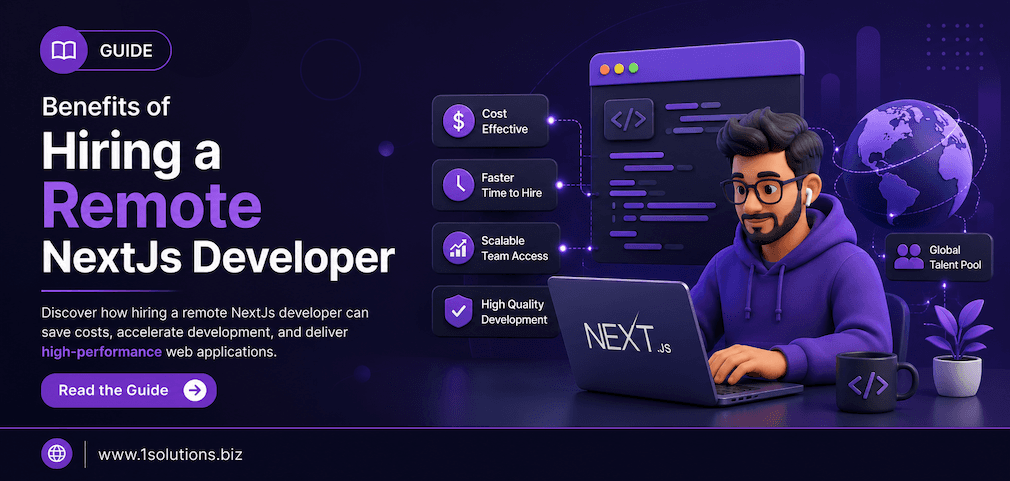
Hiring a remote Next.js developer gives businesses access to specialized talent, cost savings, and faster project timelines without the overhead of full-time in-house hiring. This article covers 10 concrete benefits, honest trade-offs, and practical steps to get started the right way.
⚡ Key Takeaways
- Remote Next.js developers offer significant cost savings compared to in-house hires, often 30-50% lower total cost.
- Next.js built-in SSR and SSG capabilities directly support better SEO performance for web applications.
- Flexible engagement models let you scale your dev team up or down without long-term contracts.
- Access to a global talent pool means you are not limited to local availability or salary benchmarks.
- Remote developers can integrate with your existing digital marketing and content workflows seamlessly.
- Honest trade-offs exist, including communication overhead and timezone coordination challenges.
- Vetting technical skills through code reviews and trial projects reduces hiring risk significantly.
The 10 Key Benefits of Hiring a Remote Next.js Developer
1. Access to a Wider and Deeper Talent Pool
One of the most immediate advantages of hiring a remote Next.js developer is that geography no longer limits your choices. When you restrict hiring to your local area, you are competing with every other business in that region for a small group of qualified developers. Remote hiring removes that ceiling entirely.
Next.js is a specialized skill. Not every React developer has hands-on experience with server-side rendering, static site generation, incremental static regeneration, or the App Router introduced in Next.js 13. Finding someone with that specific expertise locally can be difficult and time-consuming. Remotely, you can evaluate candidates from a much larger pool, increasing the chances of finding developers who have actually shipped Next.js projects at scale.
According to Stack Overflow’s Developer Survey 2023, Next.js is used by over 16% of professional developers globally, making it one of the most widely adopted frameworks. That adoption is distributed unevenly across geographies, meaning the best Next.js talent may simply not be available in your immediate hiring area.
This wider pool also means you can find specialists in specific use cases, such as e-commerce storefronts, headless CMS integrations, or enterprise-grade web applications. Comparing your options across a global marketplace lets you match skill sets precisely to your project needs rather than settling for a generalist who will learn on the job.
2. Meaningful Cost Savings Without Quality Trade-Offs
Hiring a full-time, in-house senior Next.js developer in a major metropolitan area can cost upward of $120,000 to $180,000 per year in base salary alone, not counting benefits, payroll taxes, office space, equipment, and onboarding costs. Remote hiring, especially when structured as a contract or project-based engagement, can reduce total costs by 30% to 50% depending on your arrangement.
It is important to be honest here: cost savings should not come at the expense of quality. Hiring an underqualified developer to save money will cost more in rework and delays. The goal is to find a developer whose skills match your budget without overpaying for proximity. Remote engagement models, including hourly contracts, monthly retainers, and fixed-price projects, give you more flexibility to right-size your investment.
A GitLab Remote Work Report (2021) found that 33% of remote workers reported increased productivity compared to their office counterparts, which has downstream implications for the value per dollar spent on remote talent. A more productive developer delivering higher-quality code faster is a better return on your investment than a less productive in-office hire at a higher fixed cost.
For businesses that also invest in digital visibility, pairing strong development work with professional search engine optimization services ensures that the application your remote developer builds actually gets found by users, maximizing the return on your combined technology and marketing spend.
3. Faster Project Kickoff and Reduced Time-to-Market
Traditional hiring cycles for full-time developers average 45 to 60 days from job posting to start date, once you factor in sourcing, interviews, offers, and notice periods. Remote hiring through established platforms or agencies can compress that timeline to as little as one to two weeks, especially when engaging a developer on a contract basis.
For product teams with urgent launch deadlines, this speed matters enormously. Next.js projects often involve migrating from legacy stacks, building new product landing pages, or integrating headless commerce platforms. Every week of delay has a real business cost, whether that is delayed revenue, a competitor reaching the market first, or extended infrastructure costs on a legacy system.
Remote developers who specialize in Next.js are also typically familiar with modern tooling, CI/CD pipelines, Vercel deployments, and headless CMS platforms like Contentful or Sanity. This means less ramp-up time compared to a generalist developer who needs to learn both the framework and the ecosystem from scratch.
If your project involves an e-commerce component, understanding the technology stack comparison is also worthwhile. Our guide on WooCommerce vs Shopify can help you decide which platform your Next.js developer should be integrating with based on your business model and scale requirements.
💡 Pro Tip: Before engaging a remote Next.js developer, define your project scope in writing, including expected deliverables, tech stack requirements, and deployment targets. This single step reduces miscommunication and accelerates the kickoff process significantly.
4. Built-In SEO Advantages Through Next.js Architecture
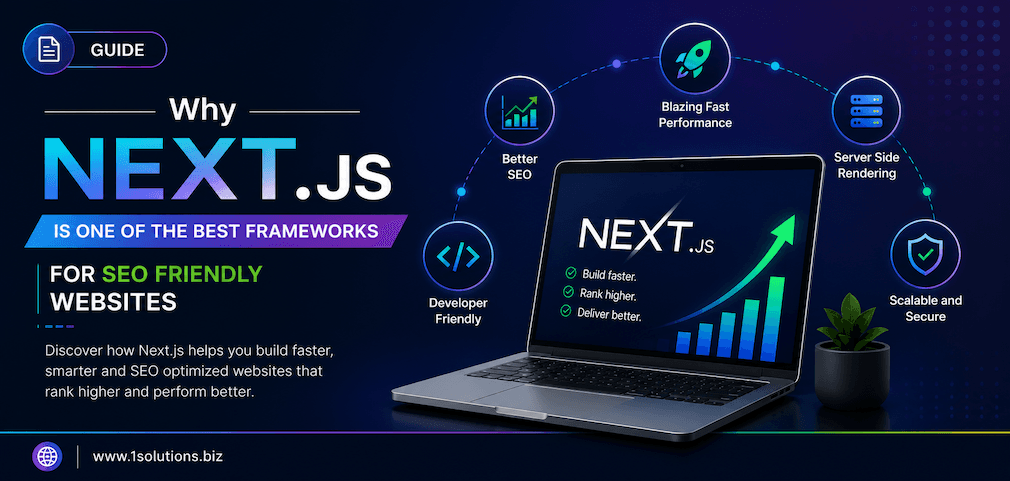
Next.js is inherently SEO-friendly by design, and hiring a developer who understands how to leverage this architecture correctly gives your web application a structural advantage over single-page React apps. The framework supports server-side rendering (SSR) and static site generation (SSG), both of which ensure that search engine crawlers receive fully rendered HTML rather than a JavaScript shell that requires client-side execution to populate content.
A remote Next.js developer who understands SEO fundamentals can implement critical technical elements properly: canonical tags, Open Graph metadata, structured data, dynamic sitemaps, and optimized Core Web Vitals scores. These are not just nice-to-haves; they directly affect search rankings and user experience signals that Google weighs in its algorithm.
Understanding how search engines are evolving is also valuable context for your developer. Resources like our breakdown of Google AI Overviews vs AI Mode illustrate how the search landscape is changing and why rendering strategy matters more than ever for content discoverability.
For businesses that rely on content-driven traffic, pairing Next.js development with a solid digital marketing strategy ensures the technical foundation your remote developer builds supports long-term organic visibility and audience growth.
5. Flexible Engagement Models to Match Your Business Needs
One of the structural advantages of remote hiring is the variety of engagement models available. You are not locked into a binary choice between hiring someone full-time or doing everything in-house. Remote Next.js developers can be engaged as hourly contractors for short-term tasks, on monthly retainers for ongoing development support, as project-based contractors for defined scopes, or as part-time contributors alongside your existing team.
This flexibility is particularly valuable for businesses with variable development needs. A startup might need intensive development effort for three months during an MVP build, then only light maintenance support afterward. A growing e-commerce business might need surge capacity during a platform migration while keeping a lean team the rest of the year.
The ability to scale your development capacity up and down without the friction of traditional employment is a genuine operational advantage. However, it does require clear contracts, defined intellectual property ownership terms, and reliable communication protocols to work well. These are solvable problems, but they are real considerations that should be addressed at the start of any remote engagement.
If your Next.js application supports an online store, reviewing a WooCommerce store maintenance checklist can help you understand the ongoing development tasks your remote developer may need to handle beyond initial build work.
6. Round-the-Clock Development Across Time Zones
While timezone differences are often cited as a challenge of remote work, they can also be structured as a genuine operational advantage. If your team is based in North America and your remote Next.js developer operates in a significantly different timezone, you can establish a workflow where work happens while your internal team sleeps. Bug fixes can be queued in the evening and resolved by morning. Feature branches can progress overnight.
This approach requires deliberate process design. Asynchronous communication tools, well-documented task management systems, and clear handoff protocols are essential. Without these, timezone differences become friction rather than advantage. But teams that invest in async-first workflows often find that remote, cross-timezone development meaningfully accelerates their overall output.
According to a 2022 Buffer State of Remote Work report, 22% of remote workers cited timezone differences as their primary challenge, but the same report noted that structured async communication largely mitigated this issue for teams with established processes. The lesson is not to avoid timezone differences but to build systems that convert them into coverage advantages.
As AI-driven tools increasingly assist developers in writing, testing, and reviewing code, understanding tools like agentic browsers can also help your remote developer stay current with emerging workflows that further accelerate development cycles.
💡 Pro Tip: Establish a one-hour daily overlap window between your internal team and your remote Next.js developer for synchronous check-ins. Outside that window, rely on documented tasks and asynchronous updates to keep progress moving without requiring constant real-time availability.
7. Specialized Technical Expertise Without Full-Time Overhead
Next.js development is a specific skill set that intersects React proficiency, Node.js knowledge, deployment platform expertise, and performance optimization techniques. For many businesses, the workload does not justify hiring a full-time specialist at a senior level. But the project complexity absolutely demands someone with that level of expertise.
Remote hiring solves this mismatch. You can engage a senior Next.js developer for the duration of your project at a fraction of the annual cost of a full-time hire, then reduce the engagement once the critical build phase is complete. This is especially relevant for tasks like initial architecture decisions, performance auditing, or migrating from a legacy stack to Next.js.
Technical expertise also extends beyond pure coding. A strong remote Next.js developer should understand Core Web Vitals optimization, image handling with next/image, font optimization, API route design, and middleware configuration. These skills directly affect both user experience and search performance, making them business-critical beyond the development function.
For businesses focused on content-heavy sites, understanding how to boost performance through page content analysis can help your remote developer prioritize which pages and templates deserve the most optimization attention during the build phase.
8. Easier Integration With Your Existing Digital Marketing Stack
A well-built Next.js application does not exist in isolation. It needs to integrate with analytics platforms, marketing automation tools, CRM systems, content management systems, and advertising pixels. A remote Next.js developer with experience across these integrations can connect your development work directly to your marketing infrastructure from day one.
This is more valuable than it sounds. Developers who only understand the front-end code without appreciating the marketing context often implement tracking incorrectly, create pages that load slowly due to unoptimized script injection, or structure URLs in ways that break SEO. A developer who understands both the technical and marketing dimensions of the work avoids these costly mistakes.
For example, if your marketing team runs paid campaigns, the pages your Next.js developer builds need to support conversion tracking, A/B testing tools, and remarketing pixels without sacrificing performance scores. Similarly, if your team is working on improving local visibility, insights from resources like local AEO best practices should inform how your developer structures location-specific pages within the Next.js routing system.
The connection between development and marketing is increasingly important as AI search changes how content is discovered and ranked. Your remote developer should be aware of these trends and build with them in mind from the start.
9. Reduced Operational and Administrative Burden
Hiring a full-time employee involves significant administrative overhead: payroll processing, benefits administration, performance reviews, HR compliance, equipment provisioning, and workspace costs. For small and medium-sized businesses, this overhead can be disproportionately burdensome relative to the development work being done.
Engaging a remote Next.js developer on a contract basis shifts much of this burden. The developer is responsible for their own equipment, workspace, and in many cases their own tax obligations depending on the engagement structure. Your organization benefits from their output without managing the full employment relationship.
This is not without its own considerations. Clear contracts, milestone-based payment terms, and defined communication expectations are essential for the relationship to function well. Intellectual property clauses and non-disclosure agreements should be standard components of any remote development engagement. These are not bureaucratic formalities; they protect both parties and set clear expectations that reduce disputes.
For businesses also managing their web presence across multiple channels, this operational simplicity in the development relationship frees up management bandwidth to focus on strategy, content, and customer acquisition rather than HR administration.
💡 Warning: Never skip the contract stage when hiring a remote developer. Verbal agreements about scope, payment, and IP ownership create ambiguity that is costly to resolve later. A simple, clear written agreement protects both parties and sets the engagement up for success.
10. Scalable Development Capacity That Grows With Your Business
Perhaps the most strategically significant benefit of hiring a remote Next.js developer is the ability to scale your development capacity in alignment with your actual business growth rather than ahead of it. Traditional full-time hiring requires you to anticipate future needs months in advance. Remote hiring lets you respond to your current reality and adjust as it changes.
A business launching its first Next.js application might start with a single remote developer. As the product gains traction and feature requests multiply, adding a second developer or a dedicated QA specialist is straightforward. If priorities shift or a project winds down, scaling back is equally simple without the friction of layoffs or restructuring.
This scalability also applies to specialization. As your Next.js application matures, you may need different expertise at different stages: an architect for initial design decisions, a performance specialist for optimization work, and a security-focused developer for compliance-related requirements. Remote hiring lets you bring in exactly the right expertise at each stage rather than trying to find one person who can do everything.
For businesses that also track how their site appears in evolving search environments, our guide on improving website visibility in AI search engines provides context for how your Next.js architecture decisions today affect discoverability in AI-powered search results tomorrow.
Comparing Remote vs In-House Next.js Developer Hiring
| Factor | Remote Next.js Developer | In-House Next.js Developer |
|---|---|---|
| Average Annual Cost | $40,000 – $90,000 (contract) | $120,000 – $180,000 (salary + benefits) |
| Talent Pool | Global, highly specialized | Local, limited availability |
| Hiring Timeline | 1 to 2 weeks | 45 to 60 days average |
| Scalability | High, flexible contracts | Low, requires full employment cycle |
| Communication | Async-first, requires tooling | Synchronous, in-person available |
| Admin Overhead | Low, contractor model | High, full HR obligations |
| Cultural Integration | Requires deliberate effort | Natural through proximity |
| Long-Term Retention Risk | Higher without loyalty-building | Lower with competitive benefits |
Practical Action: Getting Started With Remote Next.js Hiring
- Do This Now: Write a clear project brief before posting any job listing. Define your tech stack, expected deliverables, timeline, and budget range. Developers who see a well-structured brief apply more seriously and self-select for fit, saving you screening time.
- Worth Doing: Request a paid trial task or code review as part of your evaluation process. Assign a small, representative piece of work, such as building a single page component or optimizing an existing Next.js route, and evaluate both the code quality and the communication process. This reveals how the developer actually works, not just how they interview.
- Low Priority: Invest in team-building activities once the professional relationship is established. Video calls, shared documentation of team norms, and occasional recognition of good work build the kind of working relationship that reduces turnover risk over time. This matters but should come after you have confirmed technical fit and delivery reliability.
Frequently Asked Questions
What skills should I look for when hiring a remote Next.js developer?
Look for demonstrated experience with Next.js App Router and Pages Router, server-side rendering, static site generation, API routes, and Vercel deployment. Additional valuable skills include TypeScript proficiency, headless CMS integration experience, Core Web Vitals optimization, and familiarity with testing frameworks like Jest or Playwright. Always ask for links to live projects or a GitHub portfolio to verify real-world experience rather than relying solely on self-reported skills.
How do I verify the quality of a remote Next.js developer before hiring?
The most reliable method is a paid trial task that mirrors your actual project requirements. Avoid free technical tests, as they discourage strong candidates who have other options. Review their code for readability, proper use of Next.js conventions, error handling, and performance considerations. Check references from previous clients or employers, and pay attention to how clearly they communicate during the evaluation process, since communication quality predicts long-term collaboration success as much as technical skill does.
Is hiring a remote Next.js developer suitable for small businesses?
Yes, and in many cases it is particularly well-suited to small businesses that cannot justify a full-time hire. Contract and project-based engagements let small businesses access senior-level expertise for a defined scope without committing to ongoing employment costs. Small businesses can also benefit from the SEO advantages that a well-built Next.js application provides, making the development investment compound over time through organic traffic growth.
What are the biggest risks of hiring a remote Next.js developer?
The primary risks are communication gaps, unclear scope leading to scope creep, and intellectual property ambiguity if contracts are not properly structured. Timezone differences can compound communication challenges if not managed deliberately. There is also the risk of over-reliance on a single contractor who may become unavailable. Mitigate these risks through clear written contracts, milestone-based payment structures, documented codebases, and maintaining enough internal knowledge to continue operations if the developer relationship ends.
How does Next.js help with SEO, and why does the developer’s understanding of SEO matter?
Next.js supports server-side rendering and static site generation, both of which produce fully rendered HTML that search engine crawlers can read without executing JavaScript. This is a structural SEO advantage over client-side-only React applications. However, the framework’s capabilities only translate into SEO gains if the developer implements them correctly. Proper metadata management, canonical tag handling, structured data, dynamic sitemaps, and image optimization all require deliberate implementation. A developer who understands why these elements matter, not just how to code them, will make better architectural decisions throughout the project. Staying current with how search is evolving, as explored in resources like our overview of WebMCP and its SEO implications, helps ensure your Next.js application is built for both current and emerging search environments.
Conclusion
Hiring a remote Next.js developer is one of the most cost-effective and strategically flexible decisions a modern business can make when building or upgrading its web presence. From accessing specialized talent to reducing time-to-market, from enabling round-the-clock development to building scalable digital infrastructure, the benefits are concrete and measurable.
The trade-offs are real too: communication requires intentional structure, contracts need to be thorough, and quality vetting cannot be skipped. But for businesses willing to approach remote hiring with clarity and process, the returns on both the development investment and the downstream digital marketing performance are significant.
At 1Solutions, we help businesses connect development quality with marketing performance. Whether you need support with technical SEO, comprehensive digital marketing, or understanding how your web architecture affects search visibility, our team brings 15+ years of experience to every project.