
Search is no longer a single-lane highway. If you have been optimizing purely for Google’s blue links, you are already competing on a shrinking field. Understanding how AEO differs from SEO is no longer optional for marketers, it is a survival skill. Answer Engine Optimization (AEO) targets the AI-powered systems that pull direct answers from your content, while traditional SEO focuses on earning ranked positions in search results pages. Both matter. Neither replaces the other. This guide walks you through the mechanics of each, the real differences between them, and a prioritized action plan for doing both well.
AEO optimizes content to be selected as a direct answer by AI systems and voice assistants, while SEO focuses on ranking web pages in traditional search results. The two disciplines share some techniques but require different content structures, intent targeting, and measurement frameworks. A smart digital strategy in 2025 needs both running in parallel.
⚡ Key Takeaways
- AEO targets AI answer engines and voice assistants; SEO targets ranked search result pages.
- AEO content must be structured around specific questions with concise, authoritative answers.
- Schema markup, E-E-A-T signals, and conversational phrasing are critical for AEO success.
- Traditional SEO still drives the majority of web traffic, so abandoning it for AEO alone is a mistake.
- Voice search now accounts for a significant share of queries, making AEO increasingly important year over year.
- Measuring AEO success requires different KPIs than traditional SEO, including featured snippet rates and voice result appearances.
- The best strategy combines AEO and SEO into a unified content architecture rather than treating them as separate silos.
What Is SEO and What Has It Always Been About?
Search Engine Optimization has been the backbone of organic digital growth for over two decades. At its core, SEO is the practice of making your web pages more visible in traditional search engine results pages (SERPs). That means earning higher rankings for target keywords, building authoritative backlinks, improving page speed, and structuring your site so that crawlers can index it properly.
Traditional SEO success is measured in rankings, organic click-through rates, and traffic volume. If you rank in position one for a high-volume keyword, you expect a flood of visitors. According to Backlinko (2023), the first organic result in Google receives an average click-through rate of 27.6%, while results in position ten receive less than 2.4%. That gap makes ranking position extremely valuable.
Our professional search engine optimization services are built on this foundation, combining technical audits, on-page optimization, and authority-building strategies that have evolved alongside Google’s algorithm over 15 years.
SEO also spans several subspecialties. You have technical SEO, which handles crawlability and site architecture. On-page SEO covers keyword placement and content quality. Off-page SEO manages backlinks and brand authority. And local SEO targets geographic relevance. Each layer contributes to your ability to rank. If you want to understand how content quality fits into this, our post on boosting SEO efforts through page content analysis breaks it down clearly.
What Is AEO and Why Is It Different?
Answer Engine Optimization is the practice of structuring your content so that AI-powered systems, including Google’s AI Overviews, ChatGPT, Perplexity, Bing Copilot, and voice assistants like Alexa and Siri, select it as a direct answer to a user’s question. Instead of directing users to a list of links, these systems pull relevant text from web content and present it as an immediate response.
This changes the game entirely. In traditional SEO, your goal is to get someone to click your link. In AEO, your goal is to be the answer that gets read aloud or displayed at the top of an AI-generated summary, sometimes without a click ever happening.
According to HubSpot (2024), 58% of consumers have used voice search to find local business information in the past year. Meanwhile, Google’s AI Overviews now appear for a growing percentage of informational queries, reducing the need for users to scroll through organic results at all.
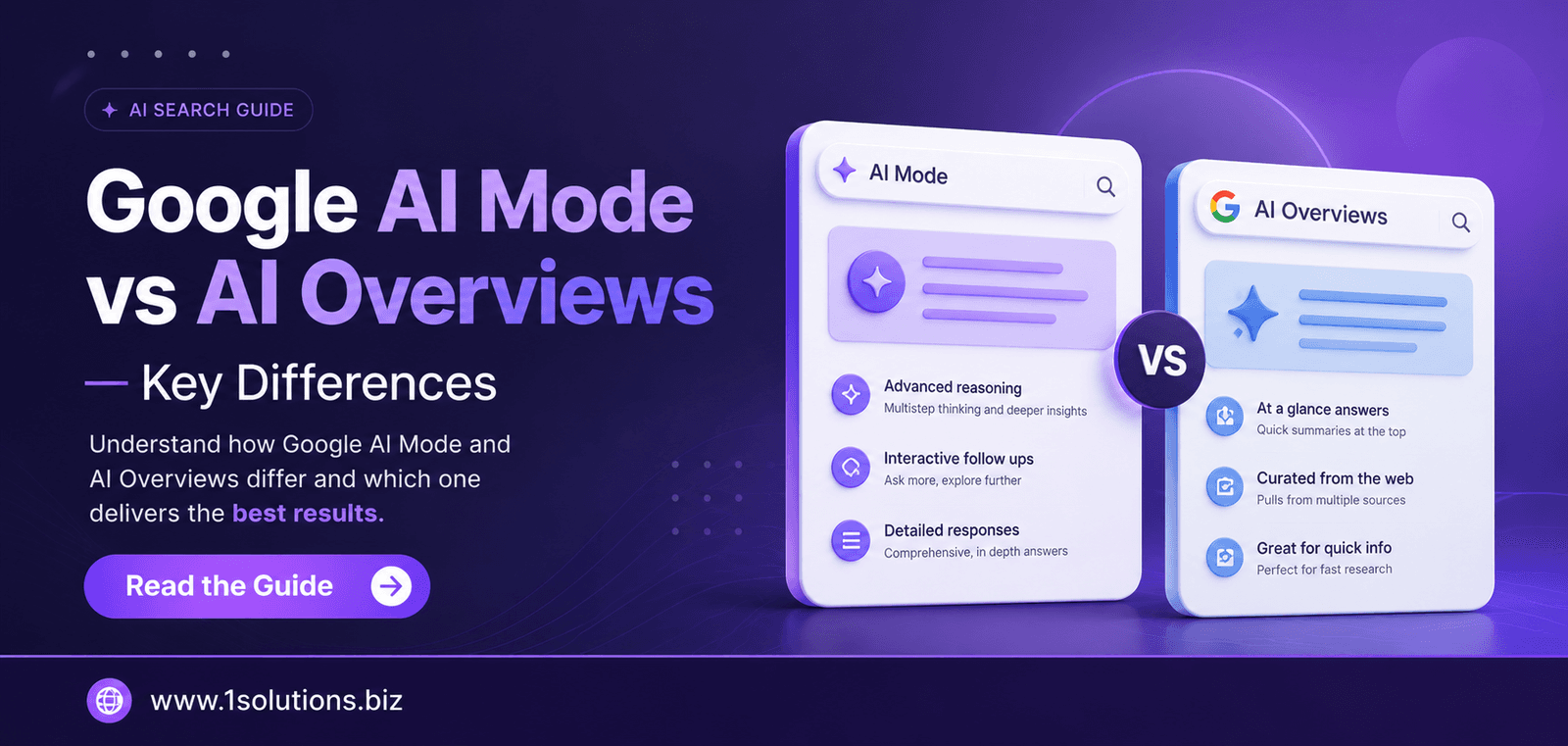
To understand how Google’s AI systems are evolving and what they mean for content creators, our analysis of Google AI Mode vs AI Overviews gives you a clear picture of where things are heading.
How AEO Differs from SEO: The Core Distinctions
The table below captures the most important structural differences between the two disciplines so you can see them side by side before diving into strategy.
| Factor | Traditional SEO | AEO (Answer Engine Optimization) |
|---|---|---|
| Primary Goal | Rank on SERP for target keywords | Be selected as a direct AI or voice answer |
| Content Format | Long-form, keyword-rich articles and pages | Concise Q&A blocks, structured data, conversational tone |
| Intent Focus | Broad keyword intent (navigational, transactional, informational) | Primarily informational and question-based intent |
| Schema Markup | Helpful but not always critical | Near-essential (FAQ, HowTo, Speakable schemas) |
| Success Metric | Rankings, organic traffic, CTR | Featured snippet rate, voice appearances, AI citation frequency |
| Link Building | Central to authority building | Authority matters, but structured content quality is primary |
| Click Dependency | Traffic depends on clicks | Visibility can happen without any click (zero-click answers) |
| Query Format | Short-tail and long-tail keyword strings | Natural language questions and conversational phrases |
Step 1: Audit Your Existing Content for Answer Readiness
Before you build anything new, assess what you already have. Most websites have content that ranks reasonably well for SEO but is completely unprepared for AEO because it was never written to directly answer a specific question in a digestible format.
Start by identifying your top-performing pages in Google Search Console. Then ask: does this page contain a clearly worded question followed by a direct, concise answer in the first two or three sentences? If not, it is not AEO-ready.
Look for pages that already appear in featured snippets. These are your best candidates for AEO enhancement because Google has already identified them as potential answer sources. Strengthen those pages by adding FAQ sections, tightening your answer paragraphs to under 50 words, and implementing the appropriate schema markup.
💡 Pro Tip: Use Google Search Console’s “Search Results” filter to find queries where you appear in position zero or as a featured snippet. These pages are your AEO quick wins. Restructure their answer blocks and add FAQ schema to lock in that placement more reliably.
Step 2: Restructure Content Around Question-Based Architecture
AEO lives and dies on how well your content is organized around actual questions people ask. This is a fundamentally different writing discipline from traditional SEO copywriting, which often prioritizes keyword density and topical breadth over direct question resolution.
Here is how to restructure your content for AEO:
- Identify the core question your page answers. Every AEO-optimized page should have one primary question it answers definitively.
- Lead with the answer. Put your most concise, accurate answer in the first paragraph after the heading, not buried three scrolls down.
- Use H2 and H3 headings phrased as questions. This signals to AI systems that a specific question is being addressed in that section.
- Keep answer paragraphs tight. Aim for 40 to 60 words per answer block. AI systems prefer concise, quotable text.
- Add a FAQ section. This gives you multiple question-and-answer pairs on a single page, multiplying your AEO surface area.
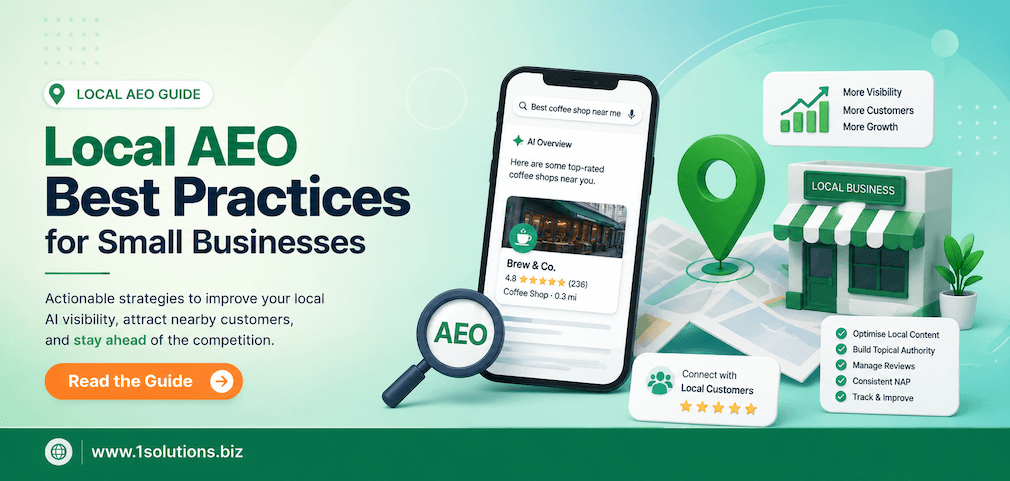
For businesses targeting local audiences, the approach needs a geographic layer on top of this structure. Our guide on local AEO best practices for small businesses explains how to combine question-based content with location signals effectively.
Step 3: Implement Schema Markup for AI Comprehension
Schema markup is the technical bridge between your content and the AI systems trying to interpret it. While traditional SEO can function without schema, AEO is severely limited without it. Three schema types are especially important:
- FAQPage schema: Marks up question-and-answer pairs so AI systems can extract them directly.
- HowTo schema: Structures step-by-step processes, which voice assistants and AI overviews love to pull from.
- Speakable schema: Specifically designed to flag content that is appropriate for text-to-speech output in voice search.
Adding these to your pages does not guarantee selection as an answer, but it dramatically improves your chances. Think of schema as raising your hand in class. The AI still chooses who to call on, but it can only call on students whose hands are visible.
The evolving relationship between structured data and AI parsing is also explored in our breakdown of how Google’s WebMCP protocol impacts SEO, which is worth reading if you want to understand where this is all going technically.
Step 4: Build E-E-A-T Signals That Both SEO and AEO Require
Google’s E-E-A-T framework (Experience, Expertise, Authoritativeness, Trustworthiness) underpins both traditional SEO and AEO. AI systems are trained to prefer sources that demonstrate genuine authority and credibility. According to Search Engine Journal (2024), pages with strong E-E-A-T signals are significantly more likely to be pulled into AI Overviews and featured snippets.
Building E-E-A-T means:
- Including author bios with verifiable credentials on content pages.
- Citing reputable external sources inline (as this article does).
- Maintaining consistent NAP (Name, Address, Phone) data for local entities.
- Earning editorial mentions and links from authoritative publications.
- Publishing original research or data that others cite.
This is one area where SEO and AEO strategy genuinely converge. Strong E-E-A-T helps you rank in traditional results AND get selected as an AI answer source. Investing here pays dividends in both channels simultaneously.
💡 Pro Tip: Add a clearly formatted “About the Author” section with credentials and publication history to every informational article on your site. AI systems scanning for trustworthy sources look for exactly these kinds of expertise signals before selecting content as an answer.
Step 5: Optimize for Conversational and Long-Tail Query Formats
Traditional SEO targets queries like “best running shoes” or “SEO agency.” AEO targets queries like “What are the best running shoes for flat feet?” or “How do I choose an SEO agency for my small business?” The shift from keyword to question changes how you approach content creation at a fundamental level.
Use tools like AnswerThePublic, Google’s “People Also Ask” boxes, and keyword research platforms to surface the actual questions your target audience is asking. Then build content that answers those questions precisely. The more your language mirrors how people actually speak and type their queries, the more likely AI systems are to choose your content as the response.
This also ties directly into voice search optimization. Voice queries are almost always phrased as complete questions or natural commands. If your content reads like a formal academic paper rather than a clear spoken answer, voice assistants will skip it in favor of something more accessible.
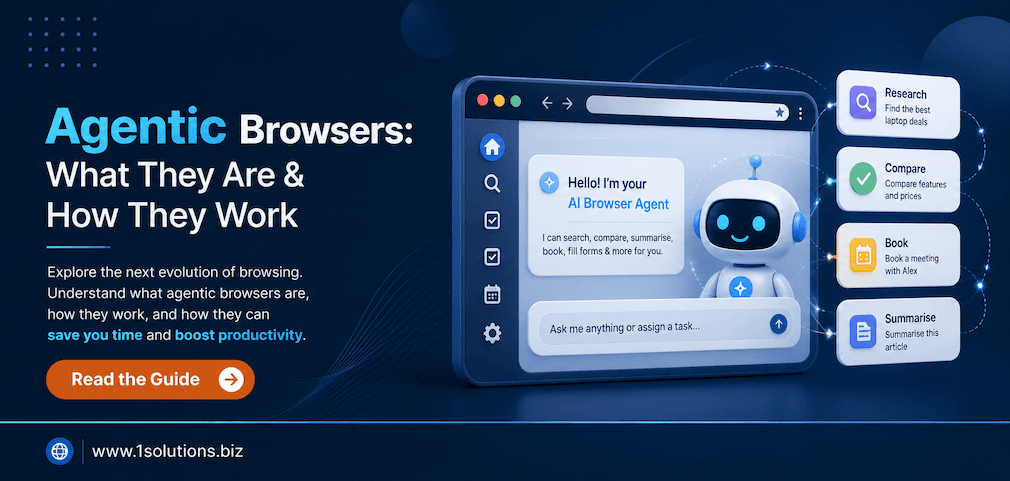
Understanding how AI-driven browsing agents are changing search behavior is also critical here. Our explainer on agentic browsers and how they work gives useful context for where conversational search is headed.
Step 6: Measure AEO and SEO with Separate but Complementary KPIs
One of the most common mistakes businesses make when adding AEO to their strategy is trying to measure it with traditional SEO metrics. Rankings and organic traffic tell you how your blue-link presence is performing. They do not tell you how often you are being cited as an AI answer source or how frequently your content appears in voice results.
Here is how to measure each discipline properly:
For SEO:
- Keyword rankings by position
- Organic click-through rate
- Organic traffic volume
- Bounce rate and time on page
- Conversion rate from organic traffic
For AEO:
- Featured snippet appearance rate
- Zero-click search impression share
- AI Overview citation frequency (trackable through tools like Semrush AI Toolkit or BrightEdge)
- Voice search visibility (tested manually across platforms)
- FAQ schema rich result appearances in Search Console
Running both measurement frameworks in parallel gives you a complete picture of your search presence. Neither alone is sufficient in 2025.
For businesses looking to improve their overall visibility across both traditional and AI-driven search, our resource on improving website visibility in AI search engines walks through the tactical steps in detail.
Step 7: Align AEO and SEO Into a Unified Content Strategy
The biggest strategic mistake is treating AEO and SEO as competing priorities. They are complementary. A well-structured piece of content can rank in traditional search AND get pulled as an AI answer if it is built correctly from the start.
The formula for unified content is: comprehensive enough to satisfy SEO depth requirements, but structured with clear question-and-answer blocks that satisfy AEO extraction needs. Think of it as a layered document: the top layer is a direct, concise answer to the primary question; the middle layer provides supporting detail and context; and the bottom layer adds comprehensive coverage for users who want to go deeper.
Our broader integrated digital marketing solutions are built on exactly this kind of layered content architecture, combining technical optimization with answer-ready content creation across all channels.
It is also worth noting that LLM optimization (LLMO) is an emerging extension of AEO that specifically targets large language model outputs. Our comprehensive guide on LLM optimization and ranking in AI search is essential reading if you want to take your AEO strategy to its next level.
💡 Warning: Do not sacrifice content depth for brevity in a misguided attempt to optimize purely for AEO. AI systems prefer sources that demonstrate genuine expertise and comprehensive coverage. Thin content that answers one question but lacks supporting substance will lose to well-rounded pages that happen to also include concise answer blocks.
Practical Action Plan: What to Do First
Here is a prioritized breakdown of where to invest your time and resources based on impact and implementation speed:
- Do This Now: Audit your top 10 organic landing pages and rewrite the opening paragraph of each to include a direct, 40 to 60 word answer to the page’s primary question. Add FAQ schema to any page that already has a Q&A section. These changes can show results within weeks and require no new content creation.
- Do This Now: Set up tracking for featured snippet appearances in Google Search Console and begin monitoring AI Overview citations using an AI visibility tool. You cannot improve what you are not measuring.
- Worth Doing: Conduct a full question-keyword research sprint using AnswerThePublic and Google’s People Also Ask data. Build a content calendar around the top 20 unanswered questions in your niche and publish structured Q&A articles targeting each one over the next quarter.
- Worth Doing: Review your author bio pages and E-E-A-T signals across all content. Add credentials, update publication dates, and ensure external citations are current and link to authoritative sources.
- Low Priority: Implement Speakable schema for voice search optimization. This is technically valuable but has limited measurable impact compared to FAQ schema and direct answer formatting. Tackle it after the higher-impact items are done.
- Low Priority: Experiment with HowTo schema on procedural content pages. Useful for how-to guides and tutorials, but requires more development time and the payoff is incremental rather than transformational.
Frequently Asked Questions About How AEO Differs from SEO
Does AEO replace SEO entirely?
No. AEO does not replace SEO. Traditional search results still drive the majority of web traffic, and organic rankings remain a primary source of qualified visits for most websites. AEO is an additional layer of optimization that helps your content get selected by AI systems and voice assistants. Both disciplines should run in parallel rather than replacing one another.
Is AEO only relevant for voice search?
No. While AEO originated partly in response to voice search growth, it now also applies to AI-generated overviews in text-based search results, chatbot responses, and AI assistant platforms. Any system that pulls a direct answer from web content rather than presenting a list of links is an answer engine that AEO can influence.
How long does it take to see AEO results?
Results vary depending on your site’s existing authority and content quality. Pages that already appear in featured snippets can see AEO improvements within weeks of restructuring. Brand-new content targeting competitive questions may take three to six months to gain traction. Unlike traditional SEO, AEO gains can happen faster because the signals AI systems look for (structure, clarity, schema) are more controllable than external link acquisition.
Do I need technical skills to implement AEO?
Basic AEO improvements like restructuring content, adding FAQ sections, and improving answer clarity require only writing and editorial skills. Implementing schema markup does require some technical capability, either from a developer or through a CMS plugin like Yoast SEO or Rank Math. For more advanced implementations, working with an experienced digital team is recommended.
Should small businesses prioritize AEO or SEO?
Small businesses should start with a strong SEO foundation and layer AEO on top. Local SEO in particular remains enormously valuable for small businesses because it drives foot traffic and phone calls. Once your traditional optimization is solid, adding AEO elements to your existing content is a high-leverage, relatively low-cost enhancement. Our resource specifically covering SEO solutions tailored for small businesses is a good starting point for building that foundation correctly.
Conclusion: AEO Differs from SEO, But Both Are Worth Your Attention
Understanding how AEO differs from SEO is the first step toward building a search strategy that works across both traditional and AI-powered environments. SEO earns you rankings and clicks. AEO earns you citations, featured answers, and voice results. The businesses that thrive in the next phase of search will be the ones that do both deliberately and measure each with the right tools.
Start with your existing content. Restructure it for answer readiness. Add schema markup. Build your E-E-A-T signals. And measure both channels separately so you know what is actually working. The investment is modest compared to the long-term payoff of owning both the ranked result and the AI-generated answer for queries your audience is asking every day.