
How to Choose a Domain Name For SEO: 10 Tips That Actually Matter
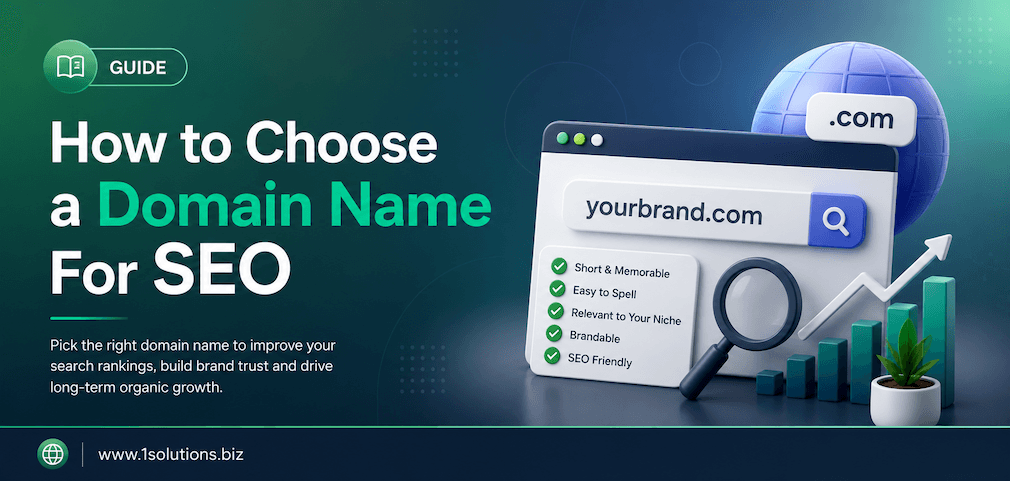
Knowing how to choose a domain name for SEO is one of the most important decisions you will make when launching a website. Your domain is your digital address, your first impression, and a subtle signal to search engines about what your site is all about. Get it right, and you build a foundation that supports every future ranking effort. Get it wrong, and you could spend years trying to compensate for a poor choice. This guide breaks down exactly what works, what does not, and what trade-offs you should understand before you register anything.
Your domain name affects brand trust, user recall, and search engine perception. Choosing a domain that is short, brandable, keyword-aware, and technically clean gives your SEO strategy a measurable head start. Avoid hyphens, keyword stuffing, and shady history, and always verify a domain’s past before buying.
⚡ Key Takeaways
- A .com extension is still the most trusted TLD globally, though niche extensions can work when used intentionally.
- Exact-match domains provide a minor ranking signal but can hurt if they look spammy or over-optimized.
- Domain age and history matter. Always audit a used domain before purchasing it.
- Brandable names outperform keyword-stuffed ones for long-term authority and user recall.
- Keeping your domain under 15 characters reduces typo errors and improves memorability.
- HTTPS is non-negotiable. Always pair your domain with an SSL certificate from day one.
- Consistent use of www vs. non-www and proper canonicalization prevents technical SEO issues.
1. Prioritize Brandability Over Keyword Stuffing
There is a temptation, especially among new website owners, to cram as many keywords as possible into a domain name. The logic sounds reasonable: if you sell running shoes, why not register “bestcheaprunningshoesusa.com”? The reality is that this approach almost always backfires.
Google’s algorithms have grown sophisticated enough to evaluate brand signals as a trust indicator. According to Moz (2023), domain authority is heavily influenced by how authoritative and consistent a brand appears across the web, not just by keyword placement in the URL. Brandable names like “Nike,” “Zappos,” or “Ahrefs” carry far more weight than keyword-laden alternatives because they earn natural mentions, links, and direct traffic.
A brandable domain is one that sounds like a company name. It is unique, easy to say aloud, and not dependent on a specific keyword to communicate value. Think of your domain as the start of a brand identity, not just an SEO trick. When users remember your name and type it directly into a browser, that direct traffic signals relevance and authority to Google.
The trade-off here is that a purely brandable name gives search engines no immediate topical context. The solution is to pair a strong brand name with excellent on-page SEO and content strategy. If you need help building that content foundation, working with a team that offers professional search engine optimization services can help you close the gap fast.
2. Keep It Short, Simple, and Memorable
Length matters more than most people realize. A domain that is too long is harder to type, easier to misspell, and less likely to be remembered after a single visit. The sweet spot for most domains is between 6 and 15 characters, not counting the extension.
Data from GoDaddy (2022) shows that the most visited websites in the world have domain names averaging just 8 characters in length. That is not a coincidence. Short domains reduce friction in every possible scenario: word of mouth, printed materials, email signatures, and mobile typing.
Simplicity also means avoiding numbers and hyphens. If your domain includes “4” instead of “four,” users will not know which version to type. If it includes a hyphen, half your potential visitors will forget it when typing. Both elements also make your domain look less professional in backlink contexts and on business cards.
When brainstorming short names, test them by saying them aloud to someone unfamiliar with your brand. If they can spell it correctly after hearing it once, you have a winner. Use tools like Lean Domain Search, Nameboy, or even ChatGPT to generate short, punchy variations of your core brand concept. Simplicity is not just about user experience. It compounds over time as a trust signal to both humans and algorithms.
3. Understand the Role of Exact-Match Domains
An exact-match domain (EMD) is one where the domain name matches a search query directly, such as “bestplumberslondon.com” or “affordableaccounting.com.” For years, EMDs were a reliable shortcut to ranking for competitive terms. Google largely closed that loophole with the EMD update in 2012, but the tactic has not disappeared entirely.
EMDs can still provide a minor relevance signal when the domain is backed by high-quality content and a legitimate business. However, they come with real risks. If your domain looks spammy or if your site fails to deliver genuine value, Google may penalize you more aggressively precisely because the domain signals an intent to game rankings. You can read more about recovering from such situations in our guide on Google penalty recovery through smart link building tactics.
The honest trade-off is this: an EMD might give you a small early boost in a low-competition niche, but it limits your brand flexibility and can attract algorithmic scrutiny. A partial-match domain, where one or two keywords appear alongside a brand element, tends to offer a better balance. For example, “HubSpot” communicates technology without being a keyword string, yet it still earns topical relevance through content. Choose EMDs only if you have a legitimate business that naturally matches the phrase and can support it with authoritative content.
4. Choose the Right Domain Extension (TLD)
The top-level domain (TLD) is the suffix at the end of your domain: .com, .org, .net, .io, and hundreds of others. Your choice here affects user trust, click-through rates, and in some cases, geographic targeting signals.
.com remains the gold standard. According to Verisign (2023), .com accounts for over 46% of all registered domain names worldwide, and users default to typing .com when they cannot remember a site’s extension. This automatic assumption means that if you register a .net or .co, you will inevitably lose some direct traffic to the .com equivalent if it exists and is owned by a competitor.
That said, niche TLDs have found real success in specific contexts. Tech startups frequently use .io or .ai. Creative agencies use .design or .studio. These extensions can reinforce brand identity when used intentionally. Country-code TLDs (ccTLDs) like .co.uk or .ca send a geographic signal to Google and can be valuable for businesses targeting a specific market through local search. If local SEO is a priority, pairing the right TLD with a strong local strategy matters enormously. Our guide on local AEO best practices for small businesses covers complementary tactics that support geographic targeting.
Avoid obscure or novelty TLDs unless they serve a clear brand purpose. They tend to trigger spam filters in email and generate user skepticism. When in doubt, secure the .com and redirect alternatives to it.
💡 Pro Tip: If your preferred .com is taken, try adding a short word like “get,” “try,” or “use” before your brand name rather than switching to a lesser TLD. For example, “getbrandname.com” is far more trustworthy than “brandname.net.”
5. Avoid Hyphens and Numbers
This point deserves its own section because it is one of the most frequently ignored pieces of domain advice. Hyphens and numbers create friction in almost every user touchpoint. They are difficult to communicate verbally, easy to forget when typing, and visually associated with lower-quality or spam sites.
From an SEO perspective, hyphenated domains historically attracted more scrutiny because they were often used by thin-content affiliate sites trying to pack multiple keywords into a single URL. While Google does not explicitly penalize hyphens, the correlation between hyphenated domains and low-quality content means you are starting with a perception disadvantage.
Numbers present a different problem: ambiguity. Does “top10tools.com” use the numeral “10” or is it spelled out? Does “b2bmarketing.com” use a number two or is it “btobmarketing”? Every point of ambiguity is a missed visitor and a diluted brand signal. If your business name legitimately includes a number (like a founding year), consider whether that number is essential to the brand or whether a cleaner alternative exists.
The practical rule is simple: register a domain you could confidently announce on a podcast or radio advertisement and expect listeners to find correctly on their first attempt. If you hesitate even slightly, the domain is not clean enough. Simplicity here is not just about user experience. It translates directly into type-in traffic, branded search volume, and the kind of natural link acquisition that strengthens your overall SEO foundation.
6. Check the Domain’s History Before Buying
Purchasing an aged or expired domain can seem like a shortcut to authority, but it carries significant risk if you skip the due diligence step. A domain that was previously used for spam, adult content, gambling, or black-hat SEO can carry algorithmic penalties that follow the domain regardless of new ownership.
Before registering any domain that has been previously owned, run it through the Wayback Machine (web.archive.org) to see what content it hosted. Then check it in Google Search Console (if possible), Ahrefs, or Semrush to examine its backlink profile. A healthy aged domain will have organic, diverse links. A problematic one will show links from link farms, irrelevant foreign directories, or spam blogs.
You should also check whether the domain has any manual actions in Google’s system. If you acquire a penalized domain and build a site on it without addressing the underlying issues, you may spend months wondering why your site refuses to rank. This is the kind of situation where understanding why Google might not be indexing your pages becomes critically important, since a penalized domain history is one of the less obvious culprits.
The trade-off with aged domains is real: a clean aged domain with relevant backlinks can accelerate your SEO timeline significantly. A dirty one can set you back by years. The hour you spend auditing a domain’s history is always worth it.
7. Include Keywords Strategically Without Over-Optimizing
Keywords in your domain name can still provide contextual relevance signals to search engines, but the days of building an entire SEO strategy around a keyword-rich domain are long gone. The goal today is strategic inclusion, not stuffing.
A partial keyword match in your domain communicates topical focus without screaming “SEO tactic.” For example, a domain like “ContentBerry.com” for a content agency hints at the niche while remaining brandable. Compare that to “cheapcontentwritingservices.com,” which is immediately recognizable as an over-optimized, low-trust domain.
If you are building a site in a highly specific niche, including one relevant keyword in a natural-sounding domain can help establish topical authority from the outset. This is especially valuable for small businesses competing in local markets. For a deeper look at how keyword strategy intersects with content across your site, our post on boosting SEO through page content analysis provides actionable tactics you can apply immediately after choosing your domain.
The key principle is that your domain should be something you are proud to put on a business card. If including a keyword makes the domain look like a marketing tactic rather than a real business, remove it and rely on your content and metadata to carry the keyword relevance instead.
💡 Pro Tip: Use Google’s autocomplete and “People also ask” results to identify the most natural-sounding keyword phrases in your niche. A domain that mirrors how real people talk about your topic will always outperform one that mirrors a spreadsheet of search volumes.
8. Ensure Your Domain is Easy to Spell and Pronounce
This might seem like a user experience concern rather than an SEO one, but the two are deeply connected. A domain that is easy to spell and pronounce generates more branded searches, more accurate direct traffic, and more natural word-of-mouth mentions. All of these are quality signals that search engines register over time.
Avoid creative spellings that sacrifice clarity for uniqueness. “Flikr” might have worked for Flickr, but that was a specific branding decision made with enormous marketing budget behind it. For most businesses, unusual spellings just create confusion and send potential visitors to competitors who registered the correctly spelled version.
Pronunciation matters for voice search as well. As voice queries continue to grow, your domain name will increasingly be spoken rather than typed. A domain that is phonetically clear performs better in voice contexts because users can ask their device to navigate there without spelling it out. This becomes especially relevant as AI-driven search evolves, a topic covered in depth in our article on how to improve website visibility in AI search engines.
A useful test: say your domain name aloud to five people who have not seen it written down. Ask them to type it immediately after. If all five get it right on the first try, your domain passes the clarity test. If even one person hesitates or misspells it, reconsider your choice before committing to a registration.
9. Secure Variations and Protect Your Brand
Choosing a great domain name is only half the battle. Once you identify the right domain, you need to protect it. That means registering the most common variations before a competitor, a cybersquatter, or a confused user does it for you.
At minimum, consider registering the .com, .net, and .org versions of your chosen name, plus any common misspellings. Set up 301 redirects from all variations to your primary domain so that any traffic landing on those alternatives flows cleanly to your main site without splitting link equity. This also prevents competitors from deliberately registering typo versions of your domain to intercept your traffic.
Brand protection extends beyond domain registration. Secure matching usernames on major social platforms before launch, even if you do not plan to use every channel immediately. Consistency across platforms reinforces brand signals that contribute to search engine trust. If your brand name is available as a domain but taken on every social platform, that is a sign you may want to refine your name choice before committing.
For businesses investing seriously in online growth, brand protection and a cohesive digital presence are foundational. Our comprehensive digital marketing services include strategic brand positioning that starts with these foundational decisions and scales as your business grows. Protecting your domain variations costs relatively little upfront and can save significant resources in reputation and legal issues down the line.
10. Think Long-Term and Plan for Growth
The most overlooked aspect of domain selection is scalability. Many businesses choose a domain that perfectly describes what they do today but becomes a limitation as they grow. A domain like “manchesterplumbingrepairs.com” is specific enough to be limiting if you expand services or locations. A domain like “swiftpipe.com” scales effortlessly.
Consider where your business will be in five to ten years before locking in a domain. If you plan to expand your product line, add service categories, or target new markets, choose a name broad enough to accommodate that growth without feeling awkward or misleading. Your domain should still feel appropriate when your business looks nothing like it does today.
Long-term thinking also applies to the relationship between your domain and your overall SEO infrastructure. A clean, trustworthy domain becomes the anchor for your link building efforts, your content strategy, and your technical SEO. Our guide on building backlinks in competitive and low-competition niches shows how a strong domain foundation amplifies every link you earn over time.
If you are building an ecommerce site, the stakes are even higher since your domain name becomes synonymous with your store’s reputation. Before registering, read our comparison of WooCommerce vs Shopify to understand how your platform choice intersects with your domain strategy. Once your domain is live and your site is built, pairing it with expert SEO support for small businesses ensures your long-term growth is backed by a structured, data-driven approach.
💡 Pro Tip: Before finalizing any domain, search the name as a trademark using your country’s intellectual property database. Registering a name that infringes on an existing trademark can result in forced domain transfer and significant legal costs, regardless of who registered the domain first.
Domain Name SEO Comparison: Key Factors at a Glance
| Factor | Best Practice | Common Mistake | SEO Impact |
|---|---|---|---|
| Length | 6 to 15 characters | Over 20 characters | High: affects recall and type-in traffic |
| TLD Choice | .com for most businesses | Obscure or novelty TLDs | Medium: affects user trust and click-through rate |
| Keyword Use | Partial match, natural sounding | Exact-match keyword stuffing | Medium: minor relevance signal vs. spam risk |
| Hyphens/Numbers | None | Multiple hyphens or numerals | Medium: perception and spam associations |
| Domain History | Clean or new registration | Unaudited expired domain | High: penalties follow the domain |
| Brandability | Unique, pronounceable, memorable | Generic or descriptive only | High: brand signals support long-term authority |
| Variation Protection | Register .com, .net, misspellings | Single registration only | Low to Medium: prevents traffic leakage |
Practical Action Plan: Domain Name SEO Priorities
- Do This Now: Audit any domain you plan to purchase using the Wayback Machine and a backlink checker. A clean history is non-negotiable. Also confirm the domain is not trademarked before registering.
- Do This Now: Test your shortlisted domain names with the “say it aloud” test. If five people cannot spell it correctly after hearing it once, keep refining.
- Worth Doing: Register the .com plus at least one or two common alternatives (.net, .org, or common misspellings) and set up 301 redirects to your primary domain immediately after launch.
- Worth Doing: Secure matching social media handles before announcing your domain publicly. Consistency across platforms supports brand authority signals.
- Low Priority: Experiment with niche TLDs (.io, .ai, .co) only after confirming the .com equivalent is unavailable or impractical. These can work but require stronger brand building to compensate for lower default trust.
Frequently Asked Questions
Does a domain name directly affect Google rankings?
Your domain name is not a primary ranking factor, but it does influence several indirect signals. These include user trust, click-through rates from search results, branded search volume, and the quality of natural link acquisition. A clean, memorable domain creates conditions that support better rankings over time rather than providing a direct boost.
Is it worth buying an aged domain for SEO?
An aged domain with a clean history and relevant backlinks can provide a meaningful head start. However, the due diligence required is significant. Always audit the domain’s backlink profile, Wayback Machine history, and any potential manual actions before purchasing. A domain with a problematic past can take years to rehabilitate and may never fully recover its ranking potential.
Should I use my business name or a keyword as my domain?
Ideally, your business name and a keyword overlap naturally. When they do not, lean toward a brandable name that reflects what you do without depending on an exact keyword match. You can establish topical relevance through content, metadata, and internal linking without forcing a keyword into your domain. Brandable domains also tend to attract higher-quality backlinks because they appear more authoritative to linking sites.
What is the best TLD for SEO?
.com remains the most effective TLD for the majority of websites due to user trust and default typing behavior. Country-code TLDs can be valuable for businesses with a genuine geographic focus and a local SEO strategy. Niche TLDs like .io or .ai can work well for tech and software brands but require stronger brand building to compensate for lower inherent trust compared to .com.
Can I change my domain name after launch without losing SEO value?
Yes, but it requires careful execution. A domain migration using proper 301 redirects from every old URL to the corresponding new URL preserves most of your link equity and rankings. However, migrations always carry some short-term volatility. Google needs time to re-crawl and reindex your site under the new domain. Plan your migration carefully, monitor performance closely for at least 90 days afterward, and notify Google Search Console of the change using the Change of Address tool.
Conclusion
Understanding how to choose a domain name for SEO means balancing brandability, technical cleanliness, and long-term scalability rather than chasing short-term keyword tricks. The best domain names are short, memorable, free of hyphens and numbers, built on a clean history, and designed to grow with your business. Every decision you make at this stage compounds over time, either accelerating your SEO progress or creating obstacles you will spend years trying to remove.
Take the time to audit, test, and protect your domain before committing. The registration fee is the smallest investment in this process. The real cost is the years of effort that either build on a strong foundation or struggle against a weak one. If you want expert guidance from the start, our team at 1Solutions has been helping businesses build search-optimized digital foundations for over 15 years.