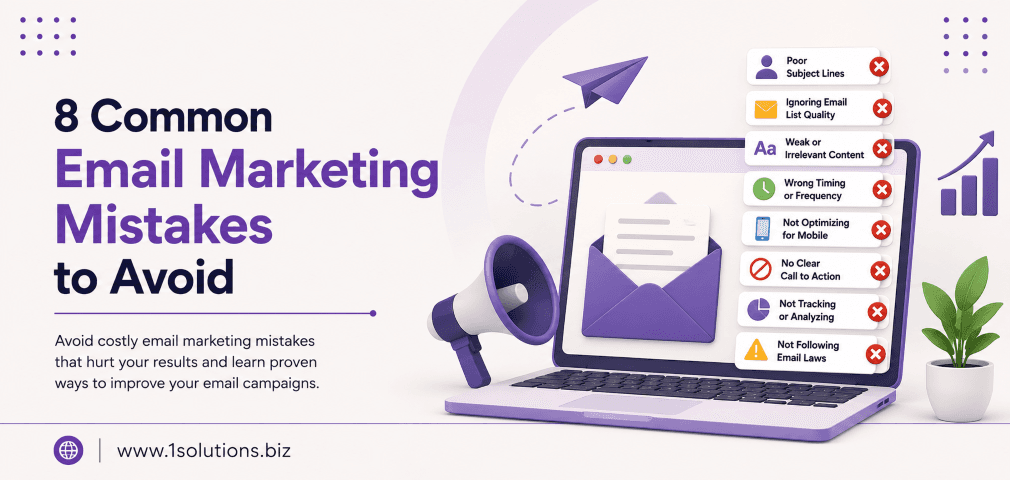

If you want a marketing channel that consistently delivers results without burning your budget, email marketing for your business is hard to beat. According to Litmus (2023), email marketing generates an average return of $36 for every $1 spent, making it one of the highest-ROI channels available to businesses of any size. Yet many businesses either skip it entirely or run campaigns that go nowhere because they lack a clear system.
This guide walks you through every stage of building and running an effective email marketing program, from choosing your tools to writing emails people actually open and act on.
Email marketing delivers exceptional ROI when done with a clear strategy. This guide covers list building, platform selection, campaign types, writing, automation, and analytics so you can build a program that grows your business steadily and sustainably.
⚡ Key Takeaways
- Email consistently outperforms most digital channels in ROI, but only when your list is healthy and your content is relevant.
- Choosing the right email service provider (ESP) early saves you significant migration headaches later.
- Segmentation and personalization are the two biggest levers for improving open and click rates.
- Automated sequences, especially welcome and abandoned cart emails, do the heavy lifting while you focus elsewhere.
- Your subject line determines whether anyone sees your content. Treat it as seriously as the email body.
- Clean your list regularly. Sending to disengaged subscribers hurts deliverability and skews your data.
- Combine email with other channels like a broader digital marketing strategy for compounding results.
Why Email Marketing Still Works in 2024
Some marketers treat email as an afterthought in a world full of social media, paid ads, and content marketing. That is a mistake. Statista (2024) reports that there are 4.48 billion email users worldwide, a number projected to grow to 4.8 billion by 2027. Unlike social media followers, your email list is an asset you own. Algorithm changes cannot take it away from you overnight.
Email also reaches people in a different mindset than social feeds. Someone who subscribes to your list has actively said they want to hear from you. That intent is enormously valuable. The challenge is honoring that intent with emails worth reading.
That said, email marketing is not a magic switch. It takes time to build a quality list, and it requires consistent effort to maintain subscriber trust. Businesses that treat email as a spam tool or send without strategy will see their deliverability suffer and their unsubscribe rates climb.
Step 1: Define Your Email Marketing Goals
Before you pick a platform or write a single word, decide what you want email to do for your business. Vague goals produce vague results. Specific goals give you something to measure against.
Common email marketing goals include:
- Driving traffic back to your website or blog
- Generating leads for a product or service
- Nurturing prospects through a longer sales cycle
- Increasing repeat purchases from existing customers
- Announcing new products, features, or promotions
- Building brand authority and trust over time
Your goal shapes everything else. A B2B company nurturing enterprise leads will use a very different email strategy than an ecommerce store trying to reduce cart abandonment. Write down one primary goal before moving to the next step.
Step 2: Choose the Right Email Service Provider
Your email service provider (ESP) is the platform that sends your emails, manages your list, and tracks your results. Picking the wrong one early creates friction when you want to scale. Here is a comparison of the most commonly used options:
| Platform | Best For | Starting Price | Key Strength | Key Limitation |
|---|---|---|---|---|
| Mailchimp | Beginners and small businesses | Free up to 500 contacts | Easy to use, wide integrations | Gets expensive at scale |
| Klaviyo | Ecommerce brands | Free up to 250 contacts | Deep ecommerce data and automation | Steeper learning curve |
| ActiveCampaign | SMBs with complex automations | From $15/month | Powerful CRM and automation | Overwhelming for simple needs |
| ConvertKit | Creators and bloggers | Free up to 1,000 contacts | Simple sequences and tagging | Limited design flexibility |
| Brevo (Sendinblue) | Budget-conscious businesses | Free up to 300 emails/day | SMS and email combined | Fewer native integrations |
If you run an online store, you may want to read our comparison of WooCommerce vs Shopify to understand which platform pairs best with your chosen ESP.
💡 Pro Tip: Do not choose your ESP based on the free plan alone. Look at the pricing tier you will realistically need in 12 months and compare features at that level. Migrating lists is painful and often causes temporary deliverability dips.
Step 3: Build and Grow Your Email List the Right Way
Your list is the foundation of your entire email program. A small, engaged list of 500 people who genuinely want your content will outperform a purchased list of 50,000 strangers every single time. According to HubSpot (2023), purchased email lists have an average open rate under 5%, while organically built lists average 21.5%.
Here are proven tactics for growing your list with the right subscribers:
Create a Lead Magnet Worth Having
Offer something valuable in exchange for an email address. This could be a practical checklist, a short guide, a discount code, a free tool, a webinar, or exclusive content. The lead magnet should solve a specific problem your ideal customer faces. Generic ebooks that exist only to collect emails rarely convert well.
Place Opt-In Forms Strategically
Put sign-up forms where people are already engaged with your content. Effective placements include your homepage hero section, at the end of blog posts, in a slide-in or exit-intent popup, on your About page, and in your website footer. Avoid interrupting users on pages where they are mid-task.
Use Your Existing Touchpoints
Add a newsletter signup option to your checkout flow, your social media bios, your email signature, and any physical receipts or packaging if relevant. Every channel you already own is an opportunity to grow your list without additional ad spend.
Run Giveaways and Contests
These can generate a large volume of sign-ups quickly, but be aware that contest-driven subscribers often have low long-term engagement. If you use this tactic, build a re-engagement sequence immediately after the contest ends to filter out those who joined purely for the prize.
Step 4: Segment Your Audience for Better Relevance
Sending the same email to everyone on your list is one of the most common and costly email marketing mistakes. Mailchimp data (2021) showed that segmented campaigns had 14.31% higher open rates and 100.95% higher click rates compared to non-segmented campaigns.
Start with basic segmentation categories:
- New subscribers: People who just joined your list and need onboarding
- Active customers: People who have purchased recently
- Lapsed customers: People who have not bought in a defined period
- Leads: People who have shown interest but not purchased
- High-value customers: Repeat buyers or high spend accounts
As your program matures, you can segment by behavior, such as which pages someone visited, which emails they clicked, or what product category they browsed. The more relevant your emails are, the better they perform.
Step 5: Write Emails That Get Opened and Clicked
Good email copywriting is a skill that improves with practice. The goal is not to impress people with fancy writing. It is to communicate clearly and move the reader toward one specific action.
Master the Subject Line
Your subject line is the single most important line in your email. If it does not convince someone to open the email, nothing else matters. Effective subject lines are specific, create curiosity or urgency without being deceptive, and are often shorter than you think. Most email clients display between 30 to 50 characters on mobile screens.
Test these approaches:
- Ask a direct question: “Are you making this pricing mistake?”
- Lead with a specific benefit: “Your site speed checklist is inside”
- Use numbers: “3 reasons your emails are going to spam”
- Use the subscriber’s name sparingly. It can help, but overuse feels gimmicky.
Write for One Person, Not a Crowd
Write as if you are emailing a single person, not broadcasting to thousands. Use “you” far more than “we.” Keep paragraphs short. Use plain language. Avoid jargon unless your audience specifically uses it. If you need help developing compelling content at scale, professional content and copywriting services can make a significant difference in both quality and consistency.
Include One Clear Call to Action
Every email should have one primary action you want the reader to take. Multiple competing CTAs reduce click rates. Make your CTA button or link text specific and action-oriented: “Download the guide,” “Book your free call,” or “Shop the collection” rather than generic phrases like “Click here” or “Learn more.”
💡 Pro Tip: Preview text is the line that appears next to or below your subject line in most inboxes. It is prime real estate that many marketers ignore. Write it intentionally to complement your subject line and add a second reason to open the email.
Step 6: Set Up Essential Email Automation Sequences
Automation is where email marketing stops being a time-consuming task and starts working for your business around the clock. You set up the sequence once, and it runs automatically whenever a subscriber meets the trigger condition.
Welcome Sequence
This is the most important automation you can build. Send it to everyone who joins your list. A good welcome sequence introduces your brand, sets expectations for what subscribers will receive, delivers your lead magnet if applicable, and shares your best content or offer. Plan for three to five emails sent over seven to fourteen days.
Abandoned Cart Sequence
For ecommerce businesses, abandoned cart emails are among the highest-converting automations available. Send the first email within one hour of abandonment, a second reminder 24 hours later, and a final email with a limited incentive 48 hours after that. Our guide on ecommerce marketing strategies covers how this fits into a broader conversion optimization approach.
Re-Engagement Sequence
Target subscribers who have not opened or clicked any of your emails in the past 90 to 180 days. Send two to three emails with a compelling reason to re-engage. If they still do not respond, remove them from your active list. Keeping disengaged subscribers hurts your sender reputation and deliverability scores.
Post-Purchase Sequence
After someone buys from you, follow up with a thank-you email, usage tips or onboarding help, a request for a review or testimonial, and eventually a cross-sell or upsell offer. This sequence turns one-time buyers into loyal customers.
Step 7: Optimize Deliverability So Your Emails Actually Arrive
Writing great emails means nothing if they land in spam folders. Deliverability is influenced by technical factors, list health, and sending behavior.
Key steps to protect your deliverability:
- Authenticate your domain with SPF, DKIM, and DMARC records
- Use a dedicated sending domain rather than a free email address
- Warm up new sending domains gradually, starting with low volumes
- Remove hard bounces immediately and soft bounces after multiple failures
- Avoid spam trigger words in subject lines like “FREE!!!”, “Act now,” or “Guaranteed”
- Maintain a consistent sending schedule rather than disappearing for months then blasting your list
- Always include a plain-text version of every HTML email
If your emails are currently getting flagged or landing in promotions tabs, audit your technical setup before blaming your content. Many deliverability problems are infrastructure issues, not content problems.
Step 8: Test, Measure, and Improve Your Campaigns
Email marketing without measurement is guesswork. Track these core metrics for every campaign:
- Open rate: Percentage of recipients who opened the email. Industry average is around 21% across sectors (Mailchimp, 2023).
- Click-through rate (CTR): Percentage who clicked at least one link. Average is around 2.5% to 3%.
- Click-to-open rate (CTOR): Clicks divided by opens. Tells you how effective your content is at driving action once someone opens.
- Conversion rate: Percentage who completed your desired action, such as a purchase or form fill.
- Unsubscribe rate: Should stay below 0.5% per campaign. Spikes signal a relevance problem.
- Bounce rate: Hard bounces above 2% indicate list health issues that need addressing.
Run A/B tests on one variable at a time. Test subject lines first since they have the biggest impact on open rates. Then test send times, email length, CTA placement, and personalization. Give tests enough time and volume to reach statistical significance before declaring a winner.
💡 Pro Tip: Many ESPs now offer AI-assisted send-time optimization that automatically delivers each email when each individual subscriber is most likely to open it. This alone can improve open rates by several percentage points without any content changes.
Step 9: Stay Compliant With Email Regulations
Email marketing is governed by laws that carry real penalties for violations. The key frameworks you need to understand are:
- CAN-SPAM Act: Requires a physical mailing address, a working unsubscribe mechanism, and honest subject lines.
- GDPR: Requires explicit consent before emailing contacts in covered jurisdictions and the ability for subscribers to request data deletion.
- CASL: Requires express or implied consent before sending commercial emails to certain recipients.
Practically, this means using confirmed opt-in forms, including an unsubscribe link in every email, honoring unsubscribe requests within ten days, and being transparent about what subscribers are signing up for. These are not just legal requirements. They are good practices that protect your sender reputation.
How Email Marketing Fits Into Your Broader Digital Strategy
Email works best when it is connected to your other marketing channels rather than operating in isolation. Use social media to drive new subscribers. Use paid ads to promote lead magnets. Use your blog to provide value that makes people want to stay subscribed. If you are running ads on social platforms, our guide on how to advertise on Facebook shows how to build an audience that flows naturally into your email funnel.
SEO and email marketing are also a powerful combination. Content that ranks well in search drives organic traffic to your site, and well-placed opt-in forms convert that traffic into subscribers. Similarly, sending subscribers back to new blog posts helps those posts accumulate traffic signals faster. If you want both channels working together effectively, exploring a comprehensive digital marketing strategy ensures that email, SEO, content, and paid channels reinforce each other rather than operating in silos.
For businesses focused on local visibility, combining email marketing with local search tactics can be particularly effective. Our guide on local AEO best practices for small businesses covers how to make your brand more discoverable at a local level while your email list converts that awareness into revenue.
Practical Action Plan: Where to Start
Use this priority framework to avoid getting paralyzed by the options:
- Do This Now: Sign up for an ESP, create a basic lead magnet, add a sign-up form to your homepage and most-visited blog posts, and write a three-email welcome sequence. This is the minimum viable email program and it can be live within a week.
- Worth Doing: Segment your list into at least three groups (new subscribers, active customers, leads), set up an abandoned cart sequence if you sell products, and start A/B testing subject lines on every campaign. These steps significantly improve performance and are worth the extra setup time.
- Low Priority: Advanced behavioral segmentation, predictive send-time AI, SMS integration, and deep CRM data syncing. These are valuable but should come after your foundations are solid and you are consistently sending campaigns that get opened and clicked.
Conclusion
Doing email marketing for your business effectively is not about sending more emails. It is about sending the right emails to the right people at the right time. Start with clear goals, build your list with genuine value, choose tools that match your scale, and write emails that treat your subscribers as the intelligent people they are.
The businesses that get the most from email are the ones that treat it as a long-term relationship rather than a short-term broadcast tool. Build that trust consistently and email will reward you with compounding returns that most paid channels simply cannot match.
Frequently Asked Questions
How often should I send marketing emails?
There is no universally correct frequency. Most businesses find a rhythm of one to four emails per month works well for general newsletters. Ecommerce businesses during promotions or product launches may send more frequently. The key is consistency and relevance. If every email you send has a reason to exist, your subscribers will not mind hearing from you often. If your emails feel random or spammy, even monthly sends will generate complaints.
What is a good open rate for email marketing?
Average open rates vary by industry, but Campaign Monitor (2023) reports an overall average of around 21.5%. B2B and nonprofit emails tend to perform above average, while retail and ecommerce often fall below. Rather than comparing yourself to industry averages, focus on improving your own baseline over time through better segmentation and subject line testing.
Do I need a big list to start seeing results?
No. A list of 200 highly engaged subscribers who have opted in specifically for what you offer can generate more revenue than a list of 20,000 people who barely remember signing up. Focus on quality and engagement from the beginning. Results from a small engaged list will actually help you learn what works much faster than sending to a large disengaged one.
Can email marketing work for service businesses, not just ecommerce?
Absolutely. Service businesses often see strong results from email because the buying decision takes longer and requires more trust-building. Email is ideal for sharing case studies, client results, educational content, and nurturing leads who are evaluating multiple providers. Many professional services firms generate a significant portion of their new business through consistent email communication with their existing network.
What should I do if my emails keep landing in the spam folder?
Start by auditing your technical setup. Make sure your sending domain has SPF, DKIM, and DMARC records configured correctly. Check your list health and remove inactive subscribers. Review your content for spam trigger words and avoid sending from free email addresses. If the problem persists, contact your ESP’s deliverability team, as they can often identify specific issues in your sending patterns or domain reputation that are not immediately obvious from the outside.