
Why Content Structure Now Determines AI Visibility
The way people find information is shifting fast. ChatGPT, Perplexity, Google’s AI Mode, and similar tools now answer millions of queries daily without sending users to a search results page. If your content is not structured in a way that these models can parse, extract, and cite, you are effectively invisible to a growing segment of your audience. Learning how to structure content for ChatGPT visibility is no longer optional for brands that want to stay relevant.
According to a 2024 study by SparkToro, roughly 59% of Google searches now end without a click to any website. Add AI chatbots into the mix, and the zero-click problem compounds quickly. The brands that win citations in AI responses are those whose content is clear, authoritative, and structured for machine comprehension, not just human reading.
This guide gives you exactly 10 actionable, fully explained strategies to optimize your content architecture for ChatGPT and other large language models. Each point is practical and grounded in how LLMs actually process text.
ChatGPT and other AI models favor content that is clearly structured, factually grounded, and easy to parse. By using logical headings, concise definitions, FAQ sections, and authoritative sourcing, you dramatically increase the chances your content gets cited. This guide covers 10 specific structural strategies to make that happen.
⚡ Key Takeaways
- AI models extract answers from content with clear hierarchical headings and short, direct paragraphs.
- FAQ sections and definition-first writing are among the highest-performing structural formats for LLM citation.
- Schema markup, especially FAQPage and HowTo, signals content structure to AI crawlers and training pipelines.
- First-hand experience signals (E-E-A-T) significantly increase citation likelihood in ChatGPT responses.
- Content that answers a specific question within the first two sentences of a section outperforms long preamble.
- Internal linking and topic clustering help AI models understand the breadth and depth of your expertise.
- Avoiding ambiguous language, jargon without explanation, and passive voice makes your content more extractable.
The 10 Structural Strategies for ChatGPT Visibility
1. Lead Every Section with a Direct Answer
Large language models are trained to identify and extract the most concise, accurate answer to a given question. When a user asks ChatGPT something, the model scans training data and retrieval sources for passages that frontload the answer rather than build to it slowly. This is the journalism principle of the inverted pyramid applied to AI optimization.
The practical implication is that every H2 and H3 section in your content should open with a one-to-two sentence direct answer before expanding into explanation, context, or nuance. If a section heading is “What is semantic SEO?”, the very first sentence of that section should define semantic SEO plainly. The explanation and examples can follow, but the extractable answer must come first.
This approach also aligns with how Google’s AI Overviews pull snippets. Research published by Authoritas in 2024 found that content appearing in AI Overviews was significantly more likely to feature answer-first paragraph structures compared to content that ranked organically but was not cited. The discipline of answer-first writing takes practice, especially if your team is used to persuasive or narrative styles, but it is one of the highest-leverage structural changes you can make.
A useful exercise is to read your section headers as questions and then check whether the first sentence of each section answers that question without requiring the reader to scroll further. If it does not, rewrite the opener. This single habit will improve your AI citation rate faster than almost any technical change.
2. Use a Strict, Logical Heading Hierarchy
ChatGPT and similar models use heading tags (H1, H2, H3) as navigational signals that describe the relationship between ideas. A well-structured heading hierarchy tells the model which concepts are primary, which are subordinate, and how they connect. Poorly nested headings, or content with no headings at all, are significantly harder for LLMs to parse into coherent answers.
Your H1 should represent the single main topic of the page. H2s should represent major sub-topics or steps. H3s should break those sub-topics into specific components. Avoid skipping levels (jumping from H2 to H4) and avoid using headings purely for visual styling. Each heading should be a genuine, descriptive label for the content beneath it.
Descriptive headings are especially important. “Step 3” tells a model nothing. “Step 3: Compress Your Images for Faster Load Times” gives the model a labeled concept it can attach to relevant queries. Think of your headings as metadata for each content block. This is particularly relevant if you want to learn more about LLM optimization strategies that align with how AI models process page structure.
Test your hierarchy by extracting only the headings from a page and reading them in sequence. They should tell a coherent story about the topic without requiring any of the body text. If they do, your structure is solid. If they are vague or disjointed, revise before publishing.
3. Write Explicit Definitions for Key Terms
One of the clearest patterns in how ChatGPT responds to definitional queries is that it favors sources that define terms explicitly, early, and without ambiguity. If your content uses industry jargon without defining it, or assumes the reader already knows what a term means, you are reducing the extractability of your content for both AI models and human readers.
The formula is simple: introduce the term, define it in one sentence, then expand. For example: “Schema markup is structured data code added to a web page that helps search engines and AI models understand the content’s context and category.” Everything after that sentence can go deeper, but the LLM has already captured a usable definition.
This strategy is especially powerful for competitive topics where multiple definitions exist. By providing a clear, specific definition that aligns with authoritative sources, you position your content as the reliable version. According to BrightEdge’s 2024 AI Search Report, pages with explicit term definitions were 2.3 times more likely to be cited in AI-generated responses compared to pages that used terms without definition.
Be aware that over-defining common terms can feel condescending to experienced readers. The trade-off is real. Aim to define terms that have meaningful nuance or that are used differently across industries, rather than defining every word in every paragraph.
💡 Pro Tip: Add a short glossary section at the bottom of long-form content pages. AI models frequently extract glossary definitions when answering “what is” queries, giving you an additional citation entry point beyond your main body text.
4. Include FAQ Sections with Natural Language Questions
FAQ sections are among the most reliably cited content blocks in AI responses. The reason is structural: a question followed immediately by a concise answer is exactly the format an LLM looks for when generating a response to a user query. When your FAQ mirrors the language a real person would use to ask a question, the match probability increases substantially.
Effective FAQ questions are conversational and specific. “How do I optimize content for ChatGPT?” performs better than “ChatGPT optimization.” The specificity matters because LLMs are matching user query intent to content, and natural language phrasing creates a tighter match. Use tools like Google’s People Also Ask, Reddit threads, and Quora to find the actual phrasing your audience uses.
Pair every FAQ with a focused answer of two to five sentences. Answers that are too short lack sufficient context; answers that are too long dilute the extractable signal. After writing your FAQ answers, apply FAQPage schema markup to reinforce the structure for both search engines and AI training pipelines. If you want guidance on building these structures across your web presence, exploring professional content and copywriting services that specialize in AI-ready formats can accelerate the process significantly.
This guide itself demonstrates the practice, with a five-question FAQ at the end. Notice how each question is written as a specific, natural language query rather than a vague topic label.
5. Implement Schema Markup for Structured Data Signals
Schema markup, also known as structured data, is JSON-LD code embedded in your page’s HTML that explicitly labels what your content is and what it contains. While ChatGPT’s training data does not include live schema in the way a search crawler reads it, the downstream effects of schema on discoverability, indexing, and AI Overview inclusion make it a critical structural element.
The most valuable schema types for AI visibility are FAQPage, HowTo, Article, and Organization. FAQPage schema tells crawlers that your page contains question-and-answer pairs. HowTo schema labels sequential steps. Article schema provides publication date, author, and publisher information that contributes to E-E-A-T signals. Organization schema helps models understand who is behind the content and whether they have authority in a given domain.
According to a 2024 analysis by Semrush, pages with structured data implemented correctly were 35% more likely to appear in Google’s AI Overviews than pages without it. While this data is specific to Google’s AI layer, the underlying logic applies broadly: structured data makes it easier for any automated system to understand and categorize your content.
The trade-off with schema is implementation complexity. If your CMS does not support schema plugins or if your development team is stretched, the setup time is real. However, for most WordPress-based sites, plugins like Rank Math or Yoast can implement core schema types with minimal technical overhead. For a deeper look at how new web protocols affect AI visibility, this piece on WebMCP and its SEO impact is worth reading.
6. Build Topic Clusters Around Core Subjects
ChatGPT and other LLMs develop a sense of a source’s authority by evaluating the breadth and depth of content on a given subject across a domain. A site with one strong article on a topic carries less weight than a site with a comprehensive cluster of interlinked content covering the topic from multiple angles. Topic clustering is therefore both an SEO strategy and an AI visibility strategy.
A topic cluster consists of a pillar page covering a broad subject comprehensively, supported by cluster pages that go deep on specific sub-topics. Each cluster page links back to the pillar, and the pillar links out to the clusters. This internal linking structure signals to both search engines and AI crawlers that your domain has meaningful coverage of a subject.
For example, a pillar page on “AI Search Optimization” might link to cluster pages covering schema markup, FAQ optimization, E-E-A-T, and LLM-specific formatting. Each cluster page reinforces the pillar’s authority while independently targeting its own specific queries. This approach is explored in detail in this guide on improving website visibility in AI search engines, which covers the architecture behind AI-friendly content ecosystems.
Building clusters takes sustained editorial investment, which is a real resource trade-off. However, the compounding authority effect means that sites which invest in clusters early tend to dominate AI citations in their niche over time, while sites that publish isolated articles see diminishing returns.
💡 Pro Tip: When building topic clusters, map your content gaps first. Use a simple spreadsheet listing the main topic, all intended sub-topics, and the current publication status of each. Prioritize sub-topics that have high query volume but zero existing coverage on your site before creating new pillar content.
7. Demonstrate E-E-A-T Through First-Hand Experience Signals
Google’s E-E-A-T framework (Experience, Expertise, Authoritativeness, Trustworthiness) was designed to evaluate content quality for human raters, but its logic maps directly onto how AI models assess source credibility. ChatGPT’s training process weighted content from sources that demonstrated genuine expertise and real-world experience over content that aggregated information without adding original insight.
Practically, this means your content should include signals like named authors with demonstrable credentials, original data or case studies, specific examples drawn from real projects or client work, and transparent citations of external sources. Generic, unattributed content that reads like a summary of other summaries is exactly what AI models are designed to deprioritize.
Adding an author bio with verifiable credentials, linking to original research you have conducted, and including specific numbers from your own experience (not just third-party statistics) all strengthen E-E-A-T signals. Even small details matter: using the first person when describing direct experience (“We tested this approach across 14 client campaigns and found…”) carries more weight than passive voice generalizations.
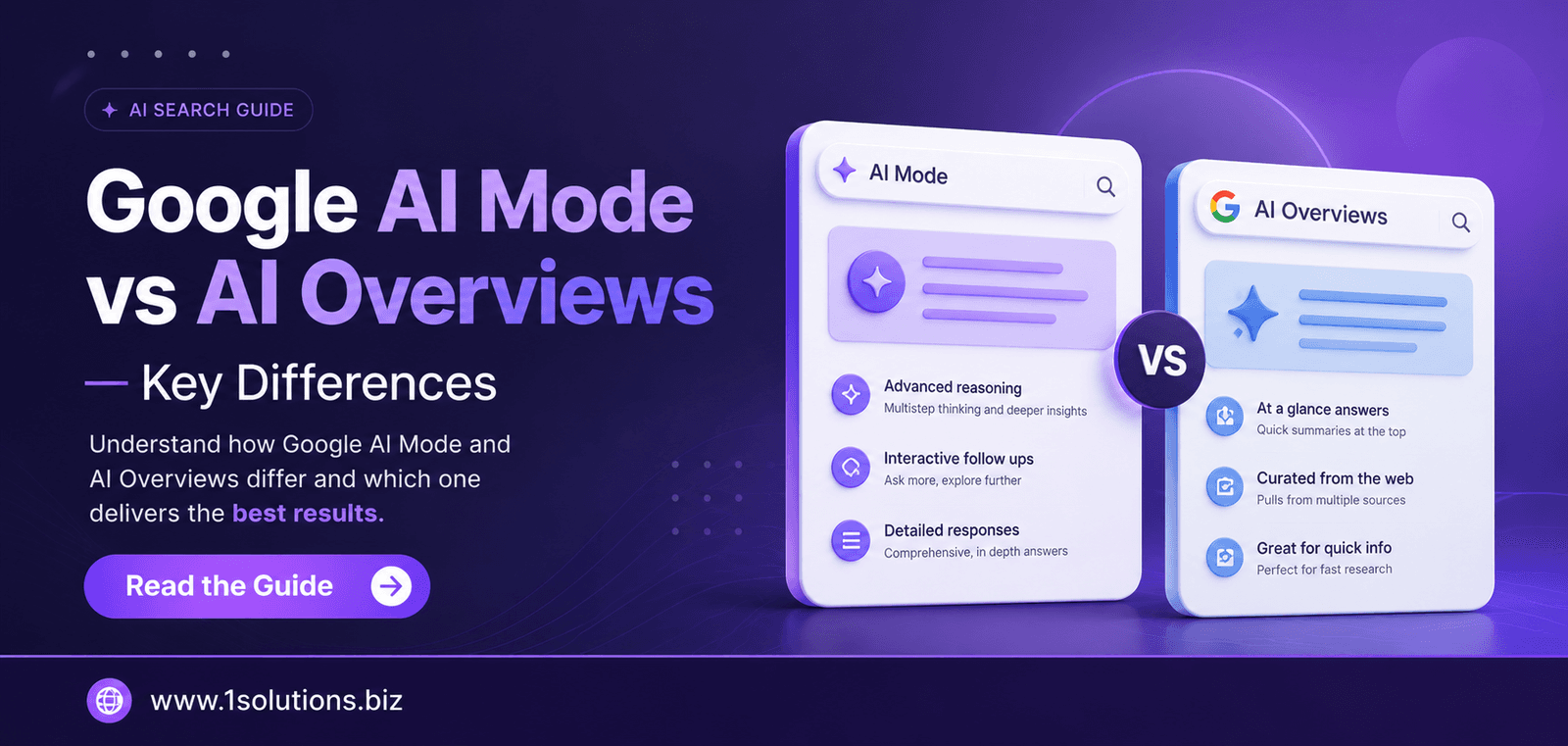
Understanding how AI search differs from traditional search helps contextualize why E-E-A-T matters at this structural level. The comparison in this article on Google AI Mode versus AI Overviews illustrates how different AI systems evaluate and surface content differently, which has direct implications for how you demonstrate authority across platforms.
8. Use Tables, Lists, and Scannable Formats for Extractable Data
LLMs process structured formatting differently from flowing prose. Tables, numbered lists, and bullet points create discrete, labeled units of information that are significantly easier for a model to extract and incorporate into a response. When a user asks ChatGPT to compare two options or list the steps in a process, the model preferentially draws from content that is already formatted that way.
Use numbered lists for sequential processes where order matters. Use bullet points for non-sequential collections of related items. Use tables for comparisons, feature sets, or data with multiple attributes. Every table should have clear column headers that label what each column contains. Avoid merging cells unnecessarily, as complex table structures can confuse automated parsers.
| Content Format | Best Used For | AI Extractability |
|---|---|---|
| Numbered List | Steps, rankings, sequential processes | High |
| Bullet Points | Features, tips, non-sequential items | High |
| Comparison Table | Product comparisons, options, trade-offs | High |
| Long-form Prose | Narrative, analysis, in-depth explanation | Medium |
| Unstructured Text Blocks | Not recommended for AI-targeted content | Low |
The balance to strike is that over-relying on lists and tables without enough prose context reduces topical depth. AI models also need explanatory paragraphs to understand the nuance behind structured data. Mix formats within each section rather than committing exclusively to one type throughout the entire article.
9. Optimize for Conversational and Long-Tail Query Matching
ChatGPT users rarely type short keyword fragments. They write full sentences and questions the way they would speak to a knowledgeable colleague. Content that is written using the same natural, conversational register as the queries it targets will match more reliably than content optimized purely for traditional short-tail keyword density.
This means writing section headers and FAQ questions in full, natural sentences. It means using synonyms and related phrases throughout your content rather than repeating an exact keyword phrase unnaturally. It means structuring your content around the intent behind a query, not just its surface words. A section titled “How to structure a blog post so ChatGPT cites it” will attract more AI citations than one titled “Blog post ChatGPT structure optimization.”
Long-tail optimization also extends to answering follow-up questions within the same piece of content. When a user asks ChatGPT something complex, the model often needs to synthesize answers from multiple sub-questions. Content that anticipates and answers those related sub-questions within the same page is more likely to be pulled comprehensively. For a practical look at this approach in an adjacent context, this guide on local AEO best practices for small businesses demonstrates how answer-engine optimization principles apply across different content types.
If your current content library was built around short-tail SEO keywords, a systematic content audit using a tool like Screaming Frog or Semrush can identify which pages need conversational reformatting. Prioritize your highest-traffic pages first for the fastest impact on AI citation rates.
10. Build and Maintain Content Freshness Signals
ChatGPT’s base training data has a knowledge cutoff, but its retrieval-augmented features (used in ChatGPT with browsing enabled, Perplexity, and similar tools) actively pull from current web content. For these retrieval-based AI responses, content freshness is a direct ranking factor. Pages that are regularly updated with new data, examples, and current information are prioritized over pages that have not been touched in years.
Freshness signals include the publication date and last-updated date visible on the page, regular additions of new data points or statistics, updated examples that reflect current conditions, and structural revisions that improve clarity based on new understanding of the topic. You do not need to rewrite an entire article to trigger freshness, but the updates should be substantive rather than cosmetic.
According to a 2023 analysis by Moz, pages that were updated within the previous 12 months received measurably higher crawl frequency from search engine bots, which increases the likelihood of inclusion in AI retrieval systems. Establishing an editorial calendar that includes regular content refreshes, not just new content creation, is a structural investment that pays long-term dividends in AI visibility.
The operational trade-off is that content maintenance competes with new content creation for the same editorial resources. A pragmatic approach is to identify your top 20 performing pages by traffic and prioritize those for quarterly updates, while allowing lower-traffic pages to be updated on an annual cycle. For broader strategies that complement this approach, exploring professional search engine optimization services can help you build a sustainable content update system alongside your broader digital marketing efforts.
💡 Pro Tip: When you update a piece of content, add a visible “Last Updated” date near the top of the article. This single change signals freshness to both users and AI retrieval systems without requiring any backend technical changes. Pair it with a one-paragraph summary of what was updated and why.
Practical Action Plan: What to Do First
- Do This Now: Audit your top 10 pages and rewrite the opening sentence of every H2 section to lead with a direct answer. This is the single highest-impact structural change for AI citation and takes minimal time per page.
- Do This Now: Add a five-question FAQ section to your most visited content pages using natural language questions drawn from People Also Ask and community forums. Apply FAQPage schema markup to each.
- Worth Doing: Map and build a topic cluster around your core service or product area. Start with the pillar page, then commission three to five cluster pieces over the next quarter. Use internal linking to connect them systematically.
- Worth Doing: Implement Article and Organization schema across all key pages. If you are on WordPress, a schema plugin handles this efficiently. Pair it with a named author bio that includes verifiable credentials on every content page.
- Low Priority: Convert long prose sections into tables and formatted lists where the content is inherently comparative or sequential. This improves extractability but has less immediate impact than answer-first writing and FAQ structure.
- Low Priority: Establish a content freshness calendar to ensure your top pages receive substantive updates every three to six months. This is a longer-term investment that compounds over time rather than delivering immediate AI citation gains.
If you want a comprehensive framework for how AI search differs from traditional search and why these structural principles matter across multiple platforms, this detailed article on agentic SEO provides important context for where AI-driven search is heading. Similarly, understanding how agentic browsers work clarifies why content clarity and structure are increasingly the primary determinants of AI-driven traffic.
For businesses looking to build these capabilities at scale, working with a team experienced in integrated digital marketing ensures that content structure improvements are coordinated with your broader SEO, technical, and authority-building strategies rather than applied in isolation.
Conclusion
The effort to structure content for ChatGPT visibility is fundamentally about making your content more useful, more clear, and more authoritative. Every structural principle in this list, from answer-first writing to topic clustering to freshness maintenance, also improves the experience for human readers. That alignment is what makes this approach sustainable rather than a short-term algorithmic workaround.
AI models are going to become an increasingly important channel for information discovery. The brands that invest in content structure now, while the field is still developing clear best practices, will hold a significant advantage over those that wait for definitive guidance. Start with the highest-impact changes, measure your citation rate over time, and iterate systematically.
Frequently Asked Questions
Does content structure actually affect whether ChatGPT cites my website?
Yes, it does, particularly for ChatGPT versions with browsing enabled and for retrieval-augmented AI systems like Perplexity. Content that is clearly structured with direct answers, logical headings, and explicit definitions is significantly easier for these systems to extract and cite. Base-model ChatGPT responses draw from training data, where content from authoritative, well-structured sources was weighted more heavily during the training process.
How is structuring content for ChatGPT different from traditional SEO?
Traditional SEO focuses heavily on keyword placement, backlink acquisition, and technical factors like page speed. Structuring for ChatGPT visibility shifts the emphasis toward semantic clarity, answer-first writing, and content that directly and completely addresses specific questions. The two disciplines overlap significantly but AI optimization places a higher premium on readability and explicit structure than keyword density alone.
How long does it take to see results from AI content optimization?
For retrieval-based AI systems that pull from current web content, improvements to page structure can start affecting citation likelihood within a few weeks of re-indexing. For base-model LLM citation, the timeline is tied to model training cycles, which are less predictable. In parallel, these structural improvements tend to improve Google organic rankings within one to three months, providing a measurable interim metric.
Should I prioritize new content or updating existing content for AI visibility?
For most established sites, updating existing content delivers faster returns than creating new content from scratch. High-traffic pages that already rank organically have authority signals in place. Adding direct-answer openings, FAQ sections, and schema markup to these pages improves AI citation probability without the time investment of building a new page’s authority from zero.
Do all AI models use the same content signals, or do I need to optimize differently for each?
The core structural principles (clear headings, direct answers, FAQ format, schema markup, E-E-A-T signals) apply across ChatGPT, Perplexity, Google AI Mode, and similar tools. Each model has specific nuances in how it weights different signals, but the shared foundation of clarity, authority, and structure is consistent. You do not need separate optimization strategies for each model; you need one strategy built on sound content architecture principles.