
9 Link Building Strategies Every Blogger Needs to Know
If you run a blog, you already know that publishing great content is only half the battle. The other half is making sure that content actually gets found. That is where link building becomes non-negotiable. Backlinks remain one of Google’s top three ranking signals, and without a consistent strategy to earn them, even the most well-written posts can sit on page five indefinitely. Whether you are a hobby blogger scaling up or a content marketer managing multiple sites, the strategies below will help you build authority the right way, without shortcuts that could get you penalized.
Link building is still one of the most powerful ways to grow a blog’s organic visibility. This guide covers 9 practical, blogger-friendly strategies, from guest posting and digital PR to broken link building and resource page outreach. Each strategy includes honest trade-offs so you can choose what actually fits your situation.
⚡ Key Takeaways
- Backlinks from high-authority, relevant sites carry far more weight than links from dozens of low-quality directories.
- Guest posting works best when you treat it as a relationship-building exercise, not a one-time transaction.
- Broken link building gives you a legitimate reason to reach out without appearing self-promotional.
- Original data and research are among the most consistently linkable content formats available to bloggers.
- Internal linking amplifies the value of every external backlink you earn.
- Skyscraper content is effective but time-intensive — prioritize topics where the existing content is genuinely outdated or thin.
- Monitoring your backlink profile regularly helps you catch toxic links before they cause ranking drops.
1. Guest Posting on Relevant, High-Authority Blogs
Guest posting is one of the oldest and most reliable link building tactics available to bloggers, and it continues to deliver results when done correctly. The core idea is straightforward: you write a high-quality article for another blog in your niche, and in return, you receive a contextual backlink in the author bio or within the body of the post. The key word here is “relevant.” A backlink from a cooking blog pointing to your finance site carries almost no SEO value, while a link from a respected finance publication can meaningfully move your rankings.
According to a study by Ahrefs (2023), pages with more referring domains consistently outrank those with fewer, making diverse and relevant backlink acquisition a core priority. Guest posting directly addresses both diversity and relevance when you target the right publications.
The trade-off is time. Writing a guest post that meets editorial standards for a strong blog takes real effort, and many top publications have strict guidelines. Pitching poorly or sending generic outreach emails will get you ignored. Focus on building a relationship with the editor first, comment on their posts, share their content, and then pitch a specific, well-researched article idea.
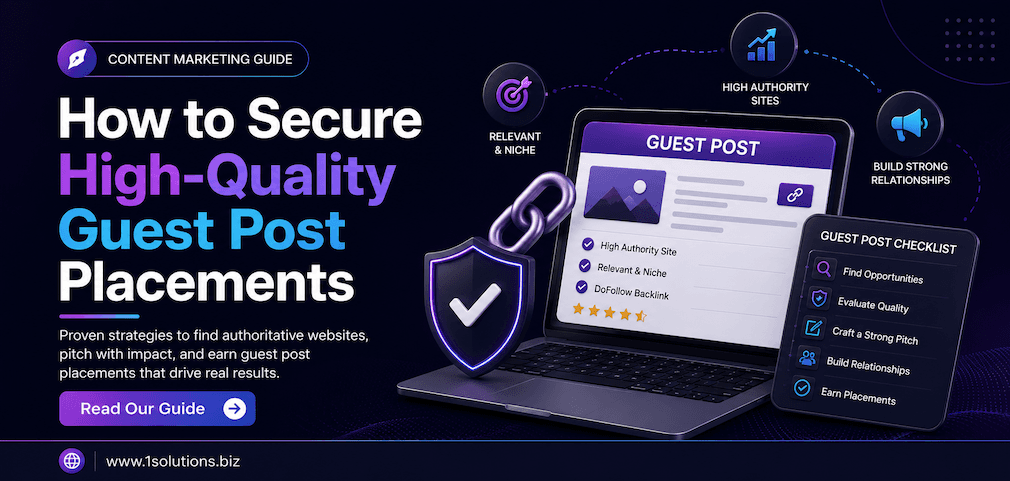
For a deeper look at how to get your pitches accepted by quality sites, check out this guide on securing high-quality guest post placements. It covers the exact outreach approach that consistently earns responses from editors.
💡 Pro Tip: Always request a do-follow, contextual link within the body of the article rather than just an author bio link. Body links carry significantly more SEO weight because they appear within relevant, keyword-rich surrounding text.
2. Broken Link Building
Broken link building is one of the most underused strategies in the blogger toolkit, and that is exactly why it works so well. The process involves finding external links on other websites that point to pages that no longer exist (404 errors), creating content that serves as a suitable replacement, and then reaching out to the site owner to suggest swapping the dead link for yours.
This approach works because it frames your outreach as genuinely helpful rather than self-promotional. You are solving a real problem for the website owner: a broken link is bad for their user experience and their own SEO. Tools like Ahrefs, Semrush, or Check My Links (a free Chrome extension) make it easy to identify broken links on high-authority pages in your niche.
The trade-off is that the conversion rate on broken link outreach can be low, sometimes between 5 and 10 percent. You need to send a reasonable volume of personalized outreach emails to see consistent results. Mass, templated emails will not cut it here. Each message should acknowledge the specific broken link, explain why your content is a better fit than a generic alternative, and keep the ask short and clear.
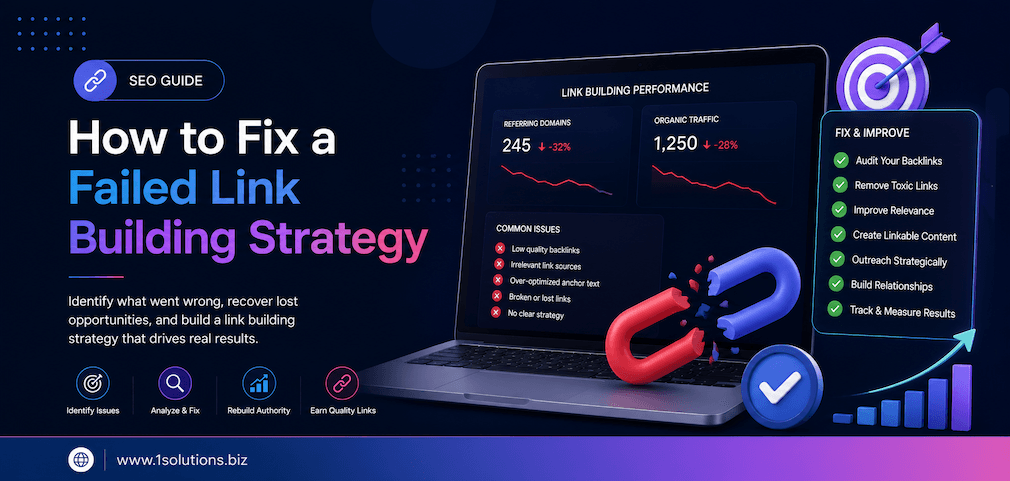
If your current link building approach has stalled or is producing poor results, this guide on how to fix a failed link building strategy can help you diagnose what went wrong and reset your approach with tactics like this one.
3. Creating Original Research and Data-Driven Content
One of the most powerful and sustainable link building strategies for bloggers is publishing original research. When you produce data that does not exist anywhere else, other writers, journalists, and bloggers naturally cite your post as a source, earning you passive, editorial backlinks over time.
This does not require a massive budget or a research team. You can run surveys using tools like Google Forms or Typeform, compile publicly available datasets from government sources or industry reports, or analyze your own blog’s performance data and turn it into insights. The result is a piece of content that becomes a reference point in your niche.
According to BuzzSumo (2023), content containing original statistics and research earns, on average, three times more backlinks than opinion-based posts. That number alone makes a strong case for prioritizing at least one data-driven piece per quarter.
The honest challenge here is that research content takes longer to produce and requires accuracy. Errors in data can damage your credibility and actually lead to links being removed. Always cite your sources, explain your methodology, and include a clear date so readers know how fresh the data is. Pair this approach with strong professional content and copywriting support if you want to elevate the presentation and reach of your research pieces.
4. Resource Page Link Building
Many websites maintain “resource pages,” curated lists of useful tools, guides, and articles for their audience. These pages are goldmines for link building because the site owner has already signaled that they are open to featuring external content. If your blog post is genuinely useful and fits the theme of their resource page, you have a very natural pitch to make.
To find these pages, use Google search operators like “your niche + intitle:resources” or “your niche + useful links.” Once you identify a list of strong resource pages, review what types of content they currently feature, make sure your post matches that standard, and send a brief, personalized email explaining why your content would be a valuable addition.
This strategy pairs especially well with comprehensive, evergreen guides, glossaries, and tutorial-style posts that solve persistent problems in your niche. A 2,000-word beginner’s guide to a specific topic, for example, is far more likely to be added to a resource page than a short news post.
The trade-off is that resource pages can go stale or get abandoned, meaning your link might eventually sit on a low-traffic or rarely updated page. Prioritize resource pages on actively maintained sites with visible update dates or recent blog activity.
💡 Pro Tip: Before pitching a resource page, check whether the site already links to any of your competitors. If they do, your pitch becomes even more credible because you can reference that mutual interest in your niche.
5. The Skyscraper Technique
The Skyscraper Technique, popularized by Brian Dean of Backlinko, is built on a simple premise: find content in your niche that has already earned a significant number of backlinks, create a substantially better version of that content, and then reach out to everyone linking to the original to let them know a superior resource now exists.
“Better” can mean more up-to-date data, more depth, better visuals, improved readability, or added sections that the original missed. The goal is to make your version the obvious upgrade so that site owners are genuinely motivated to swap or add your link.
Ahrefs (2022) found that the average top-ranking page has backlinks from approximately 3.8 times more referring domains than pages ranked in positions two through ten, which underscores why chasing existing link pools through techniques like Skyscraper can accelerate your authority growth.
The honest trade-off is significant time investment. A proper Skyscraper post can take days to produce, and outreach still requires personalization to convert. Do not apply this technique to every topic — be selective and target posts where the existing content is genuinely outdated or has clear gaps you can fill. Combining this with insights from page content analysis techniques will help you identify exactly where the gaps are before you invest the writing time.
6. Building Links Through Digital PR
Digital PR is the practice of earning editorial coverage and backlinks by creating newsworthy content, pitching stories to journalists, or positioning yourself as a subject matter expert. For bloggers, this is one of the highest-quality link building strategies available because links from news sites and major publications carry enormous authority.
Common digital PR tactics include: writing expert commentary on trending topics in your niche, creating visually compelling infographics around timely data, and using services like HARO (Help a Reporter Out) or Qwoted to respond to journalist queries that need expert sources. When a journalist quotes you and links back to your blog, that is a high-authority editorial backlink with no paid placement involved.
The challenge is consistency. Digital PR requires you to monitor media opportunities regularly and respond quickly, often within hours of a query being posted. Building a media kit and keeping your bio updated makes this process faster. If you are also working on local visibility, pairing digital PR with local AEO best practices can help your blog show up in both traditional search and AI-driven answer engines.
7. Strategic Internal Linking to Amplify External Backlinks
Most bloggers focus entirely on acquiring external backlinks and overlook one of the most controllable link building levers they have: internal linking. When an external site links to one of your posts, that page gains link equity. By strategically linking from that high-equity page to other important posts on your blog, you distribute that authority across your site, helping multiple pages rank better.
This is not just about linking randomly. It requires a deliberate structure where your most important, conversion-focused, or cornerstone content receives the most internal links from other relevant posts. Use descriptive anchor text that tells both users and search engines what the linked page is about.
According to Semrush (2023), websites with a strong internal linking structure show measurably better crawl efficiency and rank more pages in the top 10 compared to sites with a flat or unstructured internal link architecture. That is a meaningful SEO return for something that costs you only time.
For a detailed walkthrough of how to structure this correctly, this post on using internal links to boost backlink impact is worth reading before your next site audit. And if you are trying to understand why some of your pages are not getting indexed or benefiting from your link equity, this post on why Google is not indexing your pages can surface crawling and linking issues you may not have noticed.
💡 Pro Tip: Audit your top 10 externally linked pages every quarter. Make sure each one has at least 3 to 5 outgoing internal links pointing to your other important content. This simple habit can lift rankings across your entire site, not just individual posts.
8. Niche Community Participation and Link Mentions
Being an active, genuine member of your niche community, whether in forums, Facebook groups, Reddit threads, or industry Slack channels, creates natural opportunities to earn link mentions without aggressive outreach. When you consistently provide value and people recognize you as a knowledgeable source, they start referencing your blog content organically.
This is a long-game strategy, but it builds something that paid link schemes cannot: real reputation. Over time, community members tag you in discussions, share your posts, and link to your guides as reference material. Those links tend to be highly contextual and from engaged audiences, which signals quality to search engines.
The trade-off is that direct, do-follow links from community platforms are rare. Most forums and Reddit threads use no-follow links. However, the referral traffic, brand recognition, and the secondary links (other bloggers discovering your content through communities and then citing you from their own sites) create genuine SEO value over time.
If you want to expand your community presence across platforms, this comprehensive list of top 100 social media sites can help you identify where your niche audience is most active and where community-driven link mentions are most likely to convert into real traffic and authority.
9. Competitor Backlink Analysis and Replication
One of the most efficient ways to build backlinks is to study where your competitors are already getting theirs and then pursue the same sources. This is not copying — it is competitive intelligence used ethically. If a site is willing to link to a competitor in your niche, there is a reasonable chance they would link to you too, especially if your content is comparable or better.
Tools like Ahrefs, Semrush, or Moz allow you to enter any competitor’s URL and see a complete list of their backlinks, including which pages are linking to them, the anchor text being used, and the domain authority of each source. Look for patterns: are they getting links from guest posts, resource pages, digital PR placements, or industry directories? Those patterns reveal which link building channels are most active in your niche.
Once you have identified high-value linking domains, prioritize them by authority and relevance, then develop a targeted outreach plan. This approach is especially effective for newer bloggers because it removes the guesswork about which sites are worth pursuing.
If you want professional help scaling this kind of competitive link acquisition, exploring structured link building packages can give you a systematic, managed approach. And to make sure your link acquisition efforts are aligned with your broader traffic goals, working with a team that understands end-to-end SEO strategy will help you connect link building to actual ranking and revenue outcomes. For guidance on staying safe while building links competitively, this resource on building links safely without triggering penalties outlines the boundaries you need to respect.
Link Building Strategy Comparison Table
| Strategy | Difficulty | Link Quality | Time to Results | Best For |
|---|---|---|---|---|
| Guest Posting | Medium | High | 2 to 4 weeks | All bloggers |
| Broken Link Building | Medium | High | 1 to 3 weeks | Bloggers with existing content |
| Original Research | High | Very High | 1 to 6 months | Established bloggers |
| Resource Pages | Low | Medium to High | 1 to 2 weeks | Niche guide creators |
| Skyscraper Technique | High | Very High | 1 to 3 months | Competitive niches |
| Digital PR | High | Very High | Variable | Expert bloggers |
| Internal Linking | Low | Supporting | Immediate | All bloggers |
| Community Participation | Low | Low to Medium | 3 to 12 months | Brand builders |
| Competitor Backlink Replication | Medium | High | 2 to 6 weeks | Data-driven bloggers |
Practical Action Plan: Where to Start
- Do This Now: Audit your existing content and set up internal links between your top externally linked pages and your most important posts. This is free, fast, and immediately distributes existing link equity across your site.
- Do This Now: Run a competitor backlink analysis using a free trial of Ahrefs or Semrush, identify the top 20 linking domains in your niche, and build an outreach list for the next 30 days.
- Worth Doing: Plan one guest post per month on a high-authority site in your niche. Focus on building the relationship before pitching, and always propose a specific, data-backed article idea rather than a vague topic.
- Worth Doing: Identify five broken links on resource pages in your niche using Check My Links, create or repurpose content to match, and send personalized replacement pitches within the next two weeks.
- Low Priority (But Valuable Long-Term): Commission or compile original research for one cornerstone post per quarter. The upfront effort is high, but passive editorial backlinks from research pieces compound over time in a way that most other strategies do not.
Conclusion
Effective link building for bloggers is not about volume, it is about strategy, relevance, and patience. The nine approaches covered here range from tactics you can start implementing today (internal linking, competitor analysis, resource page outreach) to longer-term investments like original research and digital PR that build the kind of durable authority that protects your rankings through algorithm updates.
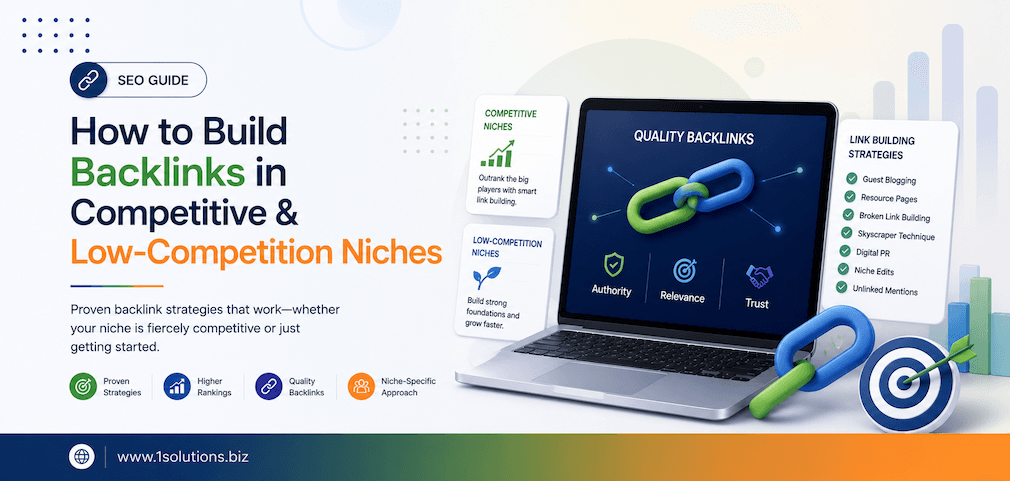
No single strategy works in isolation. The bloggers who see consistent growth are those who combine multiple approaches, monitor results, and adjust based on what their niche and audience respond to. If you want a more structured and scalable approach, exploring professional link building packages or working with a team experienced in comprehensive digital marketing services can help you move faster without risking penalties. And if you are building links in a competitive niche, be sure to read this guide on building backlinks in competitive and low-competition niches to tailor your approach correctly.
Start with what fits your current resources, build consistency, and the authority will follow.
Frequently Asked Questions
How long does it take to see results from link building?
Most bloggers start to see measurable ranking improvements within two to four months of consistent link building, though this varies depending on niche competitiveness, domain age, and the quality of links earned. Some high-authority backlinks can produce ranking movement within weeks, while broader domain authority growth is typically a six to twelve month project.
How many backlinks does a blog need to rank well?
There is no universal number. The right benchmark depends entirely on what the top-ranking pages in your niche already have. Use tools like Ahrefs or Semrush to check the referring domain count for the pages ranking in positions one through five for your target keywords, and use that as your competitive baseline rather than a generic target.
Are paid links worth the risk for bloggers?
Paid links that are not properly disclosed violate Google’s Webmaster Guidelines and can result in a manual penalty that drops your entire site from search results. The risk is rarely worth it. If you are considering investing in links, explore legitimate alternatives like sponsored content with proper disclosure, or focus budget on creating linkable assets instead.
What is the difference between do-follow and no-follow links?
Do-follow links pass link equity (often called “link juice”) from one site to another, directly influencing rankings. No-follow links include a tag that instructs search engines not to pass authority, though they can still drive referral traffic and brand awareness. A healthy backlink profile includes both, but do-follow links from relevant, authoritative sites are the primary driver of ranking improvement.
Can I do link building without spending money?
Yes, many of the most effective link building strategies cost nothing except time. Guest posting, broken link building, community participation, internal linking, and competitor analysis can all be done with free or freemium tools. The investment is primarily effort and consistency. Where budget helps is in scaling outreach, commissioning original research, or working with a professional team to accelerate results.