
Search is no longer a single-channel game. Between AI chatbots, generative search results, and voice assistants, marketers are now wrestling with three overlapping optimization disciplines: LLMO, GEO, and AEO. Understanding the difference between LLMO vs GEO vs AEO is not just academic. It changes what content you create, how you structure it, and where you invest your time and budget.
This article breaks down each approach, including what it does well, where it falls short, and how to decide which one deserves priority at your business stage right now.
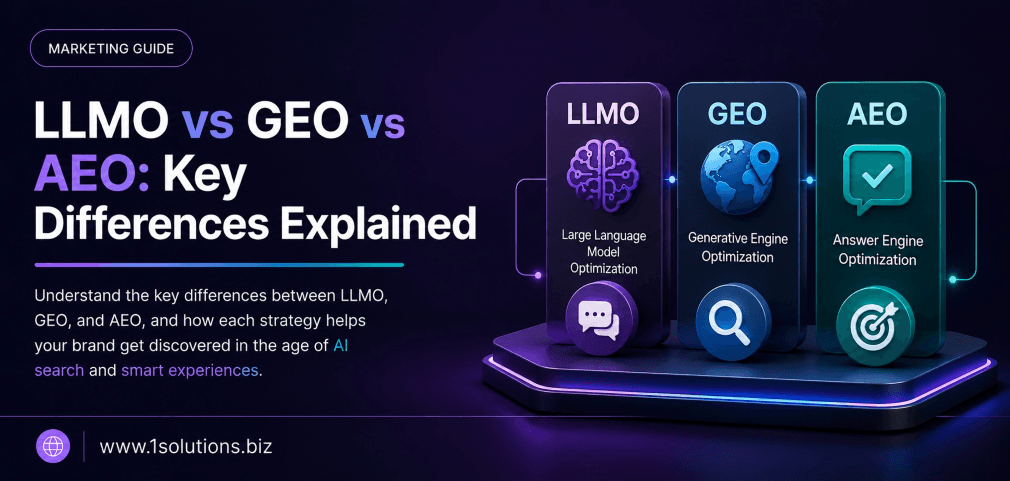
LLMO (Large Language Model Optimization) targets AI chatbots like ChatGPT and Claude. GEO (Generative Engine Optimization) targets AI-generated search summaries like Google’s AI Overviews. AEO (Answer Engine Optimization) targets featured snippets and voice assistants. All three share a common foundation but serve different surfaces. Most businesses need elements of all three, not just one.
⚡ Key Takeaways
- LLMO, GEO, and AEO are distinct but deeply interconnected optimization disciplines targeting different AI-powered surfaces.
- GEO directly affects Google AI Overviews, which now appear for roughly 47% of search queries according to Search Engine Land (2024).
- AEO has the longest track record and is the safest starting point for businesses new to AI-era optimization.
- LLMO requires brand presence across third-party sources, not just your own website, making it the most complex of the three.
- All three strategies reward structured, authoritative, clearly attributed content over thin keyword-stuffed pages.
- Small and mid-size businesses should prioritize AEO first, then GEO, then LLMO based on available resources.
- Traditional SEO remains a prerequisite. Strong organic rankings still improve your chances of being cited across all three channels.
What Is LLMO (Large Language Model Optimization)?
LLMO stands for Large Language Model Optimization. It refers to the practice of shaping your brand’s presence so that AI language models like ChatGPT, Claude, Gemini, and Perplexity are more likely to mention, recommend, or cite your content when users ask relevant questions.
Unlike traditional SEO, LLMO does not rely on a ranked list of blue links. Language models synthesize information from their training data and real-time retrieval pipelines. If your brand is not represented in authoritative third-party sources, industry publications, and structured data, it simply does not exist in the model’s world.
For a deeper look at the mechanics behind this, our guide on LLM Optimization and how to rank in AI search walks through the practical steps in detail.
LLMO Pros
- Positions your brand at the source of the answer, not just near it.
- Works across multiple AI platforms simultaneously when done well.
- Builds long-term brand authority that is harder for competitors to replicate quickly.
- Particularly powerful for informational and research-oriented queries.
LLMO Cons
- Results are difficult to measure. There is no “rank 1” in a chatbot response.
- Language models update on irregular schedules, meaning gains can be slow to appear.
- Heavily dependent on off-site mentions, which means you cannot fully control the inputs.
- Requires consistent content production across multiple external channels.
What Is GEO (Generative Engine Optimization)?
Generative Engine Optimization (GEO) refers to optimizing your content to appear as a cited source inside AI-generated summaries, specifically within search engines that now produce generative responses. Google’s AI Overviews are the most prominent example. Bing’s Copilot integration is another. Perplexity, which blends search and language model output, sits at the intersection of GEO and LLMO.
Research from Princeton, Georgia Tech, and The Allen Institute published in 2023 introduced the term GEO formally, defining it as optimizing for systems that retrieve and synthesize content rather than simply rank it. Their studies found that certain content strategies, including citing statistics, using authoritative language, and structuring answers clearly, increased source visibility in generative outputs by up to 40%.
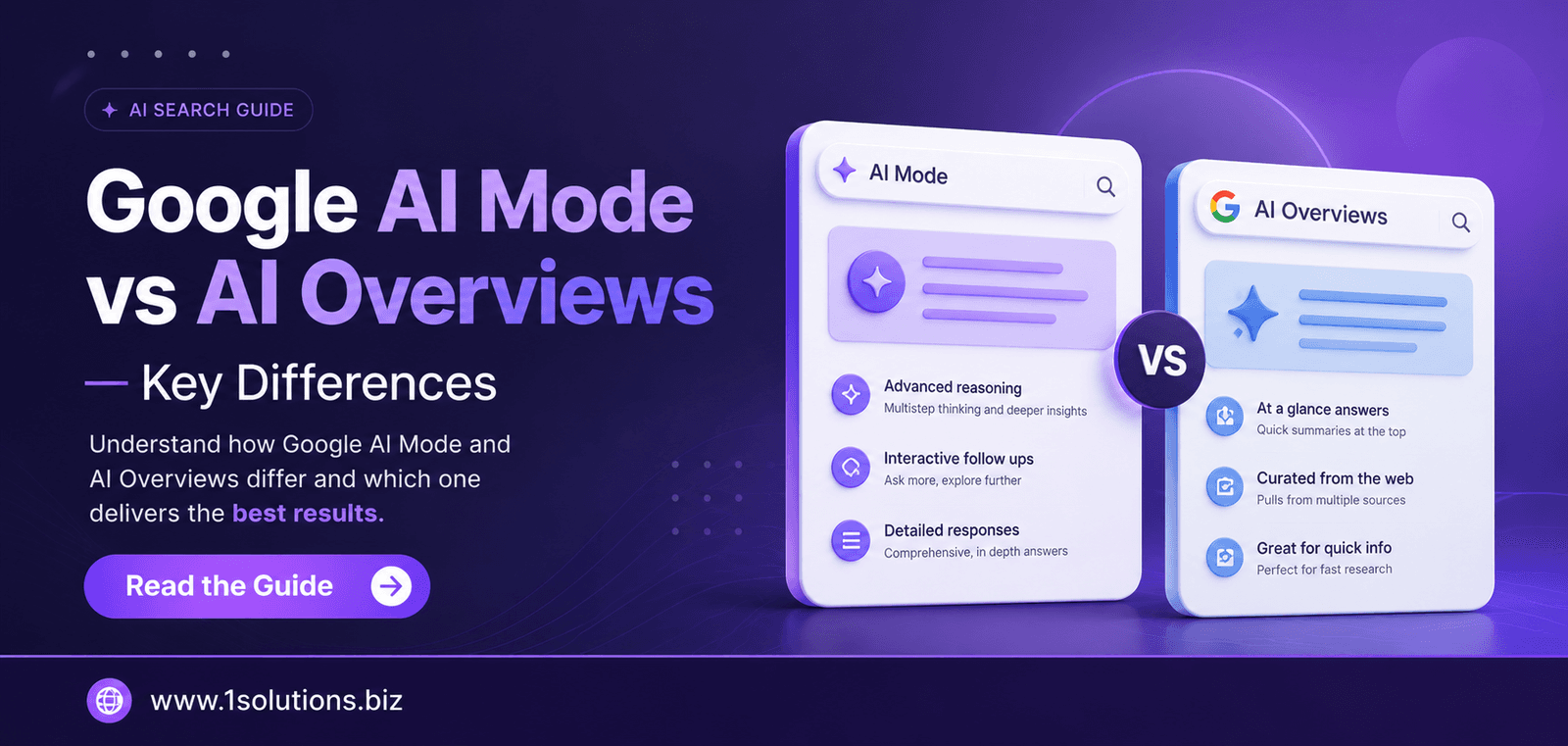
Understanding the nuances between different generative surfaces matters here. Our article comparing Google AI Mode vs AI Overviews outlines how these two surfaces actually behave differently and why that affects your GEO strategy.
GEO Pros
- Directly tied to Google, the dominant search engine globally, making it commercially significant right now.
- Content that performs well for GEO typically also ranks well in traditional organic results.
- More measurable than LLMO because you can observe citation patterns in AI Overviews.
- Structured data, clear headings, and E-E-A-T signals all contribute and are already best practices.
GEO Cons
- Google’s AI Overviews reduce click-through rates. A study by Search Engine Roundtable (2024) found CTR drops of 15 to 64% for queries where AI Overviews appeared.
- The rules for what gets cited are not fully transparent and shift with model updates.
- Heavily favors established domains. Newer sites face a significant authority gap.
- Optimizing only for GEO while neglecting traditional SEO is a strategic mistake.
💡 Pro Tip: GEO and traditional SEO are not separate tracks. Pages that rank in positions 1 through 3 organically are disproportionately cited in Google AI Overviews. Improving your core search engine optimization directly strengthens your GEO performance at the same time.
What Is AEO (Answer Engine Optimization)?
AEO, or Answer Engine Optimization, is the oldest of the three disciplines. It emerged from the rise of featured snippets around 2015 and expanded as voice search grew. The goal is to structure your content so that search engines and voice assistants can extract a direct, concise answer to a user’s question and present it without the user needing to click through.
Google’s featured snippets, People Also Ask boxes, knowledge panels, and Siri or Alexa voice responses are the primary AEO surfaces. According to Semrush’s 2023 State of Search report, featured snippets appear in approximately 19% of all search results, and voice-based queries have grown consistently year over year.
For local businesses especially, AEO has immediate practical value. Our breakdown of local AEO best practices for small businesses shows how to structure content to capture answer-based visibility in your specific market.
AEO Pros
- Established, well-understood discipline with proven tactics and measurable outcomes.
- Directly improves visibility in featured snippets and voice search results.
- Schema markup and FAQ structured data are well-supported and indexed reliably.
- Accessible to small and mid-size businesses without large content budgets.
- Strong overlap with accessibility and user experience improvements.
AEO Cons
- Featured snippets can reduce organic clicks, sometimes called the “zero-click” problem.
- Voice search traffic is harder to attribute and often does not convert directly.
- AEO alone does not address newer AI surfaces like chatbots or generative search summaries.
- Highly competitive for head-term queries in most commercial niches.
LLMO vs GEO vs AEO: Side-by-Side Comparison
| Factor | LLMO | GEO | AEO |
|---|---|---|---|
| Primary Surface | AI chatbots (ChatGPT, Claude, Gemini) | AI search summaries (Google AI Overviews, Perplexity) | Featured snippets, voice search, knowledge panels |
| Maturity Level | Emerging (2023 to present) | Emerging (2023 to present) | Established (2015 to present) |
| Measurability | Low | Medium | High |
| Content Focus | Brand authority, third-party citations, depth | Structured answers, statistics, E-E-A-T | FAQ schema, concise answers, voice-friendly phrasing |
| Off-Site Dependency | Very High | Medium | Low |
| SEO Overlap | Indirect | Strong | Strong |
| Best For | Brands, SaaS, thought leadership | Content publishers, ecommerce, service businesses | Local businesses, informational content, FAQ-heavy sites |
| Biggest Risk | Low attribution visibility | CTR reduction from zero-click answers | Zero-click problem for high-volume queries |
Where the Three Disciplines Overlap
The biggest mistake businesses make is treating LLMO, GEO, and AEO as competing priorities. In practice, they share a common foundation.
All three reward content that is structured clearly, factually grounded, and attributed to credible sources. All three benefit from schema markup. All three improve when your core domain authority and backlink profile are strong. And all three are undermined by thin content, keyword stuffing, or pages built without genuine user intent in mind.
The differences emerge at the tactical level. LLMO pushes you toward off-site presence building: getting mentioned in industry publications, building author profiles, earning citations in Wikipedia-adjacent sources. GEO pushes you toward on-page structure and E-E-A-T signals that help Google’s systems identify your content as authoritative and citable. AEO pushes you toward concise, question-and-answer formatting with proper schema implementation.
Understanding how AI search engines process and retrieve content is foundational to all three. Our guide on improving website visibility in AI search engines covers the technical and content signals that influence all of these surfaces at once.
💡 Pro Tip: If you are building local pages and want to capture AI-generated search traffic, treat AEO and GEO as a combined project. Read our guide on how to build local pages that win in AI-powered search for a practical framework that addresses both surfaces simultaneously.
Which One Should You Prioritize?
The honest answer depends on your business model, content maturity, and available resources.
If you are a local service business, a small ecommerce site, or a startup with limited content resources, start with AEO. It has the lowest barrier to entry, the most established playbook, and the most direct measurable outcomes. Implementing FAQ schema, structuring your service pages with clear question-and-answer sections, and building a Google Business Profile that is fully optimized will move the needle faster than chasing AI chatbot citations.
If you are a mid-size content publisher, a SaaS company, or a business already ranking well organically, GEO should be your next focus. Audit your top-performing pages for E-E-A-T signals, add statistics with proper citations, use clear subheadings, and monitor whether your content is appearing in Google AI Overviews. Our exploration of how to rank in Perplexity is a useful companion here, since Perplexity blends GEO and LLMO mechanics in interesting ways.
If you are a brand with thought leadership ambitions, an agency, or a business where being named as a category leader by AI systems directly affects purchase decisions, LLMO becomes a strategic priority. This requires a deliberate off-site presence strategy: contributing to industry publications, building author authority, earning mentions in structured reference sources, and ensuring your brand narrative is consistent across every channel where language models might encounter it.
For businesses managing complex digital marketing across multiple channels, working with a team experienced in full-spectrum digital marketing services can help align these strategies rather than running them in isolation.
The Role of Content Quality Across All Three
One recurring theme across LLMO, GEO, and AEO research is that generative AI systems penalize superficial content more aggressively than traditional search algorithms did. A 2024 study by Authoritas found that content demonstrating first-hand expertise and citing verifiable data was 2.7 times more likely to appear in AI-generated summaries than content without those signals.
This means the fundamentals still matter: factual accuracy, clear attribution, logical structure, and genuine usefulness to the reader. Chasing AI visibility with low-quality content is not a strategy. It is a way to remain invisible across every surface simultaneously.
For businesses that need help building content assets strong enough to perform across all three disciplines, investing in professional content and copywriting services that understand E-E-A-T and AI-era formatting is worth serious consideration.
It is also worth noting that the emergence of agentic AI systems adds another layer of complexity. These tools browse, summarize, and make decisions on behalf of users. Our overview of agentic browsers and how they work explains why this matters for anyone thinking about long-term AI visibility strategy.
💡 Warning: Do not treat AI optimization as a replacement for technical SEO fundamentals. Crawlability, page speed, mobile usability, and clean site architecture are prerequisites. AI systems cannot cite content they cannot access or trust.
Practical Action Plan: Where to Start
Here is a prioritized action plan based on effort, impact, and resource requirements:
- Do This Now: Audit your top 20 pages for AEO readiness. Add FAQ schema to service and informational pages. Ensure every page has a clear, concise answer to its primary question within the first two paragraphs. This delivers measurable quick wins in featured snippets and voice search while simultaneously strengthening your GEO foundation.
- Worth Doing: Conduct a GEO content audit. Identify pages that rank in positions 1 through 5 organically and upgrade them with verified statistics, clear author attribution, and structured subheadings that match common question formats. Monitor Google Search Console for AI Overview impressions once that data becomes more accessible in your market.
- Low Priority (But Long-Term Value): Begin your LLMO presence-building strategy. Start a content contribution calendar for industry publications. Build out author profiles on your website with verifiable credentials. Create a Wikipedia-style reference page about your brand or core product category. This is a slow burn, but the compound effect over 12 to 24 months is significant for brands in competitive categories.
LLMO vs GEO vs AEO: The Bottom Line
Comparing LLMO vs GEO vs AEO is not about picking a winner. It is about understanding which surface matters most for your specific business right now and building a content and authority strategy that strengthens your position across all three over time.
AEO gives you the fastest, most measurable results. GEO connects your content to the most commercially significant AI surface: Google. LLMO positions your brand for the longer-term future where AI systems are the primary interface between users and information.
The businesses that will lead in AI-era search are not those chasing the newest acronym. They are the ones building genuine expertise, structured content, and multi-channel authority the kind that AI systems, regardless of what they are called, consistently reward.
Frequently Asked Questions
Is LLMO the same as SEO?
No. Traditional SEO optimizes for ranked lists in search engine results pages. LLMO optimizes for how AI language models represent and cite your brand when generating conversational responses. They share some foundational principles, like content quality and authority, but the tactics and measurement approaches are distinct.
Does GEO hurt organic click-through rates?
Potentially, yes. When your content is cited in a Google AI Overview, users may get the answer they need without clicking through to your site. However, appearing in AI Overviews also signals strong authority and can increase brand recognition even without a direct click. The trade-off is real and worth monitoring in your analytics.
Can a small business realistically compete in LLMO?
Yes, but it requires focus. Small businesses are unlikely to compete with major brands for broad category mentions in AI chatbots. However, by dominating a specific niche, building consistent content in that area, and earning citations from relevant industry sources, smaller players can achieve meaningful LLMO visibility within their specific domain.
How does AEO relate to voice search optimization?
They are closely linked. Voice assistants pull answers primarily from featured snippets, knowledge panels, and structured data, all of which are core AEO targets. Optimizing for AEO using clear question-and-answer formatting and FAQ schema is the most direct way to improve voice search performance simultaneously.
Do I need all three strategies running at the same time?
Not necessarily at the start. The three disciplines share enough common foundations that improving one tends to lift the others. Begin with AEO since it has the clearest playbook and measurable outcomes, then layer in GEO optimizations on your strongest organic pages, and build toward LLMO as your content authority grows. A phased approach prevents resource dilution and allows you to measure impact at each stage.