
Why Local SEO Matters for Small Businesses in New York City
New York City is one of the most competitive business environments on the planet. With over 200,000 small businesses packed into five boroughs, standing out on Google is not optional — it is survival. This Local SEO Guide breaks down exactly what small business owners in NYC need to do to appear in local search results, attract foot traffic, and convert online searches into real customers walking through their doors.
Whether you run a Brooklyn bakery, a Queens nail salon, or a Manhattan law firm, the principles in this guide apply directly to your situation. Local SEO is not a one-time task. It is an ongoing system that rewards consistency, accuracy, and genuine community engagement.
This Local SEO Guide gives NYC small businesses a step-by-step framework to rank in local search results. It covers Google Business Profile optimization, citations, reviews, on-page signals, and more. Follow all 10 steps consistently and you will see measurable improvements in local visibility within 60 to 90 days.
⚡ Key Takeaways
- Google Business Profile is the single most important local SEO asset you control directly.
- NAP consistency (Name, Address, Phone) across all directories is non-negotiable for ranking.
- Reviews drive both trust and rankings — actively earning them is a core strategy, not a bonus.
- Neighborhood-level keyword targeting outperforms generic city-wide terms for most small businesses.
- Mobile-first design is mandatory because most local searches happen on smartphones.
- Local link building from NYC-specific sources carries more ranking weight than generic backlinks.
- Tracking the right metrics ensures your effort is focused on actions that produce real results.
The 10-Step Local SEO Guide Every NYC Small Business Needs
1. Claim and Fully Optimize Your Google Business Profile
Your Google Business Profile (GBP) is the foundation of every local SEO effort. It is the listing that appears in Google Maps and the local pack — that cluster of three businesses shown above the organic results for location-based searches. According to Google (2023), businesses with complete profiles are 70% more likely to attract location visits. That single statistic explains why this step comes first.
Start by claiming your profile at business.google.com if you have not done so already. Then fill in every single field without exception. This means your business name exactly as it appears on your signage, your physical address, phone number, website URL, business category, hours of operation, and service areas. Do not abbreviate or vary any of these details from what appears elsewhere online.
Upload at least 10 high-quality photos showing your storefront, interior, products, and team. Businesses with photos receive 42% more requests for directions and 35% more website clicks than those without (Google, 2023). Add your services or products directly inside GBP. Use the description field to naturally include neighborhood-level keywords such as “plumber in Astoria, Queens” or “coffee shop near Prospect Park.”
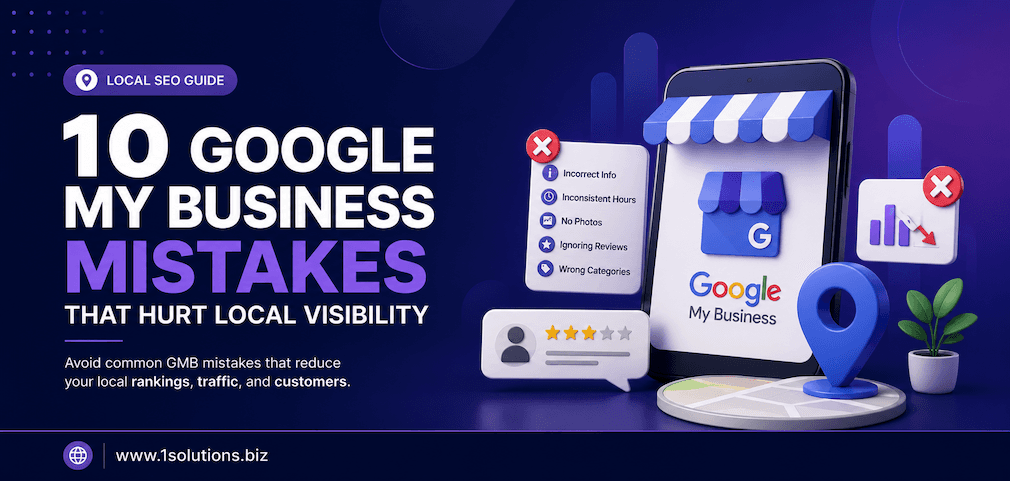
Post weekly updates using the GBP Posts feature. Announce offers, events, or new products. This signals to Google that your business is active. Avoid common mistakes like keyword stuffing your business name, which violates Google’s guidelines and can result in suspension. For a deeper look at profile errors to avoid, read this guide on Google My Business mistakes that hurt local visibility.
💡 Pro Tip: Choose your primary GBP category with extreme care. It carries more ranking weight than any other single field. Research what category your top local competitors are using before making your selection.
2. Build NAP Consistency Across All Online Directories
NAP stands for Name, Address, and Phone number. Google cross-references your business information across dozens of online directories to verify that you are a legitimate, established local business. When your details conflict — a different phone number on Yelp, a shortened address on Facebook, an old suite number on Yellow Pages — Google loses confidence in your listing and ranks you lower.
Start by auditing your current citations using free tools like Moz Local or Whitespark. Create a master document with your exact NAP details, formatted precisely as you want them everywhere. Then systematically update or create listings on the most important directories for NYC businesses: Yelp, Foursquare, Apple Maps, Bing Places, the Better Business Bureau, and any industry-specific directories relevant to your niche.
For restaurants, that might include OpenTable or Zomato. For attorneys, that could be Avvo or FindLaw. For home service businesses, Angi and HomeAdvisor matter. Do not ignore neighborhood-specific directories or local chambers of commerce either. The Manhattan Chamber of Commerce, the Brooklyn Chamber, and borough-specific business associations all offer directory listings that carry genuine local authority.
The trade-off here is time. Manual citation building and cleanup is tedious. Paid tools like BrightLocal can automate much of it, but they cost money. Budget either time or dollars — you cannot skip this step entirely without hurting your rankings. Our affordable local SEO packages include citation building as part of a complete local strategy.
3. Target Neighborhood-Level Keywords, Not Just “New York City”
Ranking for “restaurant New York City” is nearly impossible for a small business with a limited budget. But ranking for “family restaurant in Jackson Heights” or “vegan brunch spot Williamsburg Brooklyn” is very achievable. Neighborhood targeting is how local businesses compete effectively against larger brands with bigger marketing budgets.
Use tools like Google Keyword Planner, Ubersuggest, or Semrush to research what people in specific NYC neighborhoods are actually searching for. Look at search volume, competition level, and the commercial intent behind each phrase. “Best pizza near me Bensonhurst” has strong commercial intent. “History of pizza in New York” does not.
Once you identify your target neighborhood keywords, weave them into your website naturally. They belong in your homepage title tag, your meta description, your H1 heading, the first paragraph of your body content, and in your image alt text. Do not force them. If the content sounds awkward, rewrite it until it reads naturally. Keyword stuffing hurts your rankings and drives visitors away.
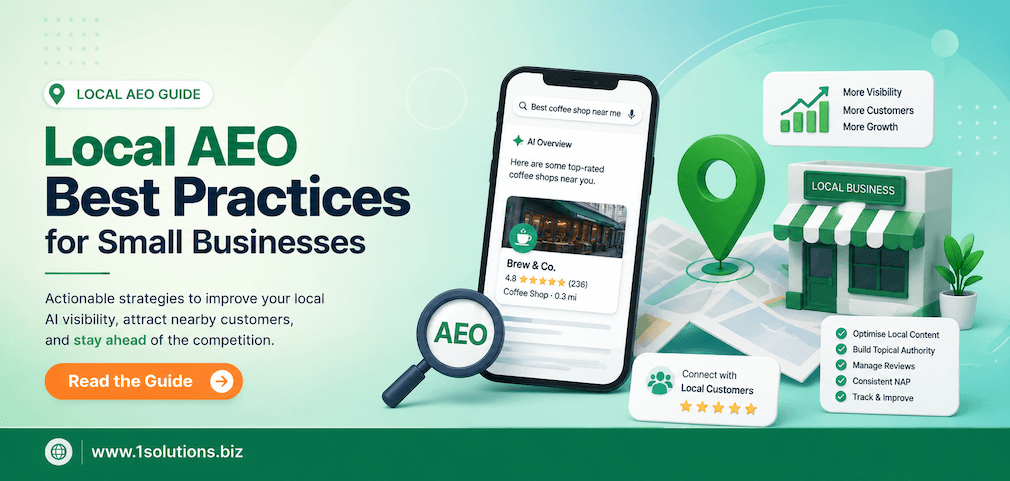
Create dedicated location pages if you serve multiple neighborhoods. A single-location business serving customers from multiple boroughs might create separate pages for each service area, each optimized for that neighborhood’s specific terms. Learn how to amplify this approach by reading about local AEO best practices for small businesses, which covers how answer-engine optimization complements your keyword strategy.
4. Make Your Website Fast, Mobile-Friendly, and Locally Optimized
According to BrightLocal (2023), 78% of local mobile searches result in an offline purchase within 24 hours. That means if your website loads slowly or looks broken on a smartphone, you are losing customers at the exact moment they are ready to spend money. Mobile performance is not a nice-to-have feature — it is a direct revenue driver.
Run your website through Google’s PageSpeed Insights and Core Web Vitals report. Focus on your Largest Contentful Paint (LCP), which should be under 2.5 seconds, and your Cumulative Layout Shift (CLS), which should be below 0.1. These are measurable numbers with specific targets, not vague advice.
On the local optimization side, every page on your site should include your full NAP in the footer, embedded exactly as it appears in your GBP. Add a Google Maps embed to your contact page. Use Schema markup, specifically LocalBusiness schema, to help search engines understand your business type, location, and hours in a structured format they can easily read and display.
If your site is running on WordPress, you have significant advantages in terms of plugin support for schema, speed optimization, and local SEO. If your site is outdated or poorly structured, working with a professional WordPress website development team can give you a technically sound foundation that supports all your local SEO efforts long-term.
💡 Pro Tip: Add your city and neighborhood name to your homepage title tag in this format: [Business Name] | [Service] in [Neighborhood], NYC. This simple change alone can lift your local rankings for core keywords within a few weeks.
5. Build a Review Generation System That Actually Works
Reviews are one of the top three ranking factors for the Google local pack, alongside proximity and relevance. According to BrightLocal’s Local Consumer Review Survey (2023), 98% of consumers read online reviews for local businesses, and 87% of consumers used Google to evaluate local businesses in the past year. Reviews are not just for optics — they directly influence where you rank.
The most effective review systems are simple and built into your regular customer interactions. Train your staff to ask for reviews at the point of maximum customer satisfaction — right after a great meal, a successful repair, or a completed service appointment. Make it easy by texting or emailing a direct link to your Google review form.
Respond to every review, positive and negative. When you respond to a negative review professionally and constructively, you demonstrate to potential customers that you handle problems with integrity. Google also takes review responses as a signal that your business is active and engaged. Never offer incentives for reviews — this violates Google’s policies and can result in listing suspension.
Spread your review-building efforts across multiple platforms. Yelp matters enormously in NYC. TripAdvisor is critical for restaurants and hospitality. Industry-specific platforms like Houzz for contractors or Healthgrades for medical practices add credibility with targeted audiences. A multi-platform review strategy protects you if one platform has an algorithm shift. If you ever face reputation challenges, professional reputation management services can help you recover and build a stronger review profile systematically.
6. Create Locally Relevant Content That Serves Your Community
Content is how you demonstrate local expertise and attract links naturally. A plumber who publishes a blog post about “How to prepare your Brooklyn apartment pipes for winter” is providing genuine value to a specific audience while signaling to Google that the business has deep local knowledge. Generic content about plumbing in general does very little for local rankings.
Develop a content calendar that addresses the real questions your NYC customers ask. Answer questions about local regulations, seasonal concerns specific to your borough, neighborhood events you participate in, or comparisons of local options. Each piece of content should target a specific keyword, address a specific audience, and offer something genuinely useful that a competitor has not already covered better.
Local content also includes creating neighborhood guides, participating in community stories, covering local events, or producing case studies featuring local customers (with their permission). This type of content earns natural backlinks from local news sites, community blogs, and neighborhood Facebook groups — links that carry genuine local SEO value.
For content that performs well in search, technical quality matters as much as the ideas. Learn how to strengthen your existing pages by reading about how to boost your SEO efforts with page content analysis. Our team also offers professional SEO services built specifically for small businesses that include content strategy, keyword research, and on-page optimization.
7. Build Local Backlinks From NYC-Specific Sources
A backlink from a local Brooklyn news site or the Queens Chamber of Commerce website carries significantly more local SEO value than a generic link from an unrelated directory. Local link building is about establishing your business as a recognized part of the community, and search engines treat community recognition as a trust signal.
Start with the easiest opportunities: your local chamber of commerce, the Better Business Bureau, neighborhood business associations, and any local media coverage you can earn or pitch. Sponsor a local event, donate to a neighborhood school, or partner with a complementary local business for a co-branded promotion. Each of these activities can generate a legitimate mention and link from a locally relevant source.
Reach out to local bloggers and journalists who cover your industry or neighborhood. Offer to be a source for a story, provide expert commentary, or pitch a genuinely newsworthy angle about your business. NYC has a large community of hyperlocal news outlets, neighborhood blogs, and community newsletters — all potential link sources that most of your competitors are ignoring.
Avoid buying links or participating in link schemes. Google’s algorithms and manual reviewers are sophisticated enough to identify unnatural link patterns, especially in competitive markets like NYC. For safe, sustainable link building approaches, the guide on how to build links safely without triggering penalties is an essential read.
8. Leverage Social Signals and Local Community Engagement
Social media does not directly influence Google rankings in a technically confirmed way, but it influences local SEO indirectly through several measurable channels. Social profiles appear in branded searches, drive traffic to your website, increase brand awareness in your local community, and create opportunities for content sharing that earns natural links and citations.
For NYC small businesses, the most relevant platforms depend on your audience. Restaurants thrive on Instagram and TikTok. Service businesses get strong leads from Facebook community groups and Nextdoor. Retail shops can find value in Pinterest and Instagram Shopping. Choose two or three platforms and do them well rather than spreading yourself thin across every network.
Engage in neighborhood-specific Facebook groups, Nextdoor communities, and Reddit subreddits like r/AskNYC or borough-specific communities. Provide helpful answers, participate in genuine conversations, and occasionally share relevant content from your business without being spammy. This builds brand recognition among people who are physically near you — which is exactly the audience you want.
Consistency in your social media presence also reinforces your NAP information and keeps your business visible between search sessions. If managing social content feels overwhelming alongside running your business, professional Facebook management services can keep your presence active and engaging without pulling your attention away from daily operations.
💡 Pro Tip: Join and actively participate in the Nextdoor app for your specific NYC neighborhood. Business owners who engage authentically in neighborhood conversations consistently report increased foot traffic and word-of-mouth referrals within 30 to 60 days of active participation.
9. Understand How AI Search Is Changing Local Discovery
The search landscape is shifting rapidly. Google’s AI Overviews and conversational search features are changing how users discover local businesses — particularly for informational queries that lead to local intent. According to Semrush (2024), AI-generated summaries now appear in over 14% of all Google searches, and local business information is increasingly being pulled into these responses.
What this means practically is that your business needs to be visible not just in traditional organic results and the local pack, but also in the structured data, authoritative content, and trusted sources that AI systems pull from. Ensuring your GBP is complete, your reviews are positive and plentiful, and your website content is structured clearly all contribute to visibility in AI-driven search results.
Schema markup becomes especially important in this context. FAQ schema, LocalBusiness schema, and Review schema all give AI systems clean, structured information to work with when generating summaries that include local business recommendations. If you want to understand the evolving AI search landscape and what it means for your visibility strategy, the comparison of Google AI Mode vs AI Overviews provides important context. Additionally, the guide on how to improve website visibility in AI search engines gives actionable steps to stay ahead of these changes.
The trade-off is real: adapting to AI-driven search requires additional structured content work that goes beyond traditional SEO. But businesses that invest in this adaptation now will have a significant advantage as AI search continues to grow in the coming years.
10. Track the Right Metrics and Iterate Based on Real Data
Local SEO without measurement is guesswork. The businesses that consistently outperform their competition are the ones that track specific metrics, identify what is working, double down on those tactics, and eliminate what is not producing results. Setting up proper tracking takes a few hours but pays dividends every month after.
The core metrics every NYC small business should track include: GBP insights (searches, views, direction requests, calls, and website clicks), organic traffic from local search queries in Google Search Console, keyword rankings for your target neighborhood terms, review volume and average rating across platforms, and website conversion rates for contact form submissions or phone calls.
Use Google Analytics 4 and Google Search Console as your free baseline tools. GBP Insights gives you the local-specific data these tools miss. For more detailed rank tracking, tools like BrightLocal or Local Falcon show you exactly where your business ranks on the Google Maps grid at different points across your city — giving you a street-level view of your local visibility.
Review your data monthly and look for patterns. If GBP views are high but direction requests are low, your profile may need more compelling photos or a stronger offer. If rankings have dropped, audit for NAP inconsistencies or check for algorithm updates. For tracking issues related to why your content may not be performing as expected, the guide on why Google is not indexing your pages covers common technical causes. Consistent measurement turns local SEO from a hope into a manageable, improvable system.
Local SEO Strategy Comparison: DIY vs. Professional Support
| Factor | DIY Local SEO | Professional Local SEO |
|---|---|---|
| Monthly Cost | Low (tools only) | Medium to High (service fees) |
| Time Required | 8-15 hours per month | 1-2 hours (oversight only) |
| Technical Expertise Needed | Moderate to High | None required from owner |
| Speed of Results | Slower (learning curve) | Faster (proven systems) |
| Citation Building | Manual and time-consuming | Automated and thorough |
| Content Creation | Owner-dependent | Handled by specialists |
| Best For | Bootstrapped startups | Established businesses scaling |
Practical Action Plan: Where to Focus Your Energy
- Do This Now: Claim and fully complete your Google Business Profile if you have not already. This single action has the highest immediate impact on local pack visibility and costs nothing except your time. Also audit your NAP across the top five directories (Yelp, Apple Maps, Bing Places, Facebook, BBB) and fix any inconsistencies you find.
- Worth Doing: Build a simple review request system using a direct GBP link texted or emailed to customers after each transaction. Set up Google Search Console and connect your website so you can start tracking which local queries are driving impressions and clicks. Begin creating one piece of neighborhood-specific content per month.
- Low Priority: Explore advanced schema markup beyond LocalBusiness schema (such as FAQ or Event schema), expand your social media presence to secondary platforms, or pursue sponsorship-based local link building. These deliver real value but should come after the foundational work is solid.
Conclusion
This Local SEO Guide covers the ten most impactful strategies for small businesses competing in New York City’s dense and demanding market. None of these steps are optional if you are serious about local visibility. The businesses that show up consistently in local search results are not there by accident — they have invested time and effort in building each layer of their local SEO foundation systematically.
Start with your Google Business Profile. Fix your citations. Build reviews. Create locally relevant content. Earn local backlinks. Track your results and adjust. Each step reinforces the others, and the compounding effect over six to twelve months is significant. NYC is competitive, but it is also a market where consistent, well-executed local SEO can genuinely level the playing field for a small business willing to do the work. If you want expert support at any stage of this process, explore our comprehensive SEO services or get started with a risk-free free 45-day SEO trial to see what professional local SEO can do for your business.
Frequently Asked Questions
How long does local SEO take to show results for an NYC small business?
Most businesses see measurable improvements in local rankings within 60 to 90 days when implementing a consistent strategy. More competitive niches in Manhattan can take 4 to 6 months. Outer borough businesses in less saturated niches often see faster movement. The key is consistency — local SEO rewards sustained effort over time rather than short bursts of activity.
Do I need a physical address in NYC to rank in local search results?
Yes, for traditional Google Maps and local pack rankings, you need a verified physical address within the geographic area you want to rank in. Service-area businesses that work at client locations (like plumbers or cleaners) can hide their address on GBP while still setting service areas. However, businesses without a verifiable local address cannot appear in the local pack for that location.
Is Yelp still important for NYC local SEO?
Yes, particularly for restaurants, bars, beauty services, and home services. NYC consumers use Yelp at a higher rate than many other markets, partly due to the platform’s strong historical presence in urban areas. A well-maintained Yelp profile with positive reviews contributes to both direct consumer trust and citation strength that supports your overall local SEO.
Can I do local SEO myself or do I need to hire an agency?
Both are genuinely viable depending on your situation. Business owners with time, a willingness to learn, and a relatively low-competition niche can manage core local SEO tasks effectively with free and low-cost tools. Businesses in highly competitive categories, those with multiple locations, or those that need fast results typically get better returns from professional support. The comparison table in this guide outlines the trade-offs clearly.
How do AI search tools affect local SEO for small businesses?
AI-powered search features are increasingly pulling local business information into generated summaries and conversational responses. Structured data, complete GBP profiles, authoritative reviews, and clearly organized website content all improve the likelihood that your business is included in AI-driven local recommendations. Staying current with these changes is important. The resource on local AEO best practices for small businesses provides a practical framework for adapting your strategy as AI search continues to evolve.