
Local SEO Tips for Restaurants in San Francisco: 10 Strategies That Actually Work
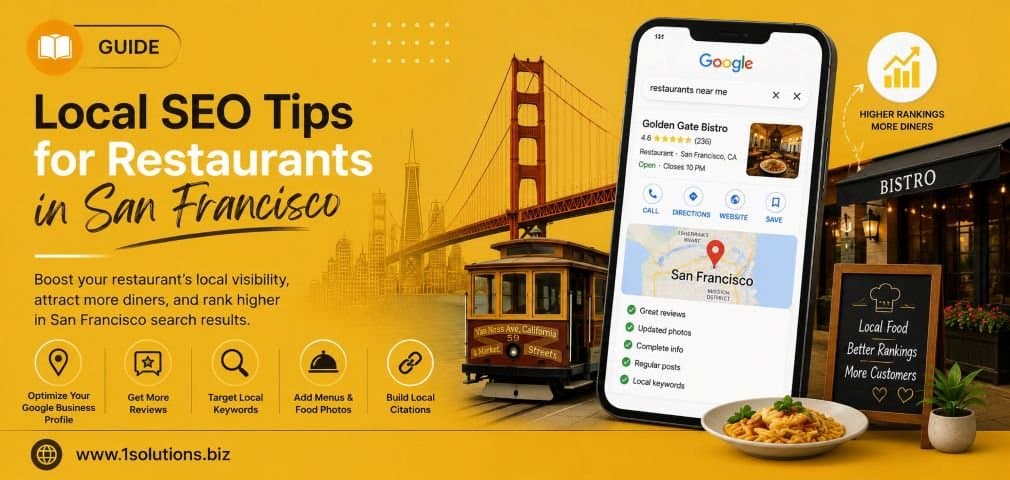
San Francisco is one of the most competitive restaurant markets in the United States. With thousands of dining options packed into a compact city, getting found online is no longer optional. It is survival. If you are a restaurant owner trying to attract more foot traffic, these local SEO tips for restaurants in San Francisco will give you a concrete, prioritized roadmap to follow. Whether you run a Mission District taqueria, a Fisherman’s Wharf seafood spot, or a Hayes Valley brunch cafe, the strategies below apply directly to your situation.
San Francisco restaurants face intense local search competition, and winning requires more than just having a website. Optimizing your Google Business Profile, building local citations, managing reviews, and creating neighborhood-specific content are the highest-impact moves. This guide covers exactly 10 actionable strategies with honest trade-offs at every step.
⚡ Key Takeaways
- Google Business Profile optimization is the single highest-ROI local SEO action for any restaurant.
- 46% of all Google searches have local intent, making local SEO critical for brick-and-mortar businesses.
- Consistent NAP (Name, Address, Phone) data across all directories directly impacts your local pack rankings.
- Responding to every review, positive or negative, improves both trust signals and search visibility.
- Neighborhood-level keyword targeting outperforms generic city-wide terms for small restaurant budgets.
- Schema markup for restaurants can increase click-through rates by surfacing menus, hours, and ratings in search results.
- Mobile page speed is a ranking factor, and over 60% of restaurant searches happen on mobile devices.
1. Claim and Fully Optimize Your Google Business Profile
Your Google Business Profile (GBP) is the foundation of every other local SEO effort. Before spending time or money anywhere else, make sure your profile is 100% complete. That means filling in your business name exactly as it appears on your signage, adding your full address, phone number, website URL, hours of operation (including holiday hours), and a detailed description that naturally includes your cuisine type and neighborhood.
According to Google (2023), businesses with complete profiles are 70% more likely to attract location visits than those with incomplete listings. That single statistic should motivate you to spend serious time here. Upload at least 10 high-quality photos covering your interior, exterior, signature dishes, and team. Add your menu directly through the GBP menu editor or link to a third-party menu provider.
Use the Posts feature weekly to share specials, events, or seasonal menu items. These posts appear directly in your knowledge panel and give searchers a reason to choose you over a competitor. One honest trade-off: maintaining an active GBP takes consistent weekly effort. If you let it go stale, Google may deprioritize your listing. Also avoid keyword-stuffing your business name, as this violates Google’s guidelines and can lead to listing suspension. For a deeper look at common mistakes that tank visibility, read this guide on Google My Business mistakes that hurt local visibility.
2. Build Consistent Local Citations Across Key Directories
A local citation is any online mention of your restaurant’s name, address, and phone number (NAP). Consistent NAP data across directories like Yelp, TripAdvisor, OpenTable, Zomato, and the San Francisco Chronicle’s dining section sends strong trust signals to Google. Inconsistencies, even minor ones like “St.” versus “Street,” can dilute your local authority and suppress your rankings.
BrightLocal’s Local Consumer Review Survey (2023) found that 87% of consumers used Google to evaluate local businesses, but citation consistency across platforms was identified as a top-three ranking factor for the local pack. For San Francisco restaurants specifically, being listed on SF-specific directories, neighborhood blogs, and local food guides adds hyper-local relevance that generic citation tools miss.
Start by auditing your existing citations using a tool like Moz Local or Whitespark. Fix duplicates and inconsistencies before adding new listings. Then build citations on high-authority platforms first, followed by niche restaurant directories and local neighborhood association websites. The trade-off here is time. A thorough citation audit for a restaurant with years of online presence can take several hours. However, the long-term benefit to your local pack rankings makes this non-negotiable. If you want structured support with this process, local SEO packages from an experienced agency can handle citation building and monitoring systematically.
3. Generate and Respond to Online Reviews Strategically
Reviews are one of the most direct ranking signals in Google’s local algorithm. A steady stream of recent, authentic, high-rating reviews tells Google that your restaurant is active, trustworthy, and relevant. But the strategy goes beyond just collecting stars. How you respond to reviews matters enormously for both SEO and customer perception.
According to Harvard Business School research (2016, updated 2022), a one-star increase on Yelp led to a 5-9% increase in revenue for independent restaurants. More recent data from BrightLocal (2023) shows that 88% of consumers are more likely to visit a business that responds to all reviews. That means negative reviews handled well can actually convert fence-sitters into customers.
When responding to positive reviews, thank the customer and naturally mention your restaurant name and a relevant keyword. For example: “Thank you for dining with us at [Restaurant Name] in the Castro. We are glad you loved the wood-fired pizza.” For negative reviews, acknowledge the issue, apologize sincerely, and offer to resolve it offline. Never be defensive in public responses. One trade-off: actively soliciting reviews must be done carefully. Google prohibits incentivizing reviews, so avoid offering discounts in exchange for feedback. Instead, train your staff to verbally encourage happy guests to share their experience online after a great meal.
💡 Pro Tip: Set up a Google review shortlink using your GBP dashboard and print it on your receipt or table card with a simple message like “Loved your meal? Tell us about it.” This frictionless approach can double your review volume within 60 days.
4. Optimize Your Website for Neighborhood-Level Keywords
Targeting “restaurant San Francisco” is nearly impossible for most independently owned restaurants. The competition includes major review platforms, booking engines, and large restaurant groups with dedicated SEO teams. A smarter approach is to optimize for neighborhood-level searches like “best brunch in the Mission District” or “North Beach Italian restaurant open late.”
Create dedicated landing pages or blog posts for specific neighborhoods you serve or are located in. Include the neighborhood name in your page title, H1, meta description, and naturally throughout the body content. Add local landmarks and cross streets to your location pages to reinforce geographic relevance. Internal linking between these pages also distributes link equity effectively. For more detail on how internal linking strengthens your overall SEO, check out this resource on using internal links to boost backlink impact.
The trade-off with neighborhood targeting is that your keyword volumes are lower. However, the conversion intent is much higher. Someone searching “dim sum Sunset District” is much closer to making a dining decision than someone searching “Chinese food.” Lower volume, higher intent is the right trade for a local restaurant with a limited SEO budget. Pair this with page content analysis techniques to ensure your neighborhood pages are fully optimized before publishing.
5. Implement Restaurant Schema Markup on Your Website
Schema markup is structured data that helps search engines understand what your web pages are about. For restaurants, the Restaurant schema type lets you communicate specific details like cuisine type, hours, price range, menu URL, accepted payment methods, and aggregate review ratings directly to Google. When implemented correctly, this information can appear as rich results in search, increasing your click-through rate significantly.
Use Google’s Rich Results Test tool to verify your schema implementation after adding it. At minimum, every restaurant website should have LocalBusiness schema with Restaurant as the more specific type, along with Menu schema if you host your menu on your site. If you take online reservations, use the hasMap property and link to your booking platform.
The honest trade-off is that schema does not directly boost your rankings in a dramatic, overnight way. It improves how your listing appears in results, which improves click-through rates, which indirectly signals relevance to Google. It also future-proofs your site as AI-powered search features evolve. Understanding how Google’s AI features are changing search behavior is worth exploring through this comparison of Google AI Mode vs AI Overviews. Implementation requires either JSON-LD code knowledge or a plugin if you use a CMS like WordPress.
6. Prioritize Mobile Speed and Core Web Vitals
Over 60% of restaurant searches happen on mobile devices, often by people who are already out and deciding where to eat in the next hour. If your website loads slowly or delivers a poor mobile experience, you are losing those customers before they ever see your menu. Google’s Core Web Vitals are a direct ranking factor, and restaurants with slow, poorly structured mobile sites face a measurable ranking penalty.
According to Google (2023), 53% of mobile users abandon a site that takes longer than three seconds to load. For a restaurant, that abandonment directly translates to an empty table. Run your site through Google PageSpeed Insights and address the highest-impact issues first: image compression, server response time, and render-blocking scripts.
If your restaurant website is built on WordPress, ensure your theme is lightweight and your images are compressed. A well-optimized WordPress site can achieve strong Core Web Vitals scores without expensive infrastructure. If your current site is outdated, working with a professional team that specializes in restaurant-focused web builds is worth the investment. The trade-off is upfront cost versus ongoing lost revenue from poor mobile performance. The math almost always favors rebuilding. For restaurants considering their platform options, understanding the broader landscape of web development decisions can be helpful.
💡 Pro Tip: Use Google Search Console’s Core Web Vitals report filtered to your mobile URLs to identify which pages are failing. Menu and contact pages are the most critical for restaurants since they carry the highest conversion intent.
7. Build Local Backlinks from San Francisco Food Media and Blogs
Backlinks from authoritative, locally relevant websites remain one of the strongest ranking signals in Google’s algorithm. For San Francisco restaurants, this means earning links from local food blogs, neighborhood news sites, SF Weekly, Eater SF, the San Francisco Chronicle food section, and local business association websites. A single link from a high-authority local food publication can move the needle more than dozens of generic directory links.
Earning these links requires a proactive outreach strategy. Pitch story angles to local food bloggers: a behind-the-scenes look at your kitchen, the story of your sourcing partnerships with local farms, or a seasonal menu preview. Sponsor a neighborhood event and request a link from the event website. Participate in local charity initiatives and earn coverage from community news outlets.
The trade-off is that link building takes time, relationships, and sometimes budget. It is not a one-time task but an ongoing effort. Shortcuts like buying links or participating in link schemes carry serious risks, including Google penalties. For a thorough understanding of safe, effective link acquisition, read this guide on building links safely without triggering penalties. Also, guest posting on local food and lifestyle publications with a link back to your website is a legitimate and effective tactic when done with genuine editorial value.
8. Leverage Local AEO to Appear in Voice and AI Search Results
Answer Engine Optimization (AEO) is the practice of structuring your content to directly answer specific questions that people ask verbally or through AI-powered search tools. As voice search and AI assistants become the default way people find local restaurants, optimizing for question-based queries is increasingly important. Queries like “What is the best Vietnamese restaurant near Union Square?” or “Which San Francisco restaurants are open past midnight?” are now common search patterns.
To optimize for these queries, create an FAQ section on your website that directly answers common questions about your restaurant: hours, parking, dietary accommodations, reservation policies, and neighborhood location. Use natural, conversational language in your answers rather than keyword-stuffed copy. This mirrors how people speak when using voice search.
For a structured approach to this emerging discipline, the guide on local AEO best practices for small businesses is directly applicable to restaurant owners. The trade-off is that AEO results are not always attributed with a direct click to your website, particularly in AI Overview responses. However, appearing as the cited source in AI-generated answers builds brand authority and drives downstream searches for your restaurant by name. This is a medium-term investment with growing returns as AI search matures.
💡 Pro Tip: Add a dedicated FAQ page to your restaurant website covering at least 15 common questions. Use the speakable schema property to mark up content intended for voice search responses. This is one of the lowest-effort, highest-future-value actions you can take in 2024.
9. Use Social Media Signals to Reinforce Local Relevance
While social media signals are not direct Google ranking factors in the traditional sense, they create a powerful indirect SEO benefit. Active social profiles generate branded search queries, drive referral traffic, earn social citations, and increase the likelihood of being featured in local media. For restaurants, Instagram and Facebook are the two highest-value platforms because of their visual format and location-based discovery features.
Tag your location in every post, use San Francisco neighborhood hashtags, and engage with local food influencer content. When influencers visit and tag your restaurant, their followers search for you by name, creating a spike in branded search volume that Google interprets as a relevance signal. According to Sprout Social (2023), 45% of consumers research restaurants on social media before visiting, making your social presence a direct part of the customer acquisition funnel.
Facebook in particular offers robust local targeting options for paid promotion. If you want to amplify your organic social efforts with paid reach, a structured approach to Facebook advertising can deliver measurable results. The step-by-step breakdown in this guide on how to advertise on Facebook is directly applicable to restaurant promotions and event announcements. The trade-off is that social media management is time-intensive. If you cannot commit to consistent posting, it is better to be excellent on one platform than mediocre across three.
10. Monitor Performance and Iterate Based on Real Data
All ten strategies above are only valuable if you track whether they are working. Without monitoring, you are spending time and money based on assumptions. Setting up a simple but consistent measurement framework allows you to double down on what is driving results and stop doing what is not.
At minimum, connect your website to Google Search Console and Google Analytics 4. In Search Console, track impressions and clicks for your primary local keywords and monitor for indexing issues. In GA4, track which pages are driving the most reservations, phone calls, or menu views. Also monitor your GBP Insights weekly for search query data, direction requests, and phone call volumes. These metrics directly correlate to foot traffic and reservation intent.
Set a monthly review cadence where you compare your key metrics period over period. If a blog post targeting a neighborhood keyword is gaining impressions but not clicks, the issue is likely your title tag or meta description. If your GBP views are strong but direction requests are low, your profile may need more compelling photos or a stronger call to action. For restaurants running lean operations, working with an agency that provides professional SEO services can handle this monitoring and iteration systematically, freeing you to focus on running your kitchen. A free trial is also an option if you want to test the impact before committing to a full engagement.
Local SEO Performance Comparison: High-Impact vs Low-Impact Tactics
| Strategy | Time to Results | Effort Level | Cost | Impact Level |
|---|---|---|---|---|
| Google Business Profile Optimization | 2-4 weeks | Medium | Free | Very High |
| Citation Building | 4-8 weeks | High (one-time) | Low | High |
| Review Generation | Ongoing | Low | Free | Very High |
| Neighborhood Keyword Pages | 6-12 weeks | Medium | Low | High |
| Schema Markup | 2-6 weeks | Medium | Free or Low | Medium-High |
| Mobile Speed Optimization | Immediate | High | Medium | High |
| Local Link Building | 3-6 months | Very High | Medium | Very High |
| AEO and FAQ Content | 4-8 weeks | Low | Free | Medium (growing) |
| Social Media Signals | Ongoing | Medium | Low | Medium |
| Performance Monitoring | Ongoing | Low | Free | Critical for all |
Practical Action Plan: Where to Start
- Do This Now: Claim and fully complete your Google Business Profile, fix all NAP inconsistencies across Yelp, TripAdvisor, and major directories, and set up Google Search Console. These three actions cost nothing and deliver results within weeks. Also begin requesting reviews from happy guests immediately using a simple shortlink or QR code.
- Worth Doing: Build neighborhood-level landing pages for the areas you serve, implement Restaurant schema markup, and start a consistent social media posting schedule on your highest-performing platform. Begin a local link outreach campaign targeting food bloggers and neighborhood publications. If your website is slow or mobile-unfriendly, prioritize a rebuild or technical audit. Consider exploring SEO services tailored for small businesses to scale these efforts efficiently.
- Low Priority: Advanced AEO optimization, voice search schema implementation, and paid social amplification are valuable but secondary to the fundamentals above. Tackle them once your GBP, citations, and on-site content are solid. They represent the ceiling of your local SEO performance once the floor is established.
Conclusion
Implementing these local SEO tips for restaurants in San Francisco does not require a massive budget or a full-time marketing team. It requires consistency, attention to detail, and a willingness to treat your digital presence with the same care you give to your physical dining room. Start with your Google Business Profile, lock down your citation consistency, and build a review generation habit. Layer in neighborhood content, schema markup, and local backlinks over the following months. Monitor your results monthly and adjust based on data. The restaurants that win in San Francisco’s search landscape are not always the ones with the largest marketing budgets. They are the ones that show up completely, consistently, and authentically in the places their customers are searching.
Frequently Asked Questions
How long does local SEO take to show results for a San Francisco restaurant?
Most restaurants begin seeing measurable improvements in Google Business Profile visibility within 4 to 8 weeks of a full optimization. Organic website ranking improvements for neighborhood keywords typically take 3 to 6 months of consistent effort. Review volume and citation consistency improvements can show results within 30 days.
Is Yelp still important for restaurant SEO in San Francisco?
Yes. Yelp maintains strong domain authority and ranks on the first page of Google for many restaurant-related searches in San Francisco. A complete, actively managed Yelp profile with regular photo updates and owner responses contributes to your overall local search presence and drives direct referral traffic.
Should a small restaurant hire an SEO agency or do it in-house?
Both approaches can work. In-house management is viable for restaurants with a dedicated owner or staff member willing to commit 5 to 8 hours per week to SEO tasks. An agency makes more sense when you lack technical skills for schema or site speed work, or when you want to accelerate results. A low-risk option is to start with a free 45-day SEO trial to evaluate results before committing.
What is the most common local SEO mistake San Francisco restaurants make?
The most common mistake is neglecting the Google Business Profile after the initial setup. Many restaurants claim their listing but never update photos, post updates, or respond to reviews. A stale GBP signals inactivity to Google and drives potential customers toward competitors with more active profiles.
How does reputation management factor into local SEO for restaurants?
Review quantity, recency, and owner response rate are all factors in Google’s local ranking algorithm. Managing your online reputation proactively, including monitoring mentions across platforms and responding promptly to all feedback, directly supports your local search rankings. Professional reputation management services can systematize this process for restaurants that receive high review volumes across multiple platforms.