
If you have been tracking how search behavior is shifting, you already know that people are no longer just typing keywords into Google. They are asking full questions and expecting direct answers. That shift is exactly why understanding what AEO mean in SEO has become one of the most important conversations in digital marketing right now. Answer Engine Optimization, or AEO, is the practice of structuring your content so that AI-powered search engines, voice assistants, and answer engines can pull your information directly as a response rather than just listing your page as a link.
AEO stands for Answer Engine Optimization. It is the process of optimizing your content to appear as a direct answer in AI search tools, voice assistants, and featured snippets. Unlike traditional SEO, which targets ranked link positions, AEO targets the actual answer box or spoken response. Brands that implement AEO correctly gain visibility even when users never click through to a website.
⚡ Key Takeaways
- AEO focuses on earning the direct answer position, not just a ranked blue link in search results.
- Structured data markup, concise paragraph answers, and FAQ schema are the three fastest implementation levers.
- Voice search is a major AEO driver: over 50% of adults use voice search daily (MindMeld, 2023).
- AEO and traditional SEO are not opposites. They work together, and strong authority still underpins both.
- Featured snippets, AI Overviews, and voice assistants all pull from AEO-optimized content.
- Small businesses and local brands stand to gain disproportionately from AEO because proximity and specificity matter to answer engines.
- Content structure, specifically using headers, lists, and short direct paragraphs, is the most controllable AEO factor you have.
What Does AEO Mean in SEO? The Core Definition
AEO stands for Answer Engine Optimization. It is a strategic extension of traditional SEO that optimizes content to be surfaced by answer engines rather than simply ranked by search engines. Answer engines include Google’s AI Overviews, Bing Copilot, ChatGPT search, Perplexity, Siri, Alexa, and similar tools that synthesize information and deliver it as a direct response.
Traditional SEO asks: how do I rank on page one? AEO asks: how do I become the answer itself? The distinction matters because AI-powered tools often deliver one response, not ten links. If your content is not structured to be that response, you simply do not appear at all, regardless of your domain authority or backlink count.
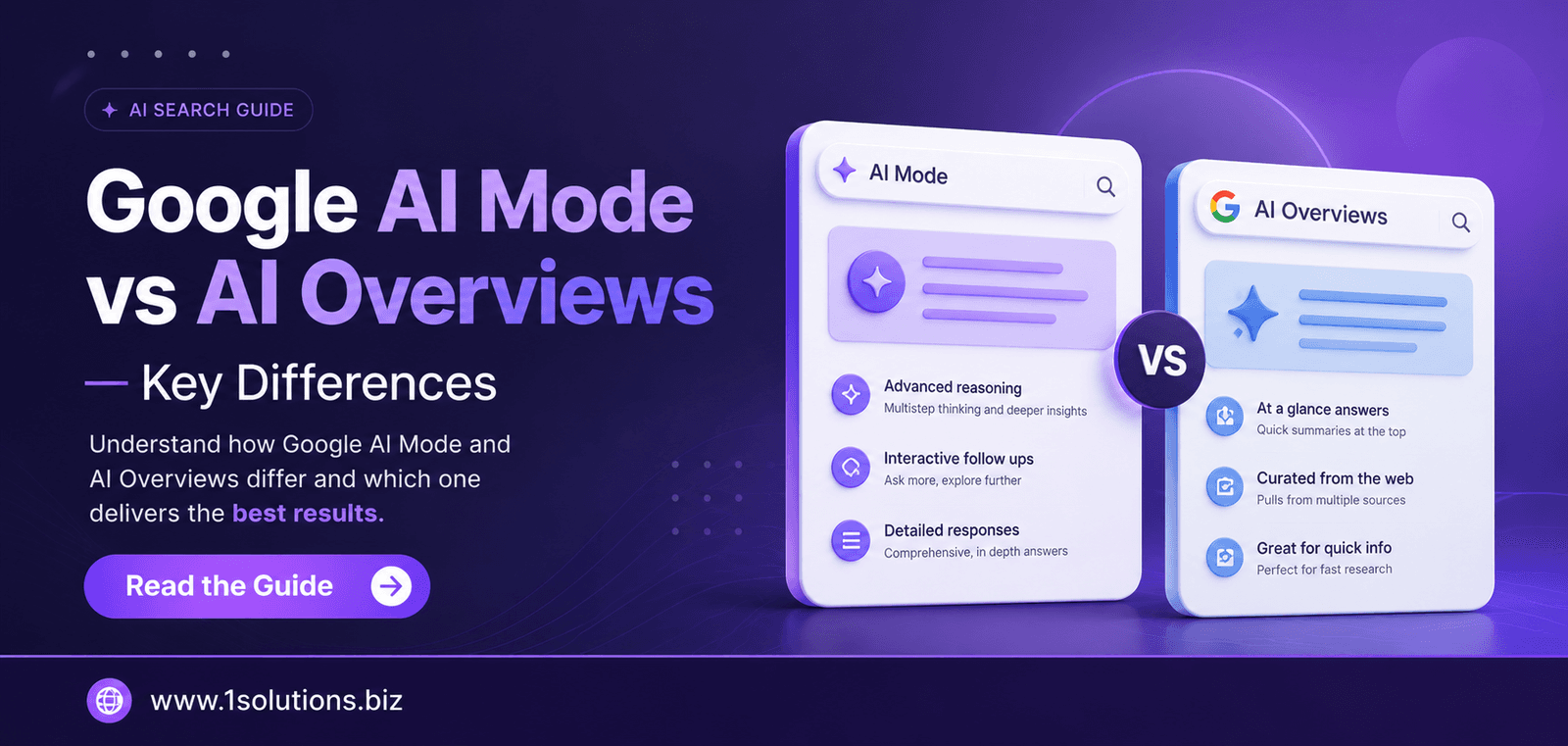
For a deeper look at how AI-driven search layers are evolving, the breakdown of Google AI Mode vs AI Overviews: Key Differences is worth reading before you dive into implementation.
Why AEO Has Become Impossible to Ignore
Search behavior data makes the case clearly. According to BrightEdge (2023), 68% of all online experiences begin with a search engine. But the nature of those searches is changing fast. ComScore (2022) projected that voice searches would account for more than 50% of all searches, and MindMeld (2023) confirmed that over half of adults use voice search every day. When someone asks Alexa or Siri a question, there is no list of links. There is one answer. AEO determines whose content gets read aloud.
Google’s own AI Overviews have also changed the first page dramatically. Users now frequently get a synthesized answer at the very top of results, often without scrolling. Brands that are not optimized for this format lose visibility they never knew they had.
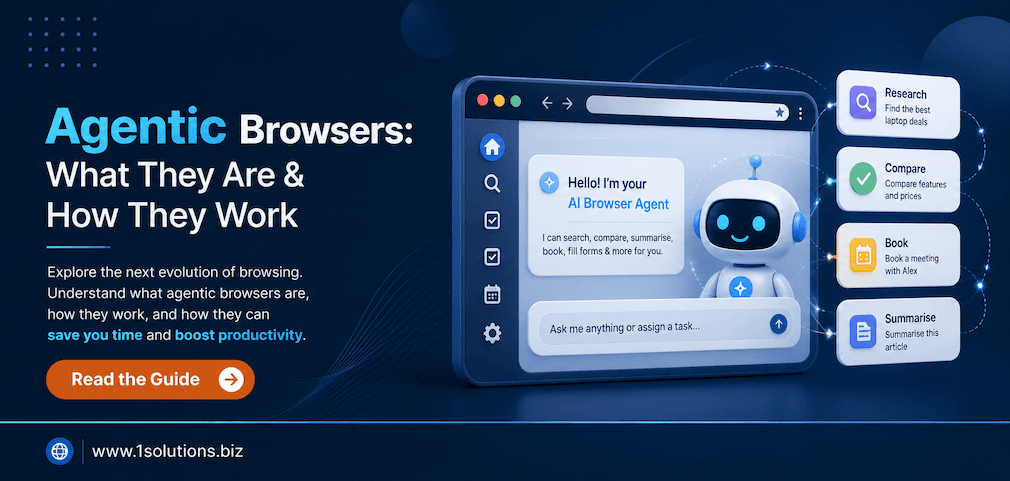
Understanding how tools like agentic browsers interact with this landscape is also increasingly relevant. Our guide on Agentic Browsers: What They Are and How They Work explains how autonomous browsing agents retrieve and process content, which reinforces why answer-ready formatting matters so much right now.
💡 Pro Tip: Do not think of AEO as replacing SEO. Think of it as a layer on top of it. Your domain authority, backlinks, and technical health still matter. AEO just determines whether your already-strong content gets picked as the answer.
AEO vs SEO: Understanding the Real Difference
It helps to see the contrast clearly before diving into implementation steps.
| Factor | Traditional SEO | AEO (Answer Engine Optimization) |
|---|---|---|
| Primary goal | Rank in top 10 blue links | Become the direct answer surfaced |
| Content format | Long-form, keyword-rich pages | Concise, question-and-answer structure |
| Schema markup | Optional but helpful | Critical, especially FAQ and HowTo schema |
| Voice search impact | Indirect benefit | Direct, primary use case |
| Metrics tracked | Rankings, organic traffic, CTR | Featured snippet wins, AI citations, zero-click visibility |
| Audience intent | Informational, navigational, transactional | Primarily question-based and conversational |
| Click-through dependency | High | Low (zero-click is a common outcome) |
The honest trade-off here is real. AEO can increase your brand visibility and authority while simultaneously reducing your organic click-through rate. When your answer appears in an AI Overview or featured snippet, users get what they need without visiting your site. That is a win for brand recognition but a potential loss for direct traffic. You need to account for this when setting expectations.
Step 1: Identify Question-Based Search Intent
AEO optimization starts with knowing what questions your audience is actually asking. This is not the same as finding high-volume keywords. You are specifically looking for queries that take a question format, because those are what answer engines are built to resolve.
How to find these questions:
- Use Google’s “People Also Ask” boxes as a free research tool. The questions listed there are exactly the kind of queries that already trigger answer-style results.
- Use tools like AnswerThePublic, AlsoAsked, or Semrush’s keyword magic tool filtered by question format.
- Review your site’s search console data for queries that include who, what, why, how, when, or which.
- Look at your customer support inbox. Real questions from real customers are gold for AEO.
Every piece of content you want to AEO-optimize should have a clearly identifiable primary question it answers. If your content cannot be reduced to a specific question and a concise answer, it is not yet ready for AEO.
Step 2: Structure Content for Direct Answers
Once you have your target questions, your content structure needs to make the answer immediately accessible. Answer engines do not scroll. They parse and pull. Your formatting needs to support that behavior.
Key structural rules for AEO content:
- State the direct answer within the first 40 to 60 words after an H2 that mirrors the question phrasing.
- Use short paragraphs of two to three sentences for definitional answers. Engines pull paragraph snippets regularly.
- Use numbered lists for process-based questions. “How do I” queries are often answered with step formats.
- Use bullet lists for comparison or feature-based questions.
- Avoid burying the answer in background context. Context can follow the direct answer, not precede it.
This content approach also aligns with the kind of page analysis described in How to Boost Your SEO Efforts With Page Content Analysis, where content clarity and relevance scoring directly influence how well a page performs across both traditional and AI search channels.
💡 Pro Tip: Write your answer first, then write your supporting content around it. Most content writers do the opposite, leading to answers that are buried rather than surfaced. Flip the structure deliberately.
Step 3: Implement Schema Markup Correctly
Structured data is the technical backbone of AEO. Schema markup tells search engines and AI tools exactly what type of content they are reading and how to categorize and present it. Without schema, you are relying on engines to guess. With schema, you are giving them instructions.
The most impactful schema types for AEO:
- FAQPage schema: Marks up question and answer pairs directly. This is one of the highest-impact additions for AEO because it maps directly to how answer engines think.
- HowTo schema: Structures step-by-step processes so engines can extract individual steps cleanly.
- Article and NewsArticle schema: Helps engines understand authorship, publication date, and content hierarchy.
- Speakable schema: Specifically designed for voice assistants. It flags which sections of a page are best suited to be read aloud.
- LocalBusiness schema: Critical for businesses that want AEO for local queries and voice searches with near-me intent.
Implementation can be done through JSON-LD code added to your page’s head section, through Google Tag Manager, or through plugins if you are on WordPress. The key is validation. Always run your markup through Google’s Rich Results Test before publishing.
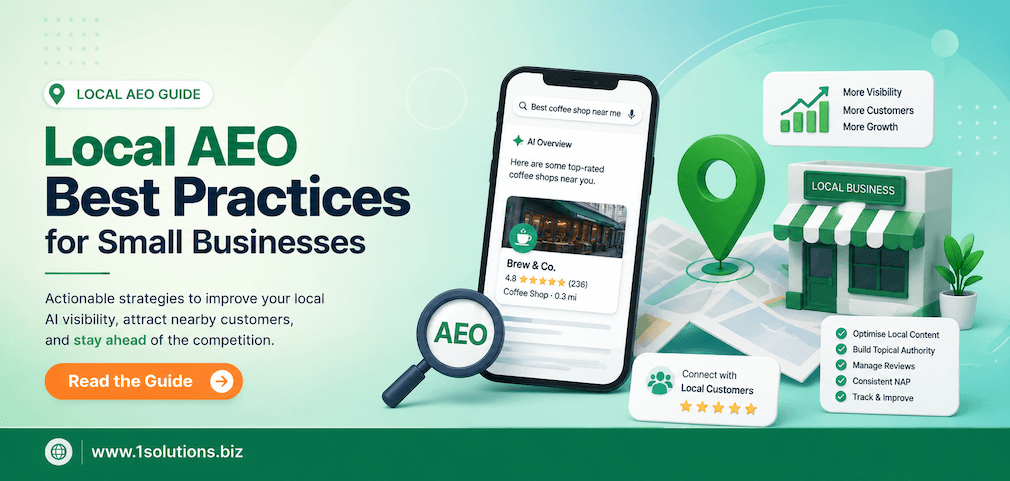
For businesses working to improve their local answer visibility specifically, the Local AEO Best Practices for Small Businesses guide covers schema implementation alongside other local-specific tactics that matter for voice and AI search.
Step 4: Build Topical Authority Through Content Depth
Answer engines do not just look at individual pages. They evaluate the authority of a site on a given topic. If your site covers one aspect of a subject in isolation, it is less likely to be cited than a site that covers that topic comprehensively across multiple pages.
How to build topical authority for AEO:
- Create a content cluster around your primary topic. One pillar page supported by five to ten supporting articles signals depth and expertise.
- Cross-link your content internally. Internal linking tells engines which pages are related and reinforces your topical focus. A practical explanation of this is covered in How to Use Internal Links to Boost Backlink Impact.
- Update content regularly. AI tools and featured snippet algorithms favor freshness, particularly for topics where information changes over time.
- Include expert authorship signals. Author bios, credentials, and consistent publishing history all feed into E-E-A-T, which Google uses as a quality signal.
Topical authority is also directly connected to how large language models rank sources. If you want your content cited by AI tools, consistency and depth across a subject area is more powerful than any single perfectly optimized page. Our article on LLM Optimization (LLMO): How to Rank in AI Search digs into this in detail.
Step 5: Optimize for Voice Search Specifically
Voice queries are conversational and longer than typed queries. “Best pizza” becomes “What’s the best pizza place near me that’s open on Sunday?” When you optimize for voice, you are optimizing for the most natural phrasing a human would use to ask a question out loud.
Voice-specific AEO tactics:
- Use conversational language in your content. Write the way people actually speak, not the way you might phrase a formal report.
- Target long-tail question phrases explicitly. Create H2s that match conversational queries word for word where it reads naturally.
- Keep your direct answer under 30 words when targeting voice snippets. Voice assistants typically read short, punchy responses.
- Ensure your site loads fast. Voice search results heavily favor pages that load in under three seconds.
- Add Speakable schema to flag voice-ready content sections explicitly.
💡 Pro Tip: Read your answer sections aloud. If they sound robotic or overly formal, rewrite them. Voice assistants read your content verbatim, so awkward phrasing sounds awkward when spoken back to users.
Step 6: Earn Citations in AI-Generated Responses
One of the most valuable outcomes of AEO is having your content cited by tools like Perplexity, ChatGPT search, or Google’s AI Overviews. This is not fully within your control, but several factors improve your chances significantly.
What increases your AI citation likelihood:
- Being cited by other credible sources. Backlinks from authoritative sites still signal trustworthiness to AI training pipelines.
- Publishing original data, research, or unique perspectives. AI tools prefer citing sources that add something new rather than simply restating existing information.
- Maintaining a clean, crawlable site structure. If your pages are not being properly indexed, they cannot be cited. Check Why Isn’t Google Indexing My Page? 10 Real Reasons if you suspect indexing problems.
- Using clear attribution language. Phrases like “According to [source], in [year]” signal that your content is factually grounded and well-researched.
- Maintaining consistent brand presence across the web. AI tools cross-reference brand mentions across multiple sources.
If you are working with a professional team to implement these strategies systematically, partnering with an experienced provider of search engine optimization services can accelerate the process, particularly the technical schema implementation and content auditing that AEO requires.
Step 7: Track AEO Performance and Refine
AEO metrics differ from standard SEO metrics. You are not just watching keyword rankings. You are watching for featured snippet wins, AI Overview appearances, and zero-click visibility trends.
What to measure:
- Featured snippet capture rate: Track which of your target queries now show your content in a featured snippet position. Semrush and Ahrefs both have featured snippet tracking features.
- Impressions vs clicks ratio: If impressions are rising but clicks are flat or declining, you may be winning AEO visibility with zero-click results. That is not necessarily bad. It depends on your goals.
- Brand mention tracking: Use tools like Brand24 or Mention to track when your site is cited in AI-generated responses across platforms.
- Voice search performance: This is harder to track directly but can be inferred through branded query growth and local search performance.
- Organic traffic from question-based keywords: Use Google Search Console to filter by query type and watch for growth in who, what, how, and why queries.
Refining your AEO approach is an ongoing process. Algorithms change, AI tools update their sourcing logic, and competitor content improves. Treating AEO as a one-time implementation rather than a continuous optimization cycle is a common mistake that erodes gains over time.
For businesses that want comprehensive support across both AEO and traditional optimization, a structured approach through integrated digital marketing services ensures that AEO efforts align with your broader content, social, and technical strategy rather than operating in isolation.
Practical Action Plan: What to Do and When
Not everything can be done at once. Prioritize your AEO implementation using this tiered action plan.
- Do This Now: Audit your top five performing pages and add FAQ schema markup. These are your quickest wins because the pages already have traffic and credibility. Pair the schema with a short, direct paragraph answer near the top of the page.
- Do This Now: Identify your ten highest-volume question-based queries in Google Search Console and ensure each one has a dedicated H2 on your site with a concise answer directly beneath it.
- Worth Doing: Build or expand a content cluster around your primary topic. Create three to five supporting articles that cross-link to a central pillar page. This builds the topical authority that AI citation algorithms reward.
- Worth Doing: Add Speakable schema to pages that answer common voice search queries, particularly if you serve a local audience or operate in a product or service category where voice-driven searches are common.
- Worth Doing: Set up brand mention monitoring so you can track when your content is being cited in AI-generated responses. This gives you a baseline to measure AEO impact over time.
- Low Priority: Experiment with original data and research content specifically designed to be cited by AI tools. This is a longer-term play that pays off over months, not weeks. Worth planning but not urgent if your schema and structure work is incomplete.
- Low Priority: Explore how emerging protocols like WebMCP affect content discoverability by AI agents. Understanding how Google’s new WebMCP protocol impacts SEO can inform your roadmap for 2025 and beyond, but it is an advanced consideration rather than a foundational first step.
Frequently Asked Questions About AEO in SEO
What does AEO mean in SEO exactly?
AEO stands for Answer Engine Optimization. It refers to the practice of structuring and formatting content so that answer engines, including AI search tools, voice assistants, and Google’s featured snippet system, can pull your content as a direct response to a user’s question rather than simply listing it as a ranked link.
Is AEO the same as voice search optimization?
They are closely related but not identical. Voice search optimization is one application of AEO. AEO also covers featured snippets, AI Overviews, chatbot citations, and structured data that serve text-based answer surfaces. Voice search is one of the most important use cases, but AEO is broader in scope.
Does AEO hurt my organic traffic?
It can reduce click-through rates on specific queries because users get their answer without visiting your site. This is the honest trade-off. However, AEO increases brand visibility, builds topical authority, and positions you for voice and AI-driven discovery. The net effect depends heavily on your business model and whether awareness or direct site visits matter more for your goals.
What schema types matter most for AEO?
FAQPage and HowTo schema have the most direct impact on AEO outcomes because they map directly to how answer engines categorize and present information. Speakable schema is specifically designed for voice and is worth adding to pages that target conversational queries. LocalBusiness schema is essential if you operate a local or service-area business.
How is AEO different from traditional SEO ranking factors?
Traditional SEO prioritizes domain authority, keyword placement, backlink profiles, and page-level optimization to earn ranked link positions. AEO prioritizes content structure, conciseness, schema markup, and topical depth to earn the direct answer position. Both rely on strong technical foundations, but AEO places more weight on formatting and question-answer alignment than on keyword density or link volume alone.