
What Is Google’s February 2026 Discover Core Update?
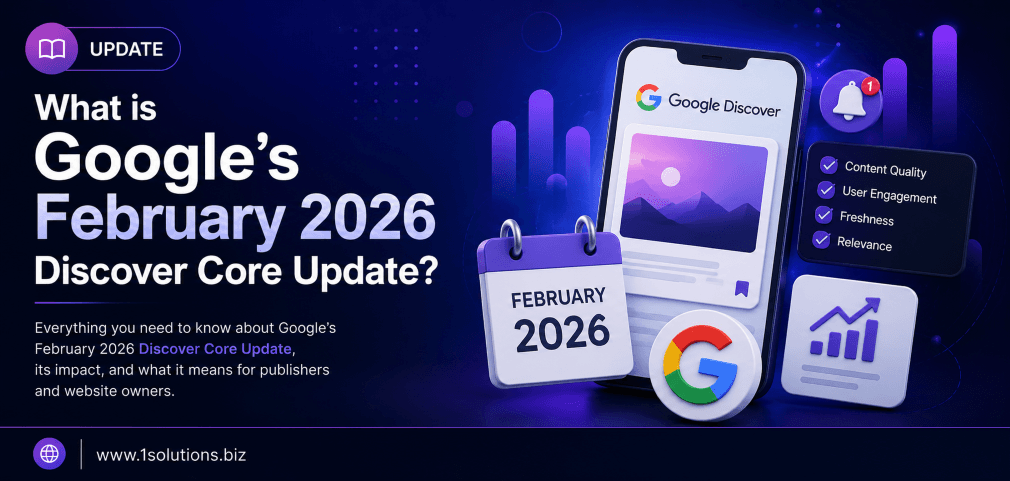
Google’s February 2026 Discover Core Update is one of the most significant algorithm changes targeting the Google Discover feed since the platform’s widespread rollout. Unlike traditional search updates that focus on ranked results pages, this update specifically targets how content surfaces in the Discover feed, which is the personalized content stream shown to users on mobile devices and the Google app. If you have noticed sudden drops or spikes in Discover traffic during February 2026, this update is the most likely cause.
Google confirmed the rollout began in mid-February 2026 and completed over approximately two weeks. The update refined how Google evaluates content relevance, freshness, authority, and user engagement signals specifically within the Discover ecosystem. Publishers across news, lifestyle, health, and e-commerce verticals reported significant traffic fluctuations, with some sites gaining substantially while others saw Discover impressions fall by 30 to 60 percent according to early tracking data from SEO monitoring communities.
Google’s February 2026 Discover Core Update overhauled how content ranks in the Google Discover feed, placing heavier emphasis on E-E-A-T signals, content freshness, and genuine user engagement. Sites with thin, low-authority, or clickbait-driven content saw the largest drops, while authoritative publishers producing helpful, experience-driven content benefited most. Recovery requires auditing your content quality, improving authorship signals, and aligning with Google’s helpful content guidelines.
⚡ Key Takeaways
- Google’s February 2026 Discover Core Update specifically targets the Discover feed, not just traditional search rankings.
- E-E-A-T (Experience, Expertise, Authoritativeness, Trustworthiness) signals are weighted more heavily than before this update.
- Content freshness and topical relevance to a user’s demonstrated interests are critical ranking factors post-update.
- Clickbait headlines, misleading thumbnails, and engagement-bait tactics are penalized more aggressively under this update.
- Sites that lost Discover traffic should audit content quality, author credentials, and on-page trust signals before requesting reconsideration.
- The update aligns closely with Google’s broader helpful content direction, rewarding content written for people, not algorithms.
- Recovery is possible but typically takes 4 to 8 weeks of consistent content quality improvements before traffic stabilizes.
15 Key Things You Need to Know About Google’s February 2026 Discover Core Update
1. The Update Targets Google Discover Specifically, Not Just Search
Most Google core updates apply broadly to search result rankings. Google’s February 2026 Discover Core Update is notable because it is specifically calibrated for the Discover feed. The Discover feed operates on different signals than traditional search. It does not rely on a user typing a query. Instead, it predicts what content a user will find valuable based on browsing history, app usage, location patterns, and previous engagement. This update refined those prediction models, meaning content that previously appeared frequently in Discover feeds may have dropped not because of any on-page failure but because Google’s interest-modeling became more precise. Publishers need to understand this distinction before assuming their content quality is the only variable at play.
2. E-E-A-T Signals Are Now a Stronger Ranking Factor in Discover
Google has been evolving its E-E-A-T framework (Experience, Expertise, Authoritativeness, Trustworthiness) since its introduction in Quality Rater Guidelines. The February 2026 update extends E-E-A-T evaluation more deeply into the Discover feed. Content from identifiable, credentialed authors with demonstrated expertise in their subject areas is now rewarded more consistently. Anonymous content, content without clear authorship, and content that cannot demonstrate first-hand experience saw measurable drops in Discover impressions. This means adding author bio pages, linking to author social profiles, and ensuring your content reflects real-world experience is no longer optional. It is a prerequisite for Discover visibility. If you want to strengthen your overall search authority alongside Discover performance, investing in professional search engine optimization services is a logical next step.
3. Content Freshness Matters More Than Ever
Google Discover has always had a freshness preference, surfacing recent content to users before older material. The February 2026 update appears to have tightened the freshness window further. Content published within 72 hours of a trending topic consistently outperforms evergreen content in Discover impressions according to publisher data shared in SEO communities post-update. This does not mean evergreen content is dead in Discover, but it does mean that sites relying solely on evergreen libraries without a regular publishing cadence will struggle to maintain Discover visibility. Building a content calendar that balances timely, topical pieces with your core evergreen content is now an essential strategy.
4. Clickbait and Misleading Headlines Are Penalized More Aggressively
One of the clearest signals in the February 2026 update is an aggressive downgrading of clickbait content. Google’s systems are now better at detecting when a headline creates curiosity or outrage that the article itself does not deliver on. When users click a Discover card, read two sentences, and immediately leave, Google interprets that as a negative engagement signal. Under the February 2026 update, repeated instances of this pattern can suppress an entire domain’s Discover eligibility, not just individual articles. Publishers who have relied on emotionally charged, vague, or exaggerated headlines to drive clicks should consider this a direct warning. Accurate, descriptive, and compelling headlines that match article content are the safe and sustainable approach.
5. User Engagement Signals Are Weighted Differently
Before this update, raw click-through rate was a dominant signal for Discover card performance. The February 2026 update appears to have shifted the weighting toward engagement quality over engagement volume. A lower click-through rate with high average time on page and low bounce rate may now outperform a high click-through rate with immediate page abandonment. This is consistent with Google’s broader shift toward measuring genuine user satisfaction rather than surface-level engagement. Publishers should monitor their Google Search Console Discover reports alongside their site analytics to identify content that earns clicks but fails to hold attention, then improve or consolidate those pieces.
6. Image and Visual Quality Plays a Larger Role
Google Discover is a visual-first feed. Cards are presented with prominent images, and the February 2026 update appears to place more weight on image quality, relevance, and originality. Stock photography that has been widely reused across the web, low-resolution images, and images that do not accurately represent the article content are being flagged as quality issues. Google’s own documentation recommends using high-quality images of at least 1200 pixels wide and enabling the max-image-preview large meta tag. Publishers who have not optimized their featured images for Discover should treat this as an immediate priority. Original photography and custom graphics outperform stock images consistently in Discover performance data.
7. The Update Aligns With Google’s Helpful Content Direction
Google’s helpful content system, which was integrated into the core algorithm in 2023, continues to influence how Discover evaluates content. The February 2026 update deepens that alignment. Content that was written primarily to rank, to fill a content quota, or to manufacture topical authority without genuine depth is being surfaced less frequently. Google’s systems are increasingly capable of distinguishing between content written by someone with real knowledge of a subject and content assembled from surface-level research. If your Discover traffic dropped in February 2026, reviewing your content against Google’s helpful content self-assessment questions is a productive starting point. You can also read our guide on how to boost your SEO efforts with page content analysis for a practical audit framework.
💡 Pro Tip: Run a Discover-specific content audit by filtering your Google Search Console data to show only Discover traffic. Identify which content types, topics, and authors generated the most impressions pre-update versus post-update. The pattern will tell you exactly where to focus your recovery efforts.
8. YMYL Content Faces Stricter Standards
Your Money or Your Life (YMYL) content, covering topics like health, finance, legal advice, and safety, has always been held to higher standards by Google. The February 2026 update raises the bar further for YMYL content appearing in Discover. Medical content without credentialed author attribution, financial advice without disclosure of qualifications, and health claims without cited sources are being systematically suppressed. If your site operates in any YMYL category, the February 2026 update is not just a traffic issue. It is a signal that your content infrastructure needs to meet the same standards Google applies to its top-tier trusted publishers. This includes bylines, credentials, citations, review dates, and clear editorial policies.
9. Google Discover Now Factors in Topical Authority
Topical authority, the concept of a site establishing deep, comprehensive coverage of a specific subject area, is now more clearly reflected in Discover rankings. The February 2026 update appears to reward sites that demonstrate consistent, deep expertise in a defined topic cluster over sites that publish broadly across many unrelated topics. A health and wellness site that covers nutrition comprehensively will outperform a general lifestyle blog touching the same nutrition topic occasionally. This makes a strong case for publishers to define their core topic clusters, audit content gaps, and build out supporting content systematically. Related to this, understanding SEO strategies for Google News ranking can complement your Discover strategy since both surfaces reward topical authority and freshness.
10. The Update Affects Both Large and Small Publishers
Early analysis from SEO communities indicated that the February 2026 Discover Core Update did not exclusively target small or independent publishers. Several large media organizations also reported significant Discover traffic drops, particularly those that had expanded into content verticals outside their established authority areas. Conversely, some smaller, highly focused niche publishers reported meaningful increases in Discover visibility. This suggests the update is primarily a quality and relevance signal rather than a domain authority threshold. Small businesses and niche content creators should not assume they are at a structural disadvantage. If your content genuinely serves your audience better than larger competitors, the February 2026 update may actually favor you. For small businesses looking to compete, SEO solutions designed for small businesses can help level the playing field.
11. Mobile Page Experience Remains Critical
Google Discover is consumed almost entirely on mobile devices. The February 2026 update reinforces the importance of mobile page experience as a ranking factor. Core Web Vitals scores, particularly Largest Contentful Paint (LCP) and Cumulative Layout Shift (CLS), are factored into how eligible a page is for consistent Discover placement. Sites with poor mobile performance, intrusive interstitials, or slow-loading featured images are at a disadvantage regardless of content quality. Google’s PageSpeed Insights and Search Console’s Core Web Vitals report should be reviewed regularly by any publisher seeking to maintain or recover Discover visibility. A page that loads poorly on mobile is less likely to generate the positive engagement signals that Discover rewards under this update.
12. Content That Sparks Genuine Saves and Shares Performs Better
While Google does not have direct access to social sharing data in the way social platforms do, the February 2026 update appears to weight indirect signals of content shareability and long-term value. Content that users save, revisit, or share generates longer engagement chains that feed positive signals back into Discover’s ranking model. Creating content with genuine utility, content that users want to bookmark or reference later, is a strategy that aligns with this update’s direction. Practical guides, original research, data-driven analyses, and personal experience narratives tend to generate these kinds of engagement signals more reliably than opinion pieces or news aggregation content.
13. Structured Data Helps but Is Not a Magic Fix
Implementing structured data markup (schema.org) correctly remains a best practice for Discover eligibility, particularly for Article, NewsArticle, and VideoObject schema types. The February 2026 update did not introduce new structured data requirements, but it did reinforce that structured data without underlying content quality is ineffective. Publishers sometimes implement schema as a technical shortcut hoping it will compensate for content quality issues. It does not. Structured data helps Google understand and categorize your content correctly, but the content itself must meet quality standards for Discover to surface it. Think of structured data as a clear label on a package: it helps identify what is inside, but the contents still need to be good.
💡 Pro Tip: If your site covers topics that could intersect with emerging AI search features, understanding the relationship between Google Discover and Google AI Overviews versus AI Mode will help you build a more resilient multi-surface content strategy for 2026 and beyond.
14. Recovering From the February 2026 Update Takes Time
One of the most important things to understand about core updates is that recovery is not instantaneous. Google does not process reconsideration requests for algorithmic core updates the way it does for manual penalties. Recovery happens organically as you improve your content quality, build stronger E-E-A-T signals, and demonstrate consistent publishing standards over time. Most publishers who have successfully recovered from previous core updates report that meaningful traffic recovery begins 4 to 8 weeks after substantive improvements are made and typically aligns with the next broad core update or Discover-specific update cycle. Patience combined with consistent, measurable improvements is the only reliable recovery path. If your site received a manual action alongside this algorithmic update, that is a separate process requiring direct intervention, and exploring professional Google penalty recovery support would be advisable.
15. The February 2026 Update Is Part of a Longer Trend
Google’s February 2026 Discover Core Update does not exist in isolation. It is part of a multi-year trajectory in which Google has progressively raised the quality bar for content surfaces, from traditional search to featured snippets, to Google News, and now more aggressively in Discover. The Google March 2026 Spam Update followed shortly after, indicating that February and March 2026 represented a significant quality enforcement period across multiple Google surfaces. Publishers who take a reactive approach, updating strategy only after traffic drops, will consistently find themselves behind. The publishers who thrive are those who read the long-term direction of Google’s quality signals and align their content strategy proactively.
Before and After: How the February 2026 Update Changed Discover Rankings
| Factor | Before February 2026 Update | After February 2026 Update |
|---|---|---|
| E-E-A-T Signals | Moderate weight in Discover | Significantly higher weight, especially for YMYL |
| Click-Through Rate | Primary engagement signal | Balanced with post-click engagement quality |
| Content Freshness | Preferred but not strictly required | Near-essential for consistent Discover placement |
| Clickbait Headlines | Could boost short-term CTR with limited penalty | Actively suppressed at domain level |
| Image Quality | Basic requirements (1200px recommended) | Originality and relevance now factored in |
| Topical Authority | Beneficial but not decisive | Strongly rewarded, broad generalist sites disadvantaged |
| Anonymous Content | Tolerated in Discover | Consistently underperforms vs. attributed content |
| Mobile Page Speed | Core Web Vitals as a tie-breaker | Stronger baseline requirement for eligibility |
What Types of Content Win in Discover After the February 2026 Update
Understanding what thrives post-update is as important as understanding what declined. Content categories consistently performing well in Discover after February 2026 include original reporting with named journalist bylines, first-person experience narratives from credentialed practitioners, data-driven analyses citing verifiable sources, in-depth how-to guides from demonstrable experts, and well-produced video content with accurate transcripts. Content that combines strong visual presentation, clear authorship, genuine expertise, and a specific audience focus tends to see the strongest Discover impressions in the post-update environment.
For content marketers looking to align their strategies, exploring local AEO best practices for small businesses offers practical frameworks for building authority-driven content that performs across multiple Google surfaces, including Discover. Similarly, understanding how AI search engine visibility works is increasingly relevant as Discover and AI-powered surfaces converge.
What Types of Content Declined After the February 2026 Update
Content categories that saw consistent Discover traffic declines after the February 2026 update include aggregated news rewrites without original reporting, listicles assembled from surface-level research without original insights, health and finance content without credentialed authorship, content with sensationalist or vague headlines that do not match article body, and broad lifestyle content from sites without a clear topical focus. Publishers in these categories are not necessarily producing bad content in an absolute sense, but they are producing content that does not differentiate itself in the ways the updated Discover algorithm rewards.
Practical Action Plan: Responding to Google’s February 2026 Discover Core Update
- Do This Now: Audit your Google Search Console Discover performance report. Compare impressions and clicks for the 30 days before and after February 15, 2026. Identify your highest-traffic Discover content and your biggest losers. Prioritize improving the losers with better authorship attribution, more original insights, and improved mobile page speed. Also review whether your featured images are original and high-resolution.
- Worth Doing: Build or strengthen your author profile infrastructure. Create dedicated author bio pages for all contributors, link them to their professional profiles and external credentials, and ensure every published piece carries a clear byline. Review your content publishing calendar to ensure you have a consistent cadence of fresh, topically focused content. Consider whether your site covers too many unrelated topics and whether narrowing your topical focus would improve your Discover authority signal.
- Low Priority: Implementing new structured data schema types or experimenting with new content formats like interactive tools or quizzes for Discover. These have potential but should not be prioritized over the foundational quality improvements above. Similarly, tracking competitor Discover performance or chasing trending topics reactively is a lower-leverage activity than building a consistently high-quality content baseline. Also, broad social media campaigns designed to manufacture engagement signals for Discover content are unlikely to move the needle meaningfully and distract from core quality work.
💡 Pro Tip: Do not chase the February 2026 update specifically. Core updates reflect the direction Google has been moving for years. Publishers who build for genuine audience value, with real expertise, clear authorship, and strong user experience, rarely need to “recover” from core updates because their content was already aligned with where Google was heading. Investing in a comprehensive digital marketing strategy that prioritizes long-term content quality over short-term traffic tricks is the most durable approach.
Key Statistics About Google Discover and the February 2026 Update
Context matters when evaluating the impact of this update. Google Discover reportedly reaches over 800 million users globally (Google, 2023), making it one of the largest content discovery surfaces in the world. Research from Moz (2024) found that Discover traffic could account for 10 to 40 percent of total organic traffic for content-focused publishers, making algorithm changes to the feed highly consequential. Additionally, a 2023 study by BrightEdge found that pages with strong E-E-A-T signals were 2.7 times more likely to appear in personalized feed environments than pages without clear author attribution. These figures underscore why the February 2026 update’s emphasis on E-E-A-T and engagement quality has such significant traffic implications for content publishers.
How to Future-Proof Your Content Strategy Beyond February 2026
The February 2026 update will not be the last significant change to Google Discover. Google has consistently refined and updated the feed’s algorithm multiple times per year. Future-proofing your content strategy means building to standards that are likely to become more, not less, important over time. This includes investing in genuine subject matter expertise within your content team, creating original research and data that other publishers reference, building strong author profiles that Google can evaluate for credibility, and maintaining technical excellence in mobile performance and page experience.
Staying informed about Google algorithm developments through reliable sources, and understanding adjacent trends like agentic SEO strategies and LLM optimization for AI search, will also help you anticipate where Google’s content evaluation systems are headed. The convergence of traditional search, AI-powered overviews, Discover feeds, and emerging agentic browsing means content quality standards will continue to rise across all surfaces simultaneously.
Frequently Asked Questions About Google’s February 2026 Discover Core Update
What exactly did Google change in the February 2026 Discover Core Update?
Google refined the signals used to determine which content appears in personalized Discover feeds. The update placed stronger emphasis on E-E-A-T signals, content freshness, post-click engagement quality, image originality, and topical authority. It also more aggressively suppressed clickbait headlines and content from sites without clear author attribution.
Is the February 2026 update different from a regular Google core update?
Yes. While Google’s broad core updates affect all search surfaces, the February 2026 Discover Core Update was specifically calibrated for the Discover feed. Traditional search rankings may not have changed significantly for sites that saw Discover traffic drops, which is why reviewing your Discover-specific data in Search Console separately from organic search data is important.
How long will it take to recover Discover traffic after this update?
Recovery timelines vary depending on the severity of the drop and the extent of improvements made. Most publishers implementing substantive content quality improvements report seeing traffic stabilization and recovery within 4 to 8 weeks. Significant recovery often aligns with the next Discover update cycle or a broad core update, as Google re-evaluates improved content.
Can a small website compete in Google Discover after the February 2026 update?
Yes. The update rewards content quality and topical authority rather than domain size. Small, highly focused niche publishers with strong authorship and genuine expertise can outperform large generalist sites that publish broadly without depth. The key is demonstrating clear expertise in a defined topic area and maintaining a consistent publishing standard.
Should I request reconsideration from Google after losing Discover traffic?
No, unless you also received a manual action in Search Console. Drops caused by the February 2026 Discover Core Update are algorithmic, not manual. There is no reconsideration request process for algorithmic updates. The only path to recovery is improving the quality, authority, and technical performance of your content over time. If you did receive a manual action alongside the traffic drop, seeking professional guidance on Google penalty recovery would be appropriate.
Conclusion
Google’s February 2026 Discover Core Update represents a clear signal of where Google is taking content quality evaluation in personalized feeds. The emphasis on E-E-A-T, content freshness, genuine engagement, and topical authority is not a temporary trend. It reflects the fundamental direction Google has been moving across all of its surfaces for several years. Publishers who lost Discover traffic in February 2026 have a clear, if demanding, path forward: invest in genuine expertise, strengthen author credibility, improve visual quality, and publish consistently within defined topic areas.
The publishers who will thrive in Discover long-term are those building content strategies grounded in real value for real audiences, not strategies engineered to game a specific algorithm. Google’s February 2026 Discover Core Update makes that principle more enforceable than ever before.