
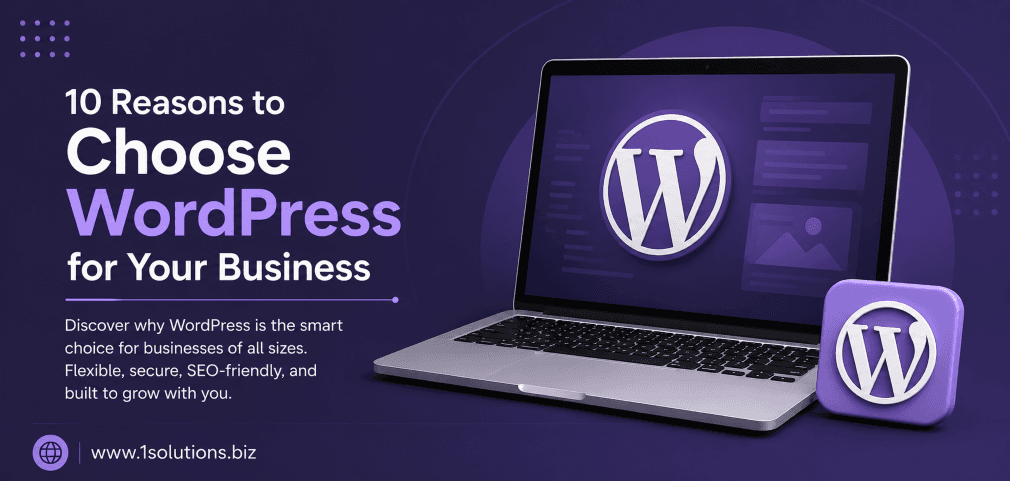
10 Reasons to Choose WordPress for Your Business
If you are evaluating platforms for your next business website, the options can feel overwhelming. But when you look at real-world adoption, one platform stands out clearly. According to W3Techs (2024), WordPress powers 43.4% of all websites on the internet, making it the most widely used content management system by a considerable margin. That kind of market dominance does not happen by accident.
There are genuine, practical reasons why businesses of every size, from solo consultants to enterprise brands, keep choosing WordPress. This article breaks down exactly 10 reasons to choose WordPress for your business, including a few honest trade-offs you should know about before you commit.
WordPress is the world’s most popular CMS for good reason: it is flexible, SEO-friendly, cost-effective, and scalable for businesses of all sizes. This article covers 10 concrete reasons to build your business site on WordPress, along with honest notes on where it requires some attention to get right.
⚡ Key Takeaways
- WordPress powers 43.4% of all websites globally (W3Techs, 2024), proving its reliability at scale.
- Its open-source nature means zero licensing fees, keeping startup costs low.
- Over 59,000 free plugins are available in the official WordPress repository, covering almost every business function.
- WordPress has strong built-in SEO foundations that pair well with dedicated optimization tools and services.
- WooCommerce, built on WordPress, is the most widely used ecommerce platform in the world by install count.
- A large global developer community means support, updates, and innovation are always available.
- WordPress can scale from a simple blog to a complex multi-site enterprise network without switching platforms.
Why Your Platform Choice Matters More Than You Think
Your CMS is the foundation of your entire digital presence. Switch platforms two years in and you risk broken URLs, lost SEO equity, migration costs, and frustrated users. Choosing right from the start saves time, money, and technical headaches. WordPress has a 20-year track record of stability, which is why so many businesses use it as a long-term foundation rather than a temporary fix.
That said, WordPress is not entirely plug-and-play. It requires some care around security, performance, and updates. We will flag those trade-offs clearly as we go through each reason.
The 10 Reasons to Choose WordPress for Your Business
1. It Is Free and Open Source
WordPress.org software is completely free to download, install, and use. There are no monthly licensing fees, no per-seat charges, and no vendor lock-in. You pay only for hosting, your domain name, and any premium themes or plugins you choose. For a small business, this makes a dramatic difference in startup costs compared to proprietary platforms that charge hundreds of dollars per month for similar functionality.
Being open source also means thousands of developers worldwide contribute to its codebase. Security vulnerabilities get patched quickly. New features get added regularly. The roadmap is driven by community need rather than a single vendor’s commercial interests. The trade-off is that “free” still requires someone to manage the installation, but managed WordPress hosting providers have largely solved that problem for non-technical users.
For businesses focused on keeping operating costs lean while maximizing capability, the open-source model is a genuine competitive advantage. You own your data, your code, and your platform. No one can change pricing on you or shut down your service.
2. Unmatched Flexibility Through Themes and Plugins
According to WordPress.org (2024), there are over 59,000 free plugins available in the official plugin repository. These cover everything from contact forms and appointment booking to membership systems, event calendars, and complex multi-vendor marketplaces. Premium plugin marketplaces add tens of thousands more options on top of that.
Themes give you design flexibility without needing to write code from scratch. Page builders like Elementor and the native block editor (Gutenberg) allow non-developers to create professional layouts visually. If you need something highly custom, a developer can build it on top of WordPress’s well-documented hook and filter system.
This flexibility is a double-edged sword worth acknowledging: installing too many poorly coded plugins can slow your site or introduce security risks. The solution is choosing quality over quantity and keeping everything updated. Working with an experienced WordPress development partner helps you avoid common pitfalls and build a lean, well-structured site from day one.
3. Built With SEO in Mind
Search engine optimization is not an afterthought on WordPress. It was built with clean, semantic HTML output, customizable permalink structures, and automatic sitemap generation that search engines appreciate. Add a dedicated SEO plugin like Yoast or Rank Math and you get granular control over meta titles, descriptions, canonical tags, schema markup, and more without touching a single line of code.
According to HubSpot (2023), companies that blog consistently generate 55% more website visitors than those that do not. WordPress’s native blogging and content management capabilities make it easy to publish, organize, and optimize content at scale. You can create category hierarchies, tag taxonomies, and internal linking structures that search engines find logical and crawlable.
If you want to go deeper on content optimization, this guide on how to boost your SEO efforts with page content analysis pairs well with what WordPress gives you out of the box. Pairing a well-built WordPress site with professional SEO services creates a compounding advantage over competitors on slower, less-optimized platforms.
💡 Pro Tip: Set your WordPress permalink structure to “Post name” (/%postname%/) from day one. Changing it later causes broken links and lost SEO rankings unless you set up proper redirects for every URL.
4. Scales With Your Business Growth
A platform that works for a five-page brochure site should also handle a 10,000-product ecommerce store. WordPress scales remarkably well when configured correctly. Businesses start small and grow their WordPress site over years without needing to migrate to a different CMS.
WordPress Multisite allows you to run multiple websites from a single installation, which is ideal for franchise businesses, agencies managing client sites, or brands operating in multiple verticals. Enterprise-level caching solutions, CDN integration, and database optimization tools are all available within the WordPress ecosystem.
The trade-off here is that scaling WordPress to handle very high traffic volumes requires server-level expertise. Shared hosting is fine for early-stage sites, but growing businesses typically need to graduate to VPS, dedicated, or cloud hosting environments. This is a manageable technical challenge, not a platform limitation.
5. Ecommerce Ready With WooCommerce
WooCommerce, the free ecommerce plugin built for WordPress, is the most installed ecommerce platform on the internet. BuiltWith (2024) reports that WooCommerce powers approximately 6.6 million live websites globally. It supports physical products, digital downloads, subscriptions, appointments, and membership-based billing.
Because WooCommerce sits inside WordPress, your store inherits all of WordPress’s SEO, content, and design advantages. You can run a blog alongside your shop, create landing pages for specific product categories, and manage everything from one dashboard. If you are comparing your options, the detailed WooCommerce vs Shopify comparison guide gives a balanced view of where each platform excels.
If you are already running a WooCommerce store, staying on top of maintenance is critical. The WooCommerce store maintenance checklist is worth bookmarking for your team. Pairing your store with a solid ecommerce marketing strategy amplifies the platform’s commercial potential significantly.
6. Large and Active Community Support
One of the most underrated advantages of WordPress is its community. There are thousands of active forums, Facebook groups, local WordCamp events, and official support channels where you can get answers to almost any question. The WordPress.org support forums alone contain millions of resolved threads.
This community also means an enormous talent pool. Whether you need to hire a developer, a designer, or a content strategist who knows WordPress, the global supply of skilled professionals is vast compared to niche or proprietary platforms. That keeps freelance and agency rates competitive and makes team scaling easier as your business grows.
The community actively contributes to WordPress core development. Regular major releases improve performance, security, and the editing experience. Core contributors are not paid by a single company with commercial incentives. They are developers, designers, and accessibility experts who care about making the platform better for everyone.
💡 Pro Tip: Attend a local WordCamp or virtual WordPress event at least once. You will discover plugins, techniques, and professionals that rarely show up in standard Google searches, and the community is genuinely welcoming to business owners who are not technical.
7. Strong Security When Managed Properly
WordPress is sometimes criticized for being a security risk. The truth is more nuanced. Because it is so widely used, it is a common target for automated attacks. But WordPress core itself is updated promptly when vulnerabilities are found. The real risks come from outdated plugins, weak passwords, and unmanaged hosting environments.
With proper security hygiene: keeping core, themes, and plugins updated; using two-factor authentication; choosing a reputable host with server-level firewall protection; and installing a security plugin like Wordfence or Sucuri, WordPress is a very secure platform for business use.
If your site has already experienced a Google penalty related to a security breach or bad links, resources on Google penalty recovery can help you diagnose and resolve the damage. Prevention is always cheaper than recovery, so building good security habits early protects both your site and your search rankings.
8. Full Content Management Control
WordPress started as a blogging platform, and content management remains one of its greatest strengths. The block editor gives you a visual, structured way to create rich content without coding. You can embed videos, design multi-column layouts, add custom buttons, create pricing tables, and build complex page structures all within the native editor.
For businesses that rely on content marketing, this matters enormously. Publishing frequency and content quality directly impact search rankings. If your CMS makes publishing frustrating or slow, your team publishes less. WordPress removes that friction. Non-technical team members can create and publish professional content without IT involvement.
Content strategy is also becoming more important in the context of AI-driven search. Understanding how to improve website visibility in AI search engines starts with having a CMS that supports structured, semantic content publishing. WordPress handles this better than most alternatives, especially when combined with proper schema markup and a clean site architecture.
9. Extensive Integration Capabilities
Modern businesses rely on dozens of tools: CRMs, email marketing platforms, payment gateways, analytics tools, social media schedulers, live chat systems, and project management apps. WordPress integrates natively or via plugin with virtually all of them. HubSpot, Mailchimp, Salesforce, Stripe, PayPal, Google Analytics 4, and hundreds of other platforms all have official WordPress plugins or REST API connections.
The WordPress REST API allows developers to use WordPress as a headless CMS, sending content to mobile apps, progressive web apps, or other front-end frameworks. This makes it future-proof in ways that closed platforms simply cannot match. As your tech stack evolves, WordPress grows with it rather than forcing you into a walled garden.
For businesses investing in digital marketing, these integrations are particularly valuable. Connecting your WordPress site to your digital marketing services stack, from paid search tracking to conversion optimization tools, is seamless compared to many proprietary alternatives.
10. Transparent Cost Structure and High ROI
Unlike SaaS website builders that bundle hosting, software, and support into an opaque monthly fee, WordPress gives you a transparent, itemized cost structure. You choose your hosting provider, your theme, your plugins, and your developer. You can start for under $100 per year and scale your investment as your business grows and your needs become more complex.
The return on investment from a well-built WordPress site is measurable. When your site ranks well in search, loads quickly, converts visitors into leads, and integrates with your sales tools, it becomes a revenue-generating asset rather than a cost center. Businesses that treat their WordPress site as infrastructure worth maintaining consistently see better digital performance than those that build and forget.
For smaller businesses in particular, the combination of low entry cost and high capability ceiling is hard to beat. If you are running a small business and are not sure where to start with your online presence, exploring SEO for small business alongside a solid WordPress foundation gives you the best possible starting position. And as your local presence grows, understanding local AEO best practices for small businesses will help you stay visible in both traditional and AI-powered search results.
💡 Pro Tip: Budget for ongoing WordPress maintenance from day one. A monthly maintenance plan covering updates, backups, uptime monitoring, and security scans typically costs far less than emergency recovery work after something breaks.
WordPress vs. Common Alternatives: A Quick Comparison
| Feature | WordPress | Wix | Squarespace | Shopify |
|---|---|---|---|---|
| Cost (platform) | Free (open source) | Monthly subscription | Monthly subscription | Monthly subscription |
| SEO control | Full control | Limited | Moderate | Moderate |
| Plugin ecosystem | 59,000+ free plugins | Limited app market | Very limited | Ecommerce-focused apps |
| Ecommerce | WooCommerce (free) | Basic ecommerce | Basic ecommerce | Purpose-built ecommerce |
| Content management | Excellent | Basic | Good | Limited (product-focused) |
| Developer flexibility | Complete | Very limited | Limited | Moderate |
| Ownership of data | Full ownership | Vendor-controlled | Vendor-controlled | Vendor-controlled |
| Scalability | High | Low to moderate | Low to moderate | High (for ecommerce) |
Practical Action Plan for Getting Started With WordPress
- Do This Now: Choose a reputable managed WordPress host (such as Kinsta, WP Engine, or SiteGround) and install WordPress. Set your permalink structure to “Post name” immediately. Install a security plugin and set up automated daily backups before you do anything else.
- Worth Doing: Select a lightweight, well-coded theme rather than a feature-heavy one. Install an SEO plugin and configure your site title, meta descriptions, and XML sitemap. Connect your Google Search Console and Google Analytics 4 accounts so you have baseline data from launch day.
- Low Priority: Explore premium plugins and advanced customizations once your core site is live and performing. Adding complexity before you have traffic data often means building features nobody uses. Let real user behavior guide your feature roadmap.
Frequently Asked Questions
Is WordPress suitable for businesses that are not tech-savvy?
Yes. The block editor and modern page builders make it possible to create and manage professional content without any coding knowledge. For initial setup and configuration, working with a developer or a managed hosting provider removes the technical barrier entirely. Once the site is built correctly, day-to-day management is straightforward for most business owners.
How does WordPress compare to Shopify specifically for ecommerce?
Both are strong options for ecommerce. Shopify is purpose-built for selling and is simpler to set up quickly. WordPress with WooCommerce offers more flexibility, better content marketing capabilities, and lower ongoing platform costs. If content-driven SEO is central to your ecommerce strategy, WooCommerce on WordPress typically delivers better long-term results. The WooCommerce vs Shopify comparison goes deeper on the specific trade-offs.
Is WordPress secure enough for a business website?
Yes, when managed properly. Keep core, themes, and plugins updated at all times. Use strong passwords with two-factor authentication. Choose a host with server-level security features. Install a dedicated security plugin. These steps make WordPress very secure for business use. The vast majority of WordPress hacks exploit outdated software, not core vulnerabilities.
Does WordPress help with local SEO for small businesses?
Absolutely. WordPress supports local SEO through schema markup plugins, Google Business Profile integration, fast page load optimization, and clean URL structures that search engines can crawl efficiently. Combining a well-optimized WordPress site with local SEO packages gives small businesses a strong foundation for ranking in local search results.
How much does it cost to build a professional WordPress site?
Costs vary widely depending on complexity. A simple business site can be built for a few hundred dollars using a premium theme and a reliable hosting plan. A custom-designed site with advanced functionality, ecommerce, or membership features typically runs from a few thousand dollars upward for development, plus ongoing hosting and maintenance costs. The platform itself remains free, which keeps overall costs lower than most proprietary alternatives at every budget level.
Conclusion
The 10 reasons to choose WordPress for your business come down to one core truth: it gives you more control, more flexibility, and more long-term value than almost any alternative at a comparable price point. From its open-source cost model and enormous plugin ecosystem to its SEO advantages, ecommerce capabilities, and strong community support, WordPress has earned its position as the world’s most used CMS through genuine merit.
It is not entirely maintenance-free, and it rewards businesses that treat it as a managed asset rather than a set-and-forget tool. But for businesses serious about their digital presence, that small investment in ongoing care pays off consistently in search visibility, conversion performance, and platform longevity. If you are ready to build or improve your WordPress site, connecting with an experienced team makes the process significantly faster and more reliable from the start.