
Why Google Maps SEO Is the Most Competitive Real Estate on the Internet
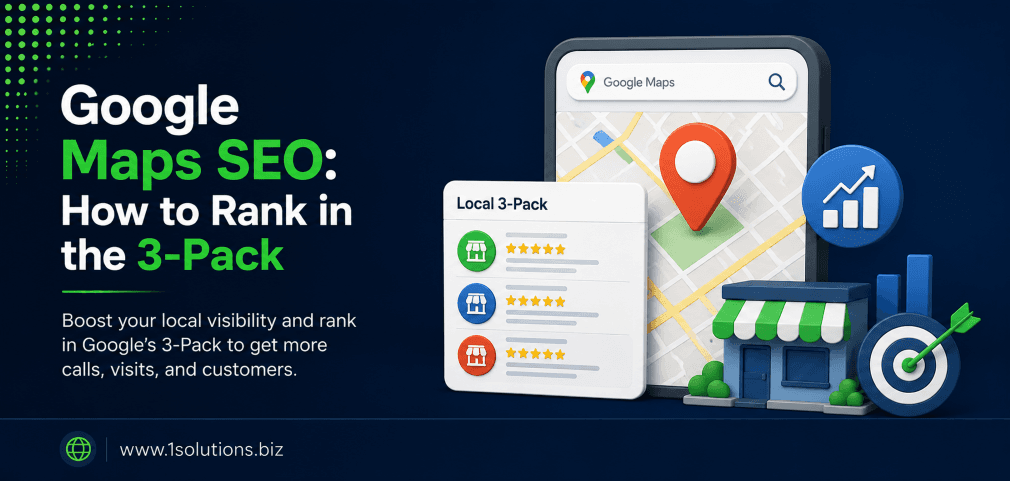
When someone searches for a plumber, a dentist, or a coffee shop near them, the first thing they see is not a list of websites. They see a map with three business listings directly below it. That cluster of three results is called the Google Local 3-Pack, and winning a spot inside it can transform how many calls, visits, and conversions your business generates every single day. Google Maps SEO is the practice of optimizing your online presence so that Google consistently places your business inside that coveted three-result block.
The stakes are high. According to Google’s own consumer insights data (Google, 2023), 76% of people who conduct a local search on their smartphone visit a related business within 24 hours, and 28% of those searches result in a purchase. Ignoring local map optimization is not a neutral choice. It is actively handing customers to your competitors.
This guide covers exactly three high-impact strategies you need to execute well. Not ten vague tips. Not a checklist you will never finish. Three focused, fully explained actions that move the needle for local map rankings.
Ranking in Google’s Local 3-Pack requires three things done exceptionally well: a fully optimized and actively managed Google Business Profile, a consistent and authoritative local citation footprint, and a steady stream of genuine customer reviews paired with smart engagement. Each of these signals feeds into Google’s three core local ranking factors: relevance, distance, and prominence.
⚡ Key Takeaways
- Google’s 3-Pack appears in approximately 93% of local search queries, making it the highest-visibility placement in local search (BrightLocal, 2023).
- Your Google Business Profile is not a set-and-forget directory listing. It requires ongoing updates, posts, and Q&A management.
- NAP consistency (Name, Address, Phone) across all citations directly influences how much Google trusts your location data.
- Review velocity and sentiment are confirmed local ranking signals. Quality and recency both matter, not just total volume.
- On-page local SEO signals on your website reinforce and amplify your Google Business Profile authority.
- Avoiding common Google Business Profile mistakes is just as important as what you actively do right.
- Local SEO is a long-term investment. Expect meaningful ranking movement within 60 to 90 days of consistent effort.
The Three Pillars of Google Maps SEO
Google evaluates local listings using three documented ranking factors: relevance (how well your profile matches the search intent), distance (how close your business is to the searcher), and prominence (how well-known and trusted your business is online). You cannot control distance in most cases, but you have enormous influence over relevance and prominence. The three strategies below address each factor directly.
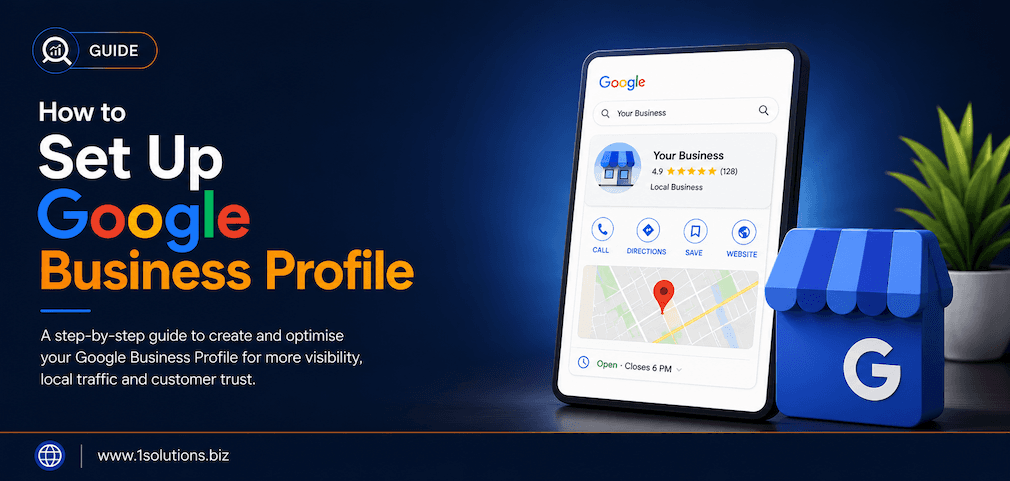
1. Optimize Your Google Business Profile From the Ground Up
Your Google Business Profile (GBP) is the single most important asset in your Google Maps SEO strategy. It is the data source Google pulls from when deciding whether to show your business in the 3-Pack. A thin, incomplete, or inconsistently managed profile is one of the fastest ways to stay invisible in local results.
Claim, Verify, and Complete Every Field
Start by claiming your profile if you have not already done so, then complete the verification process. Verification signals to Google that you are a legitimate business at a real address. Once verified, fill out every available field without exception. This includes your business name (use your actual legal or trading name without keyword stuffing), your precise address, your local phone number, your primary and secondary categories, your business description, your hours of operation including special holiday hours, and your website URL.
Category selection deserves special attention. Your primary category is the strongest relevance signal in your entire profile. Choose the most specific category that accurately describes your core offering. A business offering HVAC services should select “HVAC Contractor” rather than the broader “Contractor” category. Secondary categories allow you to capture additional relevant searches without diluting your primary positioning.
Use Every Content Feature Google Offers
Google Business Profile offers a range of content features that most businesses underuse. GBP Posts allow you to publish updates, promotions, events, and offers directly to your profile. These posts appear in the Knowledge Panel and send a recency signal to Google. Publish at least one post per week. Add high-quality photos of your premises, products, team, and work. Profiles with photos receive 42% more requests for directions and 35% more click-throughs to websites than those without photos (Google, 2022).
The Products and Services sections let you detail exactly what you offer, with descriptions that can include your target keywords naturally. The Q&A section allows anyone to ask questions about your business, and you should be the first to answer them. Seed this section with the questions your customers actually ask most often, then answer them thoroughly. If you are also investing in broader local SEO packages that include citation building and on-page optimization, your GBP efforts will compound rather than operate in isolation.
Add Attributes and Keep Information Current
Google allows you to add attributes to your profile that describe specific features of your business. These might include accessibility options, payment methods, service options like delivery or takeout, and more. Attributes directly influence whether your business appears for filtered searches, so enable every accurate attribute available to your category.
Outdated information is one of the most common and most damaging GBP problems. If your hours change, update them immediately. If you move, update your address across your profile and all citations simultaneously. As our guide on Google My Business mistakes that hurt local visibility explains, outdated or inconsistent business information causes Google to lower its confidence in your listing, which directly suppresses your rankings.
💡 Pro Tip: Use the “Messaging” feature inside Google Business Profile to allow customers to contact you directly from search results. Enabling this feature and responding promptly signals active profile engagement to Google and increases the likelihood of conversion before a visitor even reaches your website.
Your Website Must Reinforce Your GBP Signals
Your GBP does not operate in a vacuum. Google cross-references the information in your profile with what it finds on your website. Your site should have a dedicated location page that includes your business name, address, and phone number in consistent format, an embedded Google Map, local schema markup, and locally relevant content. Investing in professional SEO services that include technical on-page optimization ensures these reinforcing signals are implemented correctly and completely.
2. Build a Consistent and Authoritative Local Citation Footprint
A citation is any online mention of your business name, address, and phone number, whether or not it includes a link to your website. Citations help Google verify that your business exists at the location you claim, and they contribute directly to the prominence ranking factor. The more consistent, widespread, and authoritative your citation footprint, the more confident Google becomes in surfacing your business in local results.
What NAP Consistency Actually Means
NAP stands for Name, Address, and Phone. The consistency rule means your business information must be formatted identically across every directory, social profile, and website where it appears. “Street” versus “St.” might seem trivial, but inconsistencies at scale create confusion for Google’s crawlers and erode the trust value that citations are supposed to build. Audit your existing citations using a tool like BrightLocal or Moz Local, identify discrepancies, and correct them systematically.
According to BrightLocal’s Local Citation Trust Report (BrightLocal, 2023), businesses with consistent NAP data across 50 or more citation sources ranked significantly higher in local pack results than those with inconsistent or sparse citation profiles. The threshold matters. A handful of citations on major directories is not enough for competitive local markets.
Prioritize Tier-1 and Niche-Specific Directories
Not all citation sources carry equal weight. Tier-1 directories are high-authority general platforms that Google references regularly. These include Google Business Profile itself, Yelp, Bing Places, Apple Maps, Facebook, and the Better Business Bureau. Every local business should have a complete, verified listing on each of these platforms before worrying about anything else.
Beyond Tier-1, niche-specific and locally relevant directories carry outsized value for their respective industries. A law firm appearing in Avvo and Justia, or a restaurant appearing in TripAdvisor and OpenTable, signals to Google that real industry ecosystems recognize the business. Research the top directories in your specific vertical and build complete profiles on each one.
Structured vs. Unstructured Citations
Structured citations are formal directory listings where your NAP is presented in a consistent format. Unstructured citations are mentions of your business in editorial content, blog posts, news articles, and social media. Both types contribute to your local prominence score. Earning unstructured citations through local press coverage, community involvement, sponsorships, and partnerships adds a layer of authenticity that pure directory listings cannot replicate.
If you want to understand how link building intersects with local citation authority, our resource on building backlinks in competitive and low-competition niches explains the strategic relationship between these two disciplines. For local businesses, a citation from a respected local newspaper or business association can carry more weight than dozens of generic directory listings.
| Citation Type | Examples | SEO Value | Difficulty to Earn |
|---|---|---|---|
| Tier-1 General Directories | Yelp, Bing Places, Apple Maps | High, broad trust signals | Low, self-submission |
| Niche Industry Directories | Avvo (legal), Houzz (home), Healthgrades (medical) | High, relevance-specific authority | Medium, category-gated |
| Local Chambers and Associations | Chamber of Commerce, local business groups | High, geographic trust signals | Medium, membership often required |
| Unstructured Editorial Mentions | Local news, community blogs, event coverage | Very high, editorial credibility | High, requires relationship or newsworthiness |
| Social Media Profiles | Facebook, Instagram, LinkedIn | Medium, reinforces NAP consistency | Low, self-managed |
Local AEO and the Future of Citation Signals
As AI-powered search continues to evolve, how Google interprets local business signals is shifting. Our guide on local AEO best practices for small businesses explores how Answer Engine Optimization principles are beginning to overlap with traditional local SEO, particularly in how structured data and authoritative citations feed into AI-generated local answers. Building a strong citation foundation now positions your business well for both current and emerging search formats.
💡 Pro Tip: Before building new citations, run a full audit of your existing listings. Fixing five inconsistent citations already live on the web is more valuable than creating ten new ones. Inconsistency at scale actively damages your local rankings rather than remaining neutral.
3. Generate, Manage, and Leverage Customer Reviews Strategically
Reviews are one of the most powerful and most misunderstood components of Google Maps SEO. They influence your rankings directly through the prominence signal, they influence click-through rates through star ratings, and they influence conversion rates through the specific content of what reviewers say. A business with 200 reviews averaging 4.6 stars will almost always outperform a business with 20 reviews averaging 4.9 stars, all else being equal, because volume, recency, and sentiment all factor into the algorithm.
Review Velocity and Recency Matter as Much as Volume
Google does not simply count your reviews and assign a score. It analyzes the rate at which reviews arrive, how recent the most recent ones are, and whether the content of reviews aligns with your declared business category. A burst of 50 reviews followed by six months of silence looks suspicious and carries less ranking weight than a steady stream of five to ten reviews per month. Build a systematic process for requesting reviews from every satisfied customer, not just the ones who volunteer feedback spontaneously.
According to BrightLocal’s Local Consumer Review Survey (BrightLocal, 2023), 98% of consumers read online reviews for local businesses, and 46% consider reviews written within the last two weeks to be most relevant to their decision. The implication is clear: review recency is not just an algorithmic signal, it is a direct conversion factor.
How to Ask for Reviews Without Violating Google’s Guidelines
Google explicitly prohibits incentivizing reviews, soliciting reviews in bulk through third-party services, or discouraging negative reviews. What you can do is make the review process as frictionless as possible for customers who have had a genuine positive experience. Send a follow-up email or text message after a completed service. Include a direct link to your Google review form. Train your front-line staff to verbally invite satisfied customers to share their experience online.
The key is timing and personalization. A review request sent within 24 to 48 hours of a completed transaction, referencing the specific service the customer received, generates significantly higher response rates than a generic “please leave us a review” message. Keep the ask simple, keep it genuine, and make the link direct. Every additional click you require reduces completion rates.
Responding to Reviews Is a Ranking Signal, Not Just Courtesy
Google has confirmed that responding to reviews signals active business engagement and contributes to local prominence. Respond to every review, positive and negative, within 24 to 48 hours. For positive reviews, go beyond a templated “thank you” and acknowledge something specific about the customer’s experience. For negative reviews, stay professional, address the concern directly, offer a resolution path, and take the detailed conversation offline.
Your responses to negative reviews are read by prospective customers as carefully as the negative reviews themselves. A composed, helpful response to a one-star review often does more for conversion confidence than the negative review does harm. It demonstrates accountability, which is a competitive advantage in most local markets.
The Content of Reviews Sends Keyword Signals
When customers mention specific services, locations, or attributes in their reviews, those mentions act as organic keyword signals within your GBP. A review that says “the best emergency plumbing service on the north side of the city” is contributing relevant keyword context that Google indexes and associates with your profile. You cannot ethically instruct customers on what to write, but you can create service experiences worth describing in detail, which naturally produces richer review content over time.
If your business operates across multiple service categories or you are working to build broader digital authority, consider how your review strategy connects to your wider digital marketing services strategy. Reviews feed into your overall reputation score, and that score influences not just local map rankings but also how your brand appears in branded search results, AI-generated answers, and knowledge panels. For businesses actively managing or recovering their online reputation, our reputation management services provide a structured framework for improving sentiment at scale.
💡 Pro Tip: Create a custom short link or QR code that leads directly to your Google review form. Post it on receipts, email signatures, packaging, and your website’s contact page. Reducing friction between the intention to leave a review and the act of leaving one is the single highest-leverage improvement most businesses can make to their review acquisition process.
Practical Action Plan: Where to Start With Google Maps SEO
Local SEO can feel overwhelming when you look at everything at once. Use this prioritized framework to sequence your efforts logically and get results faster.
- Do This Now: Claim and fully complete your Google Business Profile. Verify your listing, select the most accurate primary category, fill every available field, add at least ten photos, and enable messaging. This is the foundation everything else builds on, and it costs nothing but time.
- Worth Doing: Audit your existing citations for NAP consistency, correct all discrepancies, and systematically build listings on Tier-1 directories and the top three to five niche directories in your industry. Simultaneously, implement a simple review request process for every completed customer interaction.
- Low Priority: Explore advanced GBP features like the Products catalog, Services menu, and booking integrations. Build unstructured citations through local press and community partnerships. These compound your results significantly over time but should come after the foundational work is solid.
If you want to understand how local SEO fits within a broader search strategy, our article on SEO strategies that work best for startups covers the prioritization framework in more depth. And if you are wondering why your local pages are not being indexed in the first place, this guide on why Google is not indexing your page diagnoses the most common causes.
Common Misconceptions About Google Maps SEO
Several persistent myths circulate about what actually drives 3-Pack rankings. Keyword-stuffing your business name in your GBP listing is one of the most common, and it violates Google’s guidelines. Google can and does suspend listings for name violations. Your GBP name should match your real-world business name, full stop.
Another misconception is that paying for Google Ads improves your organic map ranking. It does not. Paid placements and organic local rankings are determined by entirely separate systems. A well-funded ad campaign will not move your organic 3-Pack position one pixel. Organic local rankings are earned through the three strategies outlined in this article: profile optimization, citation authority, and review signals.
It is also worth noting that local SEO results are not instant. Most businesses see meaningful ranking movement within 60 to 90 days of consistent effort, with more competitive markets sometimes requiring four to six months before significant changes appear. This is not a failure of the strategy. It is the nature of building trust signals, which by definition take time to accumulate.
How Google Maps SEO Connects to Broader Search Trends
The way people find local businesses continues to shift as AI becomes more deeply integrated into search. Understanding how Google AI Mode differs from AI Overviews is increasingly relevant for local businesses, because AI-generated answers are beginning to pull from the same local business data that feeds the 3-Pack. A well-optimized GBP with strong reviews and consistent citations is not just a map ranking strategy. It is also becoming a prerequisite for appearing in AI-driven local answers.
Similarly, understanding how local Answer Engine Optimization works helps you future-proof your local presence beyond the traditional 3-Pack format. The businesses that invest in structured, accurate, and frequently updated local data today are the ones that will dominate both current and next-generation local search surfaces.
Conclusion
Google Maps SEO is not a mystery, but it does require consistent, disciplined execution across three interconnected areas: your Google Business Profile, your citation footprint, and your review strategy. Each of these areas reinforces the others. A fully optimized profile backed by consistent citations and a healthy stream of recent, positive reviews sends Google every signal it needs to place your business in front of local customers at exactly the moment they are ready to act.
The businesses that dominate the 3-Pack in competitive markets are not necessarily the biggest or the oldest. They are the ones that treat local search as an ongoing discipline rather than a one-time setup task. Start with your GBP today, build your citation consistency over the next 30 days, and systematize your review acquisition this week. The compounding effect of these three strategies, executed consistently, is what separates the businesses that appear in the 3-Pack from the ones that wonder why their competitors always show up first.
Frequently Asked Questions About Google Maps SEO
How long does it take to rank in the Google Local 3-Pack?
Most businesses see initial ranking improvements within 30 to 60 days of optimizing their Google Business Profile and cleaning up citation inconsistencies. Reaching and sustaining a 3-Pack position in competitive markets typically takes three to six months of consistent effort. The timeline depends on your market’s competitiveness, your starting point, and how consistently you execute the core strategies.
Does my website need to rank well for me to appear in the 3-Pack?
Not necessarily, but your website’s authority reinforces your GBP signals. Businesses with well-optimized local landing pages, schema markup, and inbound links tend to rank more consistently in local results than those with poor or missing websites. Think of your website as an amplifier for your GBP, not an independent ranking factor for map results.
Can I rank in the 3-Pack for locations where I do not have a physical address?
Google’s local ranking algorithm heavily favors physical proximity. Businesses without a verified address at or near the search location face a significant disadvantage for 3-Pack placement. Service area businesses (those that travel to customers rather than having a storefront) can still appear in local results, but their visibility diminishes as the searcher’s location moves further from the business’s registered address.
How many Google reviews do I need to rank in the 3-Pack?
There is no fixed minimum. The number you need depends entirely on your competitive landscape. In low-competition markets, ten to twenty recent, high-quality reviews may be sufficient. In competitive urban markets, you may need 100 or more to be competitive. Focus on review velocity and quality rather than hitting a specific number, and monitor what your current 3-Pack competitors have achieved as your practical benchmark.
Is it possible to get penalized by Google for local SEO practices?
Yes. Google can suspend or remove GBP listings for violations including keyword-stuffed business names, fake reviews, operating from a virtual office or mailbox address presented as a storefront, and creating multiple profiles for the same location. These suspensions are difficult to reverse and can eliminate your local visibility entirely. Always follow Google’s Business Profile guidelines, and if you have experienced a suspension or penalty, professional Google penalty recovery support can help you navigate the reinstatement process.