

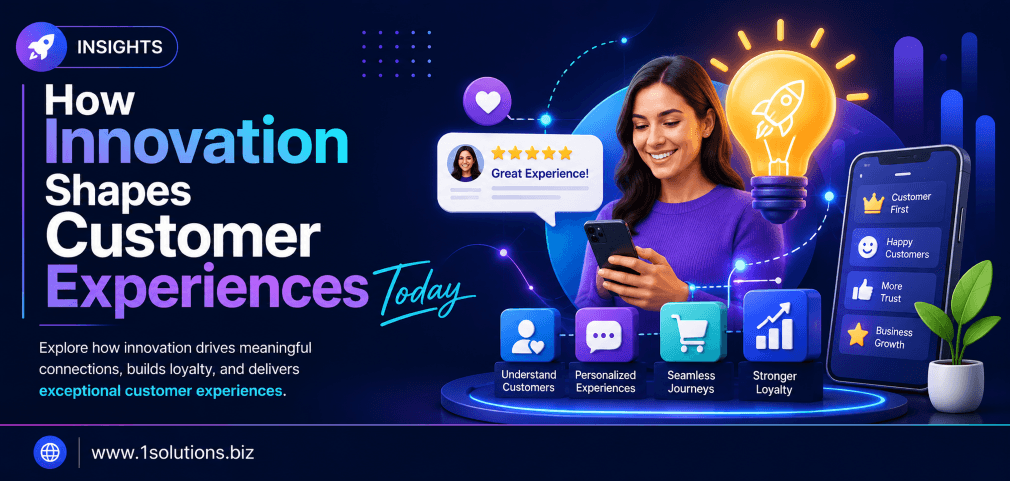
The relationship between technology and customer satisfaction has never been more direct. Every new tool, platform, or approach that businesses adopt sends a signal to customers about how much they are valued. Understanding how innovation shapes customer experiences is no longer optional for brands that want to stay competitive. It is the difference between retaining loyal customers and watching them leave for a competitor that feels more modern, more responsive, and more in tune with their needs.
Innovation is fundamentally changing how businesses connect with customers, from AI-driven personalization to seamless omnichannel journeys. This article breaks down 10 specific ways these changes are playing out, what the data says, and what your business should actually do about it. Not every innovation is worth chasing, so we also highlight where the trade-offs exist.
⚡ Key Takeaways
- Personalization powered by AI is the single biggest driver of customer satisfaction improvements right now.
- Speed and convenience are table stakes. Customers expect both, not just one.
- Omnichannel consistency matters more than any single channel being perfect.
- Emerging tools like agentic browsers are starting to reshape how customers discover and interact with brands online.
- Privacy concerns remain a genuine trade-off when deploying data-heavy personalization strategies.
- Small businesses can compete with large enterprises by using the right digital tools strategically, not by spending more.
- Customer experience and SEO are increasingly connected. Better experiences lead to better rankings.
1. Hyper-Personalization Through AI and Machine Learning
Personalization used to mean adding someone’s first name to an email. That era is gone. AI and machine learning now enable brands to tailor product recommendations, content, pricing, and even support interactions to individual behavior patterns in real time. According to McKinsey (2023), companies that excel at personalization generate 40% more revenue from those activities than average players. That is not a small margin. It reflects a fundamental shift in customer expectations.
What makes this work is the volume of behavioral data that platforms can now process instantly. A customer who browses a product category at 10pm on a Tuesday gets a different experience than one who visits via a Google ad during a lunch break. AI interprets these signals and adjusts the experience accordingly. The trade-off is real though. Customers are increasingly aware of how their data is being used, and heavy-handed personalization can feel intrusive rather than helpful. Brands that win at this are the ones who make personalization feel like genuine understanding, not surveillance. Transparency in data use is not just an ethical choice but a competitive one. Businesses investing in data-driven digital marketing strategies are better positioned to make personalization feel natural rather than forced.
2. Conversational AI and the Evolution of Customer Support
Chatbots were once a source of customer frustration. Clunky, scripted, and limited, they often made problems worse. That has changed significantly. Large language models now power conversational AI tools that can resolve complex queries, recommend products, and even handle complaints with a level of nuance that would have seemed impossible five years ago. Salesforce (2023) found that 61% of customers now prefer using self-service tools for simple issues, and AI-powered chat has become a primary delivery mechanism for that preference.
The opportunity here is substantial, particularly for businesses that handle high volumes of repetitive inquiries. Deploying a well-trained AI assistant can dramatically reduce resolution times and free up human agents to focus on genuinely complex cases. The risk, however, is deploying AI too broadly before it is ready. Nothing damages trust faster than a customer feeling like their concern is being handled by a system that does not understand them. The best implementations keep a clear and easy escalation path to a human agent. Understanding how tools like agentic browsers are beginning to interact with these support systems is also becoming relevant for brands thinking about their next-generation customer touchpoints.
3. Omnichannel Integration That Actually Works
Customers do not think in channels. They start a journey on a mobile app, continue it on a desktop browser, walk into a physical location, and expect everything to be in sync. Most businesses know this in theory but still fail to deliver it in practice. The result is frustration at every handoff point. According to Aberdeen Group (2022), companies with strong omnichannel engagement retain an average of 89% of their customers, compared to just 33% for those with weak omnichannel strategies.
True omnichannel integration requires a unified data layer. Every customer interaction, regardless of channel, needs to feed into a single view of that customer’s history, preferences, and current status. This is technically complex and often organizationally difficult because different teams own different channels. But the payoff is significant. When a customer contacts support and the agent already knows what they purchased, when they purchased it, and what they browsed last week, the interaction feels personal and efficient. It also reduces the repetition that customers find most frustrating. For e-commerce businesses especially, getting this right is foundational. Exploring the right platform infrastructure, including comparisons like WooCommerce vs Shopify, is often the starting point for building a genuinely integrated customer journey.
💡 Pro Tip: Before investing in new customer experience tools, audit your current channel handoffs. Identify the three moments where customers most often need to repeat themselves. Fixing those gaps will deliver more satisfaction than adding new features.
4. Voice Search and the Shift in How Customers Discover Brands
Voice search has quietly become a significant part of how customers find products, services, and information. Smart speakers, mobile voice assistants, and in-car systems have trained a segment of consumers to ask questions conversationally rather than type keyword strings. This changes the SEO and content strategy landscape meaningfully. Voice queries tend to be longer, more conversational, and often local in intent.
Businesses that have optimized for traditional search terms may find themselves invisible to voice searchers who phrase the same question differently. The fix involves restructuring content to answer specific questions directly, building FAQ sections, and ensuring local business information is accurate and complete. This is particularly important for service businesses where local discovery is critical. Implementing local AEO best practices is one of the most practical steps a business can take to stay visible as voice and AI-driven search continues to grow. The brands that adapt their content architecture for these new discovery patterns will maintain visibility while those that do not will quietly lose traffic without understanding why.
5. AI-Powered Search and What It Means for Brand Visibility
Search engines are no longer just link directories. Google’s AI-driven features, including AI Overviews and the newer AI Mode, are changing how results are presented and how customers interact with them. Instead of clicking through to multiple websites, users increasingly get answers directly on the results page. This means that even ranking well for a keyword may result in less traffic than it used to, unless the content is structured to be cited within AI-generated answers.
Understanding the difference between Google AI Overviews and AI Mode is now relevant for any brand managing its online presence. The implications for customer experience are direct. If a customer can get their question answered without visiting your website, the question becomes how you remain part of that answer rather than how you get the click. Brands need to invest in authoritative, well-structured content that search engines and AI systems want to reference. This shifts the content strategy from keyword density toward genuine expertise, clear structure, and trustworthy sourcing. Businesses that adapt to this shift early will maintain customer touchpoints even as the search interface continues to evolve.
6. Real-Time Data and Predictive Customer Behavior
Knowing what a customer wants before they articulate it is the gold standard of customer experience. Predictive analytics, powered by real-time behavioral data, is making this possible for businesses of varying sizes. By analyzing patterns across thousands of customer interactions, predictive models can anticipate when a customer is likely to churn, what product they are likely to need next, and what kind of offer is most likely to convert at a given moment.
Gartner (2023) predicts that by 2025, organizations using AI-driven customer data platforms will outperform competitors by 25% in customer satisfaction scores. The practical application ranges from triggered email sequences that activate when purchase likelihood is high to dynamic website content that changes based on where a visitor is in their buying journey. The challenge is building the data infrastructure to support this without creating privacy risks or compliance issues. Businesses need to be clear with customers about what data is collected and how it is used. When done transparently, predictive personalization is one of the most powerful tools for deepening customer relationships without increasing marketing spend proportionally.
💡 Pro Tip: Start with one predictive use case rather than trying to overhaul your entire data strategy at once. Predicting churn and triggering a retention offer is a high-value, low-complexity place to begin.
7. Visual and Augmented Reality Experiences in E-Commerce
One of the persistent disadvantages of online shopping compared to physical retail has been the inability to see, touch, or try a product before buying. Augmented reality is closing that gap. Furniture retailers let customers visualize how a sofa looks in their living room. Fashion brands let shoppers virtually try on glasses or shoes. Cosmetics companies allow customers to see how a lipstick shade looks on their actual face using a phone camera. These are not novelty features. They reduce purchase anxiety and, critically, they reduce return rates.
Shopify (2023) reported that merchants using 3D and AR product experiences see a 94% higher conversion rate compared to those using only traditional product images. That is a meaningful competitive advantage, especially in categories with high return rates. The trade-off is implementation complexity and cost. Building quality AR experiences requires significant investment in 3D modeling and technical infrastructure. But as the tools mature and costs come down, this will move from a differentiator to a baseline expectation in many product categories. E-commerce businesses that want to stay ahead of this curve should be evaluating their product presentation strategy now. Pairing strong visual experiences with solid e-commerce marketing support ensures that these investments translate into actual revenue growth rather than technical features that go unnoticed.
8. Seamless Payment Innovation and Reducing Friction at Checkout
Checkout abandonment remains one of the most expensive problems in e-commerce. The average cart abandonment rate sits around 70% according to Baymard Institute (2023), and a significant portion of that is caused by friction in the payment process. Too many steps, too few payment options, or a checkout that does not feel secure enough are all conversion killers. Payment innovation directly addresses this by making the final step of a customer journey as effortless as possible.
Buy-now-pay-later options, one-click checkout, digital wallets, and biometric authentication have all contributed to reducing the mental and practical barriers at checkout. For customers, the experience of paying should feel almost invisible. The moment it becomes a source of effort or anxiety, purchase intent drops. For businesses managing online stores, keeping payment options current and the checkout process streamlined is not a one-time project but an ongoing maintenance priority. Regular review of checkout analytics to identify where customers drop off is essential. This connects directly to broader store health practices, including following a thorough WooCommerce store maintenance checklist to ensure the technical foundation supports a smooth customer journey from first click to confirmation page.
9. Content Innovation and the Role of Value-Driven Storytelling
Customers are more skeptical of advertising than at any previous point in marketing history. Banner blindness is real. Ad fatigue is real. What cuts through is content that genuinely helps, educates, or entertains. The brands that are winning at customer experience through content are the ones treating it as a service rather than a sales tool. Tutorials, comparison guides, problem-solving articles, and honest product reviews build the kind of trust that drives long-term customer relationships.
The innovation in content is not just about format but about relevance and timing. AI tools now allow brands to create content at scale without sacrificing quality, provided the human oversight and strategic direction are strong. The risk of purely AI-generated content without editorial judgment is content that is technically correct but emotionally flat, and customers notice that. Good content strategy also serves SEO goals, since search engines increasingly reward depth, accuracy, and genuine usefulness over keyword optimization alone. Brands that invest in professional content and copywriting services tend to produce material that serves both goals simultaneously: engaging customers and building organic visibility. The two are not in competition. They are complementary.
💡 Pro Tip: Before publishing any piece of content, ask: does this help someone solve a problem or make a better decision? If the honest answer is no, the content is serving the brand’s interests, not the customer’s. Those pieces rarely perform well in search or in building loyalty.
10. Reputation Management as a Customer Experience Signal
What customers say about a brand after an interaction is now as important as the interaction itself. Reviews, social mentions, forum discussions, and response patterns are all visible to prospective customers before they ever engage with a brand directly. This means that reputation management has become a direct component of customer experience strategy, not just a PR concern. A business can have outstanding products and poor reputation management and still lose customers to a competitor with average products but excellent review management.
The innovation here is in the tools and systems that make reputation monitoring and response scalable. Platforms that aggregate reviews across multiple channels, flag sentiment shifts in real time, and enable rapid response have made it possible for businesses to stay ahead of reputation issues rather than react to them after the damage is done. Equally important is the practice of actively soliciting reviews from satisfied customers, since the default behavior is that dissatisfied customers leave reviews and satisfied ones often do not. Investing in professional reputation management services gives businesses a structured approach to both monitoring and influencing how they are perceived online. The connection to customer experience is direct: a brand that responds thoughtfully to negative feedback demonstrates the same care for customers that generates loyalty in the first place.
How These Innovations Compare Across Business Size
| Innovation Area | Enterprise Advantage | SMB Opportunity | Primary Trade-Off |
|---|---|---|---|
| AI Personalization | Proprietary data lakes, custom models | Third-party tools with affordable tiers | Privacy concerns and data governance complexity |
| Conversational AI | Custom-trained assistants | Off-the-shelf chatbot platforms | Risk of poor escalation handling |
| Omnichannel Integration | Dedicated engineering teams | Platform-level integrations (e.g., Shopify) | Organizational silos slow implementation |
| Voice and AI Search | Dedicated SEO teams | Content restructuring with FAQ focus | Lower direct traffic even with good rankings |
| AR/Visual Commerce | Custom 3D development | App-based AR tools | High production cost for 3D assets |
| Predictive Analytics | Data science teams | CRM-based prediction features | Requires clean, consistent data inputs |
| Reputation Management | Agency relationships | Review monitoring tools and services | Time-intensive without automation |
Practical Action Section: Where to Focus Your Effort
- Do This Now: Audit your checkout process for friction points and ensure your Google Business profile and review responses are current. These have the fastest, most measurable impact on customer experience and conversion. Also verify that your website loads quickly on mobile, since speed is the most basic customer experience signal.
- Worth Doing: Invest in content that answers the specific questions your customers are actually asking. Structure it clearly with headers and FAQ sections. This serves both voice search optimization and AI search visibility simultaneously. Begin evaluating AI-powered chat tools for your most common support queries. Exploring how LLM optimization affects your content’s presence in AI search results is also worth prioritizing in this phase.
- Low Priority: AR and visual commerce experiences are high-impact but high-cost. Unless you are in a category with notoriously high return rates (fashion, furniture, cosmetics), this is a future investment rather than an immediate one. Monitor the space and revisit when tooling costs come down further.
Frequently Asked Questions
How does innovation shapes customer experiences differently for small businesses compared to large ones?
Small businesses often have an advantage in agility. They can adopt new tools faster and personalize customer interactions more naturally because of smaller customer volumes. The gap is budget and technical resources. However, many innovation tools now offer affordable tiers specifically designed for smaller operations, making the playing field more level than it used to be.
Is AI personalization worth the investment for a mid-sized business?
For most mid-sized businesses, yes, particularly if customer retention and repeat purchase rates are important metrics. The key is starting with a specific use case rather than attempting a full platform overhaul. Even a well-configured email automation system with behavioral triggers qualifies as AI-driven personalization and can deliver measurable results quickly.
What is the biggest risk when adopting new customer experience technologies?
Deploying technology before it is ready or before the team understands how to manage it. A poorly configured chatbot that frustrates customers, or an AR feature that works inconsistently, does more damage than having no such feature at all. Pilot programs with limited rollouts before full deployment are a sensible approach to managing this risk.
How does customer experience innovation connect to SEO performance?
More directly than most businesses realize. Page speed, mobile usability, content depth, and user engagement signals all factor into how search engines evaluate a site’s quality. A site that delivers a genuinely good experience tends to have lower bounce rates, longer session times, and more return visitors, all of which are positive signals for rankings. Learning how to boost SEO through page content analysis is one practical way to align these goals.
How should a business prioritize which customer experience innovations to adopt first?
Start by identifying your biggest friction points in the current customer journey. Where do customers drop off? Where do complaints cluster? Where does your team spend the most time on repetitive tasks? Innovations that solve existing, documented pain points almost always deliver better ROI than innovations adopted because they seem interesting or because competitors are using them. Fix what is broken before adding what is new.
Conclusion
Understanding how innovation shapes customer experiences is one of the most practical strategic questions a business can ask right now. The ten areas covered here, from AI personalization to reputation management, are not theoretical. They are happening across industries, and customers are already forming preferences based on which brands handle them well. The good news is that not every innovation requires a large budget. Many of the highest-impact changes involve restructuring existing content, tightening checkout flows, and being more consistent with how customer feedback is handled. The businesses that will lead in customer experience over the next few years are not necessarily the ones with the biggest technology budgets. They are the ones that understand their customers clearly, choose their innovations purposefully, and execute with genuine care for the experience they are delivering.