
What Does a Red Heart Mean on Snapchat? 10 Things You Need to Know
If you have ever opened Snapchat and spotted a small red heart sitting next to a friend’s name, you have probably wondered what it actually means. Understanding what a red heart mean on Snapchat goes beyond emoji curiosity. It tells you something real about how often and how consistently you are connecting with someone on the platform. Whether you are a casual Snapchat user or someone who tracks every streak religiously, this guide breaks down every layer of the red heart symbol in plain, practical terms.
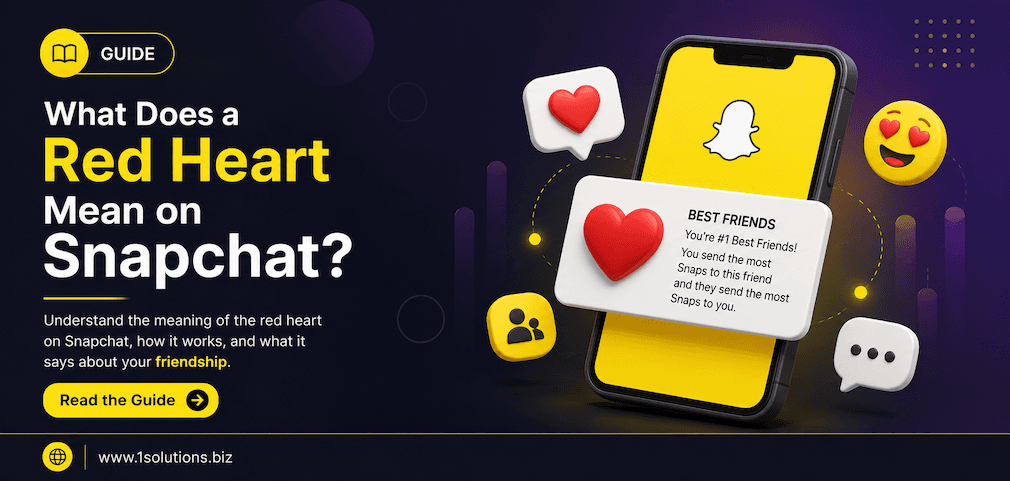
The red heart on Snapchat means you and a friend have been each other’s number one best friend for two consecutive weeks. It is a step up from the yellow heart and can evolve into a pink heart if the streak continues for two months. This guide covers 10 key things you need to know about earning, keeping, and understanding this emoji.
⚡ Key Takeaways
- The red heart appears after two weeks of being mutual best friends on Snapchat.
- It upgrades from a yellow heart, which represents just one week of mutual top-friend status.
- If the mutual best friend status continues for two months, the red heart becomes two pink hearts.
- Snapchat’s best friend algorithm is based on who you send and receive the most snaps from.
- You can lose the red heart if either person snaps someone else more frequently.
- The red heart is visible only to you, not to your friend or anyone else on the platform.
- Snapchat’s emoji system is a deliberate engagement mechanic designed to increase daily active usage.
1. The Red Heart Is a Milestone Emoji, Not Just a Decoration
Snapchat uses a tiered emoji system to reflect the depth and consistency of your interactions with different friends. The red heart is not randomly assigned. It appears specifically when you and another user have been each other’s number one best friend for exactly two consecutive weeks. That means both of you are sending more snaps to each other than to anyone else on the platform, and this mutual top-friend status has held steady for 14 days in a row.
This is important because Snapchat’s algorithm is tracking behavior on both sides of the friendship. It is not enough for you to snap someone constantly if they are snapping someone else more. Both users need to prioritize each other simultaneously. According to Snap Inc.’s own platform documentation, best friend status is recalculated regularly based on recent snap activity, which means the red heart reflects a genuine and sustained pattern of communication rather than a one-sided habit.
For context, Snapchat reported 422 million daily active users in Q4 2024 (Snap Inc., 2024), which shows just how many people are navigating this emoji system every single day. Understanding what each symbol means helps you read your social connections more clearly and use the app more intentionally.
2. It Starts With the Yellow Heart
Before you can earn the red heart, you first pass through the yellow heart stage. The yellow heart appears when you and a friend become each other’s number one best friend for the very first time. Think of it as the starting point of a mutual connection. You have been snapping each other more than anyone else, and Snapchat acknowledges that with a yellow heart next to the friend’s name.
The yellow heart is a signal that says: this person is currently your top snap buddy and you are theirs. It is fresh, recent, and not yet proven over time. Many friendships stay at the yellow heart level because maintaining that top-friend mutual status consistently is harder than it sounds. Life gets busy, group chats shift, and new people enter the mix.
If you manage to keep the yellow heart for a full two weeks without it disappearing, Snapchat upgrades it to the red heart. This progression is intentional. Snapchat designed the emoji system to reward consistency and loyalty in communication, which subtly encourages users to keep snapping daily. It is a clever engagement mechanic, and it clearly works given the platform’s strong daily active user numbers.
💡 Pro Tip: If you want to move from a yellow heart to a red heart faster, focus on sending personalized snaps rather than mass stories. Direct snaps count more heavily toward best friend calculations than passive story views.
3. The Red Heart Can Evolve Into Two Pink Hearts
The red heart is not the final destination. If you and your mutual best friend manage to maintain that number one best friend status for a full two months (approximately 60 days), Snapchat replaces the red heart with two pink hearts. This is often called the Super BFF status, and it represents one of the highest friendship indicators available on the platform.
Two pink hearts are relatively rare because sustaining mutual top-friend status for two months requires both parties to consistently prioritize snapping each other above everyone else for that entire period. Any significant drop in activity or a shift to snapping someone new more frequently can reset the counter.
The progression looks like this: yellow heart after mutual top-friend status begins, red heart after two weeks, and two pink hearts after two months. Each stage is a reward for consistent engagement, and each one signals a progressively deeper interaction history. For many users, seeing those two pink hearts is a point of pride, signaling a truly close and consistent friendship on the platform.
4. Only You Can See the Red Heart
One detail that surprises many users is that the red heart emoji next to a friend’s name is only visible to you. Your friend sees their own version of the emoji on their end, but neither of you can see what the other person’s screen shows. This means the red heart is a personal insight into your own snap habits, not a public badge that others can observe.
This design choice is intentional. Snapchat built its emoji system around personal feedback rather than social broadcasting. The emojis are meant to help you understand your own communication patterns without creating unnecessary social pressure or competition visible to third parties. It keeps the experience intimate and private, which aligns with Snapchat’s overall philosophy of ephemeral, low-pressure sharing.
According to a 2023 survey by Statista, approximately 59% of Snapchat users are between the ages of 13 and 34, meaning the platform’s engagement features are primarily shaped around younger audiences who place high social value on status indicators like streaks and friend emojis. Understanding the private nature of these emojis can reduce anxiety around what others might be seeing on their own screens.
5. Snap Activity Drives the Algorithm, Not Chat Messages
A common misconception is that chatting with someone on Snapchat contributes to earning the red heart. In reality, Snapchat’s best friend algorithm is based almost entirely on snap exchanges, meaning photos and videos sent directly through the camera function, not text chats. You could have long daily conversations with someone in the chat tab without it moving you any closer to a yellow or red heart.
This is worth knowing because many users assume all interactions on the platform contribute equally. They do not. Snaps, especially direct one-to-one snaps rather than group snaps or story posts, carry the most weight in the algorithm. If you want to build or maintain a red heart with a specific friend, the most effective strategy is to exchange direct snaps with them daily.
Snapchat has never published a precise formula for how it weights different types of interactions, but the general consensus among platform users and social media analysts is consistent: direct snap exchanges are the primary currency of the best friend system. Chat frequency, reaction frequency, and story views play a secondary or negligible role at best.
💡 Pro Tip: If you notice your red heart disappearing, check whether you have recently been sending more snaps to a group or a new contact. Refocusing your direct snap activity back toward your intended best friend should restore the emoji within a few days.
6. You Can Lose the Red Heart Without Warning
The red heart is not permanent. It disappears the moment the mutual number one best friend status breaks. If you start snapping someone else more than your current red heart friend, or if your friend starts prioritizing another person’s snaps over yours, the emoji can vanish without any notification from Snapchat. You will simply open the app one day and see the heart is gone.
This can feel jarring, especially if the change happened gradually without either party realizing it. A holiday, a new relationship, a busy week at school or work, any of these can shift snap habits enough to break the mutual top-friend status. The algorithm does not care about intent. It only tracks behavior.
The loss of a red heart does not mean the friendship is damaged. It is purely a reflection of recent snap activity. If both users resume mutual high-frequency snapping, the yellow heart will return first, followed by the red heart after another two-week period of consistent mutual priority. Think of it as a reset rather than a permanent loss. Social media relationships are dynamic, and Snapchat’s emoji system mirrors that reality faithfully.
7. The Red Heart Fits Into a Broader Emoji System on Snapchat
Snapchat uses more than a dozen different emojis to represent different types of friendships and interaction patterns. The red heart is one of the most meaningful, but it exists within a larger framework. Understanding the full system helps put the red heart into proper context.
| Emoji | Meaning | How to Earn It |
|---|---|---|
| 💛 Yellow Heart | Mutual #1 Best Friend | Both snap each other most for the first time |
| ❤ Red Heart | Mutual #1 Best Friend for 2 weeks | Sustain yellow heart status for 14 days |
| 💕💕 Two Pink Hearts | Super BFF | Sustain red heart status for 2 months |
| 🔦 Grimace Face | Shared Best Friend | Your #1 best friend is also theirs |
| 😇 Smirk Face | One-sided Best Friend | You are their #1 but they are not yours |
| 😀 Smile Face | Good Friend | One of your best friends (not #1) |
| 🔥 Fire | Snap Streak | Snapping back and forth for consecutive days |
The grimace face is particularly telling. It appears when the person you snap most is also the person someone else snaps most, which can create interesting social dynamics. The red heart and the grimace face together can signal a close but potentially overlapping social circle.
8. Customizing Emojis Does Not Change What They Mean
Snapchat allows users to customize the emojis assigned to different friendship categories. You can replace the red heart with a different emoji of your choosing if you prefer a star, a flame, or any other symbol. However, changing the display emoji does not change the underlying meaning or the criteria used to assign it. The red heart’s function, representing two weeks of mutual best friend status, remains exactly the same regardless of which emoji is displayed.
This customization option is found in Snapchat’s settings under “Customize Emojis.” It is entirely cosmetic. Many users choose to keep the default emojis because they are universally understood among Snapchat’s user base, making it easier to discuss or compare friend statuses with others. Others enjoy personalizing their experience. Both approaches are perfectly valid.
It is worth noting that if you share a device or account with someone, any emoji customizations you make will apply across the board. There is no per-friend emoji customization. You change the emoji for the entire category, meaning all mutual two-week best friends would show the same replacement emoji rather than the default red heart.
9. The Red Heart Is a Subtle Signal of Social Engagement Depth
Beyond its technical definition, the red heart carries genuine social weight for many users. It is a visible confirmation that a digital friendship is active, mutual, and sustained. For younger users especially, the presence or absence of the red heart can reflect the health of a social relationship in a way that feels tangible and real.
According to research published by Common Sense Media in 2023, teenagers who use social media apps with gamified engagement features, such as streaks, badges, and status indicators, report both higher satisfaction and higher anxiety around those features. The red heart falls squarely into this category. It motivates consistent engagement but can also create pressure to maintain it.
This is where social media literacy matters. Recognizing that the red heart is an algorithmic output based on behavior rather than a direct measure of emotional closeness helps users engage with it in a healthier way. A strong real-world friendship does not require a red heart on Snapchat, and the absence of one does not indicate a weakened bond. Just as understanding digital metrics is important in marketing contexts, including areas covered by our comprehensive digital marketing solutions, it is equally important to understand what social platform metrics actually measure versus what they appear to measure.
💡 Pro Tip: If you feel stressed about maintaining a red heart, consider muting your best friend score anxiety by using Snapchat’s customization settings to replace the emoji with something neutral. The underlying activity will still be tracked, but the visual reminder will be less prominent.
10. The Red Heart Reflects Snapchat’s Broader Engagement Strategy
Snapchat’s emoji system, including the red heart, is not an accident or a minor feature. It is a deliberate product design choice aimed at increasing daily active usage and deepening platform stickiness. By giving users visual rewards for consistent behavior, Snapchat encourages people to open the app daily, send snaps regularly, and invest emotionally in their platform relationships.
This strategy is not unique to Snapchat. Every major social platform uses some version of gamified engagement mechanics. Snapchat’s version is particularly effective because the streaks and heart emojis create a sense of ongoing commitment that feels personal rather than purely performative. According to eMarketer’s 2024 social media engagement report, Snapchat’s daily active user retention rate outperforms several competing platforms among users aged 13 to 24, and features like streaks and best friend emojis are cited as contributing factors.
For businesses and marketers, understanding how platforms like Snapchat drive engagement through behavioral cues is increasingly relevant. The same principles that make the red heart effective, consistency, mutual value, and visible progression, apply directly to how brands build relationships with audiences online. Platforms with strong engagement mechanics also tend to offer robust advertising ecosystems. If you are exploring social media as a channel for brand growth, understanding the mechanics of platforms like Snapchat matters just as much as mastering tools on other networks. You might also find value in reading about how Instagram’s shadowban affects visibility, since both platforms share overlapping audiences and similar algorithmic quirks.
For a broader view of the social media landscape and how different platforms stack up for engagement and discoverability, the complete guide to the top 100 social media sites is a useful reference. And if you manage social media for a brand or are building an audience across platforms, pairing that knowledge with strong social media management support can help you build consistent, meaningful engagement across channels.
Practical Action: What to Do With This Knowledge
- Do This Now: Check your current Snapchat friend list and identify who currently has a yellow or red heart. This tells you who your most active mutual connections are and whether your snap habits align with your actual social priorities.
- Worth Doing: If you want to build stronger digital connections with specific friends, start sending more direct, personalized snaps rather than relying on group chats or story broadcasts. Direct snaps are the primary driver of best friend status.
- Low Priority: Customizing your Snapchat emojis is a fun option but has no functional impact on how the algorithm tracks your interactions. It is worth exploring if aesthetics matter to you, but it should not be a focus if your goal is understanding or managing your friend statuses.
Understanding social engagement patterns on platforms like Snapchat is also relevant in a broader digital context. Whether you are managing personal accounts or building brand presence, the same principles of consistency and mutual value apply. If you want to understand how those principles translate into measurable online growth, exploring local AEO best practices or diving into page content analysis for SEO can offer parallel insights about how algorithms reward sustained, relevant activity.
Conclusion
Understanding what a red heart mean on Snapchat is more nuanced than it first appears. It is a two-week milestone emoji that reflects sustained mutual best friend activity, sits between the yellow heart and the double pink hearts in Snapchat’s friendship progression system, and is only visible to you. It can disappear without warning if snap habits change on either side, and it is driven entirely by direct snap exchanges rather than chats or story views.
For casual users, it is a fun social signal. For more engaged users, it is a useful indicator of who you are genuinely connecting with most on the platform. Either way, knowing what it means and how it works gives you more control over your Snapchat experience and a clearer picture of your digital social habits. And if you are a marketer or brand manager interested in how social engagement mechanics translate into real audience growth, exploring dedicated search and digital visibility services can help you apply similar consistency-driven principles to your broader online presence.
Frequently Asked Questions
How long does it take to get the red heart on Snapchat?
It takes exactly two weeks of continuous mutual best friend status. Both you and the other person need to be each other’s number one snap recipient for 14 consecutive days. The yellow heart appears first, and after two weeks it upgrades to the red heart.
Can you have a red heart with more than one person at a time?
No. The red heart is tied to your number one best friend, and you can only have one number one best friend at a time. Since only one person can hold that top spot on each side, the red heart will only ever appear next to a single contact on your friend list.
Does the red heart disappear if I stop using Snapchat for a few days?
It depends. If your absence causes someone else to become your friend’s top snap contact, or if you snap someone else more upon returning, the mutual status can break and the heart may disappear. A brief pause alone is not guaranteed to remove it, but any shift in relative snap frequency can reset the progress.
Is the red heart the same as a Snapchat streak?
No, they are different features. A Snapchat streak tracks consecutive days of snap exchange between two users and is shown as a fire emoji with a number. The red heart tracks mutual best friend status over time. You can have a streak with someone without having a red heart, and vice versa.
Why did my red heart turn back into a yellow heart?
This happens when the mutual best friend status was maintained for less than two weeks before breaking and then restarting. If the streak of mutual top-friend activity resets, the system reverts to the yellow heart stage and you need to complete another full two weeks to earn the red heart again.