
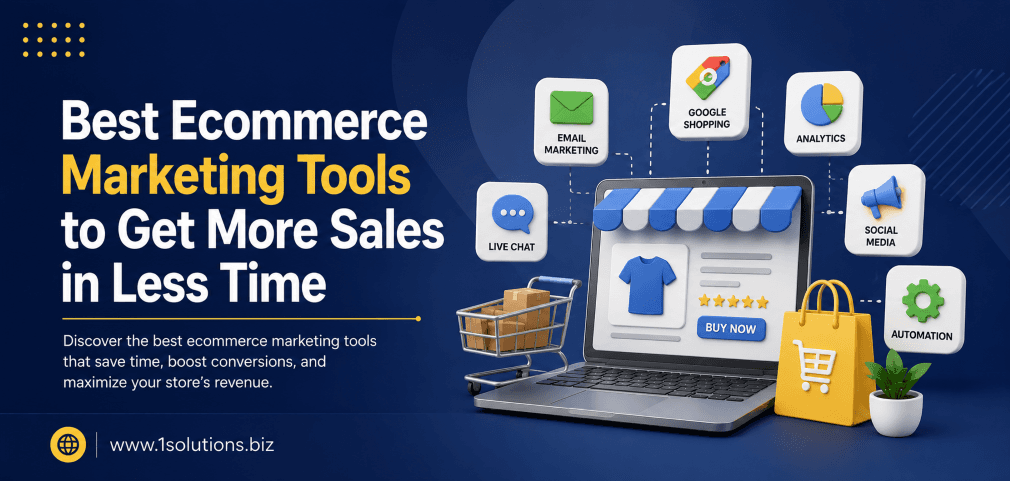
Best ecommerce marketing tools to get more sales in less time
Finding the best ecommerce marketing tools to get more sales in less time is not about chasing every shiny new platform. It is about picking the right combination of tools that fit your budget, team size, and growth stage. Whether you run a lean solo store or manage a growing brand with a small team, the tools you choose directly shape how fast you can scale, how well you retain customers, and how efficiently you spend your ad budget.
This article covers 10 of the best ecommerce marketing tools to get more sales in less time, from email automation and SEO platforms to Google Shopping and social proof apps. Each tool is explained with real use cases, honest trade-offs, and practical tips so you can make smarter decisions without wasting time or money.
⚡ Key Takeaways
- Email marketing still delivers one of the highest ROIs of any ecommerce channel, often above $36 for every $1 spent.
- Google Shopping campaigns consistently drive purchase-ready traffic that converts faster than standard search ads.
- SEO tools help you attract organic traffic that compounds over time, reducing long-term ad spend.
- Social proof tools like review apps can increase conversion rates significantly without changing your ad budget.
- Choosing a platform that integrates with your existing store (Shopify, WooCommerce, etc.) saves enormous time.
- No single tool does everything well. A stack of 3 to 5 focused tools usually outperforms one bloated all-in-one platform.
- Tracking and analytics tools are non-negotiable. You cannot improve what you cannot measure.
Why the Right Tool Stack Matters More Than the Biggest Budget
Ecommerce brands that invest in the right marketing tools grow faster than those that rely purely on ad spend. According to HubSpot (2024), businesses that use marketing automation see a 451% increase in qualified leads. That is not because automation is magic. It is because consistency, timing, and personalization become scalable when you have the right systems in place. Let us walk through 10 tools and categories that genuinely move the needle.
10 Best Ecommerce Marketing Tools to Get More Sales in Less Time
1. Klaviyo: Email and SMS Automation That Actually Converts
Klaviyo has become the go-to email and SMS marketing platform for ecommerce brands, and for good reason. It connects directly with Shopify, WooCommerce, BigCommerce, and other major platforms, pulling in real-time purchase data to trigger highly relevant messages. You can set up abandoned cart sequences, post-purchase upsell flows, winback campaigns, and browse abandonment emails without writing a single line of code.
What makes Klaviyo stand out is its segmentation depth. You can target customers based on purchase frequency, average order value, product category preferences, and even predictive lifetime value. Email marketing as a whole delivers an average return of $36 for every $1 spent, according to Litmus (2023). Klaviyo takes that ROI potential and adds precision targeting on top of it.
The trade-off is cost. Klaviyo pricing scales with your list size, and once you cross a few thousand contacts, the monthly bill climbs quickly. Smaller stores might start with Mailchimp or Omnisend and migrate later. But if you are serious about ecommerce growth, Klaviyo’s behavioral triggers and deep analytics justify the investment. Start with three flows: abandoned cart, welcome series, and post-purchase. Those three alone often account for 20 to 30 percent of email-attributed revenue for most stores.
2. Google Shopping Ads: High-Intent Traffic at Scale
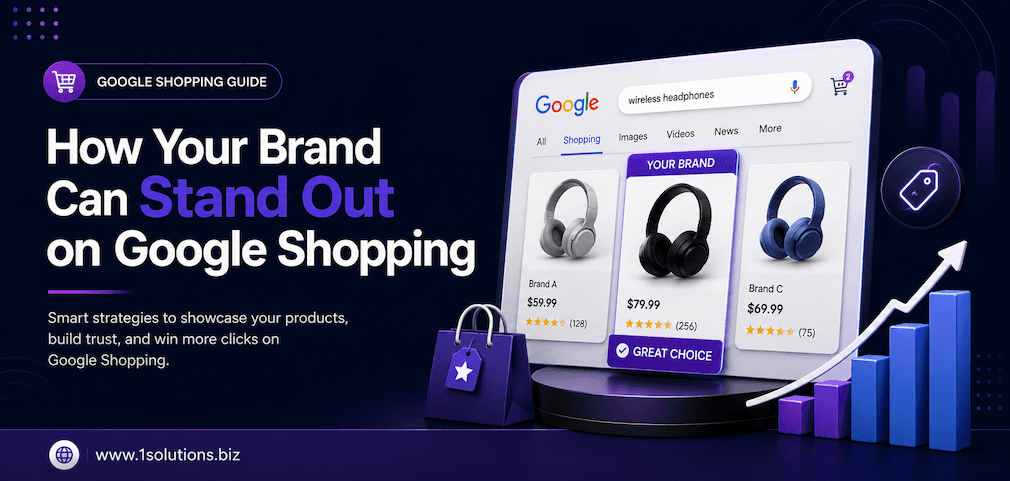
Google Shopping ads show your products directly in search results with images, prices, and store names. They are one of the most efficient paid channels for ecommerce because the user has already searched for something specific, which means intent is high and friction is low. Learning how to increase sales with Google Shopping ads is a skill that pays off for months and years after you build the foundation.
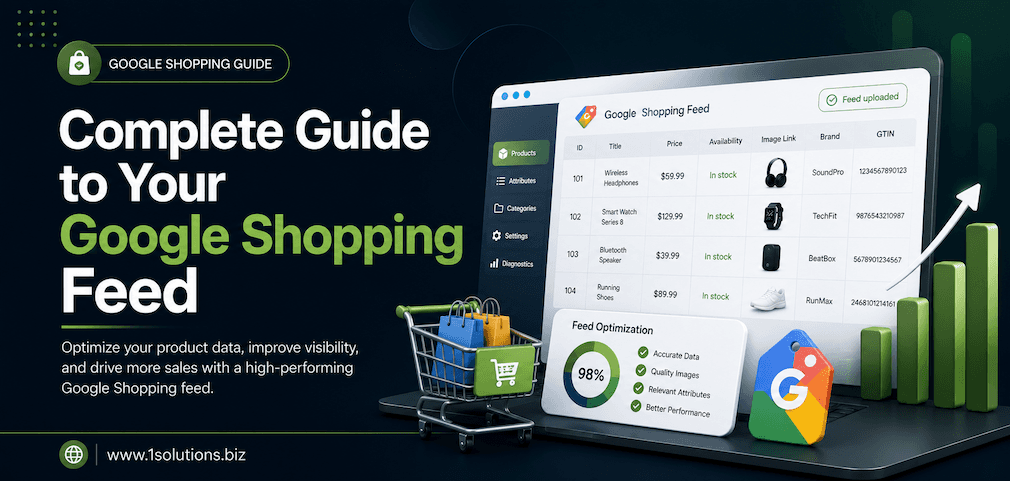
The key to making Shopping ads work is a clean, well-optimized product feed. Your titles, descriptions, images, and attributes need to match how your customers actually search. Poor feed quality leads to wasted spend and low impression share. If you want to go deeper on this, the complete guide to your Google Shopping feed walks through every element you need to get right before you spend a single dollar.
The trade-off with Shopping ads is that they require ongoing optimization. You need to manage negative keywords, monitor search term reports, and adjust bids regularly. But once your campaigns are running efficiently, they can deliver purchase-ready traffic that outperforms almost every other paid channel. Pair this with smart bidding strategies and a well-structured campaign, and you have a repeatable sales machine. For brands wanting expert-level management, partnering with an ecommerce marketing services agency can shortcut the learning curve significantly.
💡 Pro Tip: Segment your Shopping campaigns by product margin. Bid more aggressively on high-margin products and reduce bids on low-margin SKUs. This simple structure can dramatically improve your overall return on ad spend without increasing your budget.
3. SEMrush or Ahrefs: SEO and Competitive Intelligence
If you want traffic that does not disappear the moment you stop paying for it, SEO is your answer. Tools like SEMrush and Ahrefs give you the data to understand what your competitors rank for, which keywords drive the most revenue in your niche, what backlinks are pointing to top-ranking pages, and where your own site has technical issues holding it back.
For ecommerce stores, the most valuable use cases include keyword gap analysis (finding terms your competitors rank for but you do not), product page optimization, and category page SEO. According to BrightEdge (2023), organic search drives 53% of all website traffic across industries, making it the single largest traffic source for most ecommerce stores over time.
The honest trade-off is that SEO takes time. You will rarely see results in the first 30 to 60 days. But the compounding effect means that traffic earned today keeps working for you months later without additional spend. Use your SEO tool alongside a strong content strategy, and consider reading up on how to boost your SEO efforts with page content analysis to squeeze more value from your existing pages. If you need professional help executing an SEO plan, exploring dedicated ecommerce SEO packages can save you significant time and guesswork.
4. Hotjar or Microsoft Clarity: Understand How Shoppers Behave on Your Site
You can run all the traffic campaigns in the world, but if your product pages are confusing or your checkout flow has friction, you will keep losing sales. Hotjar and Microsoft Clarity (which is free) let you watch session recordings of real visitors, view heatmaps showing where people click and scroll, and identify the exact points where users drop off.
For ecommerce, this is invaluable. You might discover that users on mobile are tapping a button that does not work, or that people scroll past your add-to-cart button without seeing it because of a poorly placed image. These insights cannot come from Google Analytics alone. You need visual behavior data to make confident UX improvements.
Microsoft Clarity is a genuinely capable free option that most small and medium ecommerce stores can start with immediately. Hotjar’s paid tiers add survey tools and more granular filtering, which become useful at higher traffic volumes. Either way, reviewing five to ten session recordings per week gives you a fast feedback loop on what is and is not working on your site. Make it a habit, and you will consistently find conversion wins that no amount of extra ad spend could fix.
5. Yotpo or Judge.me: Social Proof and Review Collection
Shoppers trust other shoppers more than they trust your marketing copy. A product with 50 reviews converts at a measurably higher rate than the same product with zero reviews. According to Spiegel Research Center (2022), displaying reviews can increase conversion rates by up to 270% for lower-priced products. For higher-priced items, the effect is even larger because the purchase decision carries more risk.
Yotpo is a premium option with deep integrations for review collection, photo and video UGC (user-generated content), loyalty programs, and SMS. It is well-suited for mid-to-large stores that want everything in one system. Judge.me is a more affordable alternative that handles core review collection and display extremely well, with a generous free plan that works with both Shopify and WooCommerce.
The trade-off with both tools is that reviews take time to accumulate. You need to actively solicit them via post-purchase email sequences, and you need to respond to negative reviews publicly to show prospective buyers that your brand is trustworthy. The tool does not do all the work for you. That said, building a review collection habit early pays dividends for the life of your store. Combine review tools with a solid social media presence to amplify user-generated content across channels.
6. Facebook Ads Manager: Paid Social for Discovery and Retargeting
Facebook and Instagram remain two of the most powerful paid channels for ecommerce, particularly for visual products and impulse purchases. Facebook Ads Manager lets you run prospecting campaigns to find new audiences based on interests, behaviors, and lookalike modeling, as well as retargeting campaigns to bring back visitors who browsed but did not buy.
The learning curve for Facebook Ads is real. Campaign structure, creative testing, audience segmentation, and bidding strategies all require time to master. For a step-by-step breakdown, the guide on how to advertise on Facebook is a practical starting point. The biggest driver of performance on Meta platforms is creative. A great image or video will outperform a mediocre one even if your targeting is identical.
The trade-off is that Meta ad costs have increased, and iOS privacy changes have made attribution less precise than it once was. That means your reported ROAS may look lower even when actual sales are coming in. Use post-purchase surveys to understand where customers found you, and combine Meta data with your own first-party analytics. Brands that manage their Facebook presence strategically also benefit from organic reach through community building. If managing this in-house feels stretched, consider working with a team that specializes in Facebook management services to maintain consistent output.
💡 Pro Tip: Run a Dynamic Product Ad (DPA) retargeting campaign targeting visitors who viewed products but did not add to cart. This is often the highest-ROAS campaign type available for ecommerce brands on Meta, and it requires very little ongoing creative work once set up.
7. Google Analytics 4 (GA4): Your Core Analytics Foundation
Before you can improve anything, you need to measure it accurately. Google Analytics 4 is the standard analytics platform for ecommerce stores, and it is free. GA4 tracks sessions, conversions, product views, add-to-cart events, checkout steps, and revenue attribution. It also integrates with Google Ads and Search Console, giving you a connected view of your paid and organic performance.
For ecommerce specifically, setting up enhanced ecommerce tracking in GA4 unlocks reports on product performance, purchase funnel drop-off, and revenue by traffic source. This data tells you which campaigns are profitable, which products have high view-to-purchase rates, and where in the funnel you are losing potential customers.
The trade-off with GA4 is the learning curve. It uses an event-based model that is fundamentally different from Universal Analytics, and many business owners find the interface less intuitive at first. However, there are excellent free resources to help you get set up correctly. Once configured, GA4 becomes the data backbone that informs every other tool on this list. Do not skip this step. Running ecommerce marketing without proper analytics is like navigating without a map.
8. Omnisend or ActiveCampaign: Multi-Channel Automation for Smaller Budgets
Not every store is ready for Klaviyo’s pricing. Omnisend and ActiveCampaign offer robust marketing automation at more accessible price points, making them excellent choices for stores in earlier growth stages. Omnisend is built specifically for ecommerce, with pre-built automation workflows for cart abandonment, welcome series, and product recommendations. ActiveCampaign is broader, covering CRM, email, and SMS across both ecommerce and service businesses.
Both platforms support segmentation, A/B testing, and multi-channel messaging including push notifications and SMS alongside email. Omnisend’s ecommerce-native design means setup is faster for Shopify and WooCommerce users. ActiveCampaign’s CRM features make it more useful if your store has a longer sales cycle or a customer service team that needs contact tracking.
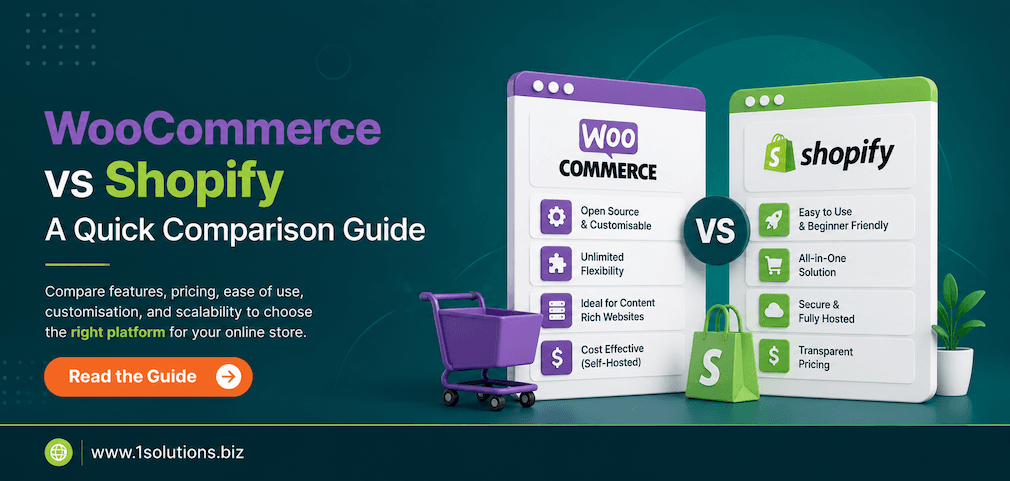
If you are running a WooCommerce store, pairing a tool like Omnisend with a well-maintained store is important. The WooCommerce store maintenance checklist is a helpful reference for keeping your backend clean and your integrations working properly. Also, if you are deciding between platforms, the comparison between WooCommerce and Shopify can help you choose the right foundation before you build your tool stack on top of it.
9. Canva or Adobe Express: Fast Visual Content Creation
Marketing moves fast, and your ability to produce compelling visuals quickly is a genuine competitive advantage. Canva and Adobe Express give non-designers the power to create professional-quality product images, social media graphics, email banners, ad creatives, and promotional content without a design team or a large budget.
Canva’s template library is vast, and its brand kit feature lets you lock in your fonts, colors, and logo so every asset stays on-brand even when produced quickly. Adobe Express (formerly Adobe Spark) integrates better with the broader Adobe ecosystem, which matters if your team already uses Photoshop or Lightroom for product photography.
The honest limitation is that neither tool replaces a skilled designer for complex brand projects or high-production campaigns. But for the everyday content needs of an ecommerce brand, including seasonal sale banners, product launch graphics, and social media posts, both tools dramatically cut the time and cost of production. Combine consistent visuals with a strong social media presence to build brand recognition. For content that goes beyond visuals into copywriting and strategy, professional content and copywriting services can fill the gap and give your brand a sharper voice across all touchpoints.
💡 Pro Tip: Create a content calendar using Canva or a simple spreadsheet and batch your visual content production once per week. Spending two hours creating a week’s worth of assets is far more efficient than designing one post at a time every day.
10. Google Search Console: Free SEO Insights You Cannot Ignore
Google Search Console is one of the most underused tools in ecommerce marketing, and it is completely free. It shows you exactly which search queries are bringing users to your site, which pages are getting impressions but low clicks (a sign that your title tags and meta descriptions need improvement), which pages have indexing errors, and how your Core Web Vitals score is trending.
For ecommerce stores, Search Console data is gold. You can find product-level and category-level keywords that are ranking on page two of Google, then optimize those pages to push them to page one. You can also identify pages that Google is not indexing at all, which is a common issue on large stores with dynamically generated URLs or thin content. If you have ever wondered why certain pages are not appearing in search results, the breakdown on why Google is not indexing your page covers the most common causes clearly.
Combined with an SEO tool like SEMrush or Ahrefs, Search Console gives you a complete picture of your organic search performance. It should be checked weekly, not just when something seems wrong. The brands that win at SEO are the ones that treat it as an ongoing process rather than a one-time setup. If you want professional support to make the most of your organic presence, a results-focused SEO services company can accelerate the work considerably.
Quick Comparison: Top Ecommerce Marketing Tools at a Glance
| Tool | Primary Use | Best For | Cost | Trade-Off |
|---|---|---|---|---|
| Klaviyo | Email and SMS automation | Growing and established stores | Paid (scales with list) | Expensive at large list sizes |
| Google Shopping Ads | Paid product discovery | All ecommerce sizes | Pay per click | Requires ongoing feed optimization |
| SEMrush / Ahrefs | SEO and competitive research | Stores investing in organic | Paid monthly | Results take time to appear |
| Hotjar / Clarity | Behavior analytics | All store sizes | Free to paid | Only reveals problems, not solutions |
| Yotpo / Judge.me | Reviews and social proof | All store sizes | Free to paid | Reviews accumulate slowly |
| Facebook Ads Manager | Paid social advertising | Visual and impulse products | Pay per click | Attribution is less precise post-iOS |
| Google Analytics 4 | Core analytics and tracking | Every ecommerce store | Free | Steep learning curve |
| Omnisend / ActiveCampaign | Email and multi-channel automation | Early-stage stores | Affordable tiers | Fewer ecommerce-specific features than Klaviyo |
| Canva / Adobe Express | Visual content creation | Teams without designers | Free to paid | Not a replacement for complex design work |
| Google Search Console | Organic search performance | Every ecommerce store | Free | Data is limited to Google only |
Practical Action Plan: Where to Start
- Do This Now: Set up Google Analytics 4 with enhanced ecommerce tracking and connect Google Search Console. These two free tools give you the data foundation every other decision depends on. Without them, you are guessing.
- Do This Now: Install Microsoft Clarity (free) and review your first session recordings within two weeks. Identify one friction point in your checkout or product pages and fix it before spending more on ads.
- Worth Doing: Choose an email automation platform (Klaviyo, Omnisend, or ActiveCampaign based on your budget) and build three core flows: welcome series, abandoned cart, and post-purchase. These three automations alone can meaningfully lift monthly revenue.
- Worth Doing: Launch a Google Shopping campaign with a well-structured product feed. Start with your best-selling products in a separate campaign so you can control bids tightly and see results clearly before scaling.
- Worth Doing: Add a review collection app and set up automated post-purchase review request emails. Start building social proof now, because it compounds over time.
- Low Priority: Invest in a premium SEO tool like SEMrush or Ahrefs once you have your analytics and email systems running. SEO is a long-term play, and you want your other fast-return channels working first before you focus heavily on organic traffic growth.
- Low Priority: Scale your Facebook and Instagram paid social after you have proven offers and creative assets. Running paid social without tested creatives wastes budget quickly. Build your proof of concept on lower-cost channels first.
Final Thoughts
The best ecommerce marketing tools to get more sales in less time are not always the most popular or the most expensive. They are the ones you actually use consistently and integrate properly with your existing setup. Start with your data and email foundations, layer in paid channels once you have baseline conversion data, and add tools that address specific weaknesses you can see in your analytics rather than tools that just sound impressive.
For stores that want expert guidance in building and executing a tool-powered marketing strategy, working with an experienced team behind dedicated digital marketing services can close the gap between knowing what to do and actually getting it done at scale.
Frequently Asked Questions
What is the most important ecommerce marketing tool for a new store?
Google Analytics 4 and Google Search Console should be the first tools any new store sets up, because they are free and give you the data needed to make every other marketing decision intelligently. After that, an email automation platform is the next highest-priority investment.
Is email marketing still effective for ecommerce in 2025?
Yes. Email consistently delivers one of the highest returns of any marketing channel. According to Litmus (2023), the average ROI is $36 for every $1 spent. The key is behavioral segmentation and automation rather than batch-and-blast campaigns that feel generic.
How do I choose between Klaviyo and Omnisend?
If your store is generating significant monthly revenue and you want the deepest segmentation and predictive analytics, Klaviyo is worth the cost. If you are earlier in your growth and want strong ecommerce-native automation at a lower price point, Omnisend is an excellent choice that you can migrate from later.
Do I need to use paid tools, or can I manage with free ones?
You can build a solid foundation with free tools including Google Analytics 4, Google Search Console, Microsoft Clarity, and Judge.me for reviews. Paid tools like Klaviyo, SEMrush, and Facebook Ads become more valuable as your store grows and you need more precision, scale, and automation depth.
How long does it take to see results from ecommerce marketing tools?
It depends on the channel. Email automation flows can show results within weeks once set up. Paid advertising (Google Shopping, Facebook Ads) can show results within days to weeks depending on budget and optimization. SEO tools and organic search efforts typically take three to six months to show meaningful traffic growth, but deliver compounding returns over time.