
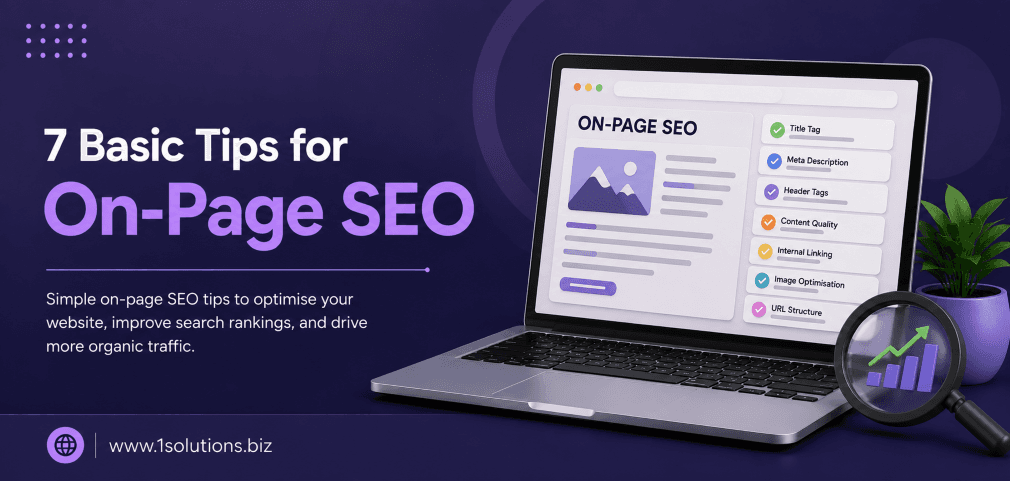
7 Basic Tips for On-Page SEO
If you want your website to rank higher on search engines, mastering on-page SEO is where you start. These 7 basic tips for on-page SEO cover the foundational elements that search engines use to evaluate and rank your pages. Whether you are building a new site or optimizing an existing one, getting these basics right can make a measurable difference to your organic visibility and traffic.
On-page SEO refers to all the optimizations you make directly on your web pages, from how you write your title tags to how you structure your content and images. Unlike off-page factors such as backlinks, on-page SEO is entirely within your control. That also means there is no excuse for skipping it.
On-page SEO covers everything you do on your actual web pages to help search engines understand and rank your content. This guide walks through 7 foundational tips including title tags, content quality, internal linking, and page speed. Follow these consistently and you will build a strong technical and content foundation for organic growth.
⚡ Key Takeaways
- Title tags and meta descriptions are still among the most impactful on-page elements for click-through rates.
- Content depth and relevance matter more than keyword stuffing. Google rewards helpful, accurate content.
- Page speed is a confirmed ranking factor. Even a one-second delay can hurt conversions significantly.
- Internal linking distributes page authority and helps search engines crawl your site efficiently.
- Image optimization, including alt text and compression, contributes to both accessibility and SEO performance.
- Header tags create structure that benefits both users and search engine crawlers.
- URL structure should be clean, descriptive, and free from unnecessary parameters.
Why On-Page SEO Still Matters
With algorithm updates becoming more frequent and AI-driven search evolving rapidly, some marketers wonder whether traditional on-page SEO is still relevant. The answer is yes, more than ever. According to a 2024 study by Backlinko, pages ranking in position one on Google have an average click-through rate of 27.6%, compared to just 2.4% for position ten. That gap is largely influenced by on-page factors. Before you explore advanced tactics, you need these fundamentals locked in.
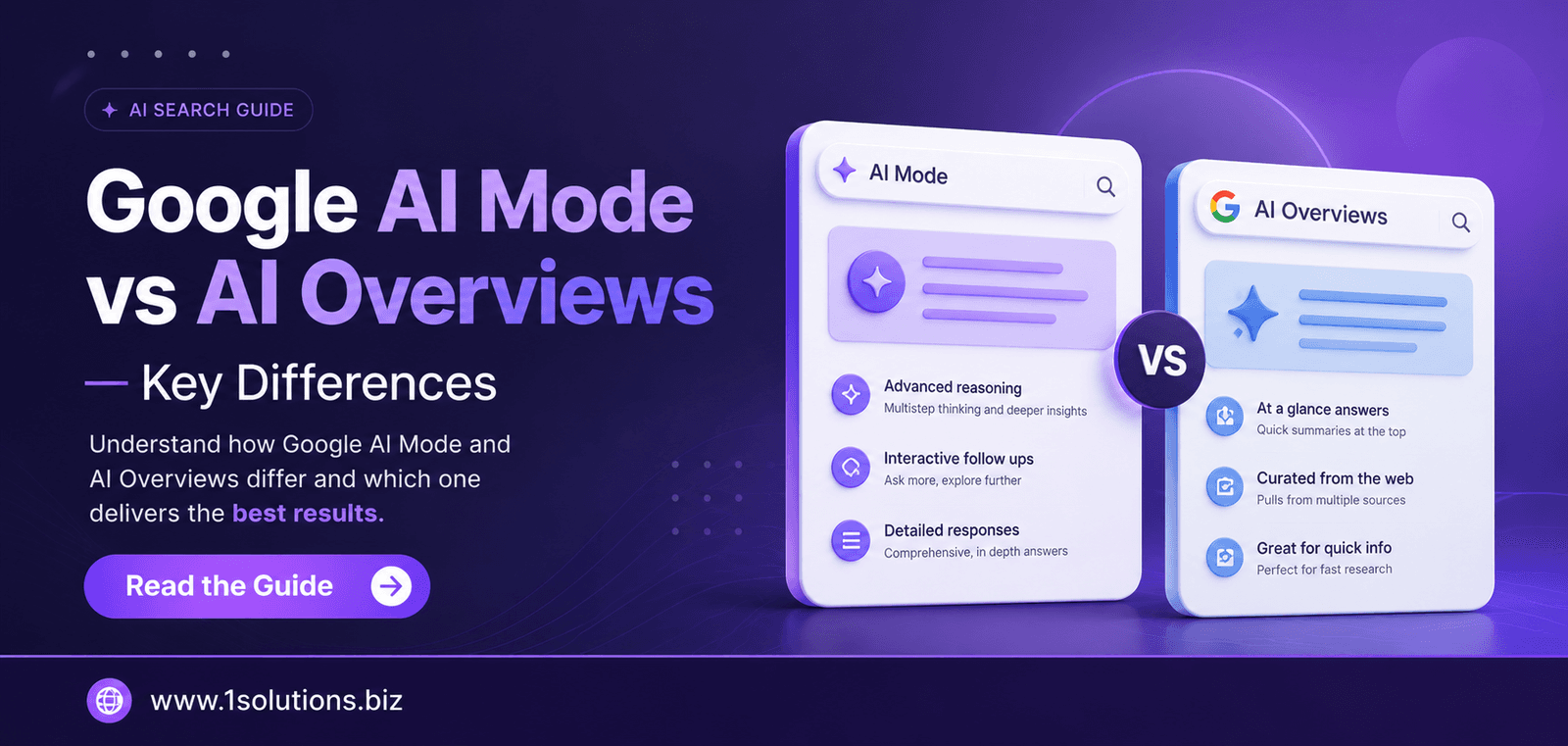
For a deeper look at how Google’s evolving systems evaluate content, check out this breakdown of Google AI Mode vs AI Overviews and what it means for how your content gets discovered.
The 7 Basic Tips for On-Page SEO
1. Optimize Your Title Tags for Search and Clicks
Your title tag is the single most important on-page SEO element. It tells both search engines and users what your page is about. Despite being a simple HTML element, getting it right requires real thought and strategy.
A well-optimized title tag should include your primary keyword, ideally near the beginning. It should be between 50 and 60 characters so it displays fully in search results without being cut off. It should also be compelling enough to earn a click over competing results. That means avoiding generic phrases and being specific about the value your page offers.
According to Moz (2023), title tags that align closely with the searcher’s intent receive significantly higher click-through rates than those that simply stuff keywords without context. There is a real trade-off here: writing for keyword placement alone can make your title feel robotic and reduce clicks, while writing purely for engagement might sacrifice keyword clarity. Aim for a balance.
One useful approach is to write two or three title tag variations, test them if your platform allows it, and track which version drives more organic clicks in Google Search Console. Also remember that Google may rewrite your title tag if it determines your version does not match the page content or searcher intent. The best defense against rewrites is making sure your title accurately represents what is on the page.
💡 Pro Tip: Keep your brand name at the end of the title tag, separated by a pipe symbol or colon, rather than at the beginning. This keeps your primary keyword front and center for both users and crawlers.
If you want professional help building pages that rank from the start, explore our comprehensive SEO services for businesses of all sizes.
2. Write Meta Descriptions That Drive Click-Through Rates
Meta descriptions do not directly influence your rankings, but they significantly affect whether users click on your result after seeing it. Think of your meta description as a 155-character advertisement for your page. It needs to summarize the content accurately while also giving the user a compelling reason to choose your result over others on the same page.
A strong meta description includes the primary keyword naturally, highlights a specific benefit or outcome, and includes a subtle call to action. Phrases like “learn how,” “discover,” or “find out” can nudge users toward clicking without feeling pushy.
Google’s own documentation confirms that they may generate their own meta description from page content if they deem your version unhelpful or irrelevant to the query. This means even your best-written descriptions might get replaced. The most reliable way to keep your description visible is to make sure it genuinely reflects the content and naturally incorporates query-relevant language.
Also consider that meta descriptions appear differently on mobile devices, where space is more limited. Write your core message in the first 120 characters so it does not get cut off on smaller screens. For pages targeting informational queries, leading with a direct answer to the likely question works well.
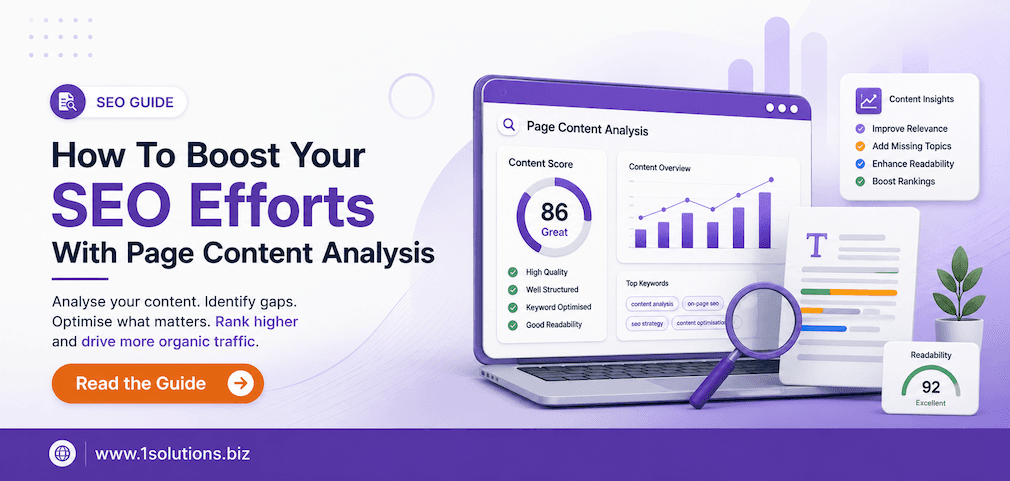
For practical guidance on how page content analysis feeds into better SEO decisions overall, read this detailed resource on how to boost your SEO efforts with page content analysis.
3. Use Header Tags to Create Clear Content Structure
Header tags, from H1 through H6, are not just formatting tools. They serve as structural signals that help search engine crawlers understand the hierarchy and organization of your content. More importantly, they help users scan your page quickly and find the information they need.
Every page should have exactly one H1 tag, which should include your primary keyword and clearly describe the page topic. Think of the H1 as your page’s main headline. From there, use H2 tags for major sections and H3 tags for subsections within those. Going deeper than H3 is rarely necessary for most web content.
A common mistake is using header tags purely for visual styling rather than for semantic structure. If your H2 contains a keyword that has nothing to do with the section below it, that is a misuse of the tag. Crawlers read headers as indicators of content relevance, so misaligned headers can send confusing signals.
According to SEMrush’s 2023 ranking factors study, pages with a clear heading structure are more likely to appear in featured snippets, which can dramatically increase organic visibility even without moving up in traditional rankings. Structured content also supports the kind of clear formatting that works well in AI-generated summaries and answer boxes, which are increasingly common in search results.
For a related look at how structure affects news content specifically, see these 5 key SEO strategies for Google News article ranking.
4. Create High-Quality, Relevant, and Comprehensive Content
No amount of technical optimization can compensate for thin or irrelevant content. Google’s Helpful Content system, which became a core part of its ranking algorithm in 2023, specifically targets pages that exist primarily for search engines rather than for human readers. If your content does not genuinely serve the user, it is at risk.
High-quality content means several things in practice. It means covering a topic with enough depth that the user does not need to return to the search results to find a better answer. It means being accurate and citing credible sources. It means using language that is appropriate for your audience, neither too technical nor too simplified. And it means being honest about trade-offs, limitations, and uncertainties rather than presenting everything as simple and easy.
According to HubSpot’s 2024 State of Marketing report, content that includes original research, first-person experience, or expert quotes generates significantly more backlinks and shares than generic informational content. Those organic signals in turn reinforce your on-page SEO by indicating to Google that your content is trustworthy and valuable.
When creating content, also think about semantic relevance. Rather than repeating your exact target keyword throughout the page, use related terms, synonyms, and contextually relevant vocabulary. This helps search engines understand the full topical depth of your content and match it to a wider range of related queries.
💡 Pro Tip: Before writing a new page, search your target keyword and read the top five results. Identify what they cover, what they miss, and where you can genuinely add more value. That gap is your content opportunity.
If you need help producing content that is both optimized and genuinely useful to readers, our team offers dedicated content and copywriting services built around search intent and user value.
5. Optimize Images for Speed, Accessibility, and Search
Images are one of the most overlooked aspects of on-page SEO. Done well, they enhance user experience and create additional ranking opportunities through image search. Done poorly, they slow down your pages and create accessibility barriers that hurt both users and SEO performance.
Every image on your page should have a descriptive alt text attribute. Alt text serves two purposes: it tells screen readers what the image shows for visually impaired users, and it gives search engine crawlers a text-based description of the image content. Your alt text should describe the image accurately and include your target keyword where it is natural and relevant, not forced into every image regardless of content.
Image file size is equally important. Large, uncompressed images are one of the most common causes of slow page load times. Use tools like Squoosh or ShortPixel to compress images before uploading them. Serve images in modern formats like WebP, which can reduce file size by 25 to 35 percent compared to JPEG or PNG without visible quality loss, according to Google’s web.dev documentation (2023).
Also pay attention to image file names. A file named “IMG_4827.jpg” tells crawlers nothing. A file named “on-page-seo-checklist.jpg” provides contextual information that reinforces your page’s topic. It is a small detail, but small details compound over time.
Finally, use descriptive captions where appropriate. Captions are among the most-read text on any web page, and they give you another natural opportunity to reinforce keyword relevance and provide value to the user.
6. Improve Page Speed and Core Web Vitals
Page speed has been a Google ranking factor since 2010 for desktop and since 2018 for mobile. More recently, Google’s Core Web Vitals update formalized specific speed and usability metrics that directly influence rankings. These metrics include Largest Contentful Paint (how fast the main content loads), Interaction to Next Paint (how responsive the page is to user input), and Cumulative Layout Shift (how stable the page layout is during loading).
The data on page speed and user behavior is stark. According to Google (2023), 53% of mobile users abandon a page that takes longer than three seconds to load. Even a one-second improvement in load time can increase conversions by up to 7%, according to a Deloitte Digital study (2020). These are not marginal gains. Speed is a direct business metric as well as an SEO metric.
Common causes of slow pages include unoptimized images, render-blocking JavaScript, excessive third-party scripts, lack of browser caching, and poor hosting infrastructure. Tools like Google PageSpeed Insights and GTmetrix give you a detailed breakdown of exactly what is slowing your pages down and what to prioritize first.
One trade-off worth acknowledging: some of the design features that make websites visually impressive, such as large hero videos, complex animations, and multiple web fonts, can significantly hurt Core Web Vitals scores. Finding the right balance between design and performance requires deliberate decisions rather than defaulting to the heaviest visual options.
For websites built on WordPress, performance optimization is built into many well-designed themes and plugins. You can learn more about how a solid WordPress infrastructure supports SEO by working with an experienced WordPress development company.
Also, if you are unsure why Google is not indexing certain pages despite your optimization efforts, this article on why Google is not indexing your page covers 10 real technical reasons that often go unnoticed.
💡 Pro Tip: Run your Core Web Vitals check in Google Search Console under the “Experience” section. It shows real-user data from Chrome browsers, which is more actionable than simulated lab data from third-party tools.
7. Build a Clean URL Structure and Use Internal Links Strategically
Your URL structure and internal linking strategy are two closely related elements that together shape how search engines discover, crawl, and assign authority to your pages. Neither requires advanced technical knowledge, but both are frequently neglected even by experienced site owners.
A clean URL is short, descriptive, and readable by both humans and bots. It uses hyphens to separate words (not underscores), avoids unnecessary stop words where possible, and includes the primary keyword for the page. For example, “yoursite.com/on-page-seo-tips” is vastly preferable to “yoursite.com/page?id=2847&cat=blog.” Clean URLs also tend to earn more clicks when shared on social media or in email, since users can see at a glance what the destination page is about.
Internal linking distributes link equity (also called PageRank) across your site and helps search engines discover and prioritize your most important pages. Every time you publish a new piece of content, look for existing pages on your site that are relevant and add a natural link to the new page. Likewise, make sure your high-priority pages receive internal links from multiple other pages on your site.
The anchor text you use for internal links also matters. Descriptive, keyword-rich anchor text tells crawlers what the destination page is about and reinforces its topical relevance. Avoid generic anchors like “click here” or “read more” whenever possible.
For a comprehensive guide on making the most of your internal linking strategy, see this resource on how to use internal links to boost backlink impact. And if you are also working on your broader link strategy, this guide on how to build links safely without triggering penalties is worth bookmarking.
On-Page SEO Elements at a Glance
| On-Page Element | Primary Purpose | Ranking Impact | Time to Implement |
|---|---|---|---|
| Title Tag | Tell crawlers and users what the page is about | High | Minutes per page |
| Meta Description | Improve click-through rate from search results | Indirect (CTR) | Minutes per page |
| Header Tags | Structure content hierarchy for crawlers and users | Medium | 30 minutes per page |
| Content Quality | Satisfy user intent and demonstrate expertise | Very High | Hours to days per page |
| Image Optimization | Improve speed, accessibility, and image search | Medium | 1 to 2 hours per page |
| Page Speed | Reduce bounce rate and meet Core Web Vitals | High | Ongoing technical work |
| URL Structure and Internal Links | Distribute authority and aid crawl efficiency | Medium to High | Ongoing as content grows |
Practical Action Plan: Where to Start
- Do This Now: Audit your top 10 most-visited pages in Google Search Console. Check that each has a unique, keyword-optimized title tag and meta description under the recommended character limits. These are quick wins with meaningful impact on CTR and rankings.
- Do This Now: Run your site through Google PageSpeed Insights and resolve any Critical issues flagged under Core Web Vitals. Slow pages lose both rankings and users. Focus on image compression and eliminating render-blocking resources first.
- Worth Doing: Review your internal linking structure. Identify your highest-priority service or product pages and make sure they receive at least 3 to 5 internal links from relevant supporting content. Use descriptive anchor text throughout.
- Worth Doing: Audit every published page for content quality. Remove or consolidate thin pages that offer little unique value. Expand pages that rank between positions 5 and 15 with additional depth, examples, and structured headers.
- Low Priority: Standardize your URL structure for future pages. If your existing URLs are already indexed and performing, do not change them without implementing 301 redirects. Focus on getting new pages right from the start instead.
On-Page SEO in the Context of AI Search
As AI-generated search results become more common, on-page SEO is evolving. Google’s AI Overviews and similar features pull structured, clearly written content to answer queries directly in the search interface. Pages with strong on-page optimization, particularly clear headers, comprehensive coverage, and well-structured data, are more likely to be cited in these AI-generated summaries.
If you want to understand how AI search works and how to optimize for it beyond traditional on-page techniques, this guide on how to improve website visibility in AI search engines is a practical next step. Similarly, understanding emerging concepts like LLM optimization and how to rank in AI search will help you stay ahead as the search landscape continues to shift.
For small businesses especially, on-page SEO combined with local optimization can be a high-return investment. Explore our SEO services for small businesses if you are looking for a structured approach tailored to tighter budgets and local competition.
Frequently Asked Questions
What is on-page SEO and why is it important?
On-page SEO refers to the optimizations you make directly on your web pages to help search engines understand and rank your content. It includes elements like title tags, meta descriptions, header tags, content quality, URL structure, image optimization, and page speed. It is important because these factors are entirely within your control and form the foundation that all other SEO work builds on.
How long does it take to see results from on-page SEO?
On-page SEO results vary by site age, competition level, and how many pages need optimization. For existing pages with some ranking history, improvements can show up in Google Search Console within two to four weeks of changes being crawled. For newer pages or highly competitive keywords, it may take three to six months before significant ranking improvements become visible. Patience combined with consistent effort is the realistic expectation.
Is keyword density still a relevant on-page SEO factor?
Keyword density as a specific numerical target is largely outdated. Google’s algorithms have evolved to understand context and topical relevance rather than counting exact keyword repetitions. What matters now is using your primary keyword naturally in key locations such as the title tag, H1, and early in the body content, while using semantically related terms throughout the rest of the page. Forcing an exact keyword percentage can actually hurt readability and trigger spam filters.
Do I need to optimize every page on my site for on-page SEO?
Ideally yes, but in practice it makes sense to prioritize. Start with your highest-value pages: those that target your most important keywords, drive the most revenue, or already have some organic visibility that could be improved. Pages like privacy policies, terms of service, and certain utility pages need basic technical correctness but do not require the same level of content optimization as your main service or product pages.
Can on-page SEO help my site recover from a Google penalty?
On-page SEO can address certain content-related penalties, particularly those related to thin content, keyword stuffing, or unhelpful content flagged by Google’s Helpful Content system. However, penalties related to unnatural link profiles or spam require specific off-page remediation. If you suspect a penalty is affecting your rankings, a thorough audit is the right first step. You can learn more about structured recovery approaches through our Google penalty recovery services.
Conclusion
Implementing these 7 basic tips for on-page SEO consistently is one of the highest-leverage actions you can take for your website’s organic performance. From writing precise title tags to building a fast, well-structured, internally linked site, each element reinforces the others. None of these tips requires a large budget or advanced technical skills. What they do require is attention to detail, consistent execution, and a genuine commitment to creating pages that serve your users well.
Start with what you can fix today, build a habit of optimization as you create new content, and revisit older pages regularly to ensure they remain relevant and competitive. The compounding effect of consistent on-page SEO work is one of the most reliable paths to sustainable organic growth.