
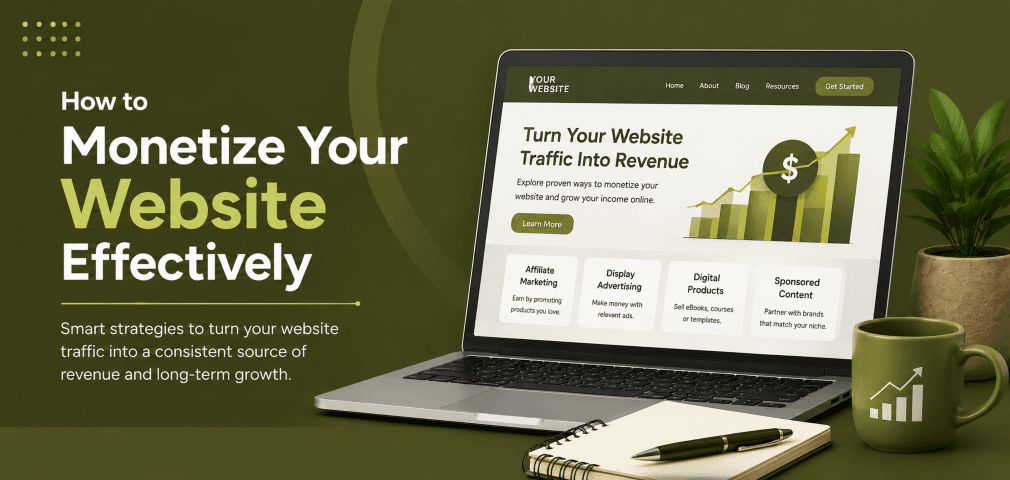
If you have a website that gets traffic, you already have an asset. The real question is whether you are extracting any value from it. Knowing how to monetize your website effectively is not just about slapping ads on a page. It requires a thoughtful strategy that matches your audience, your content, and your long-term goals. This guide walks you through every major monetization method, what actually works, and where most site owners go wrong.
Website monetization works best when you match the right revenue model to your traffic type and audience intent. Start with one or two proven methods, build consistency, and layer in additional income streams as your site grows. Organic traffic from search is the foundation that makes everything else possible.
⚡ Key Takeaways
- Display advertising is easy to start but rarely generates significant income without high traffic volumes.
- Affiliate marketing and digital products tend to offer the best income-to-effort ratio for content sites.
- Email list building is one of the highest-ROI investments you can make for long-term monetization.
- SEO is not optional. Without organic traffic, almost every monetization model underperforms.
- Selling services directly from your website can be more profitable than any passive income stream.
- Diversifying across two to four revenue streams protects you from algorithm changes and platform shifts.
- Your site’s technical foundation, speed, and content quality directly affect earning potential.
Why Most Websites Fail to Make Money
The honest truth is that most websites do not earn because their owners skip the groundwork. According to a study by Ahrefs (2023), approximately 90.63% of pages get zero traffic from Google. No traffic means no income, regardless of which monetization model you choose. Before you think about revenue, you need to think about visibility.
The second most common mistake is choosing the wrong monetization method for the wrong audience. A blog read by hobbyists will not convert the same way a site read by purchasing professionals does. Matching your monetization model to your audience’s intent is the single most important strategic decision you will make.
Finally, many site owners try to monetize too early. Placing aggressive ads or affiliate links on a site with thin content and no trust signals pushes visitors away before they ever become customers. Build first, then monetize.
Step 1: Understand Your Traffic and Audience Intent
Before choosing any revenue model, you need to audit your existing traffic. Use Google Analytics or a tool like Semrush to answer these questions:
- Where does your traffic come from: organic search, social, direct, or referral?
- What pages get the most visits and what topics do those pages cover?
- What is the average session duration and bounce rate on key pages?
- Are visitors in research mode or buying mode?
Audience intent is everything. Someone searching “best running shoes under $100” is ready to buy. Someone searching “what is a marathon” is still learning. The first visitor is worth far more to an affiliate marketer. The second visitor may be better served by a lead magnet that captures their email for a long-term nurture sequence.
Understanding this distinction helps you avoid wasting months optimizing a monetization channel that was never aligned with your audience in the first place.
💡 Pro Tip: Use Google Search Console to identify which queries bring people to your site. If most of your top queries are informational, affiliate links may underperform. Consider building a content-to-email funnel that converts readers into subscribers first.
Step 2: Build a Strong SEO Foundation First
Every monetization strategy in this guide depends on traffic. And the most sustainable, cost-effective traffic source is organic search. That is not a marketing opinion. According to BrightEdge (2023), organic search drives 53% of all website traffic across industries.
If your site is not optimized for search, you are fighting with one hand tied behind your back. This means publishing well-researched content that targets specific keywords, building authoritative backlinks, ensuring your site loads quickly, and structuring your pages so search engines can crawl and index them properly.
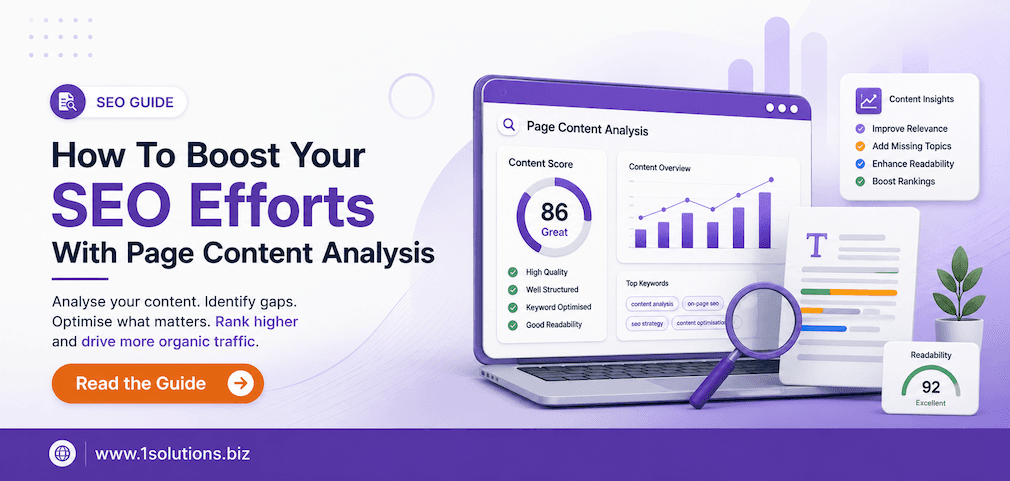
Our guide on how to boost your SEO efforts with page content analysis is a practical starting point for auditing your existing pages and improving their ranking potential. If you need professional help, our comprehensive SEO services cover everything from technical audits to content strategy and link building.
It is also worth noting that SEO is not static. Search engine algorithms evolve constantly. Staying informed about updates like the Google March 2026 Spam Update can protect your traffic and income from sudden drops.
Step 3: Choose the Right Monetization Models
There is no single best way to monetize a website. The right combination depends on your niche, traffic volume, content format, and how much time you can invest. Here is an honest breakdown of the most widely used methods:
Display Advertising
Google AdSense and premium networks like Mediavine or AdThrive place ads on your pages and pay you per thousand impressions or per click. This is the easiest model to set up but also the lowest-paying for most sites. The average RPM (revenue per thousand pageviews) on AdSense is typically between $2 and $10, depending on niche and geography. To earn $2,000 per month, you may need 200,000 to 1,000,000 monthly pageviews. This is achievable but takes significant time and consistent content production.
Affiliate Marketing
You promote another company’s product or service and earn a commission when a visitor makes a purchase through your link. According to Statista (2023), affiliate marketing spending in the US alone reached $9.56 billion, reflecting its scale and maturity as a channel. This model works especially well for review sites, comparison content, and how-to guides where visitors are already close to a purchase decision.
Selling Digital Products
Ebooks, templates, courses, presets, spreadsheets, and software are all examples of digital products you can sell directly from your site. The profit margin is near 100% after initial creation costs. The challenge is building enough trust and traffic to generate consistent sales. Platforms like Gumroad, Lemon Squeezy, or WooCommerce make it straightforward to handle payments and delivery.
Selling Services
If you have a professional skill, your website can serve as your primary lead generation tool. Consultants, designers, writers, marketers, and developers often find that a single client acquired through organic search is worth more than months of display ad income. This model requires less traffic but demands higher trust signals: case studies, testimonials, and a clear service description.
Membership and Subscriptions
Locking premium content behind a paywall creates recurring revenue. This works best when you consistently produce high-value content that readers cannot easily find elsewhere. Platforms like Memberful, Patreon, or a custom WordPress membership plugin can power this model.
Sponsored Content
Brands pay you to publish articles, reviews, or mentions on your site. Rates vary wildly based on your domain authority, niche, and audience size. This can be lucrative but carries risks: publishing low-quality sponsored content can damage your SEO and reader trust simultaneously.
Selling Physical Products or Ecommerce
If your content is closely tied to a specific product category, adding an online store is a natural extension. If you are considering this route, our comparison of WooCommerce vs Shopify will help you choose the right platform for your needs.
| Monetization Method | Traffic Required | Setup Effort | Income Potential | Best For |
|---|---|---|---|---|
| Display Advertising | High (100k+ pageviews) | Low | Low to Medium | High-volume content sites |
| Affiliate Marketing | Medium | Medium | Medium to High | Review and comparison blogs |
| Digital Products | Low to Medium | High (upfront) | High | Educators and creators |
| Services | Low | Low | Very High | Professionals and consultants |
| Memberships | Medium | High | High (recurring) | Niche communities |
| Sponsored Content | Medium to High | Low | Variable | Authority blogs |
| Ecommerce | Medium | High | Very High | Product-focused niches |
Step 4: Build and Leverage Your Email List
An email list is the only audience you truly own. Social platforms change algorithms. Google updates can cut organic traffic overnight. But your email list stays with you. According to Litmus (2023), email marketing delivers an average return of $36 for every $1 spent, making it the highest-ROI digital marketing channel available.
To build a list effectively, offer something specific and valuable in exchange for an email address. A checklist, a free mini-course, a template, or a discount all work well. Place your opt-in form prominently on high-traffic pages and make sure your welcome sequence is ready before you launch.
Once you have a list, you can promote your own products, affiliate offers, or service packages directly to people who have already shown interest in what you do. This dramatically improves conversion rates compared to cold traffic.
💡 Pro Tip: Segment your email list based on which lead magnet a subscriber downloaded or which page they visited. Segmented campaigns generate up to 58% more revenue than unsegmented ones, according to Mailchimp research. Relevance always wins.
Step 5: Use Paid and Social Traffic to Accelerate Growth
Organic traffic is the backbone of a monetized website, but paid and social traffic can accelerate results, especially in the early stages or when launching a new product. Facebook and Instagram ads can drive highly targeted traffic to landing pages, product pages, or content pieces designed to capture leads.
If you are new to paid social, our step-by-step breakdown of how to advertise on Facebook is worth reading before you spend a single dollar. Paid traffic only makes financial sense if your conversion rate and average order value justify the cost per click.
For ecommerce sites, Google Shopping is another powerful channel. Our guide on how to increase sales with Google Shopping ads covers the practical steps to get your products in front of buyers actively searching for them.
If you are running social campaigns, expanding your reach across multiple platforms matters. Our complete guide to the top 100 social media sites can help you identify where your specific audience spends time so you can focus your efforts strategically.
Step 6: Optimize Your Site for Conversions
Traffic without conversion optimization is like pouring water into a leaking bucket. Even small improvements in conversion rate have an outsized effect on revenue. Here are the highest-impact conversion improvements to make:
- Page speed: Google data shows that as page load time increases from one to three seconds, the probability of a bounce increases by 32%. Slow sites lose money.
- Clear calls to action: Every page should have one primary action you want the visitor to take. Avoid cluttering pages with competing CTAs.
- Trust signals: Testimonials, case studies, certifications, and media mentions all increase the likelihood that a visitor will take action.
- Mobile optimization: More than half of global web traffic comes from mobile devices. A site that is hard to use on a phone is a site that is hard to monetize.
- Internal linking: Guide visitors toward your highest-value pages. Our guide on how to use internal links to boost backlink impact explains how strategic linking improves both SEO and user journeys simultaneously.
Step 7: Diversify and Protect Your Revenue Streams
One income stream is a liability. Two or three are a business. Diversification does not mean doing everything at once. It means building one model to a stable level, then layering in a complementary one.
For example, a content site might start with affiliate marketing, then add a digital product once the audience trust is established, then introduce a membership tier for the most engaged readers. Each step builds on the last without disrupting the existing income.
Diversification also means protecting your traffic. If your site relies entirely on Google organic traffic and you receive a penalty, your income can disappear overnight. Building an email list, a social following, and some paid traffic capacity gives you options if your rankings are ever affected. If you do encounter a penalty, our Google penalty recovery services can help you diagnose and resolve the issue quickly.
It is also worth understanding how emerging technologies are changing search behavior. Tools and shifts described in our article on how to improve website visibility in AI search engines may affect how future traffic reaches your site, which directly impacts any monetization model that depends on search.
💡 Warning: Do not diversify too early. Spreading effort across five monetization models before any one of them is generating consistent income is a common trap. Focus leads to results. Diversification comes after stability, not before it.
Step 8: Track, Test, and Iterate
Monetization is not a set-and-forget exercise. What works today may not work as well in six months. Tracking the right metrics helps you spot problems early and double down on what is working. The key metrics to watch include:
- Revenue per thousand visitors (RPV) across each income stream
- Conversion rates on product pages, lead magnets, and affiliate links
- Email list growth rate and open rates
- Organic traffic trends by page and keyword cluster
- Average time on page and scroll depth on monetized content
Run A/B tests on your most important pages. Test different CTA placements, headline variations, and offer structures. Even a 1% improvement in conversion rate on a high-traffic page can meaningfully change your monthly income.
Our full-service digital marketing solutions include conversion rate optimization, analytics setup, and campaign management for site owners who want expert support scaling their monetization efforts.
Practical Action Plan: Where to Focus Your Energy
Use this prioritized action plan to cut through the noise and focus on what matters most at each stage:
- Do This Now: Audit your existing traffic sources using Google Analytics and Search Console. Identify your top five pages by traffic and assess whether each one has a clear monetization path. If not, add one targeted CTA to each page this week. Also confirm that your site loads in under three seconds on mobile.
- Worth Doing: Set up an email list if you do not have one. Create one lead magnet relevant to your most-visited content. Choose one primary monetization model that fits your audience intent and commit to optimizing it for 90 days before adding another. Start building backlinks to your most valuable pages using strategies outlined in our guide on 15 link building methods that continue to work.
- Low Priority: Explore premium ad networks, memberships, or sponsored content once your traffic exceeds 25,000 monthly sessions and you have at least one stable revenue stream. These models reward scale and established authority. Pursue them after the foundation is solid.
Frequently Asked Questions
How much traffic do I need before I can monetize my website effectively?
There is no universal threshold, but a realistic starting point is around 1,000 to 5,000 monthly visitors for affiliate marketing or selling services. Display advertising typically requires much higher traffic to generate meaningful income. Selling a digital product or service can work with even less traffic, as long as that traffic is highly targeted and engaged.
Is affiliate marketing still a reliable way to earn from a website?
Yes, when done honestly and with genuine product recommendations. Affiliate marketing works best when you have tested the products yourself and your content answers real questions your audience has. Purely promotional content with no genuine insight tends to underperform and can also attract Google algorithm scrutiny for low-quality, thin content.
Should I use multiple monetization methods at the same time?
Eventually, yes. But not all at once from day one. Start with the method that best fits your current traffic and audience intent. Build it to a stable, predictable income level, then layer in a second method that complements rather than competes with the first. Trying to run five models simultaneously before any one of them is mature typically results in none of them performing well.
How important is SEO to website monetization?
It is foundational. Every monetization model in this guide benefits from a larger, more qualified audience. Organic search is the most scalable and cost-effective traffic source available to most site owners. Without it, you will either rely on paid traffic (which is expensive) or social media (which is inconsistent). Strong SEO creates a compounding advantage that supports all other monetization efforts over time.
Can I monetize a new website with no existing audience?
Yes, but it requires patience. New sites typically take three to twelve months to build meaningful organic traffic. In the meantime, focus on content quality, technical SEO, and building an email list from whatever small audience you can attract. You can also use paid traffic to test monetization concepts before organic traffic scales up, though this requires a budget and a strong understanding of your conversion funnel.
Conclusion
Learning how to monetize your website effectively is a process that rewards clarity and consistency over shortcuts. Start by understanding who your visitors are and what they need. Build an SEO foundation that brings in sustained, qualified traffic. Choose one or two monetization models that match your audience’s intent. Capture email addresses to build an audience you own. Then track, test, and expand as your results allow.
There is no single right answer for every website. But there is always a right starting point: build value first, earn trust second, and monetize third. Follow that sequence and the income follows naturally.