Google Remove Outdated Content Tool Remove Competitor Pages?

Google Remove Outdated Content Tool Remove Competitor Pages

Can the Google Remove Outdated Content Tool Remove Competitor Pages?

The question surfaces constantly in SEO forums, Reddit threads, and client calls: can the Google Remove Outdated Content Tool remove competitor pages from search results? It is a fair question, especially when a rival’s outdated or damaging content is outranking you for keywords that matter to your business. The short answer is no, not in the way most people hope. The longer answer involves understanding what the tool is actually designed for, how it is being misused, and what legitimate alternatives exist for businesses who want cleaner, more competitive search visibility.

TL;DR

The Google Remove Outdated Content Tool is a public-facing utility meant to flag cached or indexed content that no longer exists on the live web. It cannot and will not remove active competitor pages from search results. Misusing it may violate Google’s policies and lead to penalties. Legitimate SEO and content strategies remain the most reliable path to outranking competitors.

⚡ Key Takeaways

  • The Google Remove Outdated Content Tool is designed strictly for content that has already been removed from the source website.
  • It does not give any user the power to remove a competitor’s active, live web page from Google’s index.
  • Attempting to misuse removal tools against competitors can result in a Google policy violation and potential penalties.
  • Google processes removal requests manually, and most legitimate requests take between a few hours and a few days.
  • Legal routes like DMCA takedowns apply only to copyright infringement, not general competitive content.
  • Sustainable competitive advantage in search comes from stronger content, authoritative backlinks, and consistent technical SEO.
  • Monitoring your own indexed content regularly is the most productive use of Google’s removal tools.

What Is the Google Remove Outdated Content Tool?

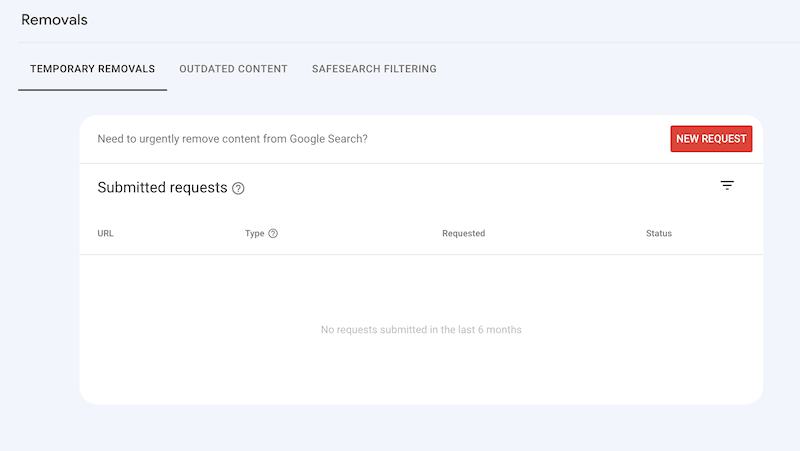
Google’s Remove Outdated Content Tool is a publicly accessible utility within Google Search Console’s family of tools. It was created to let anyone, not just site owners, request the removal of cached snapshots or indexed information that no longer reflects what is live on the actual webpage. If a page has been deleted, a phone number has been removed, or personal information is no longer available at the source URL, someone can submit a request asking Google to update its cached version and search snippets.

The key distinction here is critical: the tool acts on Google’s cached data, not on the existence of the page itself. If the content still exists on the live site, Google will not honor the removal request. The tool is not a weapon. It is a maintenance utility.

According to Google’s own documentation (Google Search Central, 2024), the tool is intended for situations where a page has been updated or deleted and Google’s index has not yet caught up. That is a very narrow use case, and it has nothing to do with removing a competitor’s actively published content.

How People Try to Misuse It Against Competitors

The attempt to use the Google Remove Outdated Content Tool against competitor pages is more common than Google publicly acknowledges. The typical scenario involves a business owner or an inexperienced SEO consultant submitting removal requests for competitor URLs, hoping that Google will deindex those pages and drop them from rankings.

This does not work for one fundamental reason: when Google’s systems check the submitted URL and find that the content is still live and accessible, the request is automatically denied. There is no loophole. There is no edge case that makes it effective against live content.

Beyond the practical failure, there is a policy concern. Google’s guidelines explicitly prohibit submitting false or misleading removal requests. If Google detects coordinated abuse of this system, the account associated with the requests could face consequences. For site owners who depend on organic traffic, that is a serious risk to take for a tactic that does not work.

💡 Pro Tip: If a competitor’s page is outranking you, the correct response is to build a more authoritative, better-optimized page on the same topic. Tools like Google Search Console are meant to manage your own web presence, not to interfere with others.

What the Tool Can Legitimately Do

Used correctly, the Remove Outdated Content Tool serves several genuine purposes. Here is where it has real value:

  • Removing cached versions of deleted pages: If you deleted a page from your site but Google still shows an old cached version, this tool helps speed up the refresh.
  • Clearing outdated snippets: Sometimes Google’s search snippet shows old information, like an expired price or a discontinued product. The tool can flag this for an update.
  • Addressing leaked personal information: If personal data appeared on a page that has since been removed, the tool can help clear it from Google’s cached display.
  • Temporary visibility control: For site owners managing a redesign, the tool can help temporarily suppress outdated indexed pages while new content is being crawled.

None of these use cases involve competitors. They are all about managing the accuracy of your own site’s representation in Google’s index, which is a legitimate and valuable function when used properly.

A Comparison: What Google’s Removal Tools Actually Do

ToolWho Can Use ItWhat It DoesCan It Remove Competitor Content?
Remove Outdated Content ToolAnyone (public)Flags cached/indexed content no longer live on sourceNo
Google Search Console URL RemovalVerified site owners onlyTemporarily removes your own URLs from Google’s indexNo
DMCA Removal RequestCopyright holdersRemoves content that infringes your copyrightOnly if copyright is violated
Personal Information RemovalIndividualsRemoves specific personal data from search resultsNo (personal data only)
SafeSearch / Spam ReportsAnyone (public)Flags policy-violating content for Google reviewOnly if content violates Google policies

What Happens When a Removal Request Is Denied?

When Google receives a removal request through the Outdated Content Tool, its systems automatically check whether the content in question is still live at the given URL. If it is, the request is denied. Google’s support documentation notes that most legitimate requests are reviewed within a few hours to a few days, while requests for live content are rejected almost immediately (Google Search Central, 2024).

If someone submits repeated requests for competitor URLs in an attempt to trigger a manual review or force a ranking change, they are wasting time and risking their own standing with Google. There is no escalation path that leads to a competitor’s active page being removed simply because someone asked.

For content that genuinely violates Google’s quality guidelines, the appropriate channel is a spam report, not a removal request. And even spam reports do not guarantee removal. They are reviewed by Google’s quality team, and action is taken only when a clear policy violation is confirmed. According to Semrush’s State of Search 2023 report, spam-based manual actions affected roughly 4 percent of sites audited, underscoring that Google’s enforcement is real but not triggered by competitive reporting without genuine violations.

Why Businesses Keep Searching for Shortcuts

The desire to use the Google Remove Outdated Content Tool against competitor pages comes from a real frustration. Organic search competition is genuinely difficult. According to Ahrefs (2023), over 90 percent of web pages receive zero organic traffic from Google, meaning the vast majority of published content never gains meaningful visibility. With that kind of competition, it is understandable that businesses look for faster paths to ranking improvements.

The problem is that shortcuts rarely work and often backfire. Google’s algorithm has become sophisticated enough to reward genuine authority, helpful content, and trustworthy backlink profiles. As covered in our breakdown of 5 key SEO strategies for Google News article ranking, sustainable visibility comes from content quality and relevance signals, not from suppressing competitors through policy workarounds.

The same principle applies to page indexing. If a page is not performing, the right question is why Google may not be indexing or ranking it properly. Our guide on why Google is not indexing your page walks through 10 real technical reasons that are far more actionable than trying to remove a competitor’s content.

💡 Pro Tip: Before trying to suppress a competitor’s visibility, audit your own content first. A thorough page content analysis often reveals quick wins that can lift your rankings faster than any removal tactic. See our guide on how to boost SEO efforts with page content analysis for a practical framework.

Legitimate Paths to Outranking Competitors

If the Google Remove Outdated Content Tool cannot remove competitor pages, what actually works? The honest answer is that competitive SEO requires sustained effort across multiple dimensions. Here are the approaches that produce measurable results:

Content Depth and Topical Authority

Google’s Helpful Content system, which became a standalone signal in 2023, rewards content that demonstrates genuine expertise and satisfies user intent better than competing pages. Publishing longer, more thoroughly researched content is not enough on its own. The content must address questions that competitors miss, use structured data effectively, and update over time to reflect new developments.

Backlink Profile Development

According to Moz (2023), pages with stronger backlink profiles rank higher in competitive queries in over 75 percent of cases studied. Building authoritative inbound links through guest posting, digital PR, and content partnerships remains one of the most reliable ranking signals. Our resource on how to build backlinks in competitive and low-competition niches covers practical methods for link acquisition without triggering penalties.

Technical SEO Fundamentals

Core Web Vitals, crawlability, structured data, and internal linking architecture all influence how Google ranks pages. A technically sound site that loads quickly and presents content clearly has a structural advantage over a competitor with weak fundamentals, even if that competitor has more content. Our overview on how to use internal links to boost backlink impact explains how site architecture directly influences link equity distribution.

DMCA as a Targeted Tool for Copyright Violations

If a competitor is genuinely copying your original content, a DMCA takedown request submitted through Google’s Legal Removals portal is the correct and legally supported path. This is not the Remove Outdated Content Tool. It is a separate legal mechanism that Google takes seriously and processes through a dedicated team. However, it applies strictly to copyright infringement, not to competitive content on the same topic.

Brand Authority and Search Presence

Building strong branded search signals, through consistent content publication, social proof, and local visibility, helps Google recognize your site as an authoritative source. This includes maintaining an accurate and optimized presence across platforms. Our analysis of local AEO best practices for small businesses is particularly relevant for businesses competing in geographically targeted search results.

The Evolving Role of AI in Content Competition

The competitive landscape has shifted significantly with the rise of AI-generated content and Google’s AI Overviews feature. Many businesses are now less focused on ranking individual pages and more focused on appearing within AI-generated summaries that sit above traditional organic results. This changes the conversation around competitor content in meaningful ways.

As explored in our breakdown of Google AI Mode vs AI Overviews, these features pull from sources Google considers most authoritative and relevant. No removal tool can influence which sources are cited in an AI Overview. The only path to inclusion is building the kind of content quality and site authority that Google’s systems trust.

This also means that attempting to suppress competitor pages through outdated removal tactics is doubly ineffective in an AI-forward search environment. The competitive dynamic has shifted toward who Google trusts most, not who submits the most removal requests.

💡 Warning: If you receive advice from an SEO vendor promising to remove competitor pages through Google’s removal tools, treat that as a serious red flag. No legitimate professional SEO service would offer this, because it does not work and violates Google’s terms of service.

Practical Action Plan

If you came here looking for a way to handle a competitor’s ranking advantage, here is a realistic priority framework:

  • Do This Now: Conduct a full content audit of your own top-priority pages. Compare them directly against the competitor pages outranking you. Identify gaps in depth, structure, and keyword targeting. This is where ranking improvements actually originate.
  • Do This Now: If a competitor is copying your original content verbatim, file a DMCA takedown request through Google’s Legal Removals tool. Document the original publication date and the infringing URL before submitting.
  • Worth Doing: Build a consistent link acquisition strategy targeting relevant publications in your industry. Even modest link building, done consistently over several months, compounds into meaningful authority gains. Our resource on how to build links safely without triggering penalties is a practical starting point.
  • Worth Doing: Review your technical SEO baseline, including page speed, crawl errors, structured data, and internal linking. Technical issues are often the hidden reason a well-written page underperforms a weaker competitor’s page.
  • Low Priority: Submit spam reports for competitor pages only if you have specific, documented evidence of policy violations like cloaking, hidden text, or scraping. Submitting reports without clear evidence does not help and may not lead to any action.
  • Low Priority: Use the Remove Outdated Content Tool for its actual purpose: clearing your own cached pages that are no longer live. Schedule a quarterly review of your indexed URLs to catch stale content early.

Businesses that want sustained competitive search performance benefit most from working with professionals who understand both technical and content-based ranking signals. Our SEO services for small businesses are specifically structured to deliver measurable improvements without shortcuts that put sites at risk.

Final Thoughts: The Google Remove Outdated Content Tool Remove Competitor Pages Question Deserves a Straight Answer

The Google Remove Outdated Content Tool cannot remove competitor pages. It was not designed for that purpose, it does not function that way technically, and attempting to use it against live competitor content violates Google’s policies without producing any ranking benefit. This is not a limitation that will change with future updates. It is a deliberate design decision.

The businesses that consistently outrank their competitors are not the ones who found clever removal tactics. They are the ones who built better content, stronger link profiles, and more technically sound websites over time. That approach is slower and more demanding than submitting a removal request, but it is the only approach that actually works.

If your competitive position in search needs improvement, the starting point is an honest assessment of your own site’s strengths and gaps, not an attempt to suppress what others have built. A qualified digital marketing partner can help you identify exactly where to focus for the greatest impact.

Frequently Asked Questions

Can I use the Google Remove Outdated Content Tool to deindex a competitor’s page?

No. The tool only works for content that has already been removed from the live website. If a competitor’s page is still active and accessible, Google will automatically reject any removal request you submit for that URL. There is no workaround or escalation path that changes this outcome.

What should I do if a competitor is copying my original content?

If a competitor is republishing your original content without permission, you have a legitimate legal path through Google’s DMCA Legal Removals process. This is separate from the Remove Outdated Content Tool and applies specifically to copyright infringement. Document your original publication date and submit through the official Google Legal Removals portal.

Are there any legitimate ways to get a competitor’s page removed from Google?

Only under specific circumstances. If the competitor’s page contains content that violates Google’s spam policies, such as cloaking or hidden text, a spam report may lead to a manual action. If it infringes your copyright, a DMCA request is the route. If it contains defamatory or illegal content, legal counsel and a formal legal request to Google may apply. For general competitive content, no removal mechanism exists.

How long does the Remove Outdated Content Tool take to process a valid request?

According to Google Search Central (2024), valid requests for genuinely removed or updated content are typically processed within a few hours to a few days. Requests for content that is still live on the source website are rejected almost immediately after Google’s systems verify the current state of the URL.

What is the most effective alternative to trying to remove competitor content?

The most effective alternative is building a stronger version of the competing content on your own site. This means deeper coverage of the topic, better structured data, more authoritative inbound links, and a technically optimized page that loads quickly and presents clearly. Over time, a consistently well-maintained content and link strategy will outperform any page that is not being actively improved.

Atul Chaudhary

Atul Chaudhary

With 18 years of industry experience, Atul specializes in building scalable digital products and crafting data-driven marketing strategies that deliver measurable business growth.